

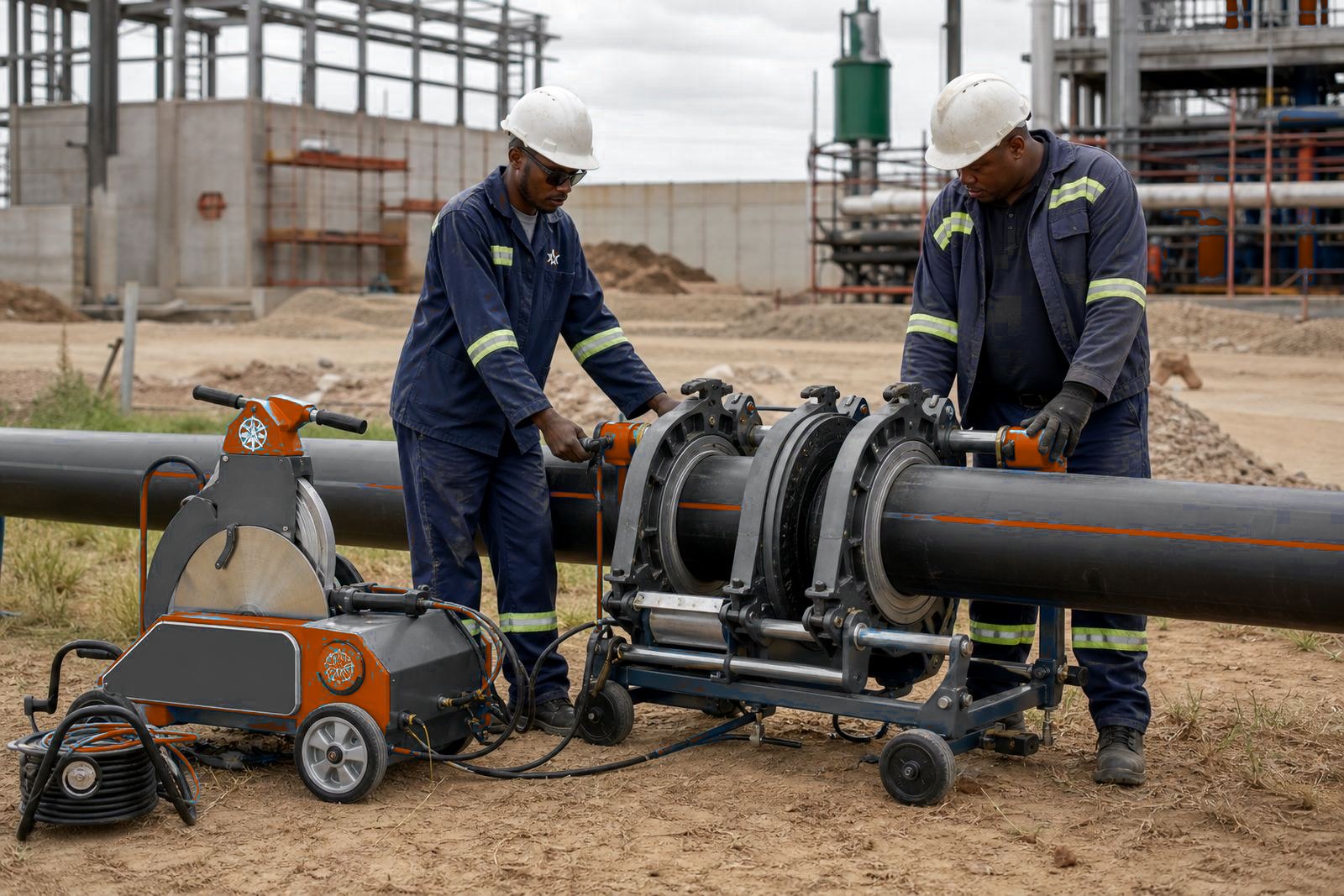
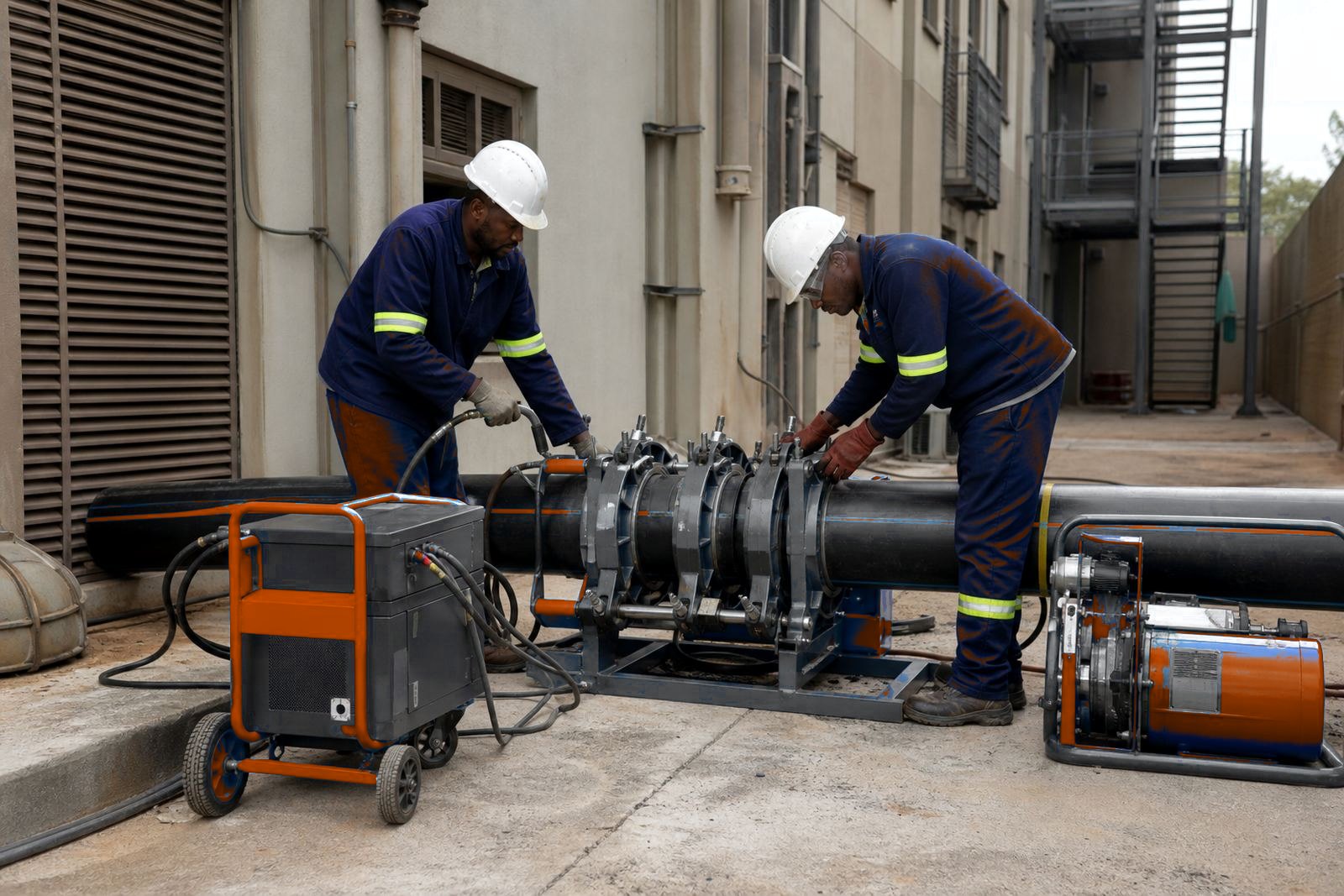
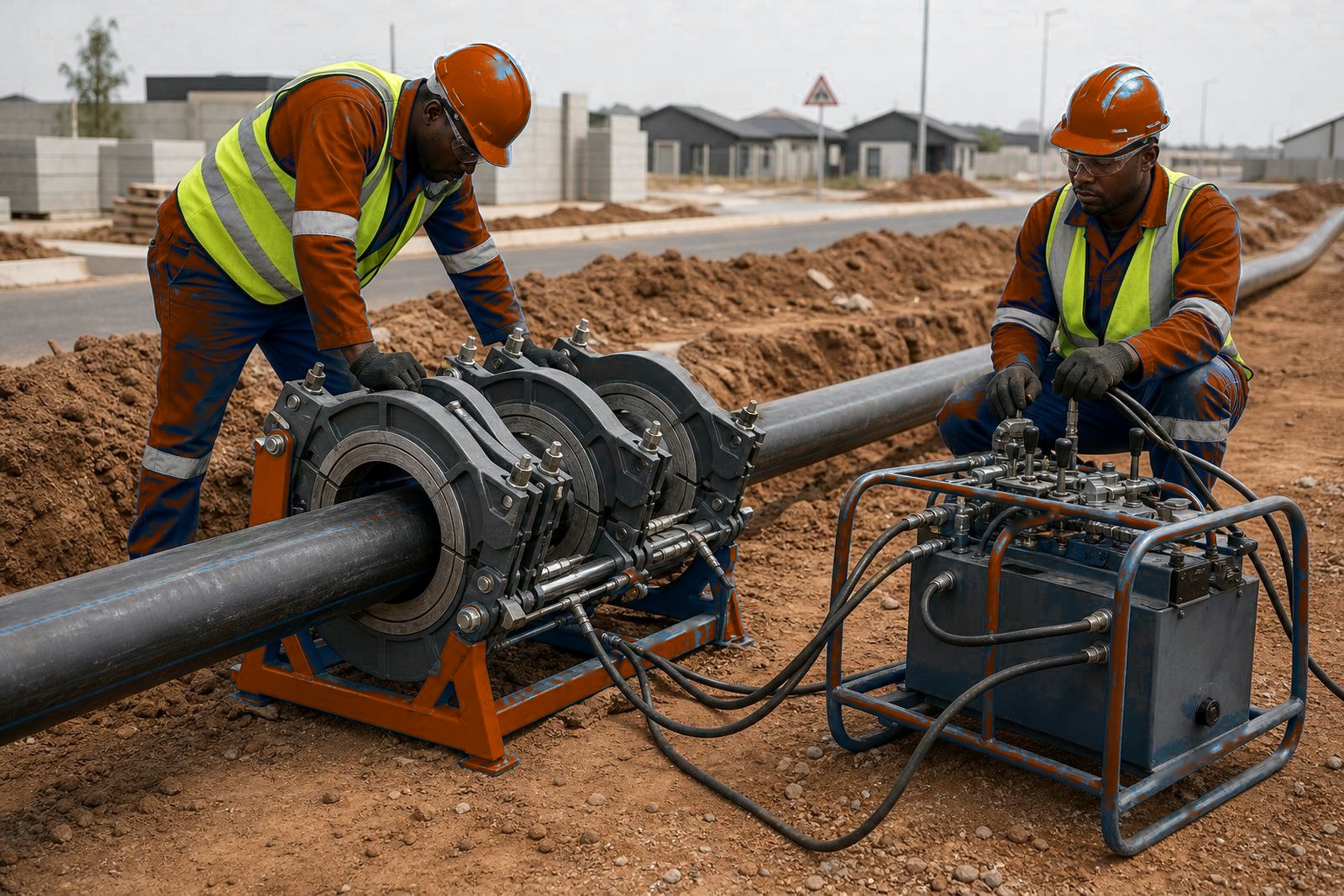
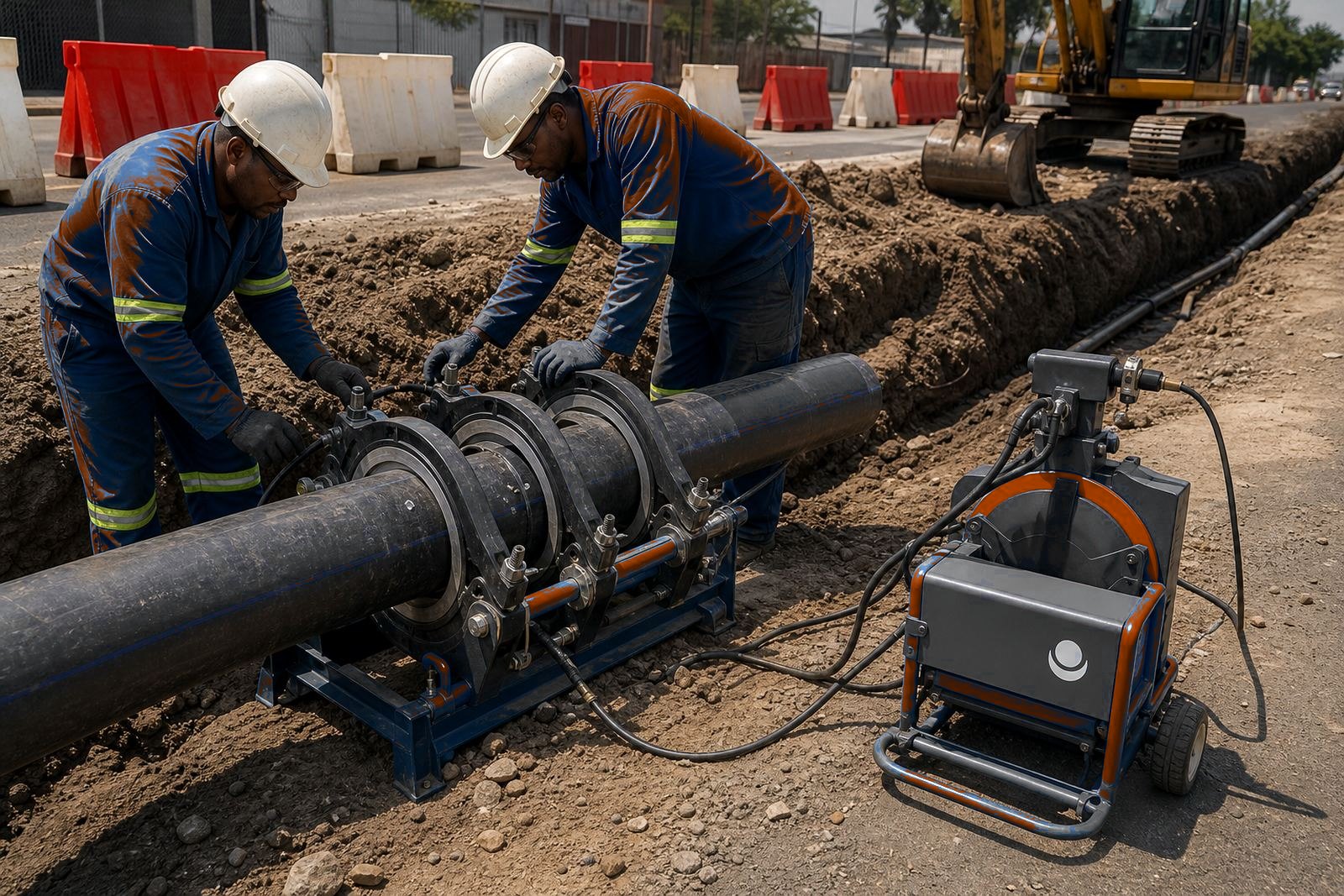
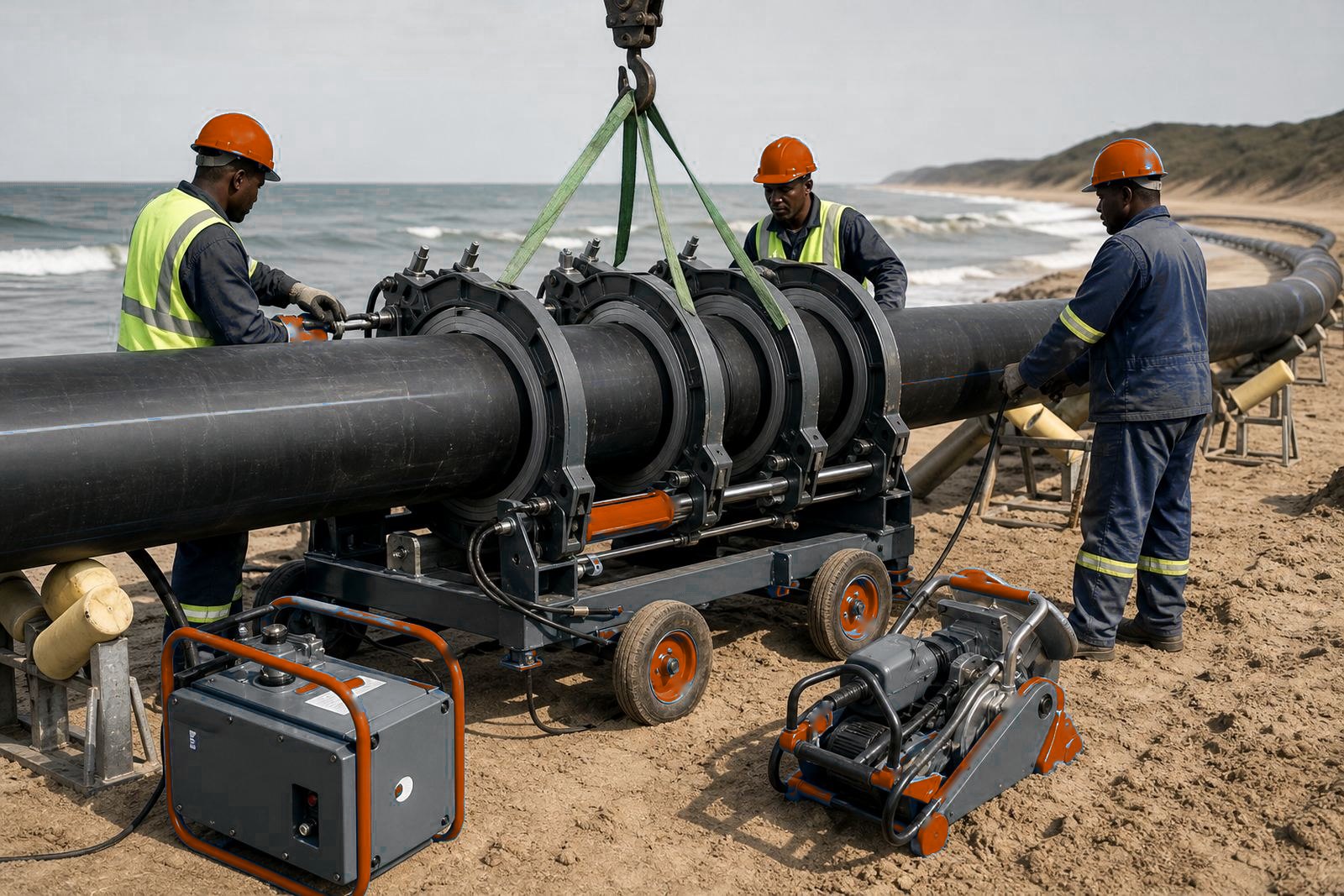
Where butt-fusion sits in the pipe run
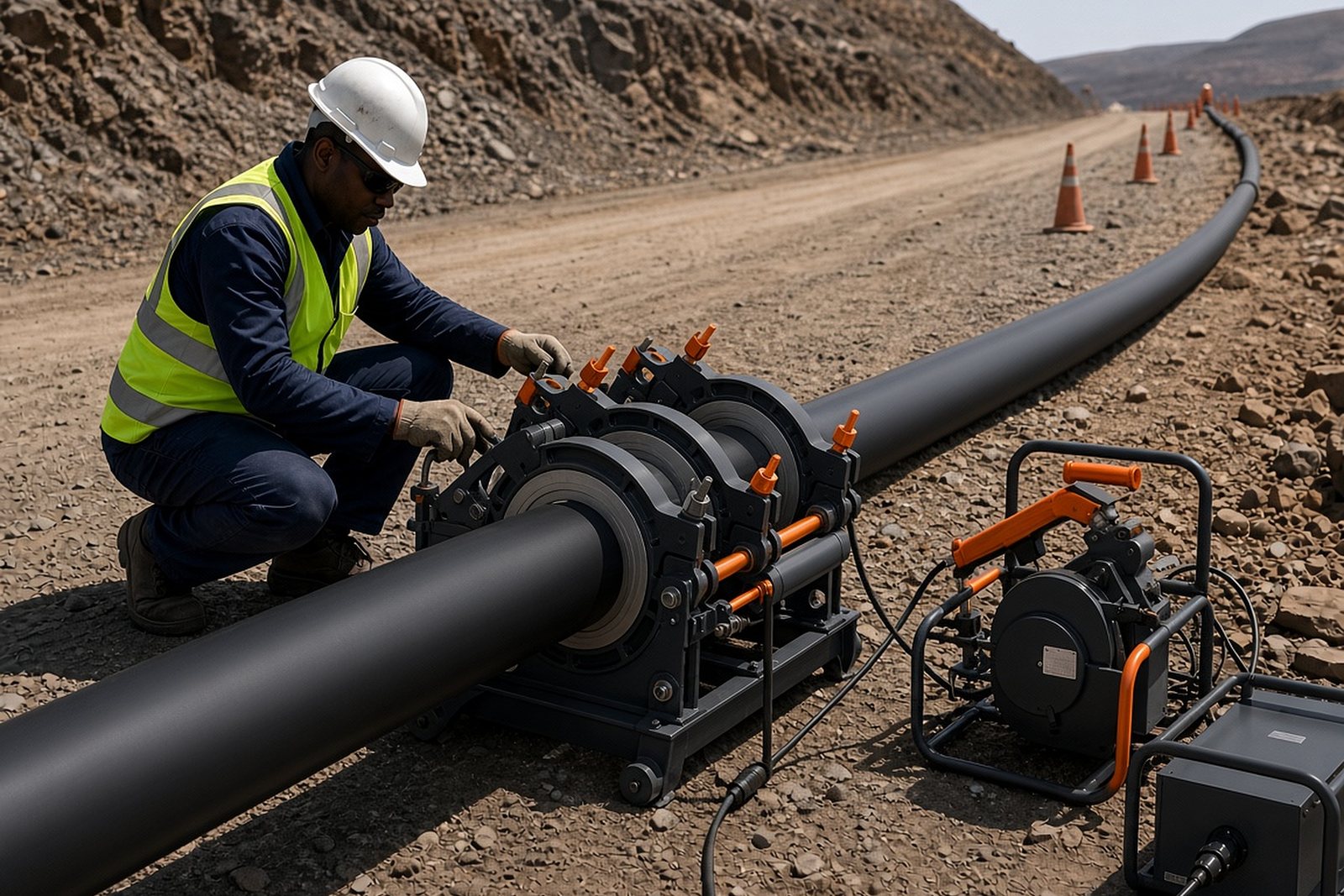
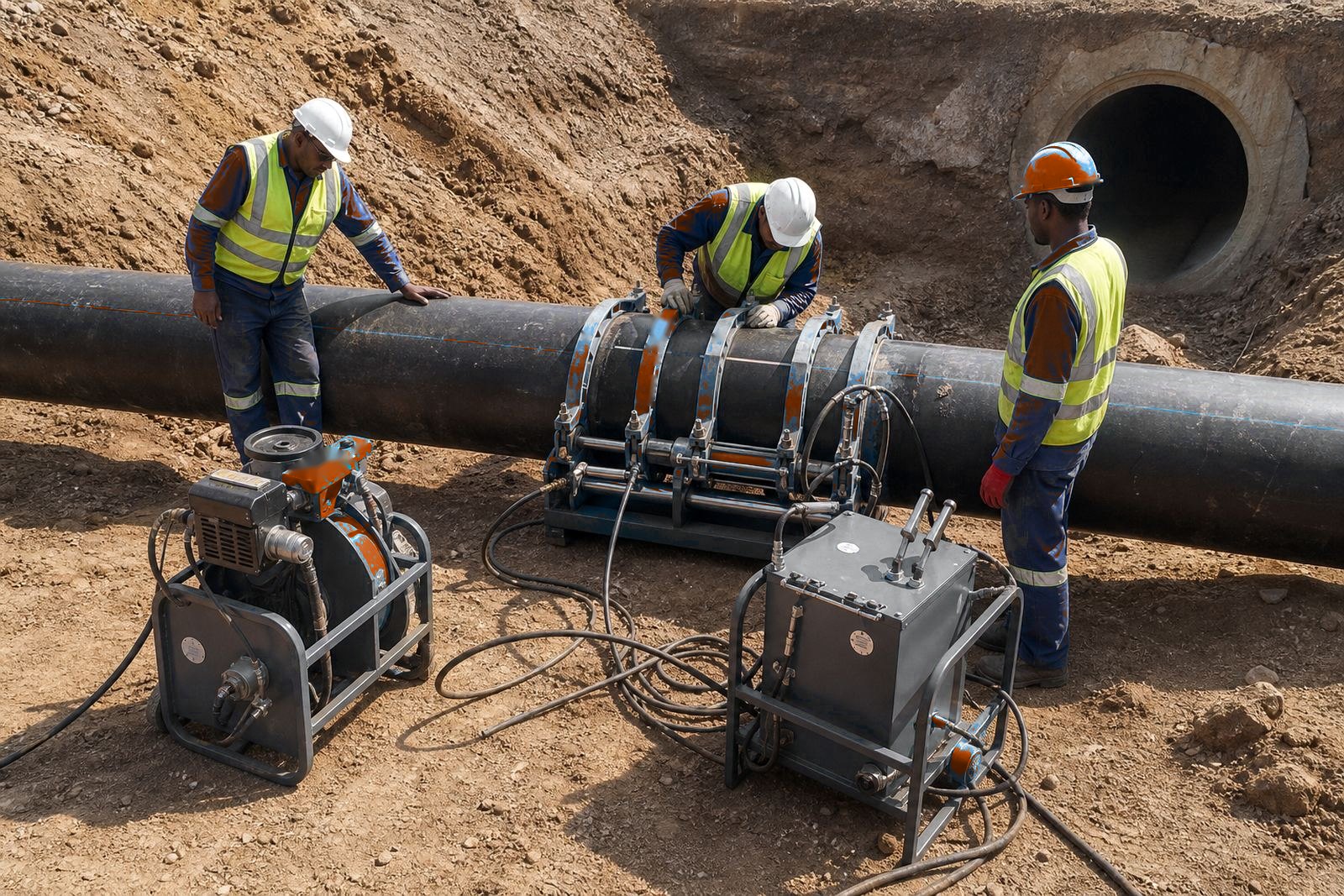
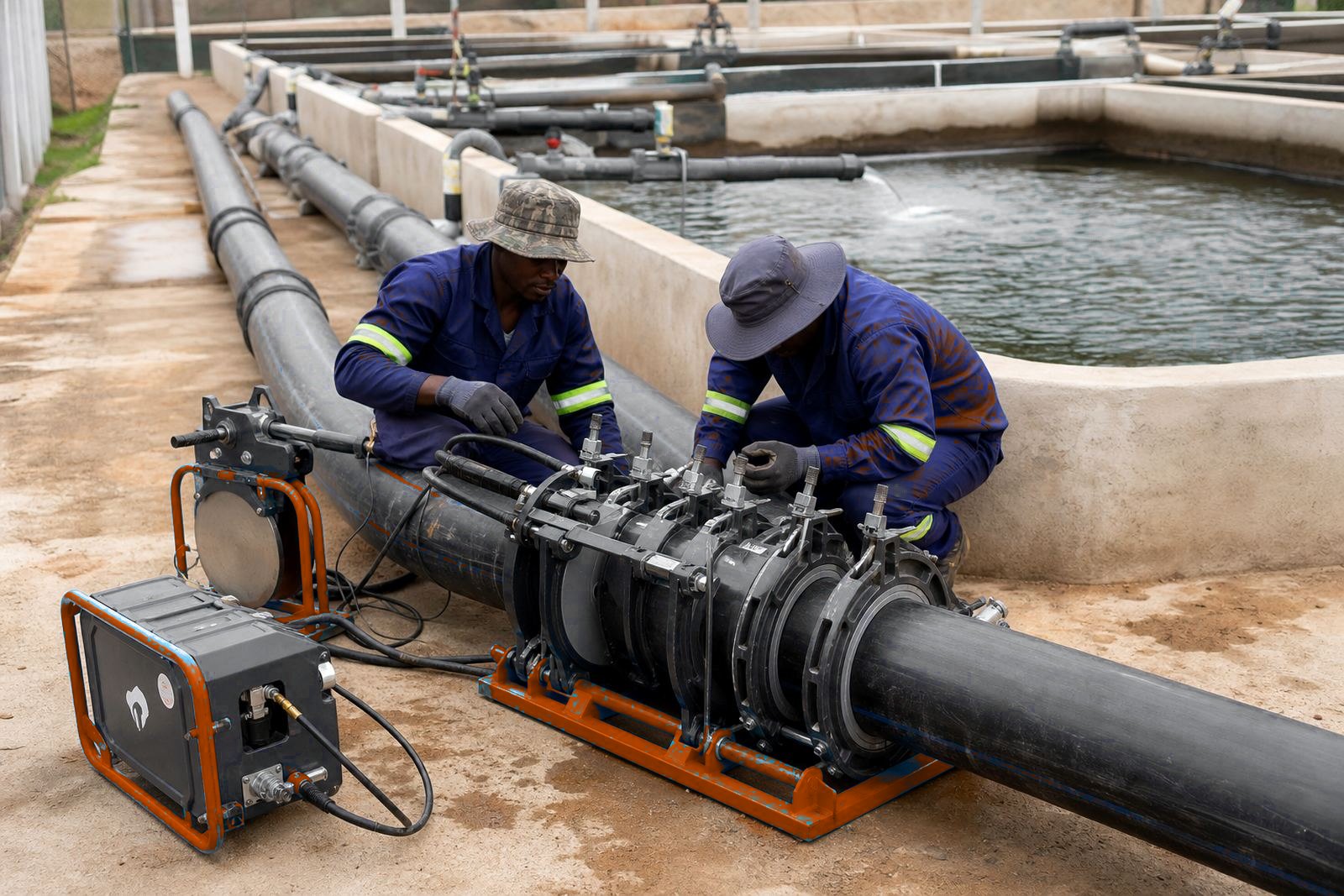
Butt-fusion is used when HDPE pipe sections need a permanent joint that carries water through a clean, aligned line. Correct pipe size, wall thickness and SDR guide the process. If any of those steps drift, the joint can show a poor bead, misalignment or weak fusion.
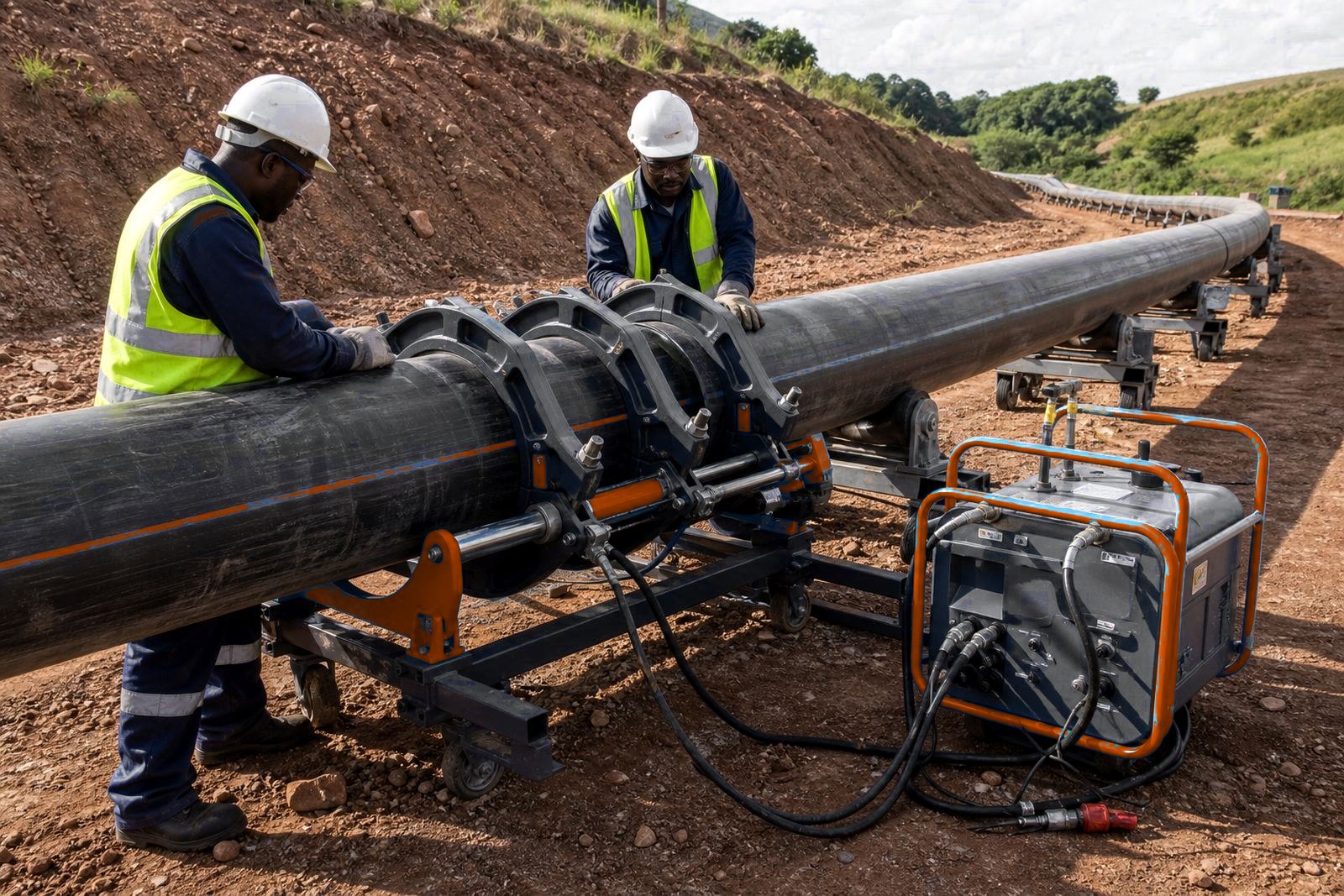
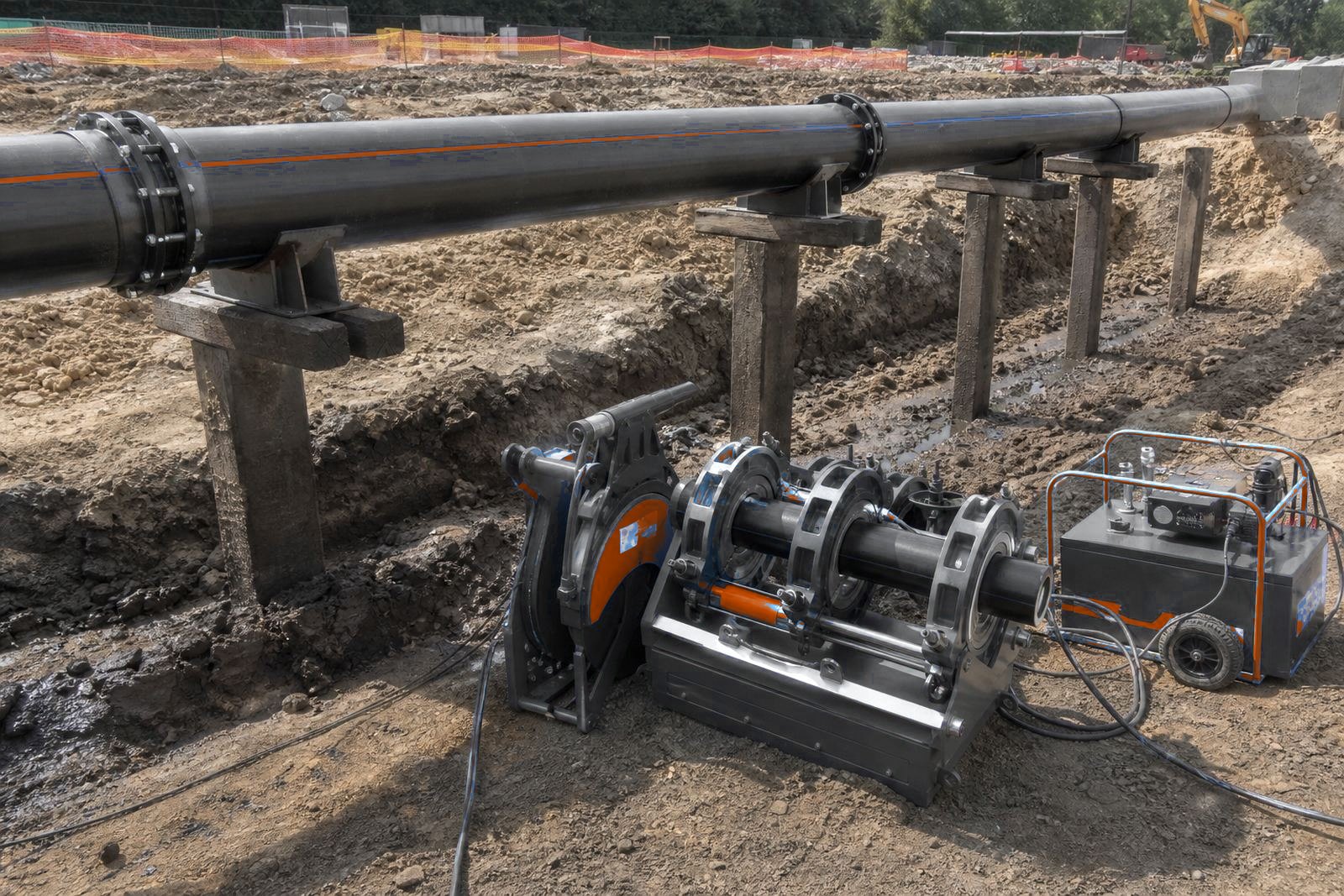
Our work supports teams handling long pipe runs. One setup behaves differently on 110 mm pipe and a far larger line, so clamps, facer and plate are chosen per job.
Jobs that call for the right welding set-up
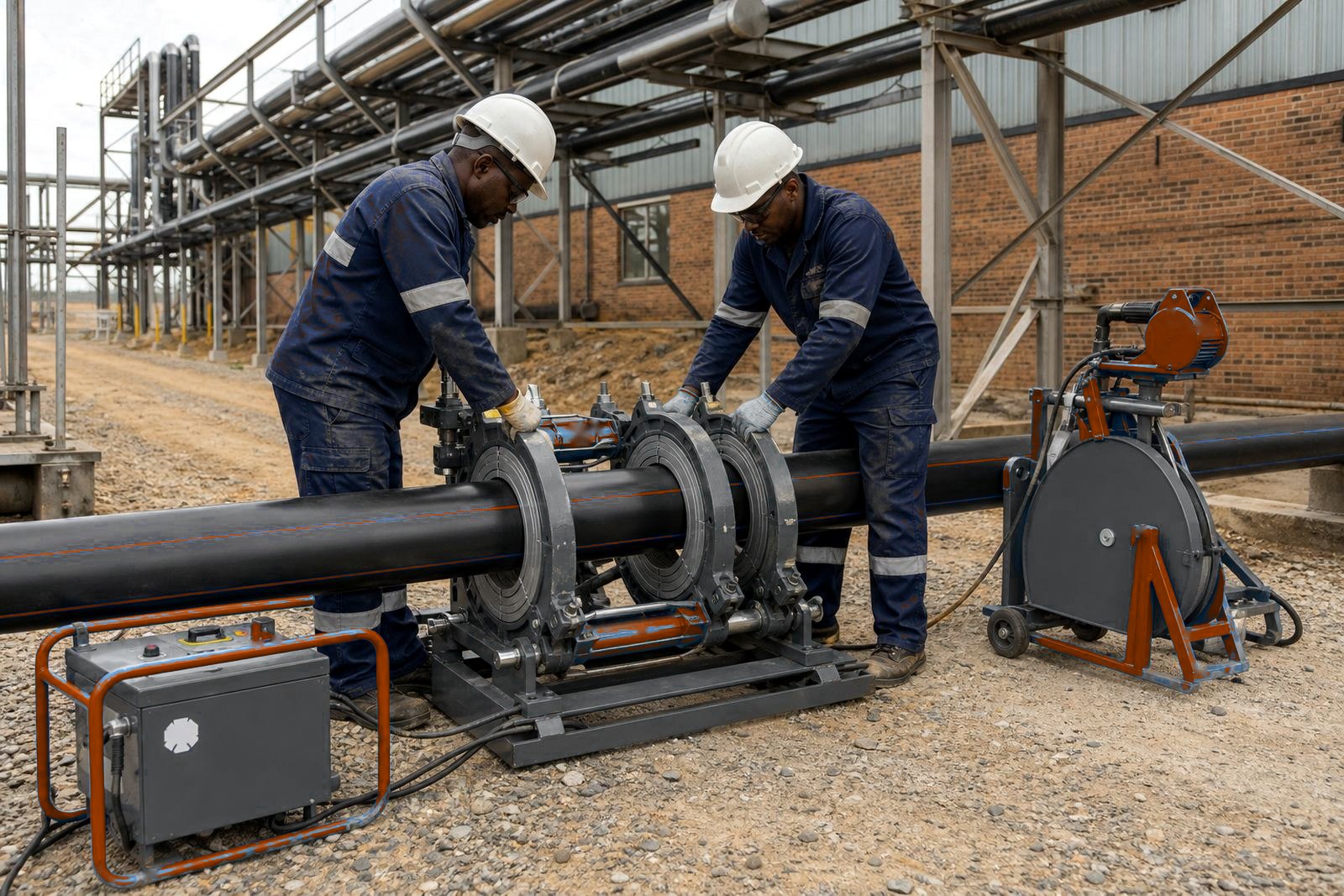
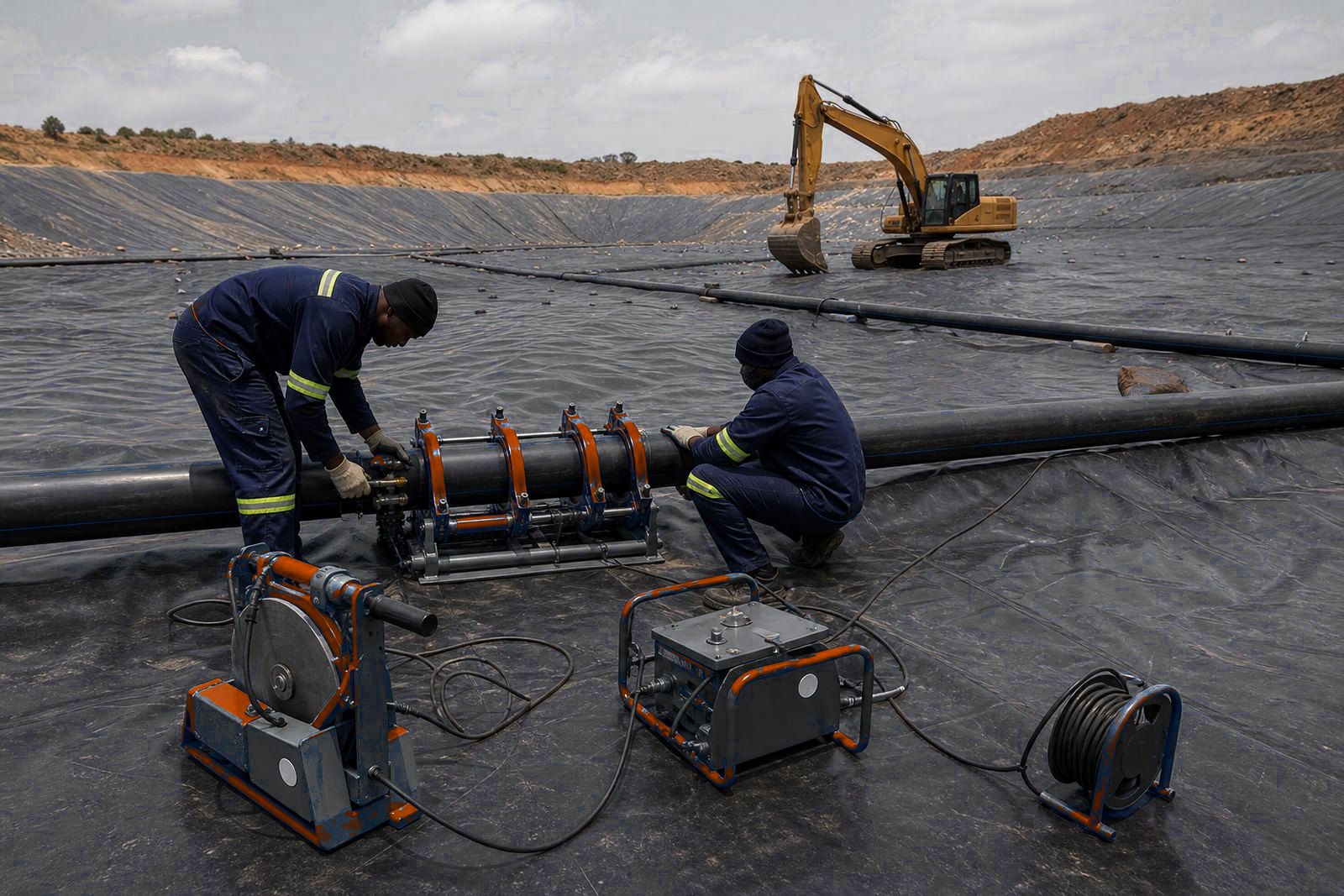
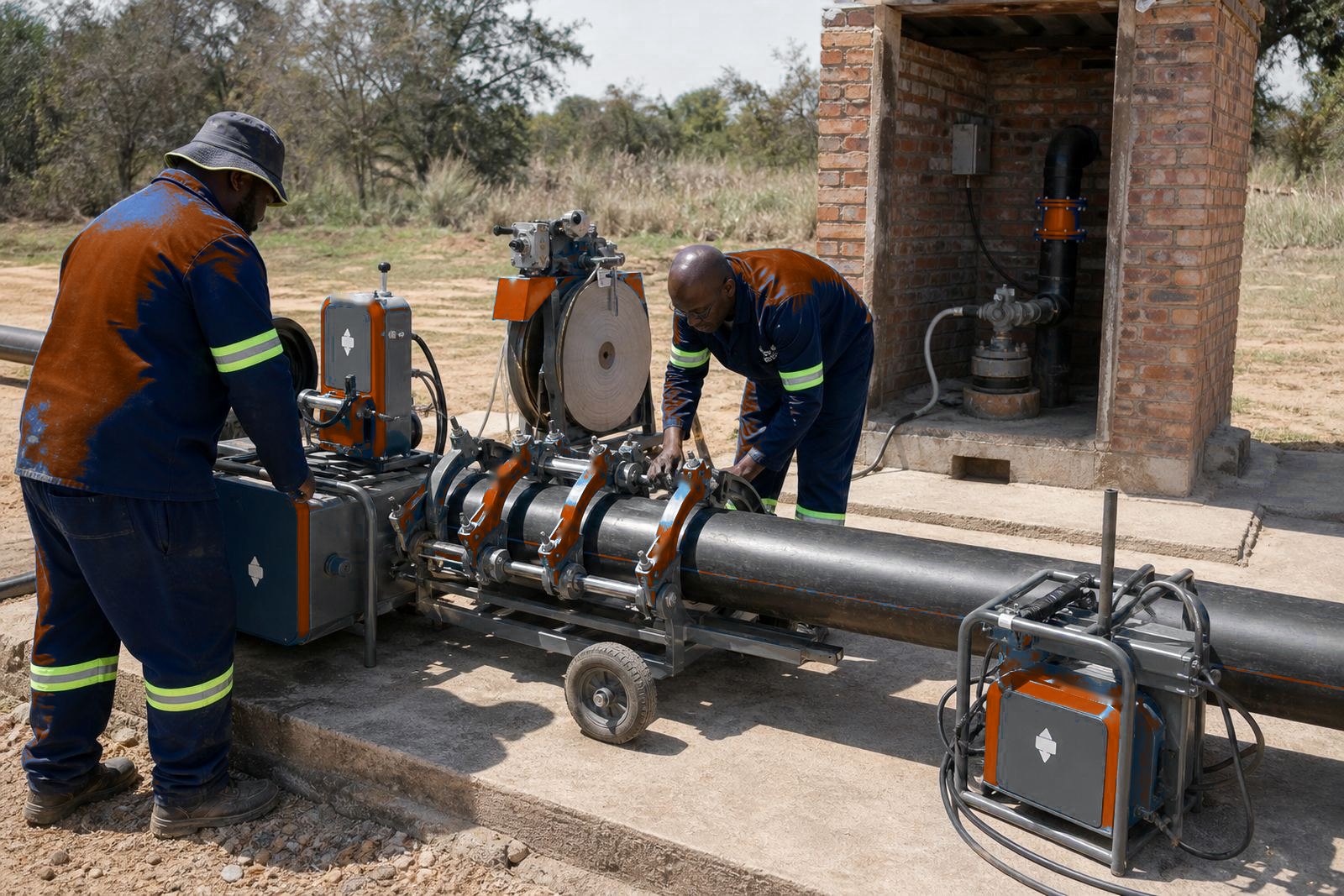
Some pipe work needs a compact machine for tight service yards, while other jobs need heavier gear for longer sections and more demanding site handling. Water reticulation crews often need reliable alignment over repeated joints, and mining crews may work with dust, vibration and pipe movement that makes clamp stability important.
- Slurry and process pipe
- Plant rooms and workshop pipe runs
- Repair joints on straight runs
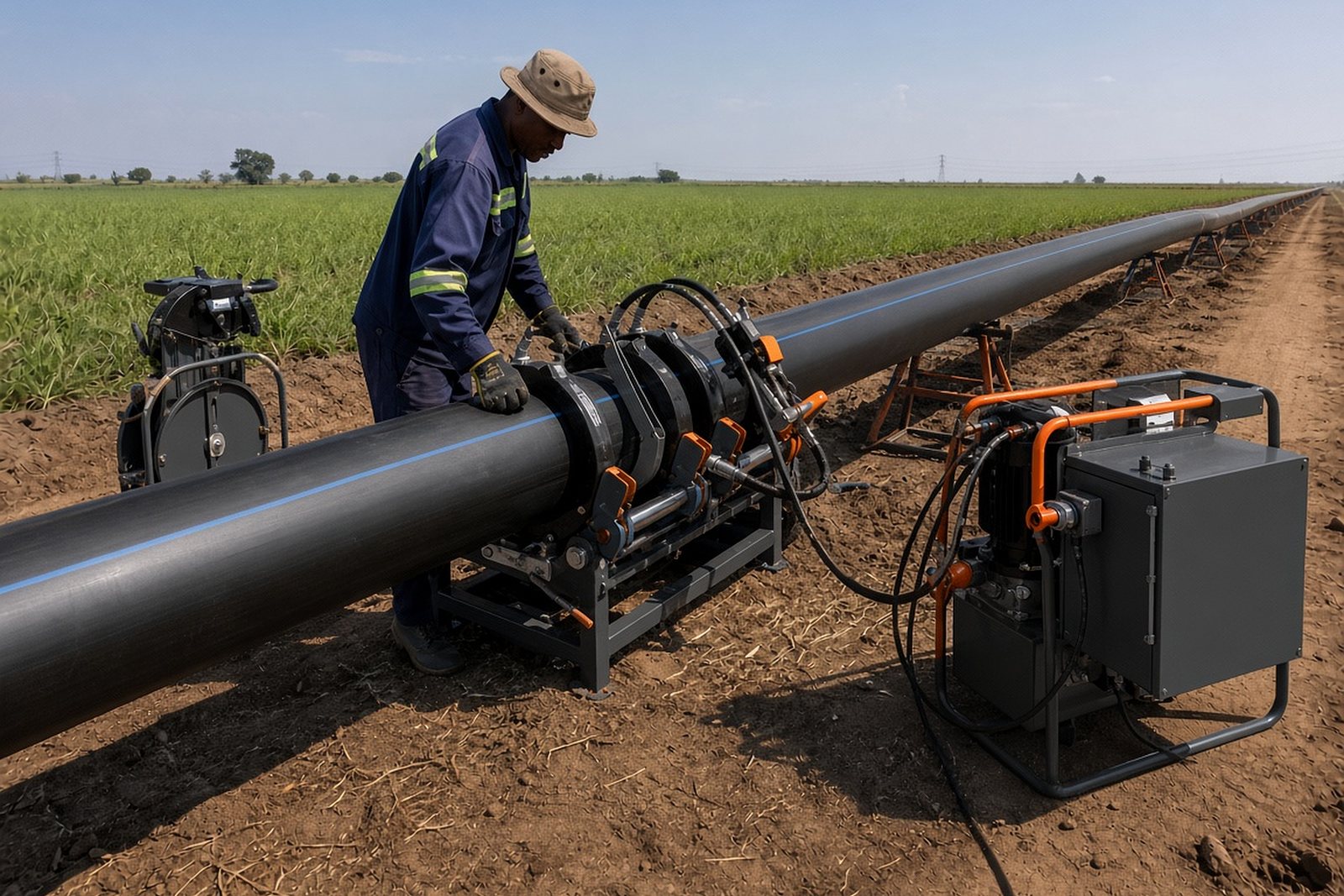
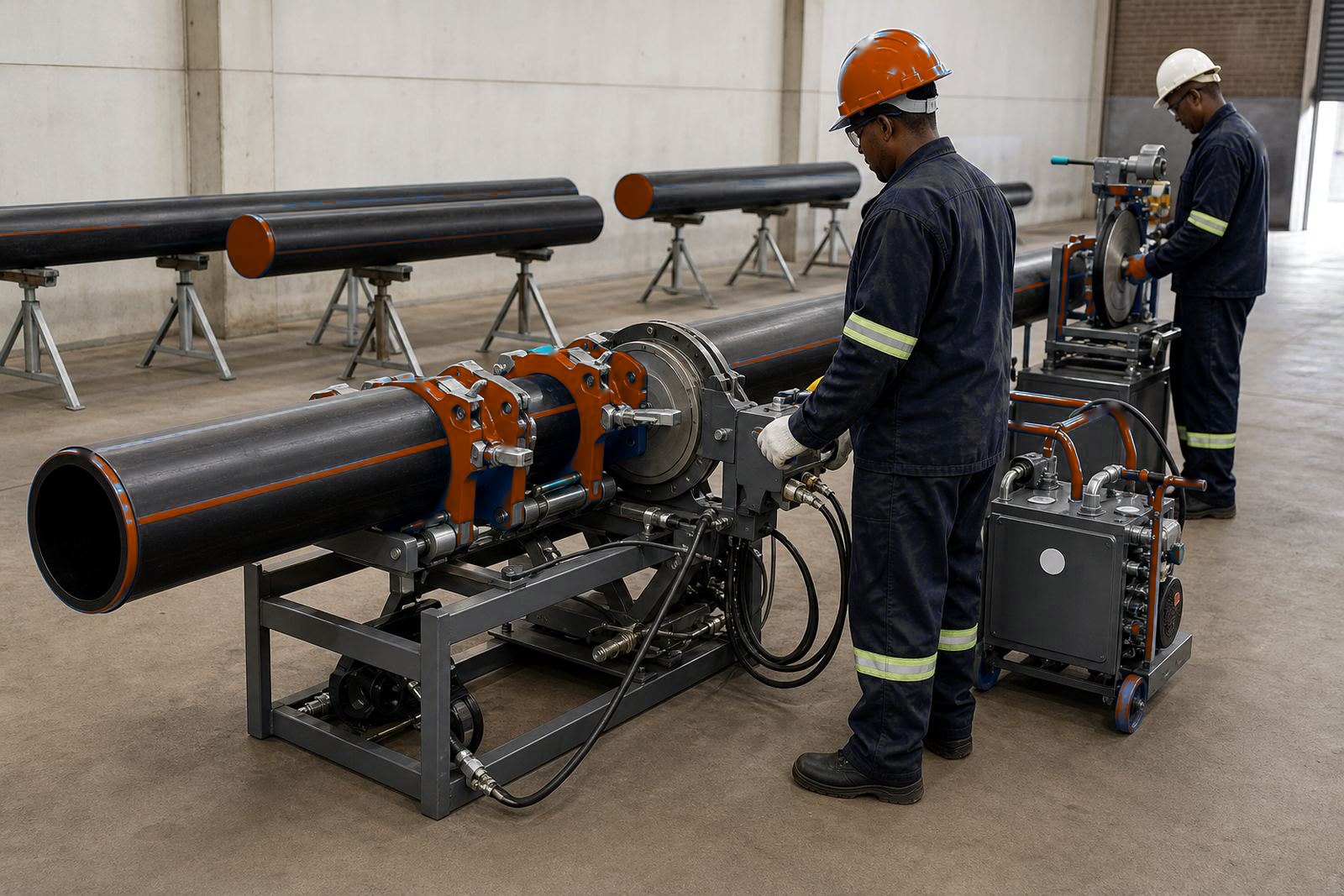
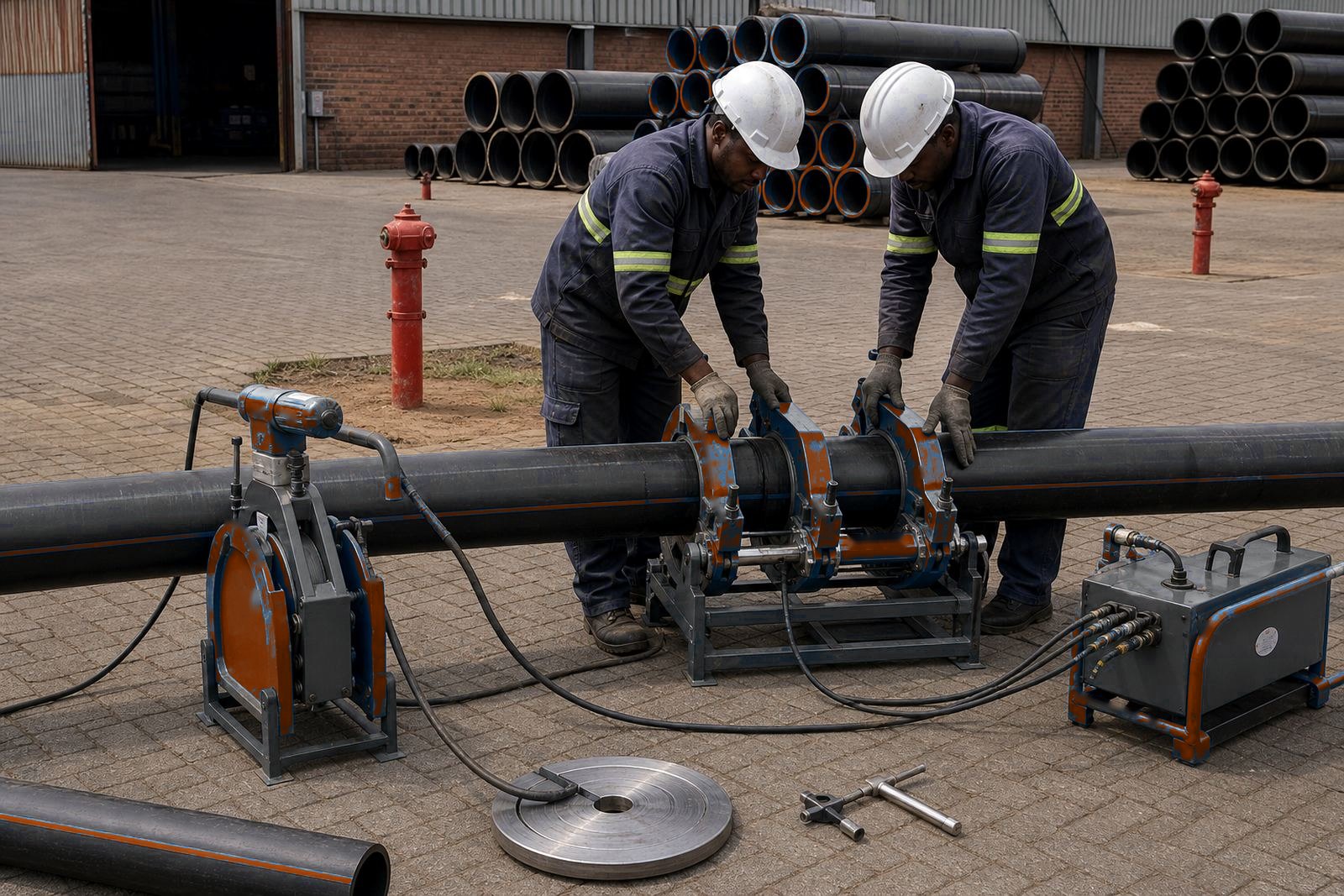
We supply machines, facing tools, heater plates and clamps for these conditions, with hire options when a project needs equipment for a defined period.
What the operator watches during a weld
After the heater plate comes out, the joint is held without disturbance.
Large-diameter crews often record weld data for traceability. Weld records let a later inspection confirm one method was used across a section.
- Facing should leave both ends square and clean
- Fusion pressure should match the pipe and machine setup
Crew teaching matched to each pipe job
Operator training gives new staff one method across mixed pipe sizes and site handovers. We cover the basic sequence of a butt-fusion cycle, machine set-up, clamp alignment, heater plate checks and bead inspection. Refresher sessions are practical for teams that already know the process but want a tighter routine before a new run starts.
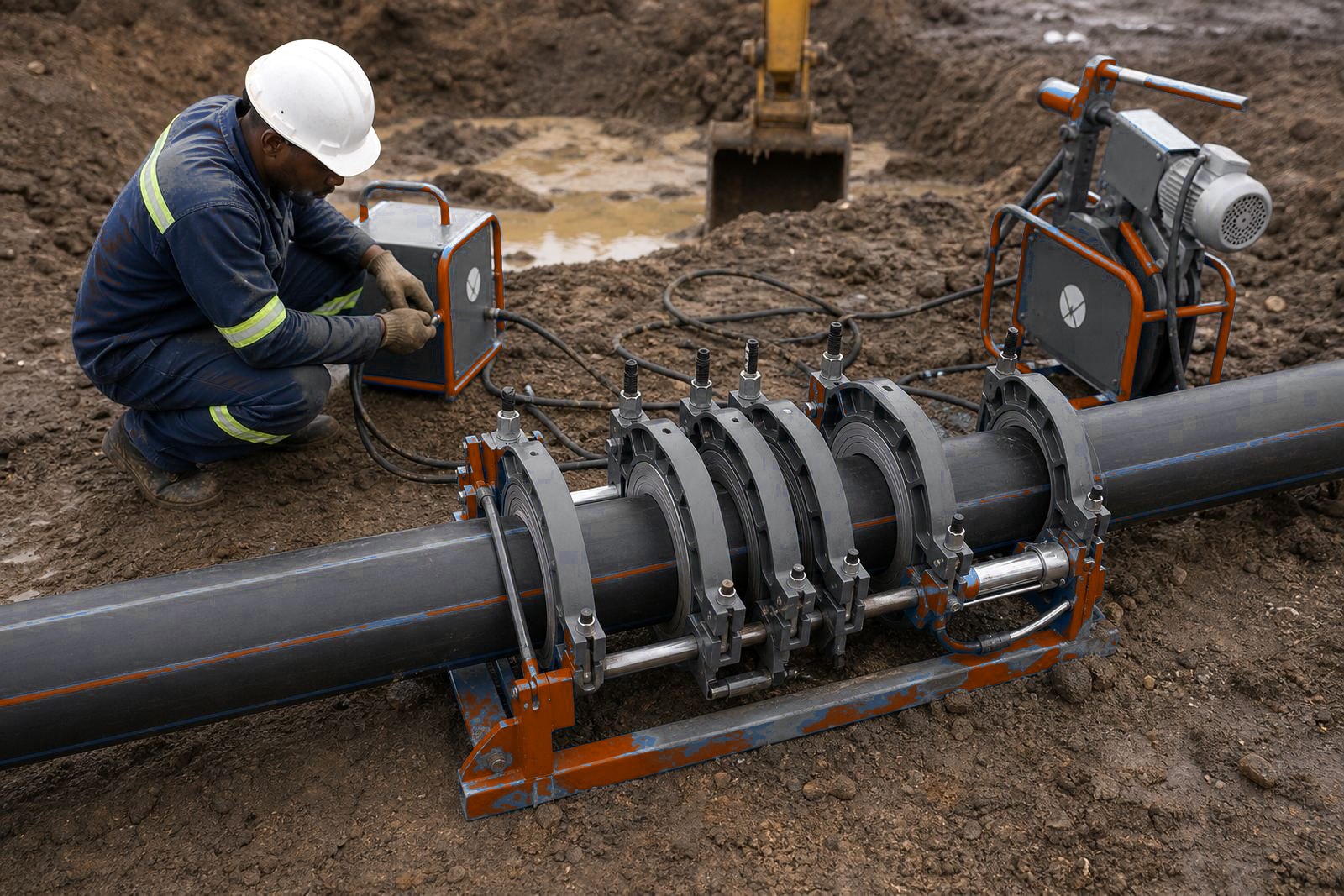
Site startup help can go with the machine when it leaves the workshop for field work. Includes setting the machine on level ground, checking hydraulic pressure, confirming the pipe seating in the clamps and walking through the first weld with the crew.
Backup for crews already on site
Machines working across South Africa pick up wear in the facer, clamps, hoses and hydraulic components. Regular servicing keeps the movement smooth and reduces the chance of a hard pull, uneven face or poor clamp grip. Check the heater plate after it has been stored, moved or used on a long job in dust or coastal humidity.
Packages are put together around pipe size, site access and how much of the welding work stays in-house.
Picking the right support for your pipe work
We plan each job from the joint method, diameter range and site conditions. A short trench line may call for different handling than a coastal installation or a high-dust mining area. Experienced crews may only need refresher training. New or demanding lines are easier to control with startup help on the first welds.
PlasticWelder works with the practical side of the job, from machine selection through to inspection after the weld. Each recommendation starts from the pipe diameter, SDR and access on the job.