Pipework that has to stay clean in wet, busy yards
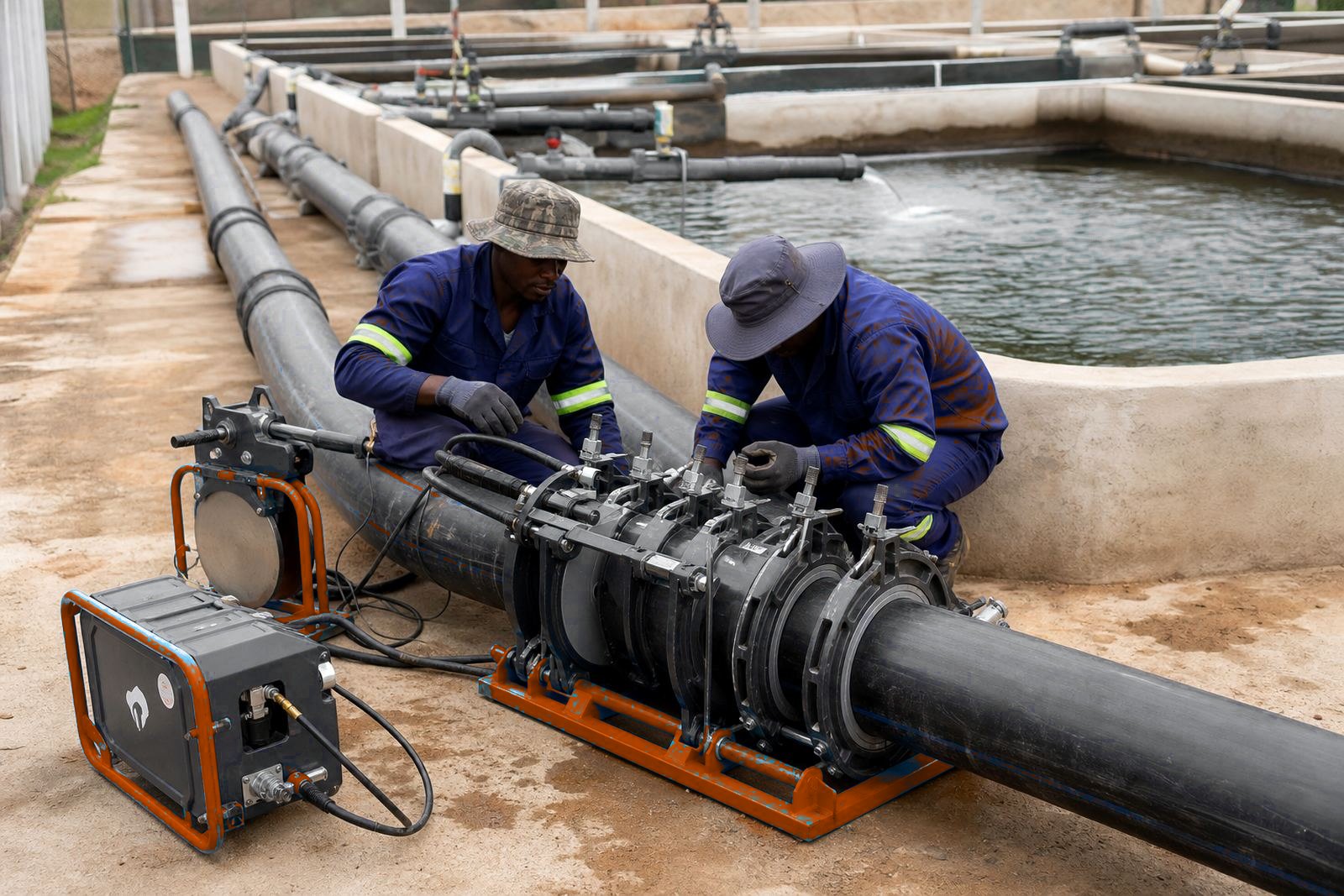
Fish farms, hatcheries and nursery systems put a steady demand on pipework. Water circulation lines, backwash runs, transfer mains and wash-down circuits all need joints that stay aligned and hold under repeated flow changes. HDPE is often used because it copes well with damp conditions, chemical wash-down and the knocks that happen around tanks, channels and bunded areas.
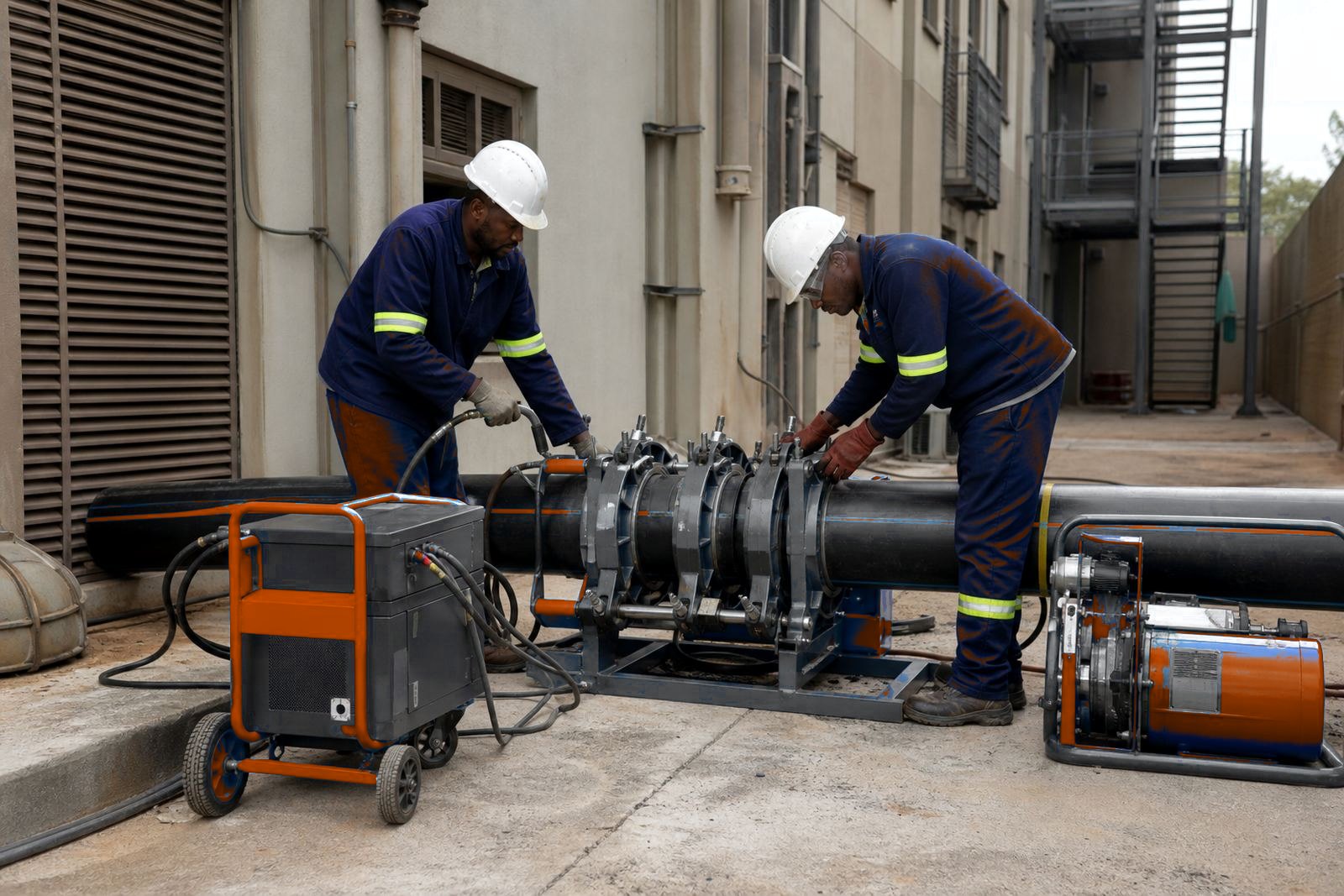
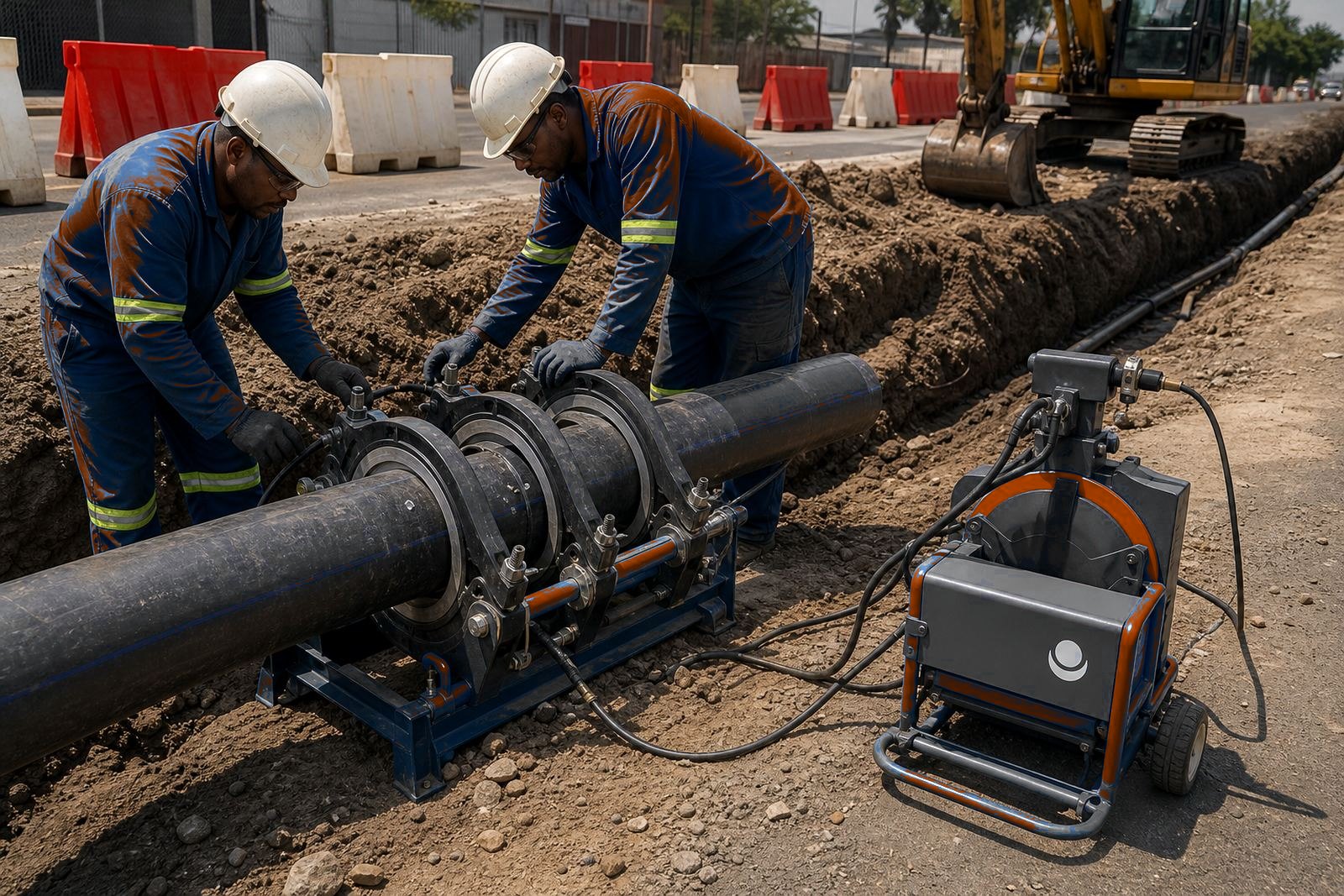
Butt-fusion suits long pipe runs where a leak at a joint would cost time and water. The process joins two pipe ends by facing them square, heating the faces, bringing them together at the right fusion pressure and holding them through the cooling time. On aquaculture work, pipe sizes can shift between headers and branch lines, and SDR choice affects pressure rating and wall thickness.
In coastal towns the air carries more moisture and salt, so pipe storage and handling need a bit more care. Open pipe ends should stay clean and dry, and the joint area needs enough space for proper clamping, facing and bead inspection.
The set-up usually needed on site
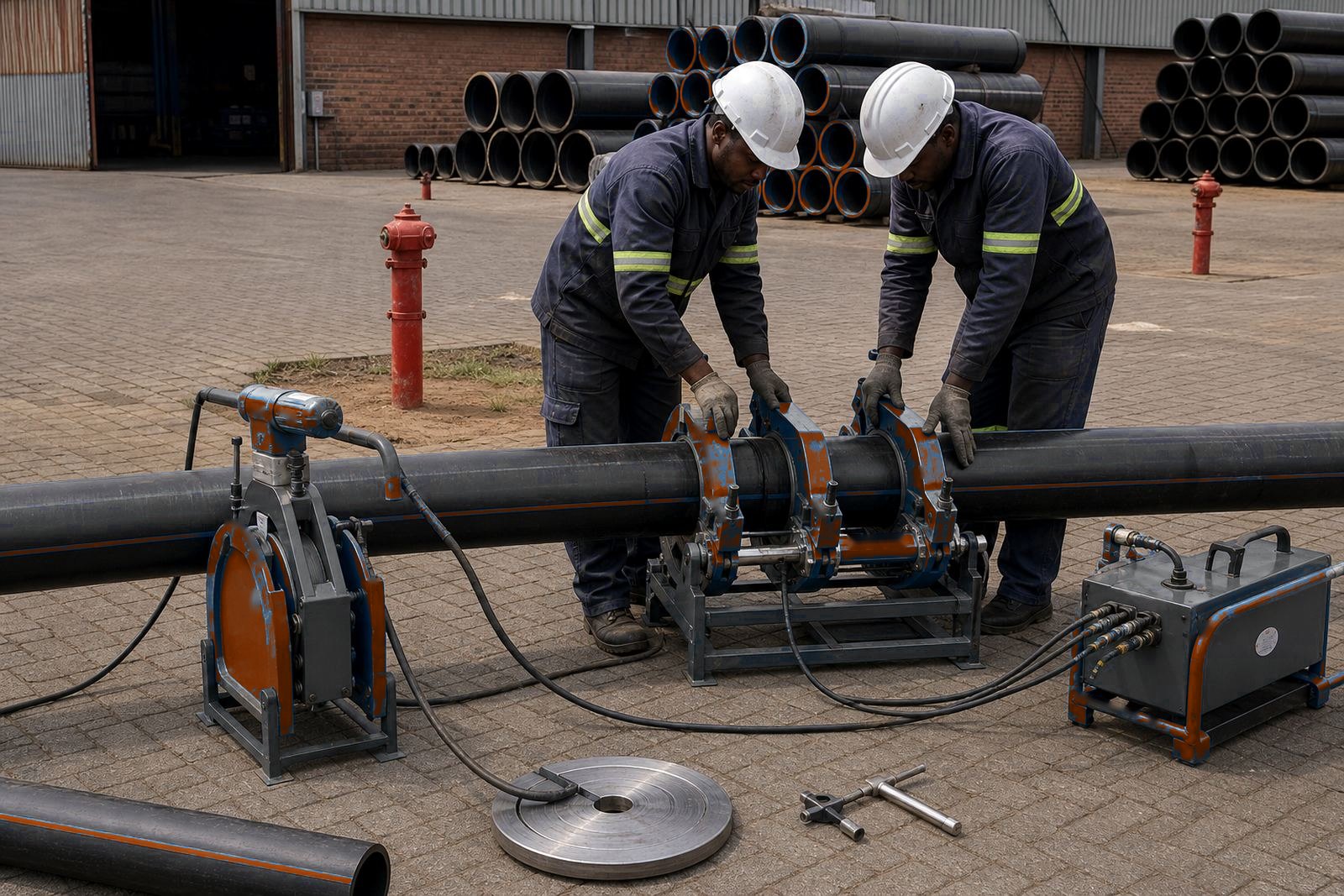
Aquaculture jobs often need a mix of machine sizes and support gear. A compact machine can suit smaller recirculation lines, while larger frames are needed for main distribution pipework or buried runs feeding ponds and treatment areas. Facing tools, heater plates, clamps and insert sets all have a part to play.
- Machine covering the pond and tank-feed diameters.
- Clamps that keep the pipes in line through fusion and cooling
- Hydraulic or mechanical pressure control, depending on the machine
- Joint records for each pond and tank feed weld.
Where pipe routes cross uneven ground, set up a level fusion bench, shade from direct sun and enough clearance for pipe handling when the line is long or the pipe lengths are awkward to swing into place.
Planning the layout before the first weld
Send a plain layout sketch, even if the site is already partly built. Mark the tank positions, valve points, drain routes, pump connection and access space for cleaning. Our team decides where long straight runs suit the job and where fittings and proper restraint handle a change in direction better.
SDR affects how the line behaves when filled, through pressure rating, wall thickness and pipe stiffness. A branch line for clean water distribution may need a different pipe spec from a drain or sludge transfer route. Size and wall thickness set heating and cooling times on fish farm pipe.
Fish farm pipework often runs close to wet floors, splash zones and channels. Keep the joint area clear of mud, standing water and fine grit. Pipe stored in the sun is left to settle before welding so one side is not hotter.
The welding steps that keep joints square
Aquaculture pipework uses the standard butt-fusion sequence, run the same way on every joint. The ends are clamped, faced until clean and square, then checked for full contact. Fusion pressure comes in without jerks, then the joint stays under pressure during cooling so the bead forms evenly.
- Keep the facing cuts clean, with no ragged edge
- Watch for even melt across the full face
- Hold alignment through the changeover
For records on each weld, switch on the machine's logger. Long shifts with several joints in a row make it easier for the crew to spot where settings drift.
Pipe ends that are not square
Most failures on aquaculture pipework come from rushed prep. A pipe end that is not fully square can throw the weld off centre. Dirty faces can trap grit in the joint. Heat and pressure are set from the weld table for each pipe size. These errors are small on the day and expensive later.
Another common problem is poor layout around supports and anchors. Long HDPE runs need anchors placed so thermal movement stays away from the joints. Badly clamped lines near pumps or tank collars let vibration work on the welds. Inspect each bead after cooling, before the line is buried or filled.
On coastal and inland sites alike, keep heater plate checks on the maintenance list. An uneven plate or rough facer cut shows in the joint before any outside sign appears.
Budget bands for South African aquaculture work
For fish farm work, budget for pipe size and joint count. Small circulation lines can be handled with a lighter set-up, while larger mains for pumping and distribution need heavier frames and more handling gear. Travel distance to the farm also changes the overall spend.
For planning, these broad Rand bands are often used as a starting point:
- Hire for smaller fusion sets: about R1 500 to R4 500 per day
- Machines for 250mm pipe and above: about R4 500 to R12 000 per day
- Pen and intake pipe joins: quoted to pipe size and site layout
Many crews compare this range when weighing a short repair, a hatchery tie-in or a full farm run. Fish farm quotes are built from weld count, access around the ponds and the diameter steps across the site.