When a fire water route moves through a busy yard
Fire water mains usually run across hardstand and past workshop blocks where vehicle traffic never really stops. The pipework often sits above ground in places and buried in others, so the welding set-up has to cope with long runs, tight bends and sections that change level without putting side stress into the joint.
Plan the pipe size, SDR and route layout together. A line at one SDR may carry a different pressure rating from the same nominal diameter at another SDR, so base the welding plan on the actual pipe data. Cut lengths, the amount of movement space for the machine and enough room to let the joint cool without being bumped by forklifts or service crews all need to be planned in.
For fire water networks the weld log is handed over with the line. A record of pipe size, material batch, machine setting, heater temperature, fusion pressure and cooling time helps the contractor show how each section was done. On a large yard, several teams may have worked different sections over a few days, and the log shows who did which.
The machine set that suits a depot line
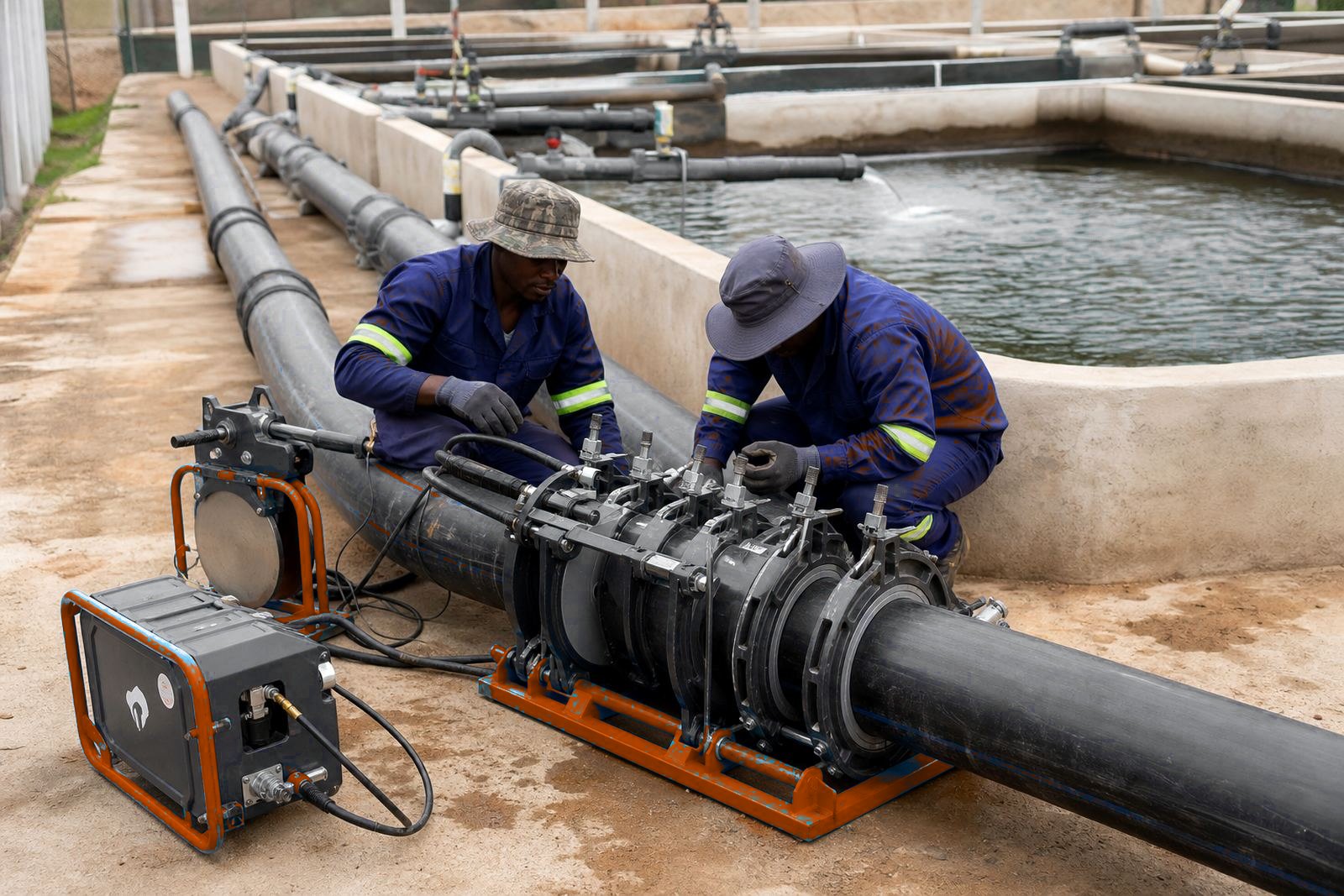
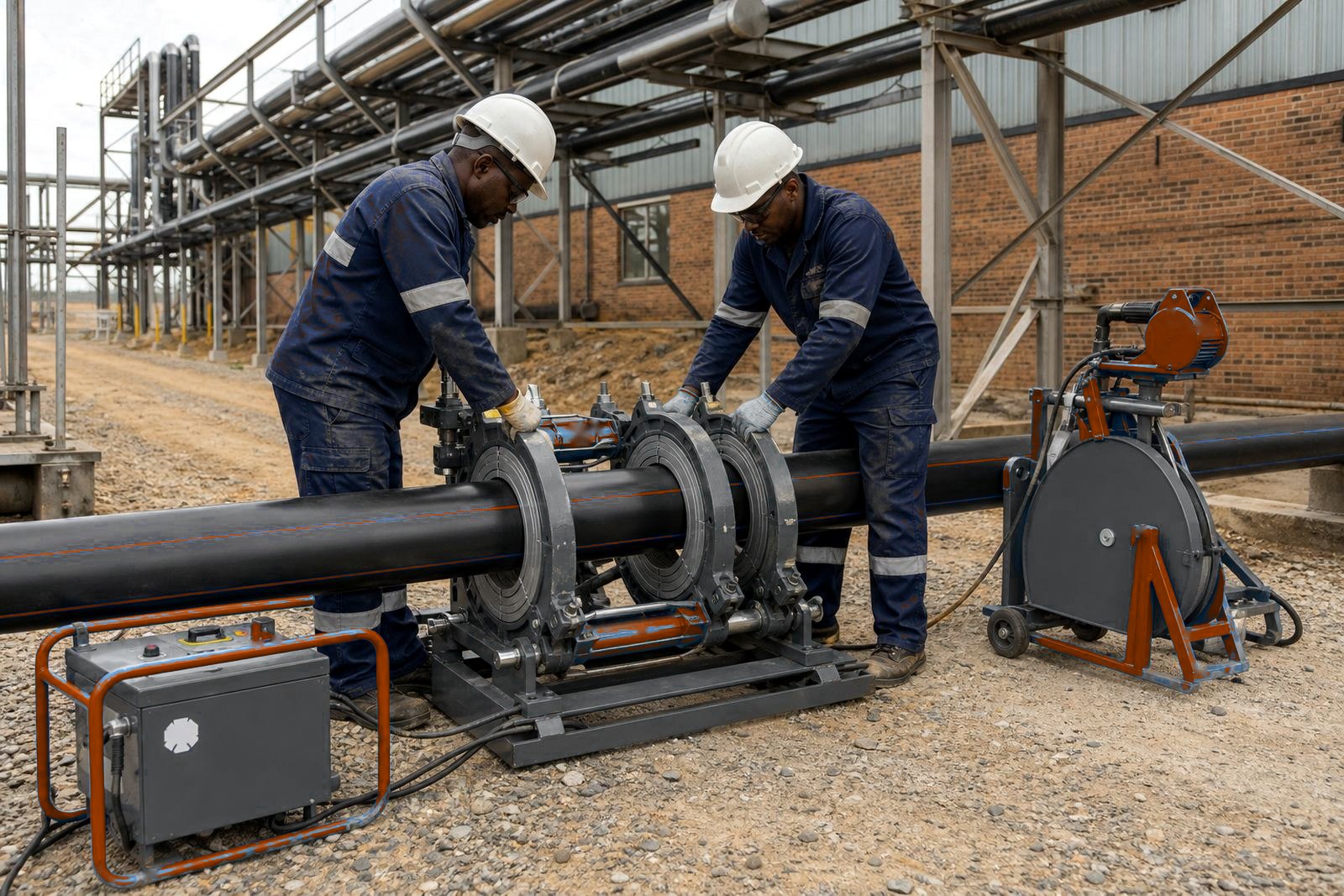
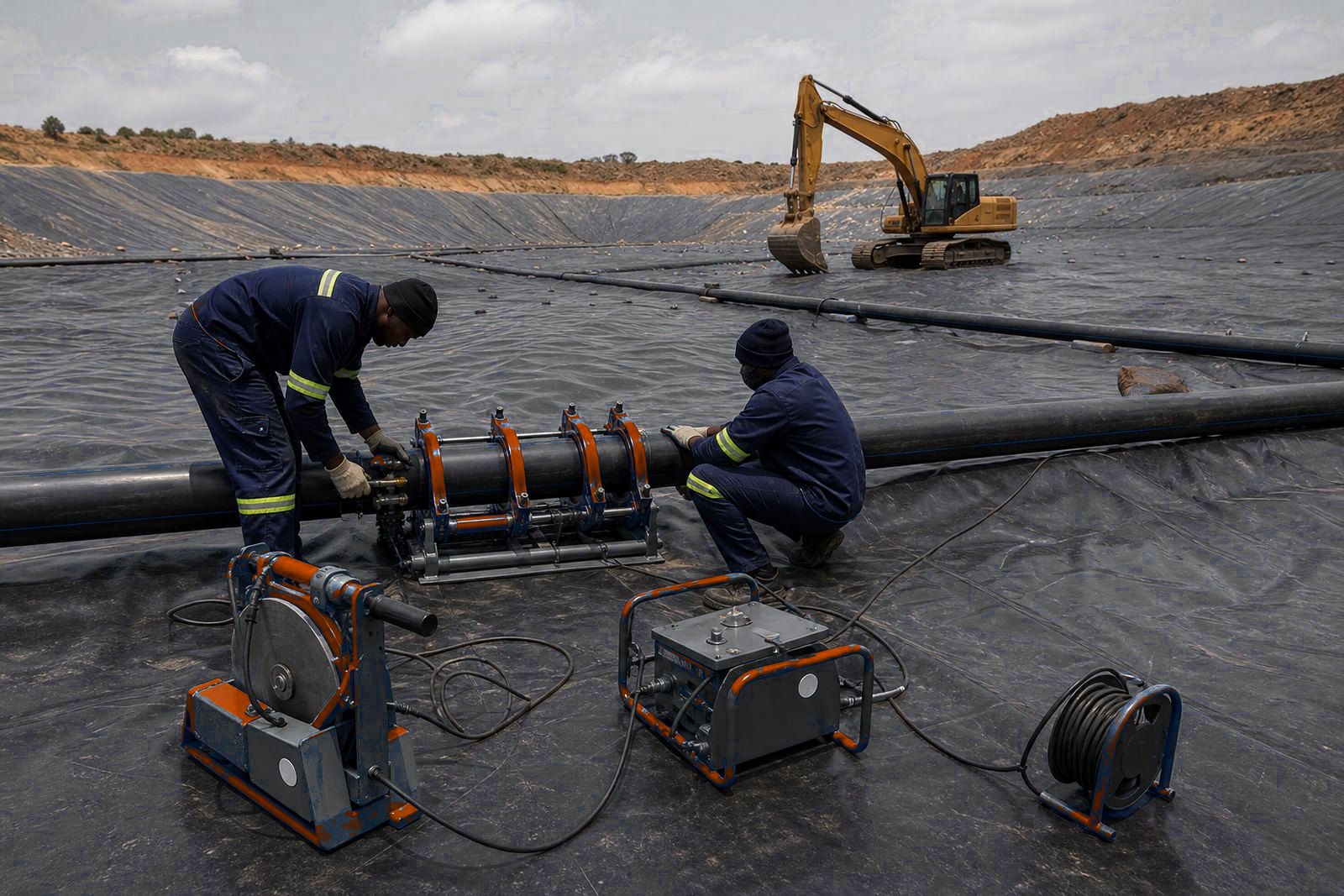
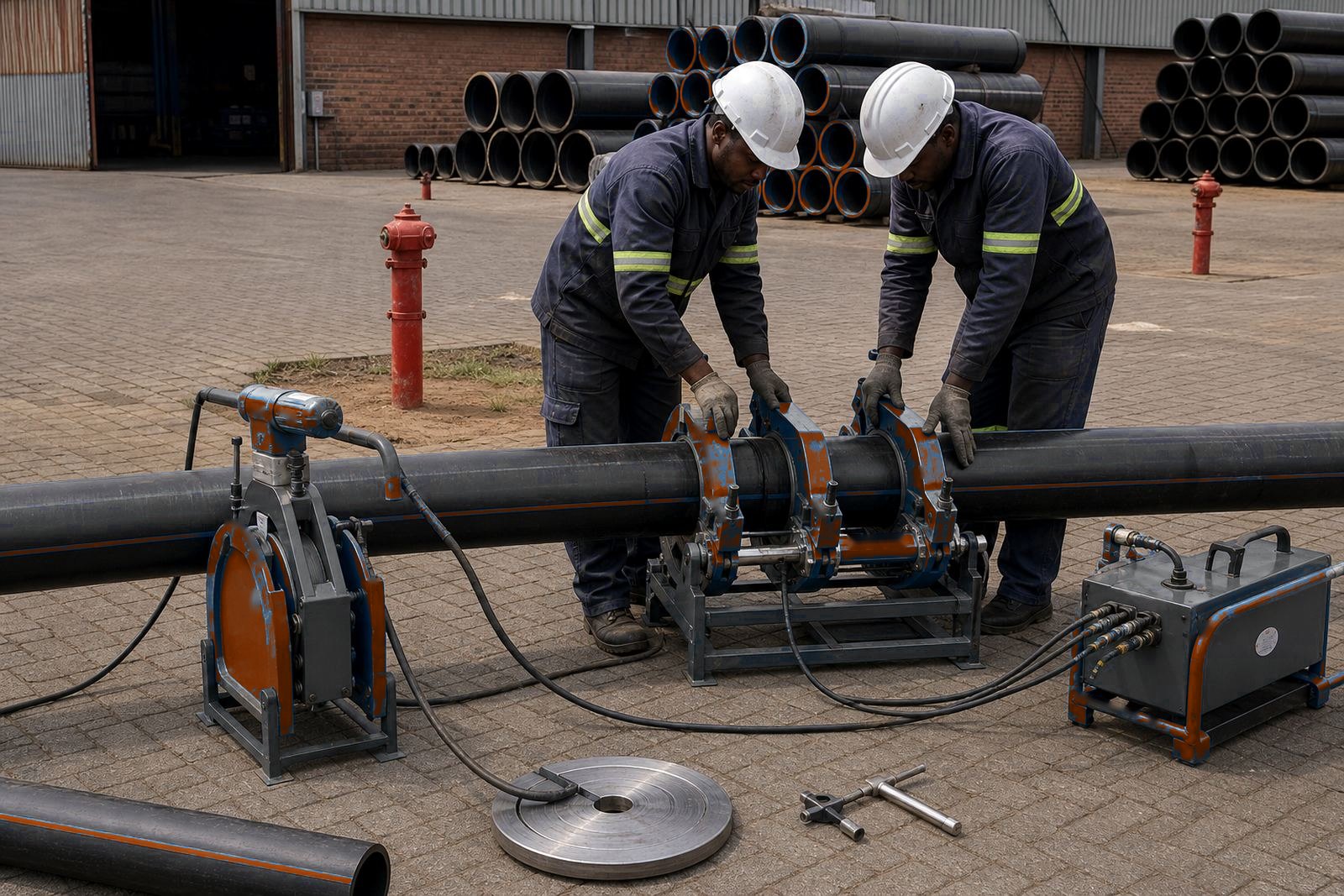
A typical fire water weld set includes a butt-fusion machine with clamps, a facer, a heater plate, pipe supports and a generator or mains connection where site power is available. Large fire mains need a frame with solid alignment and enough clamp force to keep ends square. Smaller lines still need the same care, only with lighter tooling and faster handling.
For many industrial routes the practical kit also includes spare jaws, inserts, clean lint-free cloths, marking tools and a log sheet pack for recording the weld sequence. If the route includes frequent valve chambers or skid connections, short extension pieces and extra supports help the operator keep the pipe ends in line before changeover.
- Clamps and inserts matched to the pipe outside diameter
- Pipe stands for straight alignment on long runs
Room for the machine to open and close
The best fire water installs leave enough room for the machine to open, face, heat and close without the pipe being forced sideways. On a cramped route, support the pipe so the trench, a wall edge or a badly placed support does not pull it off line. Near pump houses and manifolds, map the sequence first, then weld the sections that will be hardest to move once they are fused.
In coastal areas like Durban and Cape Town, humidity and salt air leave surfaces damp or dusty within hours. Fire water pipe ends and the heater face are cleaned before each joint. In heavy yards, the bigger issue is grit, vibration and vehicle movement, so the route should be set out with physical protection around fresh joints until they have cooled properly.
Fire water routes also need a practical plan for changeover. Once facing is complete, the operator has to move from open pipe ends to heater contact and then into fusion pressure without dragging or twisting the section. Large fire mains may need extra hands or mechanical support at changeover.
What a sound butt-fusion cycle looks like on site
Fire water joints need square pipe ends and a clean facer pass. The pipe is clamped, faced until both ends are even and then checked before the heater plate is brought in. After heating, the operator removes the plate, brings the ends together at the correct changeover moment and holds the fusion pressure steady while the bead forms evenly around the circumference.
Leave the joint in the clamps for the whole cooling period. Fire water systems often run long distances, so one bad joint can complicate pressure testing and create unnecessary rework on a route that already had limited access.
A very small slip in alignment can be visible there before it turns into a larger problem at test stage. Good weld logging makes that inspection easier because the operator can compare the recorded settings with the actual joint result.
Training for fire-water crews
Fire water networks are often built by crews who know steel pipe, but HDPE butt fusion has its own rhythm. Training covers machine set-up, facing, heating, pressure control, cooling time, bead inspection and keeping the joint clean and square from start to finish. Agreed settings mean fewer joints cut out later.
Refresher training tightens the method for teams already welding fire mains. Included are clamp alignment checks, heater plate condition, facer condition and the way weld logs are filled in. For contractors scaling up a fire water package, site startup help covers the first few welds while the route is still being organised.
- Startup support for new fire main routes and first shifts.
- Fire system records and handover packs from our logging help.
Budget bands for fire water work in Rand
We quote fire water welding by diameter range, machine frame size, hire or purchase, and the logging and support needed. A small route for lighter diameters can sit in a much lower range than a yard installation carrying larger pipe and heavier clamping gear. A contractor doing repeated work across several sites may also need a hire package while the permanent fleet is being built.
As a rough planning guide, hire for smaller butt-fusion sets may start in the lower thousands of Rand per period, while larger site machines, facing tools and support gear move into higher ranges. Heater plate checks are usually priced separately because they depend on the condition of the equipment. Spares support should also be included if the job is moving between branches or sites.
For a firm quote, the pipe diameter range, SDR, route length and whether the work is in one yard or across several depots all shape the final figure. Fire water quotes depend on access, transport and machine size, so a short urban job and a long rural run are quoted differently.