Cooling water runs that need clean fusion joints
Industrial cooling lines are often laid through plant rooms, service corridors, pipe racks and outdoor utility areas where HDPE pipe has to hold alignment over long runs. The work usually involves chilled water loops, process cooling return lines and transfer pipework feeding towers, pumps or heat exchangers. Each joint must be straight, full-face and repeatable, because a poor fusion affects flow, pressure and maintenance access later.
Most teams ask for butt-fusion because it suits larger diameters and long pipe routes with fewer mechanical joints. For a job check, we need the pipe diameter, wall thickness, SDR, available working length and the route through the plant. In many cases the line is 63 mm to 315 mm, though larger cooling circuits use bigger sizes, depending on the layout and handling gear.
The equipment set that keeps the line steady
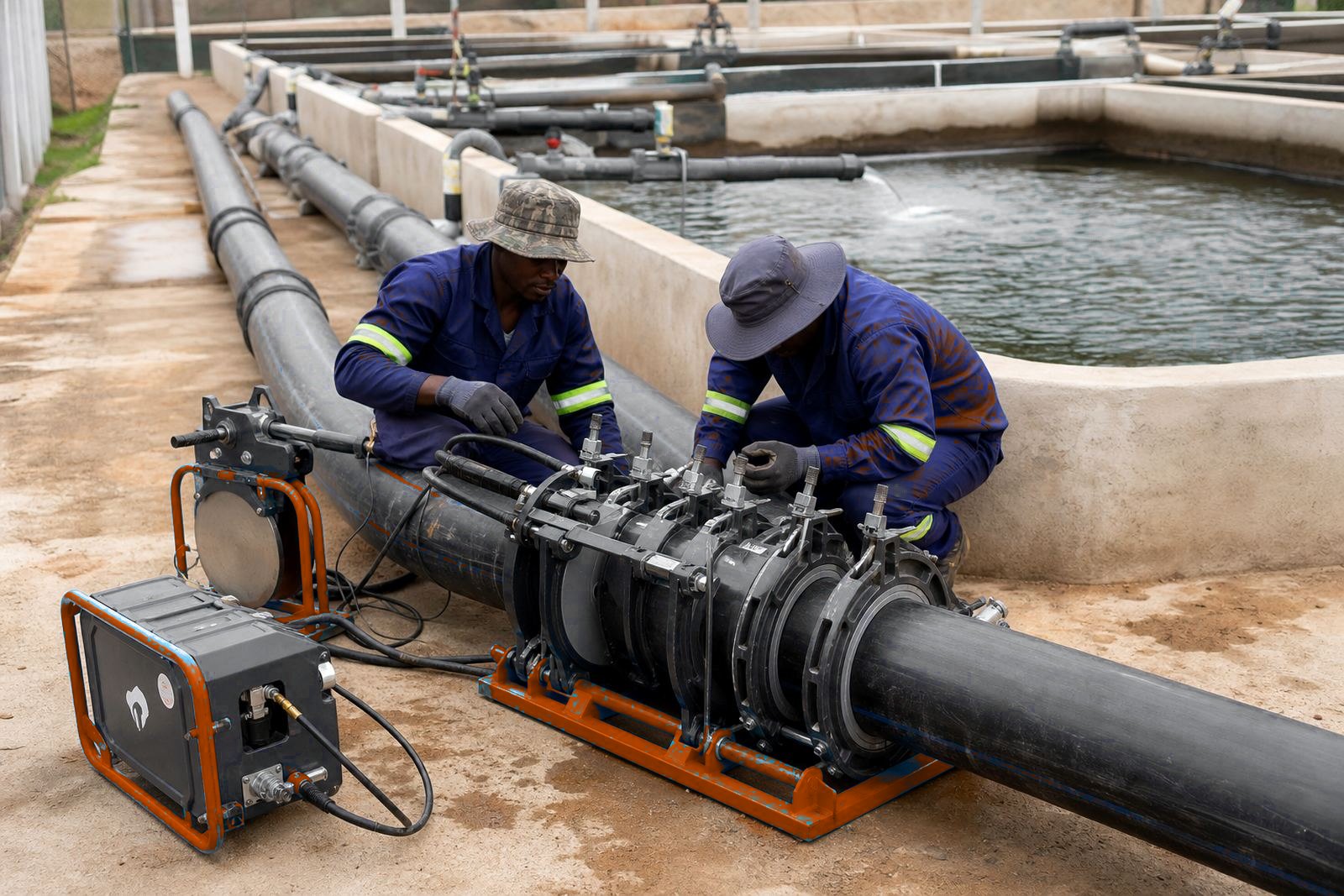
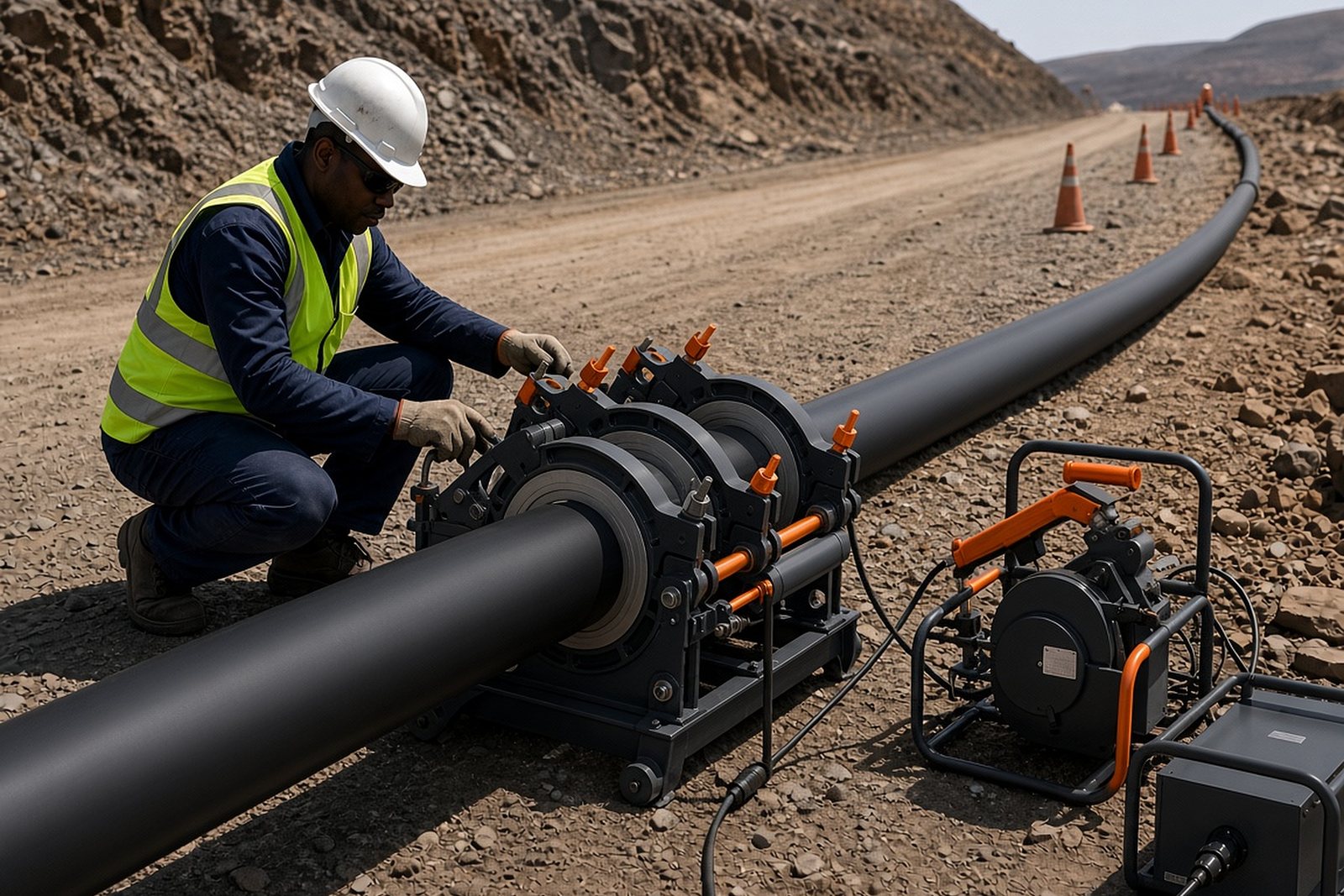
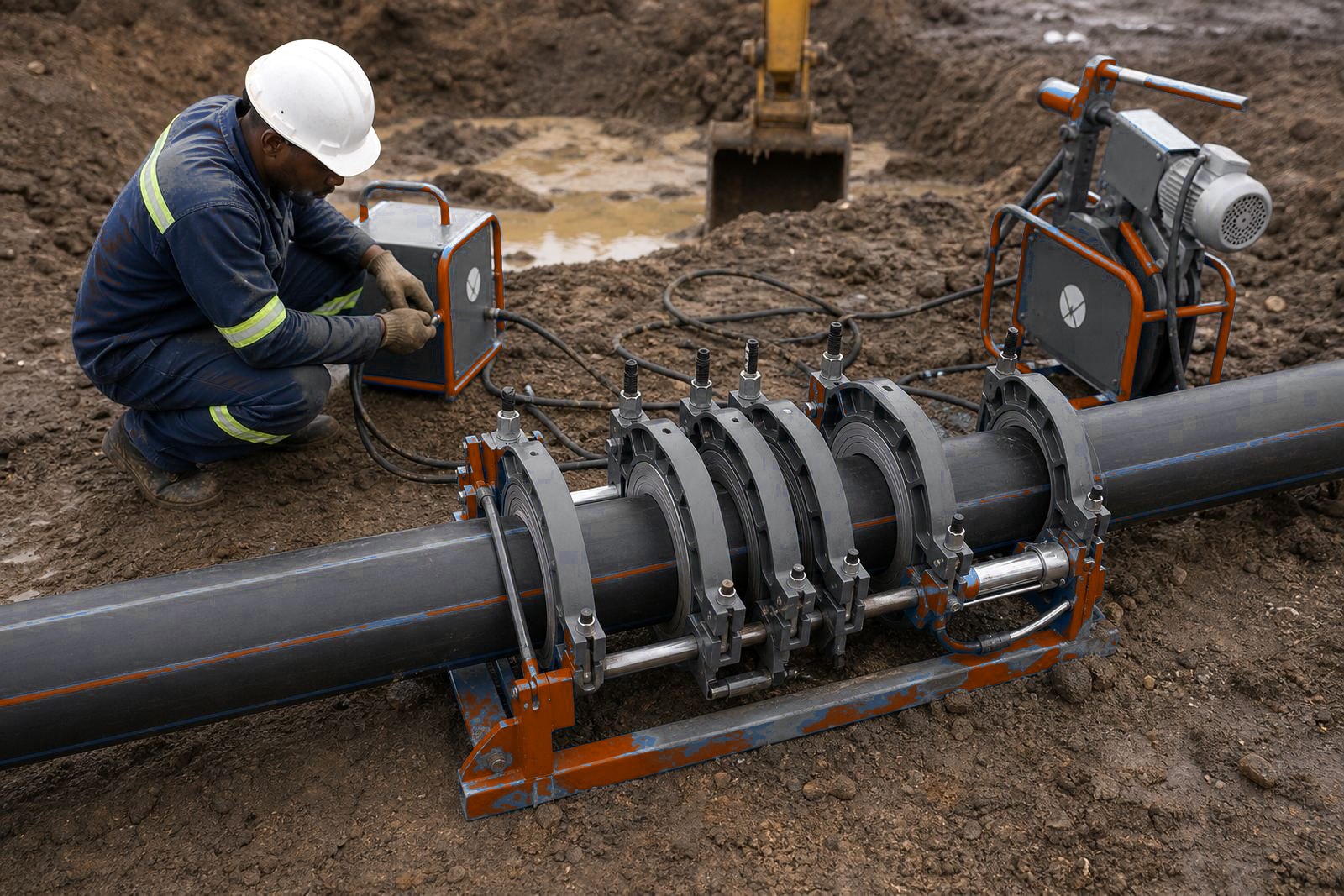
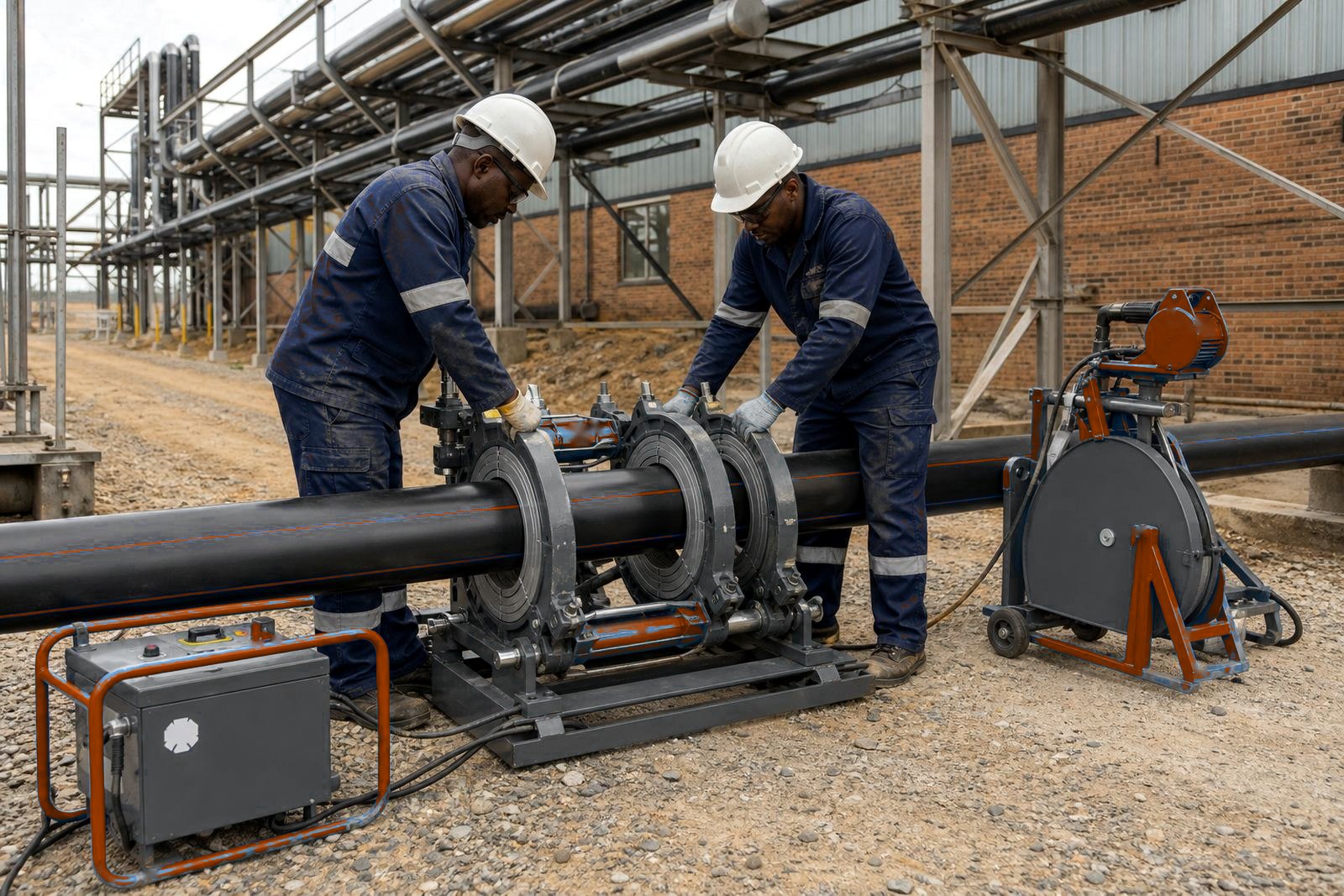
A cooling line fusion crew normally works with a butt-fusion machine, a facer, a heater plate, pipe clamps, centring supports and a basic set of measuring tools. Some sites also want a data logging unit so the weld record can note pressure, heat soak, changeover and cooling time for each joint. Record notes help when a plant manager asks for traceable joint notes during handover or later fault tracing.
- Machine matched to the plant's cooling line diameter and SDR.
- Clamps and supports that keep the pipe ends aligned
- Hydraulic pressure test gear for post-weld system checks
When a line runs through a tight plant area, the equipment set should also suit the available space around bends, walls and steelwork. An oversized machine in a tight plant room slows work and forces awkward handling.
Layout choices for cooling lines
Lay out a cooling line to give the welding crew a straight approach to the joint and enough room to clamp, face and heat the pipe without distortion. Live equipment, foot traffic and maintenance access are common on these sites. That means weld positions need to be planned before pipe sections are moved into place.
Allow enough run-up length for each joint, especially where a fitter has to load long straight sections or handle prefabricated spools. If a line is built too close to a wall, beam or floor obstruction, the facer may not cut square and the heater plate may not seat properly. Cooling time also needs to be left alone, without lifting the joint early just to push the shift forward.
- Mark each weld location before pipe arrives on site
- Check access for clamps, heater plate and facing tool
- Leave space for bead inspection after fusion cooling
- Keep pipe ends clean, dry and protected from dust
The weld sequence on cooling pipework
Once the correct heat soak is reached, the heater plate is removed with a controlled changeover and the pipe ends are pushed together under the correct fusion pressure. Leave it clamped through the cooling time so the bead can set without movement.
Bead inspection happens during the weld as part of the work. Cooling line joints should sit square to the pipe with an even bead. Wide variation, heavy mismatch or a thin bead can point to poor alignment, dirty ends or pressure problems. Where data logging is used, the record should match the settings used on the joint and the operator should know how to read it properly.
Rushed heating on cooling water lines
Cooling water lines can fail after commissioning because of faults made during welding. When pipe sizes or SDR values change, check the machine setup for each joint. Another is rushing the heating phase or moving the pipe before cooling time has passed. A third is poor clamp alignment, which can leave the finished joint under stress when the line fills.
Dust, oil mist and wet floors in plants leave dirty pipe ends. If the facing cut is uneven, the heater plate only touches part of the pipe face and the weld carries an internal weakness. On coastal plant sites, store pipe and tools covered so moisture and grit do not settle on them.
- Do not skip facing, even on short repair sections
- Do not change pressure settings halfway through a weld
- Do not open clamps before the cooling period is complete
- Do not assume one machine suits every pipe diameter
Budget ranges in Rand for a cooling line job
Industrial cooling line budgets cover pipe size, joint count, access, and hire or purchase. Smaller hire jobs for limited plant repairs may start in the low thousands of Rand for machine hire and associated support, while a larger machine purchase can run into the tens or hundreds of thousands of Rand depending on capacity and tooling. Heating plates, facers, clamps and logging add to the total, as does servicing if a machine has been idle.
Contractors building or maintaining cooling water pipework can split the spend into equipment, labour, transport and testing. A short line with a few joints may need only a hire set. A longer plant route with larger diameters may need a complete machine set with spares on hand. We quote from the pipe schedule, the site town and the joint count.
- Hire suits short repair work and occasional site use
- Purchase makes more sense for repeated plant installation work
Backup across South Africa
First-joint support comes with our startup visit. Mixed conditions need proper checks on cooling line jobs where the plant cannot wait for a machine that has not been checked properly.
Riaan Salie plans the cooling-line jobs in operations. For cooling water pipework, that means the right machine can be matched to the pipe size, the site layout and the welding method before the crew starts setting up.