
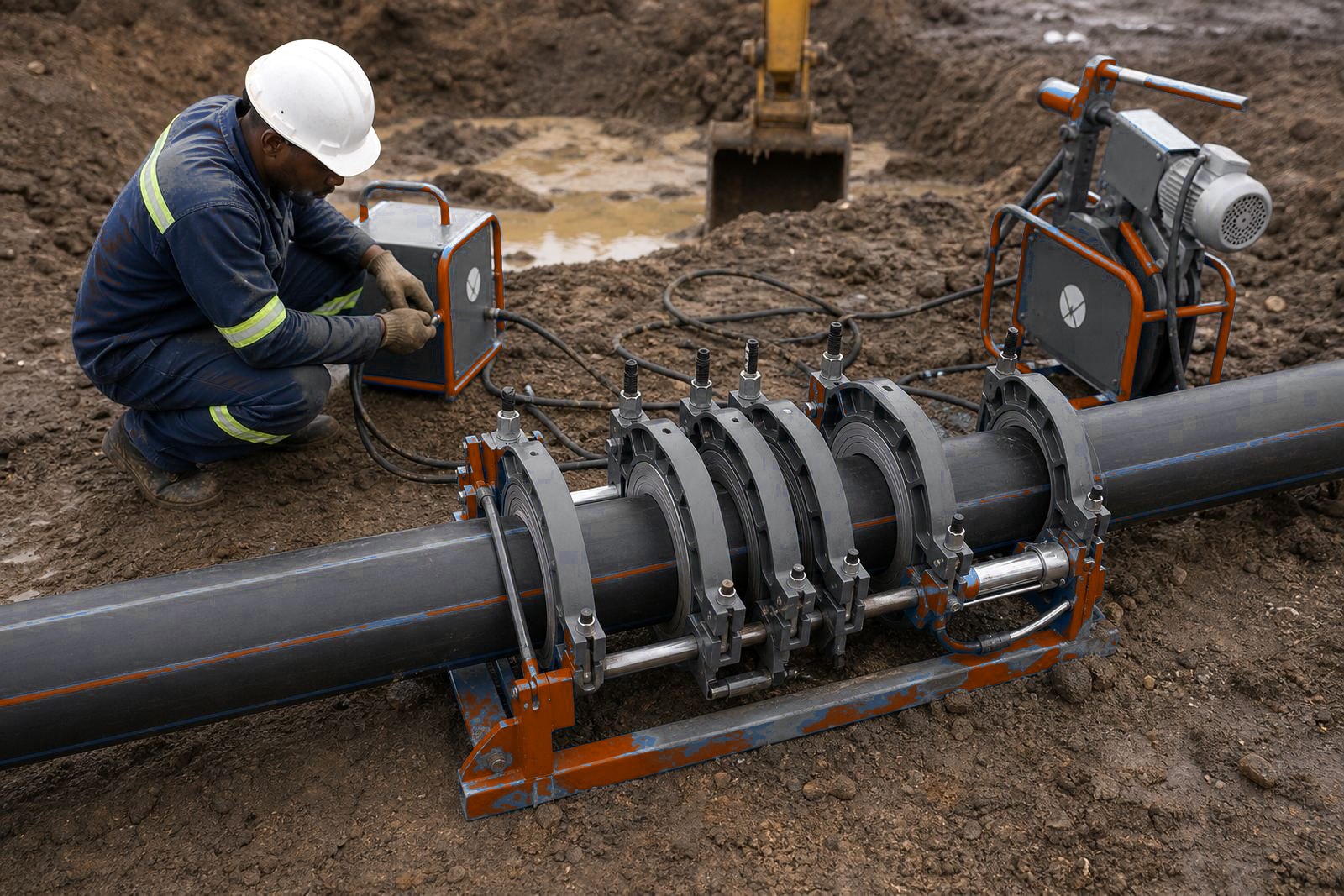
Temporary pumping circuits keep changing
Dewatering work changes as trenches deepen, sumps move and discharge routes lengthen. Portable butt-fusion equipment lets the line be made up in sections, checked, then moved. On dewatering lines, the pipe run often has to hold pressure for long shifts while mud, vibration and handling all push on the joints.
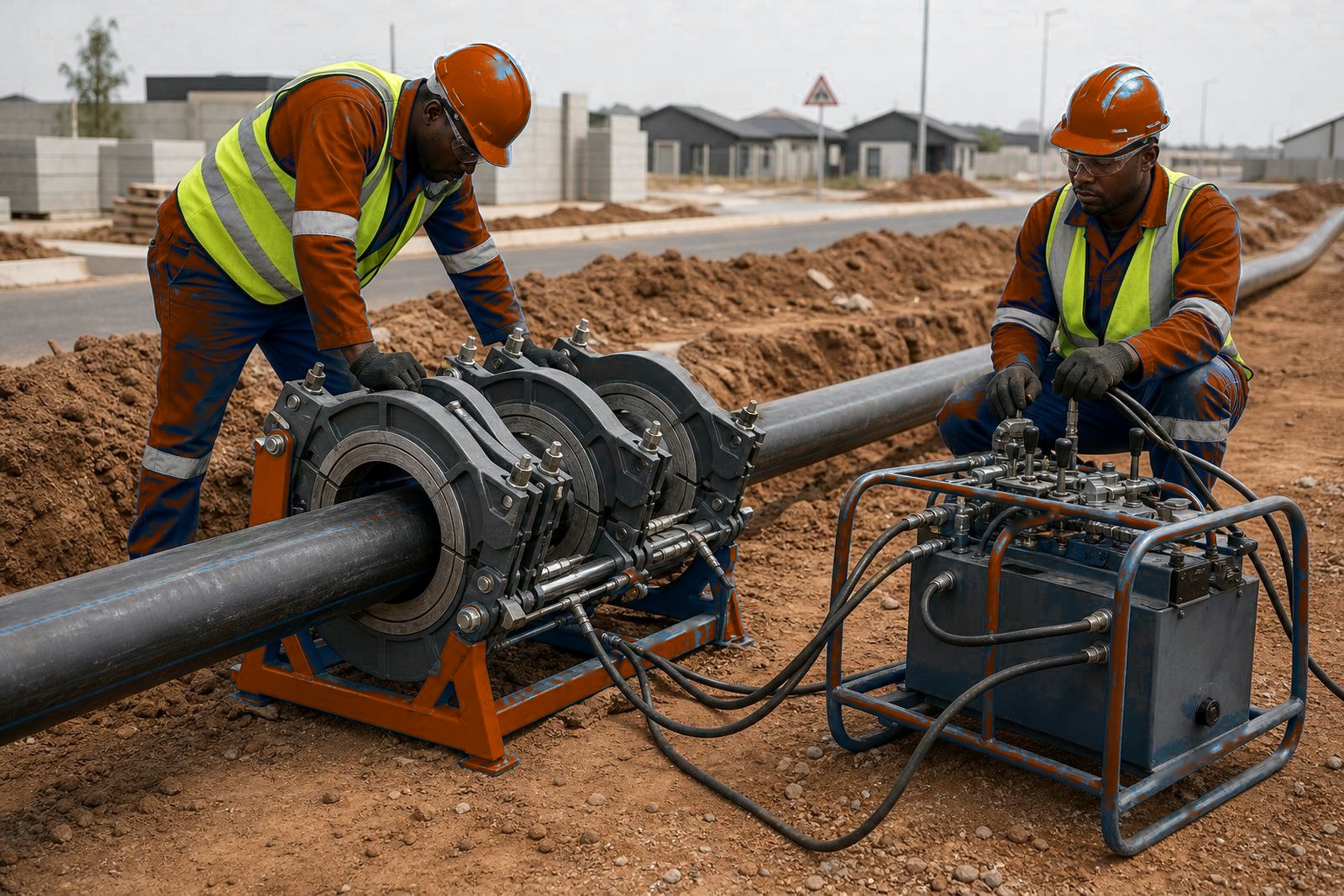
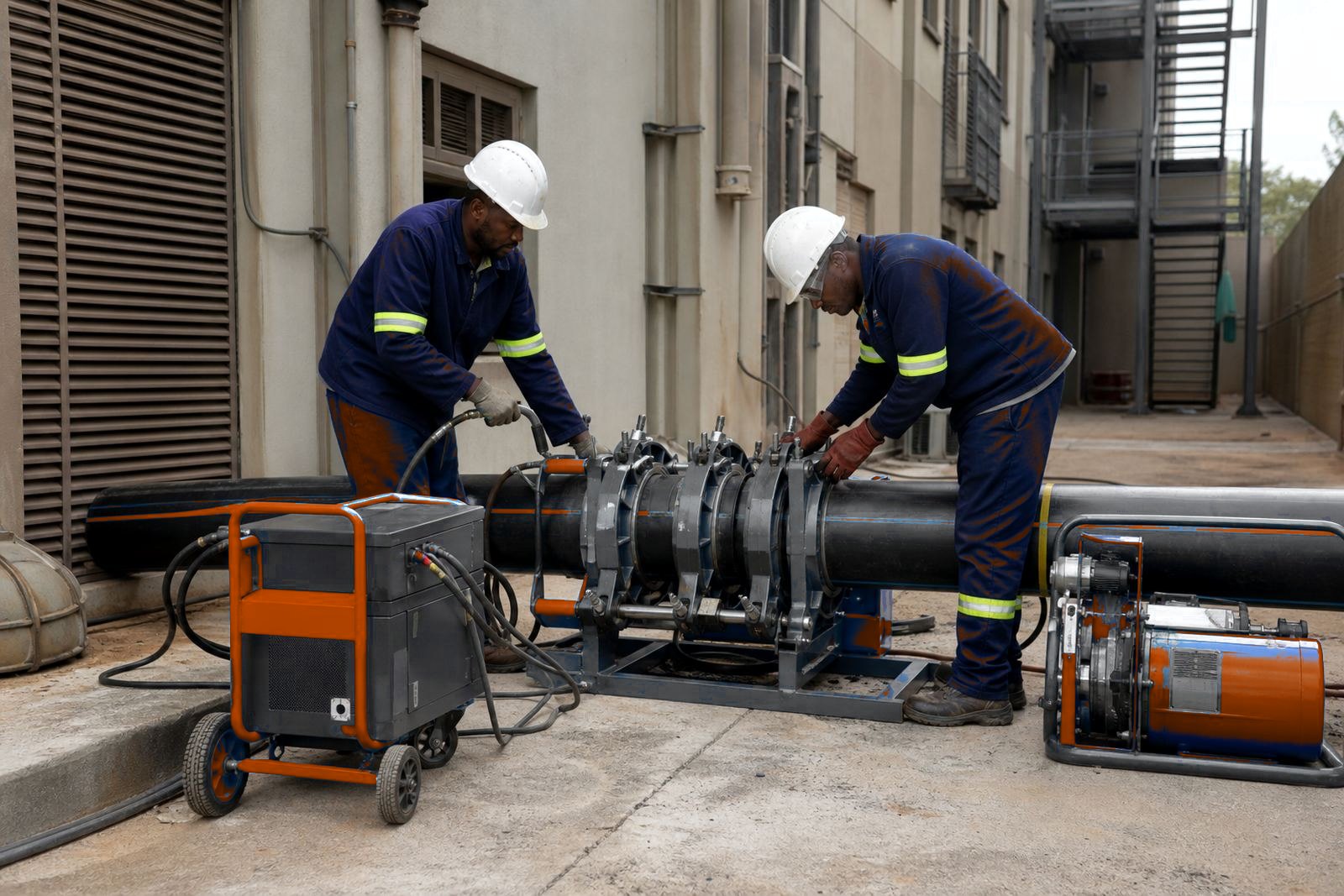
For this kind of job, the kit needs to be easy to position and simple to read in the field. Contractors usually want a facer, heater plate, fusion unit, clamps, skids or supports, and a clear way to record each weld. Hire units cover a changing site footprint or standby duty while the main line keeps running.
What the fusion set normally carries
For a dewatering setup, give us the pipe size and SDR, because wall thickness changes the heating time, pressure and cooling period. Smaller lines can move quickly, while larger diameters need more body support and steadier handling during changeover. Long, uneven dewatering routes get clamps and pipe rollers planned with the machine.
- Hydraulic pressure control for long dewatering runs.
- Facing tool for square, clean pipe ends
- Clamp set matched to the pipe diameter and SDR
- Data logging or weld record sheet for job traceability
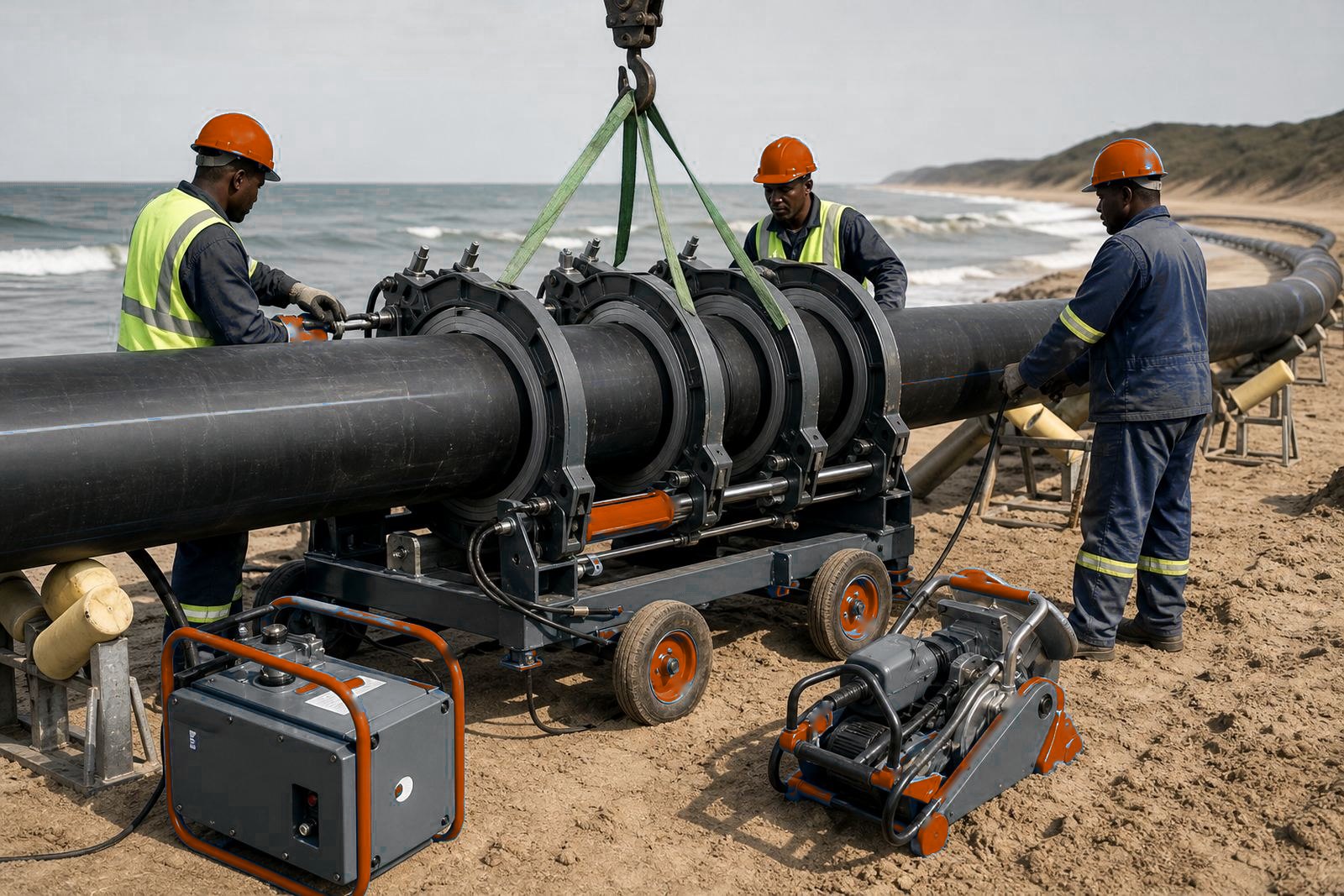
- Support stands, rollers and basic alignment tools
Poorly supported pipe shifts during heating and leaves an uneven bead.
Planning the line before the pump starts
For dewatering, lay the pipe to follow the ground levels. Long straight runs are easier to control, but temporary bends, offsets and lifted sections are common around sumps, crossings and access roads. The team needs enough space to face the pipe, heat both ends, make the changeover and hold the fusion pressure without the joint moving.
Take fusion pressure from the machine's weld table and add the measured drag. During cooling, the line must stay still until the joint has set. On wet ground, people sometimes rush this step and then wonder why the joint shows a flat spot or pull-out marks.
Good planning also includes where the weld log will live, who signs off the sequence, and how the pipe lengths will be moved as the dewatering line changes position. That small bit of order makes the rest of the shift less messy.
Mud and grit on pumping circuit joints
Temporary pumping circuits usually fail at practical points on site, while the drawing holds. A dewatering line can look fine from a distance and still carry poor prep or unchecked beads. Mud, grit and damp hands add to the trouble, especially when crews are under pressure to keep water moving.
- Cutting pipe ends without a proper square face
- Skipping cleaning after facing and before heating
- Using the wrong fusion pressure for the pipe size
- Moving the joint before the cooling period is complete
- Mixing pipe sections without checking SDR or diameter
- Leaving no weld log or mark on the finished joint
An even, centred bead should run consistently around the joint, with no obvious cold lines or heavy distortion. A suspect bead gets a closer check before the line goes under load.
Field crew and hire team coaching
Many dewatering jobs run with mixed crews, so operator training has to be plain and practical. New operators need to understand pipe preparation, clamp alignment, heat soak, changeover timing and final inspection. Refresher training helps where the site has changed hands or where the welding crew has not run a portable set for a while.
Hire units are inspected before welding starts. Machines left in a yard get a hose, heater, blade, clamp and pressure check before going out. On long pumping runs, weld logging help records which joint sat where and who signed it off.
Budget ranges that make sense in Rand
Dewatering work can be priced as a purchase or a short hire. Smaller portable fusion sets for lighter HDPE work usually sit in a lower bracket than larger diameter units, and the add-ons change the figure. Each service item is priced separately, according to kit condition and diameter range.
- Short hire for a portable fusion setup: often from about R3,500 to R9,500 per period, depending on size and extras
- Heavier machine packages for larger pipe: often from about R85,000 to R320,000 and upward, depending on diameter range and control set-up
Those figures shift with the pipe size, the number of clamps, the condition of the facer and heater plate, and whether the job needs logging support. A dewatering run and a mine bypass line carry different loads, so each is priced on its own equipment list.
Keeping dewatering crews supplied
The work is usually time sensitive, but the joint still has to be right. Machine setup, operator handling and service condition all need attention before the line goes into service.