Main runs that sit under pressure
Plumbing main lines are a different conversation from short branch work. Once you move into larger building mains, estate reticulation and long precinct runs, the weld has to carry pressure, handle movement during installation, and stay tidy enough for inspection before backfill. HDPE is used on these jobs because the pipe comes in long lengths, the joints are fused, and the finished line suits water movement through plant rooms, service corridors and external routes.
The usual request is for butt-fusion equipment that suits the pipe sizes already on site, from smaller service runs through to larger diameter sections. Match the setup to the pipe SDR, because wall thickness alters the heating soak, clamp load and fusion pressure settings. On a plumbing main, the crew often wants tidy weld records, a sound bead profile and a method that can be shown to the clerk of works or consultant.
The kit usually used on a plumbing contract
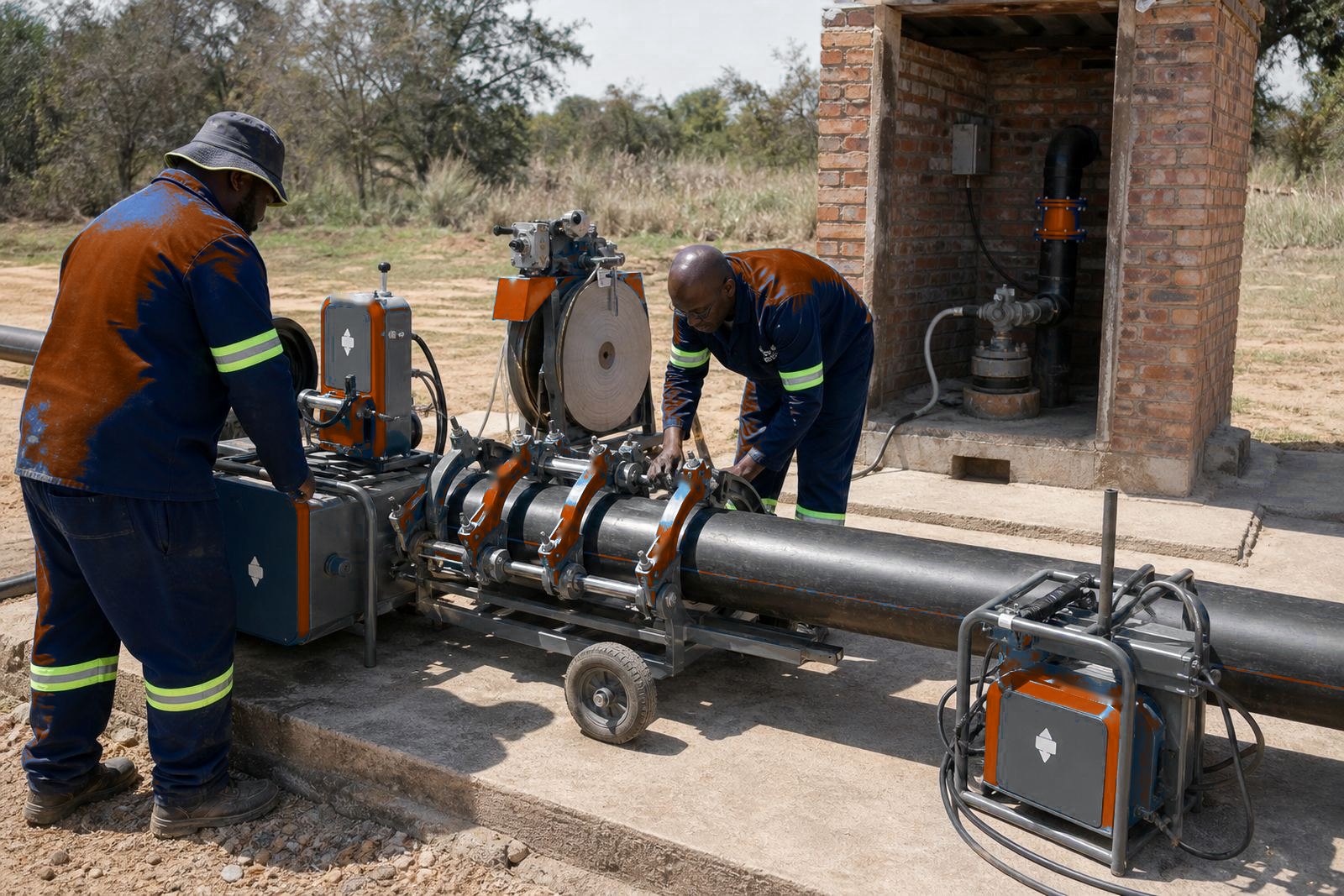
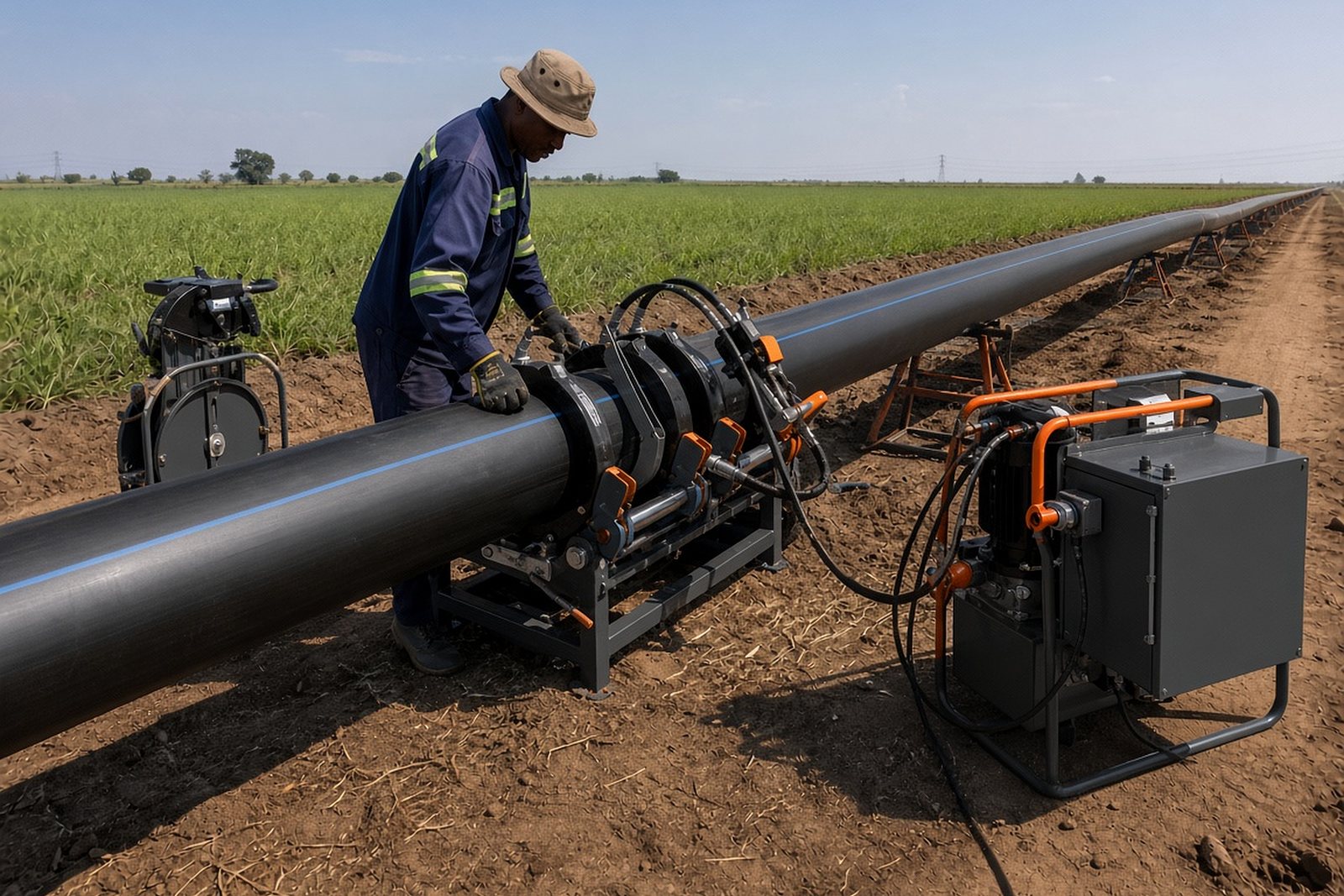
A working kit for plumbing mains normally includes the fusion machine, centring clamps, a facer, heater plate, pipe support rollers and tools for handling fresh joints without marking the pipe. Where the line is long or the pipe is heavier, the team may also need lifting help, alignment checks and a reliable hydraulic setup that holds pressure steady through the fusion cycle.
- Machine sized for the planned building main diameters.
- Controlled-surface plate for building water mains.
- Clamps and inserts suited to the pipe wall and diameter
- Data logging where the job calls for recorded weld details
- Weld logging help for job files and handover packs
For plumbing mains, the equipment has to cope with repeated joints in a single day and the realities of site conditions. That means checking the facer blades, keeping the heater face clean, and making sure the clamp alignment has not drifted after the first few welds. Faces out by a few millimetres give poor joints from a machine that looked fine in the yard.
How a sound butt-fusion joint is put together
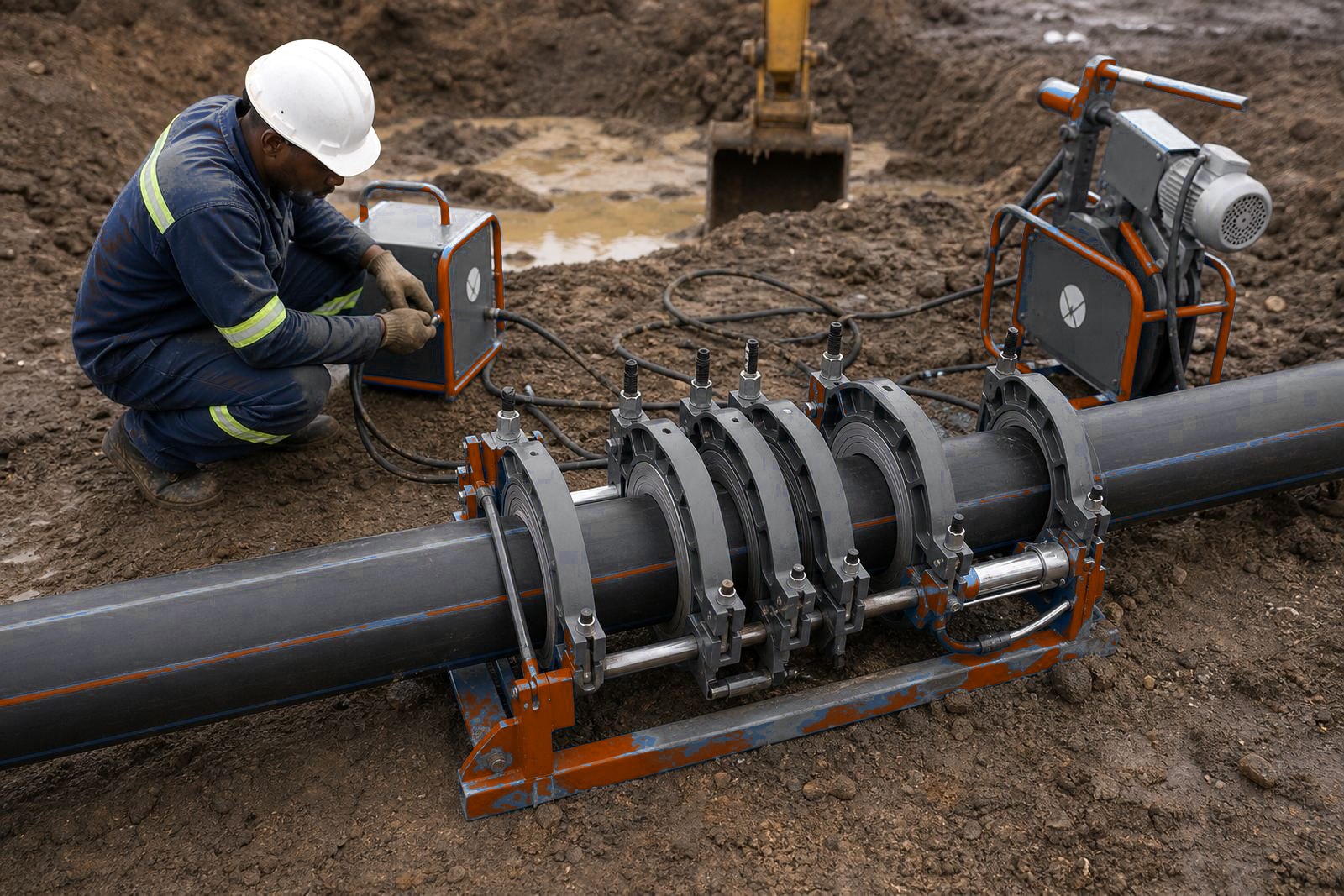
After the correct heat soak, the pipe faces are withdrawn in the changeover window and the ends are brought together under the right fusion pressure. During cooling time, the joint stays clamped so the bead forms evenly and the melt line stays undisturbed.
On a plumbing main, people often concentrate on the machine and overlook the process around it. The bead should run evenly around the full circumference, without heavy mismatch or obvious cold spots. The outer bead gives a useful visual check, and the recorded settings help if the site needs proof of how the joint was made.
Critical or large plumbing mains show small errors quickly. A dirty plate changes heat transfer on plumbing mains. If the clamp alignment is poor, the bead can tilt. If the pressure is rushed, the molten faces do not settle cleanly and the joint needs to be cut out.
Layout and planning on crowded building sites
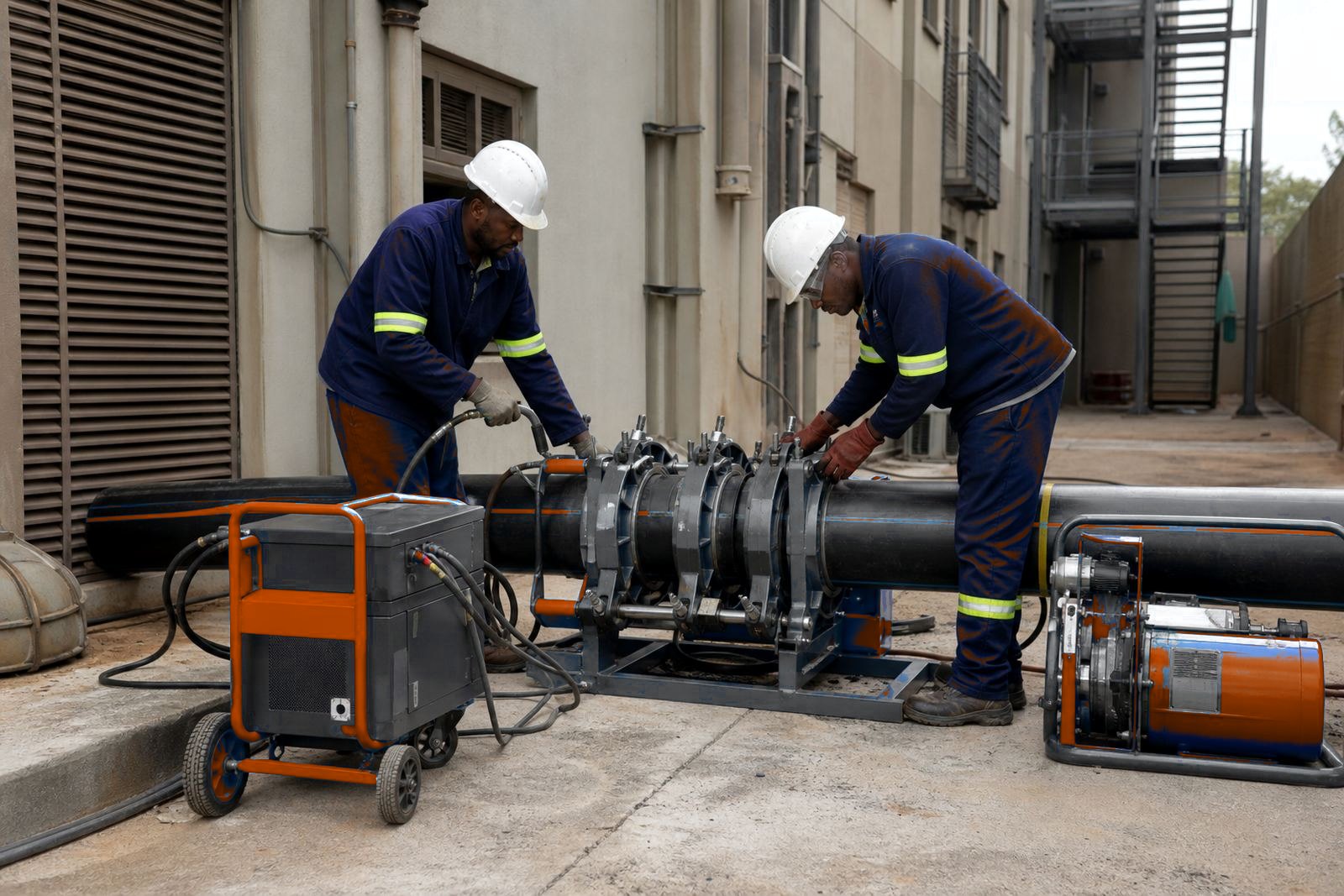
Plumbing mains often pass through spaces already shared with other trades, so the welding area must be chosen carefully. The pipe length, joint access and lifting space should be planned before the machine arrives. If the line is going through a basement, the crew needs enough straight access to clamp the pipe properly and enough room for the heater plate to move in and out without scuffing the ends.
Site planning also affects the hire choice. A contractor doing short internal runs may only need a compact machine and a facer. A team laying long external mains across a precinct may need a larger fusion set, extra clamps and a support plan for repeated joints. Transport, storage and setup space all influence the right equipment choice, especially when the pipe is bulky and the route has bends, doors or narrow trenches.
- Match machine capacity to the largest planned SDR and diameter
- Leave space for alignment, facing and heater movement
- Keep the weld zone dry and free of grit
- Plan a clear path for pipe handling and joint cooling
Patchy heater plate temperature
Dirty pipe ends, a worn facer, a heater plate with patchy temperature and a rushed changeover all show in the finished bead. On plumbing mains, where the line may be inspected before cover goes in, a poor weld can hold up the job, force rework and raise awkward questions at sign-off.
A common issue is setting the machine incorrectly for the pipe wall thickness. SDR affects fusion parameters because the wall changes. A machine set for one wall thickness can produce a poor joint on another, so reset it when the SDR changes. Data logging records what was actually done on the day.
Training also changes the result. Operators who understand bead inspection, pressure hold and cooling time waste less pipe and cut out fewer joints. Refresher work covers crew changes, larger pipe sizes, and moves from short building connections into longer mains with tighter tolerances.
Rand ranges for buying, hiring and keeping the kit working
Budgets for plumbing main work depend on pipe diameter, joint count and how often the machine is needed. For a contractor with only occasional main line jobs, hire can make more sense than buying, especially when the size requirement changes from one project to the next. For regular crews, ownership often becomes the practical route once machine use is frequent and transport is already in place.
Compact hire jobs sit at the lower end of the price range, and large machines with logging gear cost more. A new purchase for serious main line work can sit much higher again, especially where hydraulic control and larger pipe capacity are needed. Servicing should be allowed for as part of the running cost.
Hire includes a facer and clamp set for the main pipe sizes. That suits plumbing contractors on long pipe routes where the weld is under working pressure.