When a mainline run needs a stronger join
Irrigation trunk lines need extra care where the pipe run crosses open ground, enters a pump area or sits under service roads and planted zones. Small alignment faults on irrigation mains show later as leaks, pulled beads or bends.
On these jobs we usually see HDPE in a mix of SDR ratings, with pipe sizes ranging from smaller distribution branches up to large bore mainlines. Choose the machine by its clamp size, hydraulic control, heater plate condition and whether it holds the pipe ends square without chatter or slip.
For a clean butt-fusion joint, the operator still has to read the pipe and the ground. Hot sun can soften exposed pipe ends, wind can cool the heater face unevenly, and dust from trench backfill can get into the joint if the work area is not kept tidy. Those practical details govern how the weld behaves once the line is pressurised.
A set-up that suits irrigation pipe on site
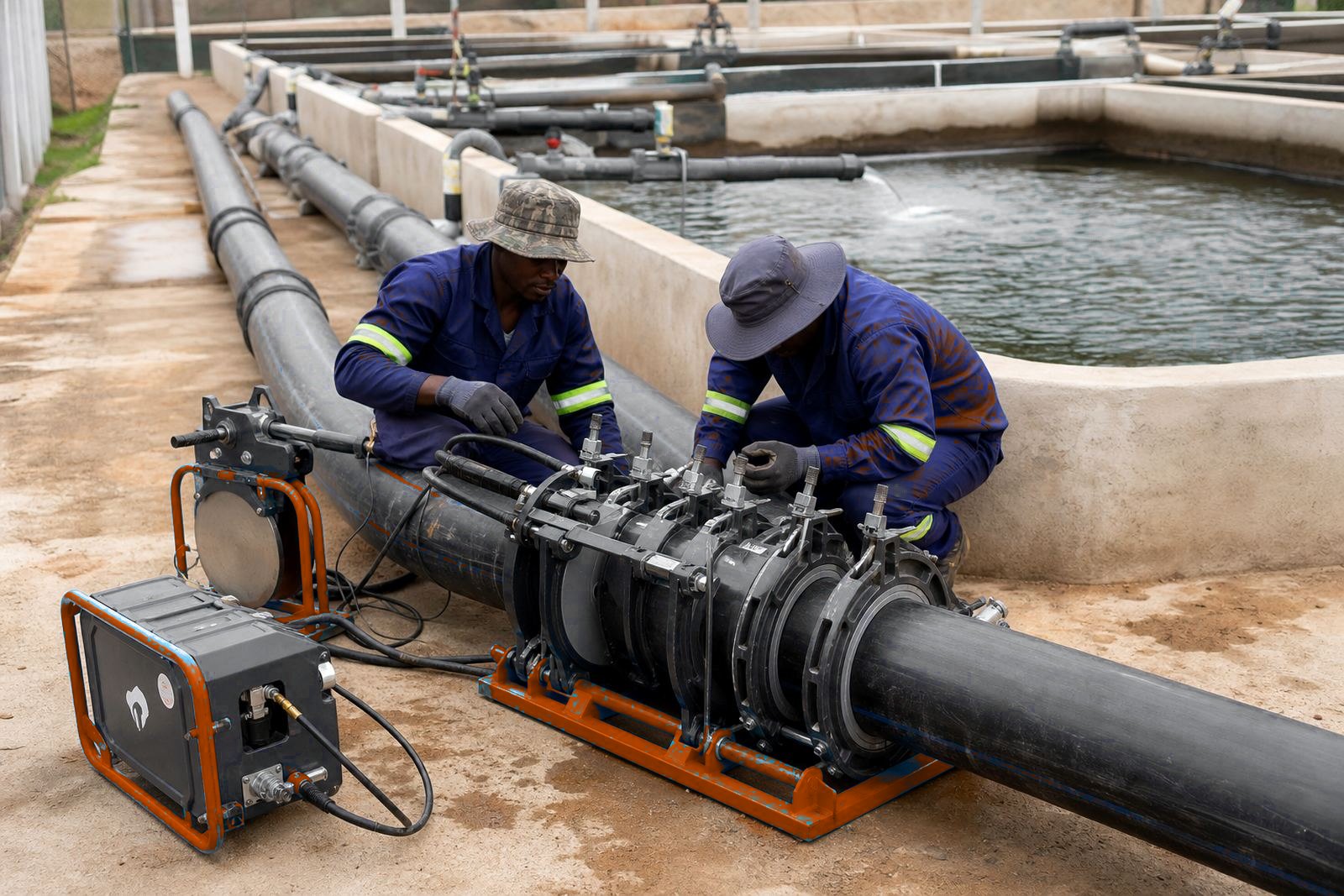
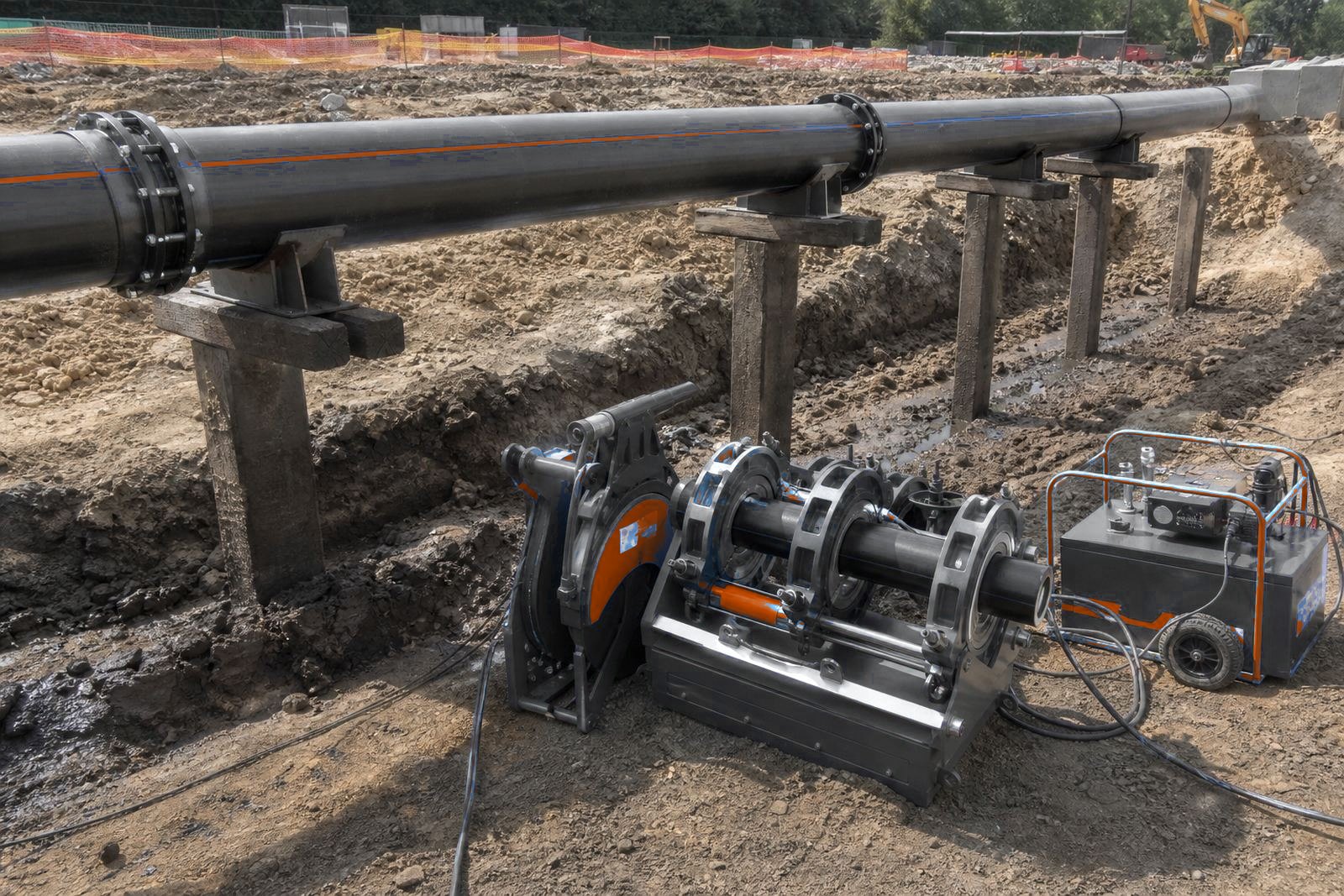
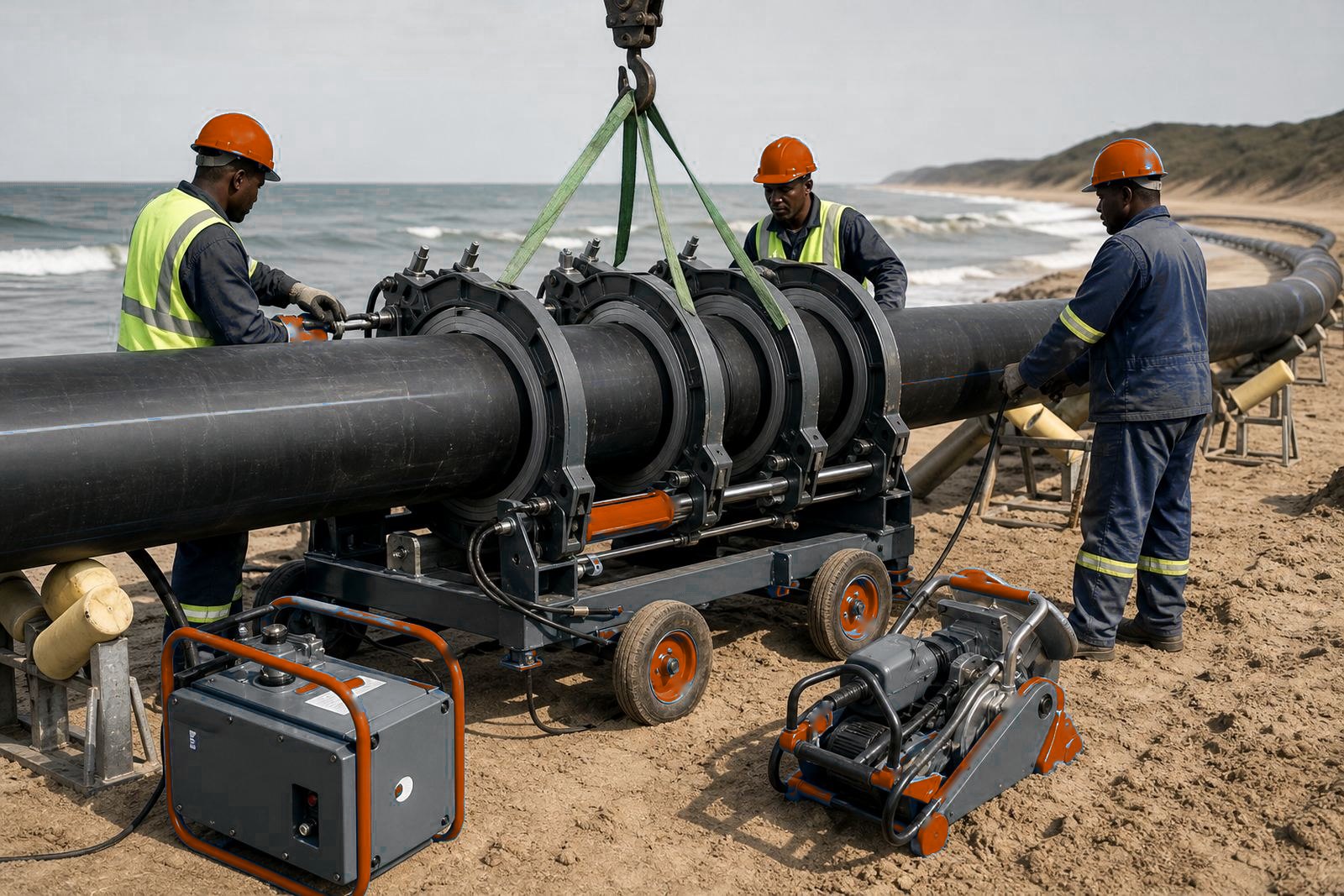
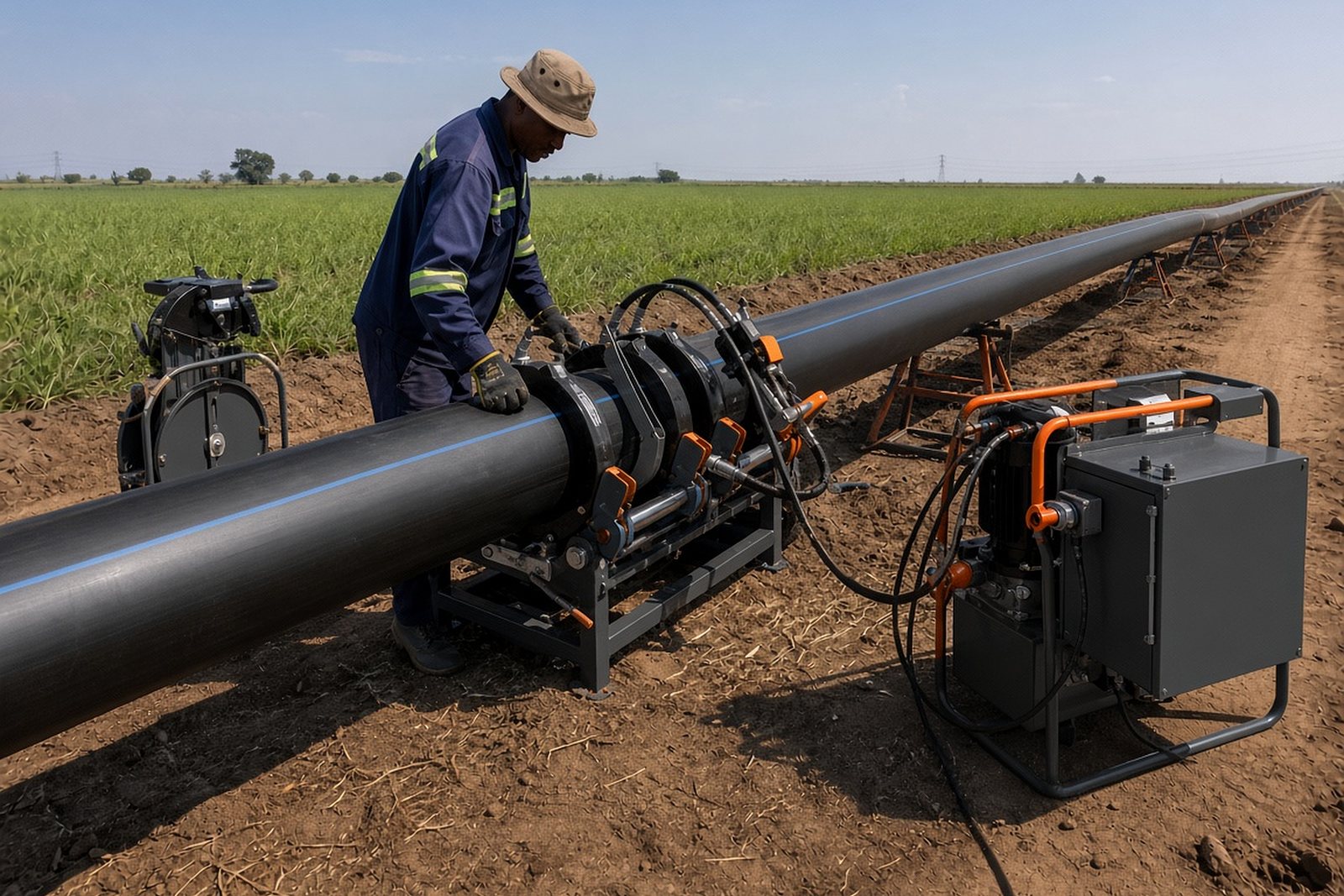
For irrigation mainlines, the usual equipment set includes a butt-fusion machine, facing tool, heater plate, pipe clamps, hydraulic unit, and support rollers or blocks where the pipe needs extra support. On larger bore work, chain or multi-size inserts help keep the pipe concentric.
- Jaw range for irrigation main diameters.
- Facing tool with sharp cutters and stable feed
- Clamps that hold round pipe without flattening the ends
- Hydraulic pressure control for controlled fusion and hold pressure
- Logging sheets or digital weld records for site handover
Where the line includes valves, fittings or chamber connections, the team also needs enough workspace to keep the ends aligned while the operator changes over from heating to fusion. That short changeover is where many on-site problems start, because a pipe end can drift if the clamps are loose or the operator is rushing around a trench edge.
Planning the line before the first weld
Irrigation trunk lines are usually planned to match ground levels, valve positions and the pump layout, and the weld sequence is planned with them. Map where the straight lengths will sit, where offcuts can be used, and where the machine can stand without forcing the pipe into a twist. Add supports where the ground falls away or the trench is narrow.
On longer farms and landscaped estates, contractors also need to think about access for transport and handling. A machine can work well in the workshop and still become awkward at a site where pipe sticks out into a narrow service road or a wet verge. Our team asks about the layout, then matches the machine and training level to the site.
Good planning also keeps the joints within the pipe maker's recommended SDR range for the work at hand. It affects wall thickness, fusion surface area and the pressure profile during hold and cooling. If the wrong pipe series is mixed into the same run, the line can end up with uneven behaviour once the pump starts pushing water through it.
Blunt facers and rushed plate removal
Most failures on irrigation mainlines trace back to pipe preparation. Dirty ends, blunt facers, poor alignment, overheating and rushed plate removal all mark the weld. Gaps, thin spots or heavy folding in an irrigation bead point to pressure issues.
- Skipping the facing step or leaving a rough, uneven face
- Using a heater plate with dirty or damaged surfaces
- Allowing pipe ends to cool too much before changeover
- Applying fusion pressure outside the weld table value
- Moving the joint before cooling time is complete
- Ignoring oval pipe ends that need proper clamping and support
Another common issue is bead inspection being treated as a quick glance. A proper inspection checks symmetry, bead width, pipe alignment and visible surface quality. Where the job calls for records, weld logging helps the supervisor trace who welded what, on which machine, and under which setting. The logged details go into the handover pack once the line is buried.
Hire for the field crew
Some irrigation contractors only need a machine for a run of work, while others want their own crew trained to manage the full sequence from preparation to cooling. We support both. Our courses cover machine set-up, pipe handling, facing, heating, fusion pressure and cooling. Site Startup Help suits a team moving onto a new property with different pipe sizes or awkward access.
Hire Fleet Prep is the right fit when a machine is being sent onto a farm, a nursery, a sports field or a landscaping site and everything must be checked before collection. Machines are serviced and pressure tested between irrigation contracts.
Machines knocked in transport or plates losing even heat are sorted before the pipe run starts, so the trench crew is not left waiting.
Practical budget bands for irrigation work
An irrigation mainline quote covers machine hire or purchase. Small projects with short pipe runs and limited diameter changes need less kit. Larger trunk lines, remote sites and long welding sequences push the cost up because the machine, clamps, handling gear and support time all have to match the duty.
Hire of smaller fusion sets for irrigation work runs from about R2,500 to R6,500 per week, depending on machine and accessories. Mid-size butt-fusion machines with proper clamps and facing gear can move into the R8,000 to R18,000 per week range when the pipe diameter and site demands increase. Servicing and heater plate work are usually priced separately, and a full service can range from a few thousand Rand for a limited check to a higher figure where hydraulic parts, facers or alignment work are needed.
For a contractor setting up a season of irrigation trunk line work, it often helps to budget for the machine first, then add operator training. The crew uses a sound heater plate and a clamp set that holds the pipe straight.