When a bypass line has to carry the site
A bypass route is usually called for when a main pipeline must be opened, cut out or pressure-tested and the site still needs flow. The pressure on a temporary line can shift during the job, so the layout needs proper pipe support, good joint prep and a clean fusion sequence from the first weld.
Bypass machines arrive after size, SDR and working space are confirmed. A 63 mm temporary line beside a trench is one thing, while a 315 mm or 400 mm bypass around a shutdown area needs more set-out space, longer handling room and firmer clamp control. In coastal areas like Durban, stored pipe and heater faces also need a bit more care because moisture and grit can interfere with clean fusion surfaces.
Typical hire gear for a short-term diversion
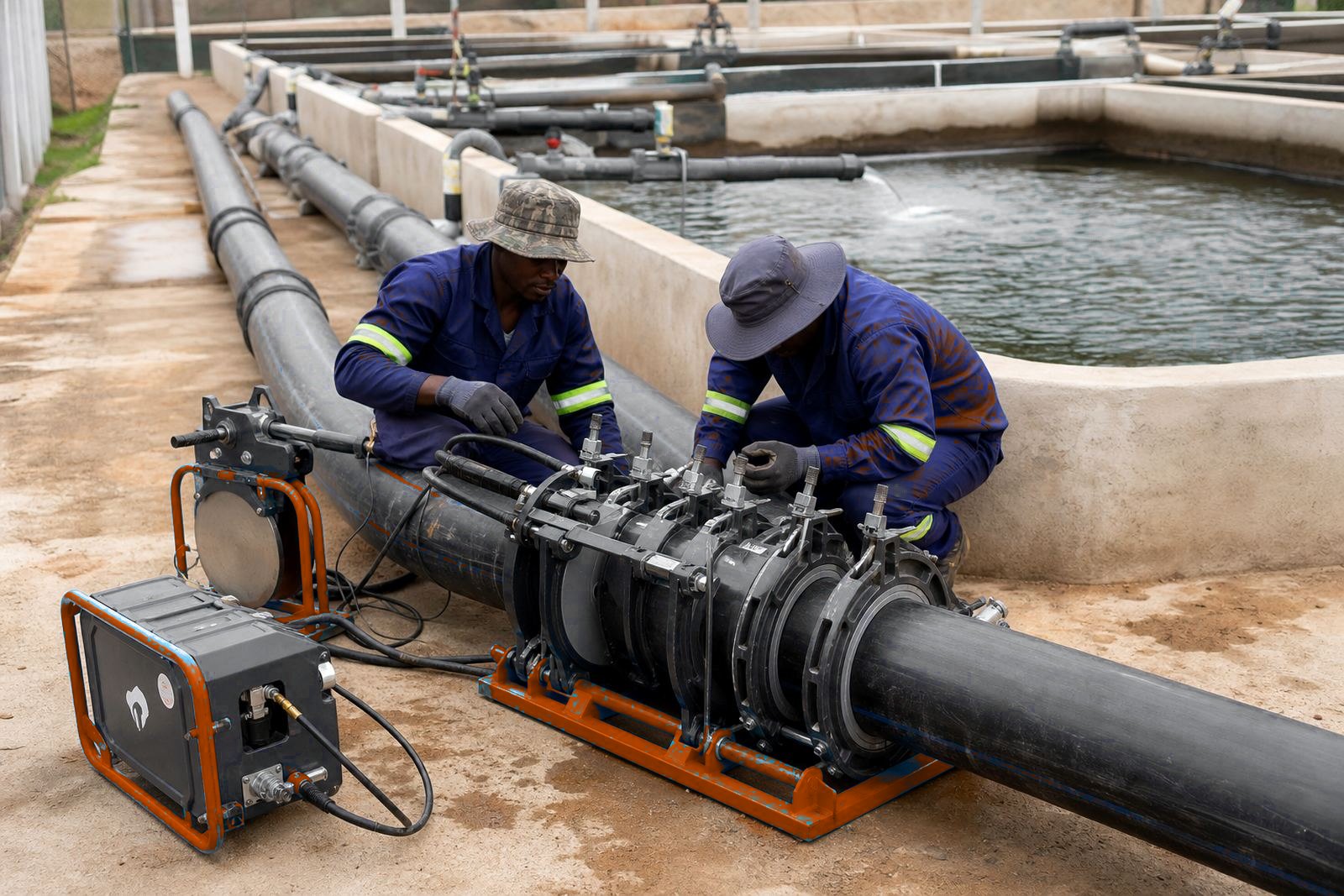
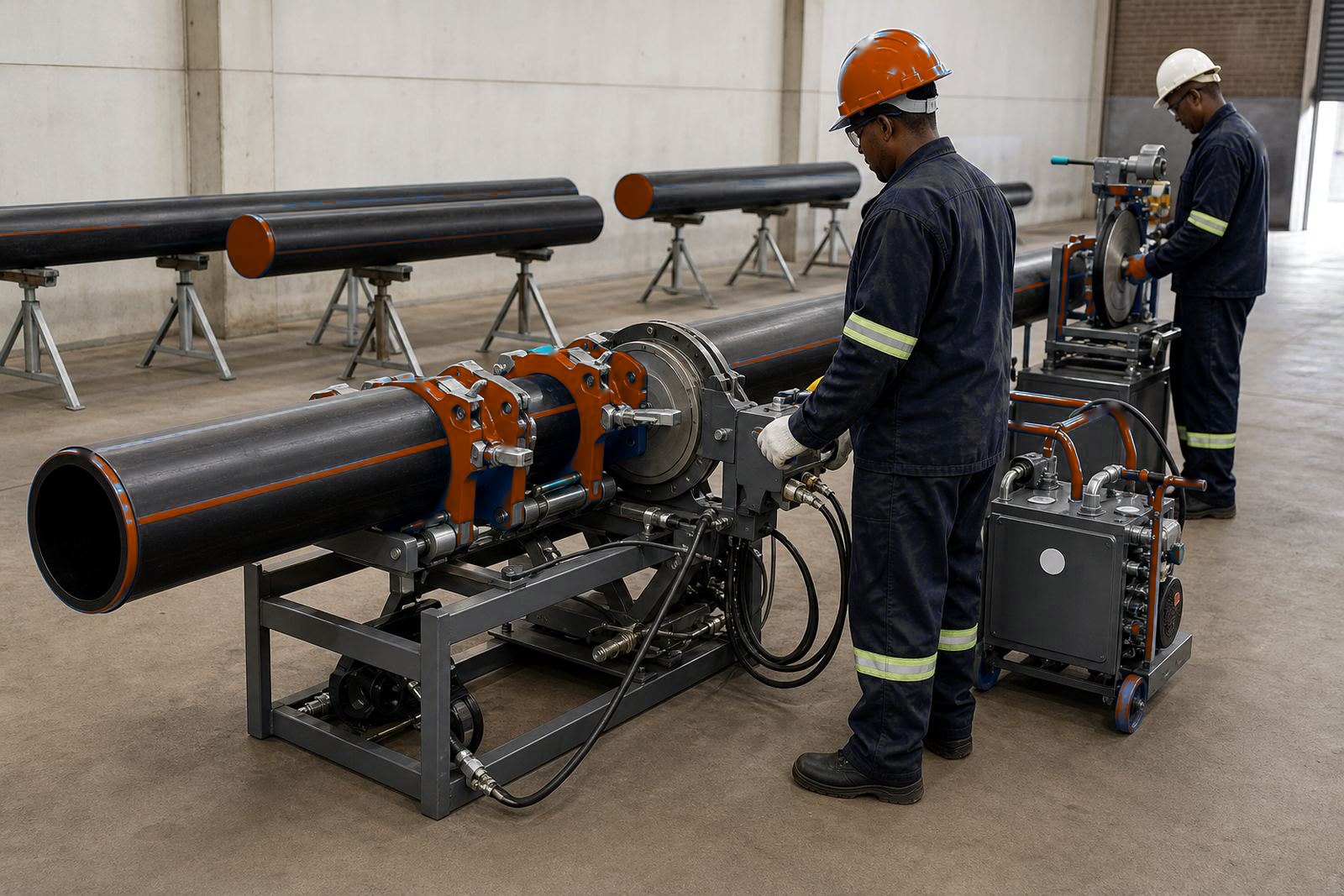
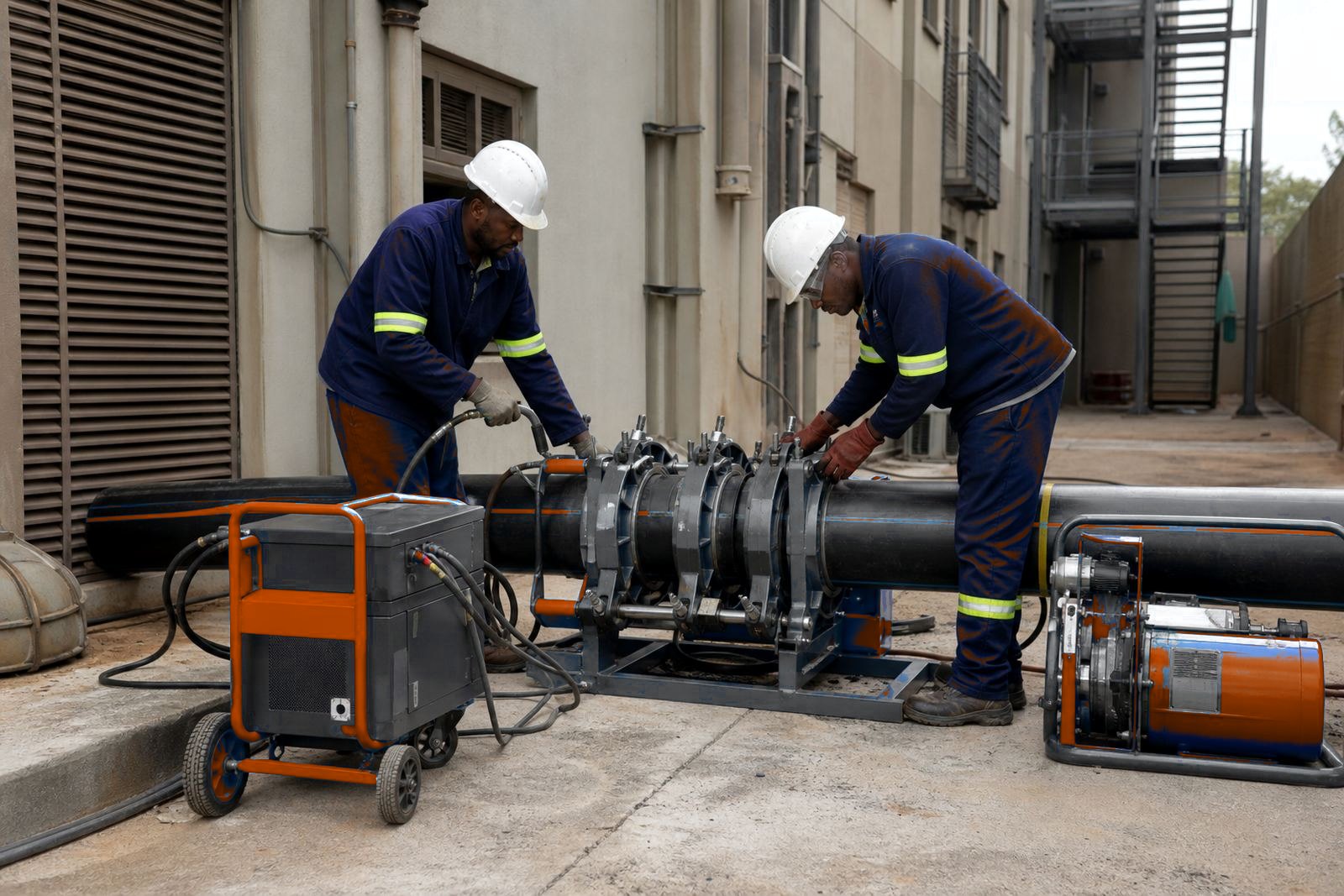
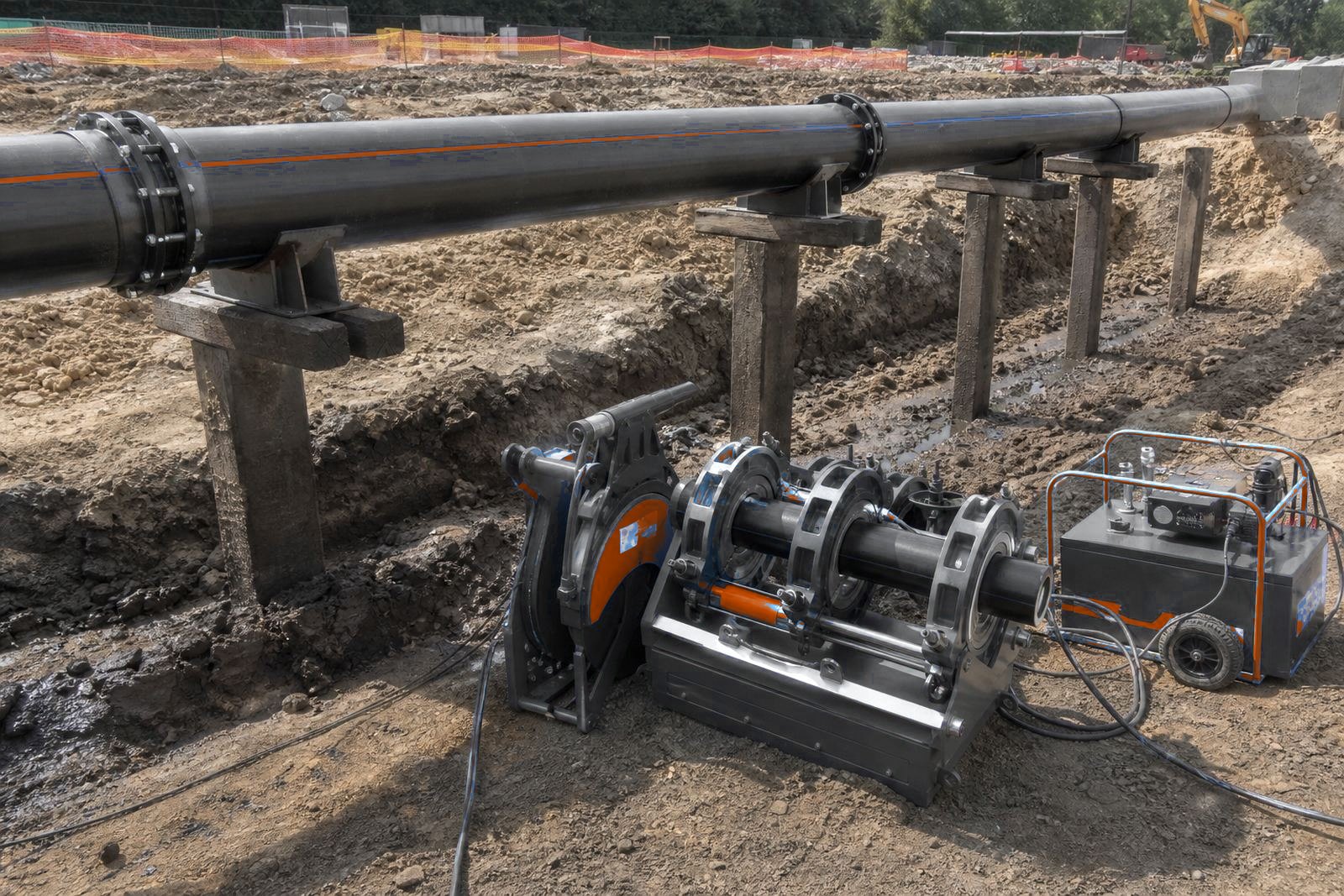
A temporary bypass job normally needs a fusion machine, facing tools, heater plates, clamp sets, pipe rollers or stands, and lifting gear for bigger diameter. For larger line sizes, the clamps must hold the pipe ends square, otherwise the bead line will drift and the weld face will show uneven squeeze-out.
- Frame chosen for the line's diameter and SDR.
- Heater plate with sound surface condition and correct temperature control
- Clamp sets sized for the pipe and the site layout
- Bypass job records with heat, changeover and cooling times.
- Prep checks before the unit goes out
For bypass work that moves between sites, hire kit arrives with the right clamps and heater plate, so there is no mixed setup pieced together from other jobs.
Site layout on the trench edge
Short-term bypass routes are rarely flat and tidy. The line may need to cross gravel, run around a bund wall or sit on timber blocks near an excavation. Plan the join sequence along the bypass route, so the crew has room for facing, heating, changeover and cooling without dragging hot ends across the ground.
Ovalled pipe or uneven clamp bite puts the face wrong before heating. On pressure-sensitive runs, the operator should note fusion pressure, hold pressure and cooling time, then leave the joint still until the bead has formed properly. Rushed handling causes many temporary line failures.
- Allow room for pipe movement and machine travel
- Protect the fusion faces from dust, wet soil and mud
- Set the bypass so valves and tie-ins are reachable
- Plan the route with bends, anchors and supports in mind
- Route the temporary line clear of standing water.
Rushed bypass welds: short heating and early handling
A crew may heat the faces unevenly, change over too slowly, or remove the clamps before the cooling period is finished. Another issue is using the wrong pressure setting for the pipe size and SDR, which can leave a weak joint or a bead that does not show even squeeze-out all around.
Inspect every bead on a temporary line. A neat-looking ring alone can hide mismatch at the joint, contamination on the faces, or a heater plate that was not ready. On longer bypass routes, the first few welds set the pattern for the run, so stop and correct the setup at the start.
Machine servicing before a shutdown helps a lot. A facer that is out of line or a heater plate with hot spots can hold up the entire job. Run hydraulic pressure tests on the machine and check clamp alignment before the pipe arrives on site.
Operator training for shutdown crews and site teams
Bypass teams choose between a short refresher and full operator training before starting. The training covers machine setup, facing, heating, changeover timing, pressure control, cooling time and basic weld logging. New operators can see how pipe size changes the timing and pressure settings on each joint.
For a fast bypass build, site startup help gives the team one method across every joint. Work stays steady, and the chance of one operator doing it one way while another does it differently is reduced. For civil contractors running more than one crew, a shared method makes the temporary line easier to manage.
- Site Startup Help for new shutdown setups
- A supervisor on site for the first shutdown joints
What a temporary bypass budget usually covers in Rand
Budgets change with pipe diameter, site access and how long the bypass must stay in place. A small temporary route with light pipe and a short hire period will sit far below a larger municipal diversion that needs heavier clamps, a bigger machine and more handling support. Each bypass quote is built from the pipe size, hire period and handling support needed.
As a working range, smaller bypass jobs can start in the low thousands of Rand for equipment hire and checks, while mid-size jobs with larger pipe and more support often sit in the tens of thousands. Long bypass runs, multiple welders or extended hire periods can move higher again. Machine servicing is often added when the site team wants less risk around the shutdown window.
For a clearer estimate, the pipe size, SDR, route length and site conditions need to be known first. Temporary bypass work matches the right set to a line that has to hold pressure while the main system is offline.