When transfer lines need a tight weld routine
Chemical transfer lines usually run on HDPE because the pipe handles corrosion better than metal in many washdown and process areas. The welding work still needs care, especially where the line carries mixed liquids, rinse water or aggressive process fluid and the pipe ends must meet square, clean and dry.
Poor preparation causes most joint faults on this kind of line. A slight face mismatch, grease on the pipe ends or a rushed changeover weakens the joint under pressure cycles. In coastal towns such as Durban and in humid yards around Johannesburg, pipe ends also pick up dirt and moisture quickly, so the work area has to stay controlled.
The welding set that suits this kind of job
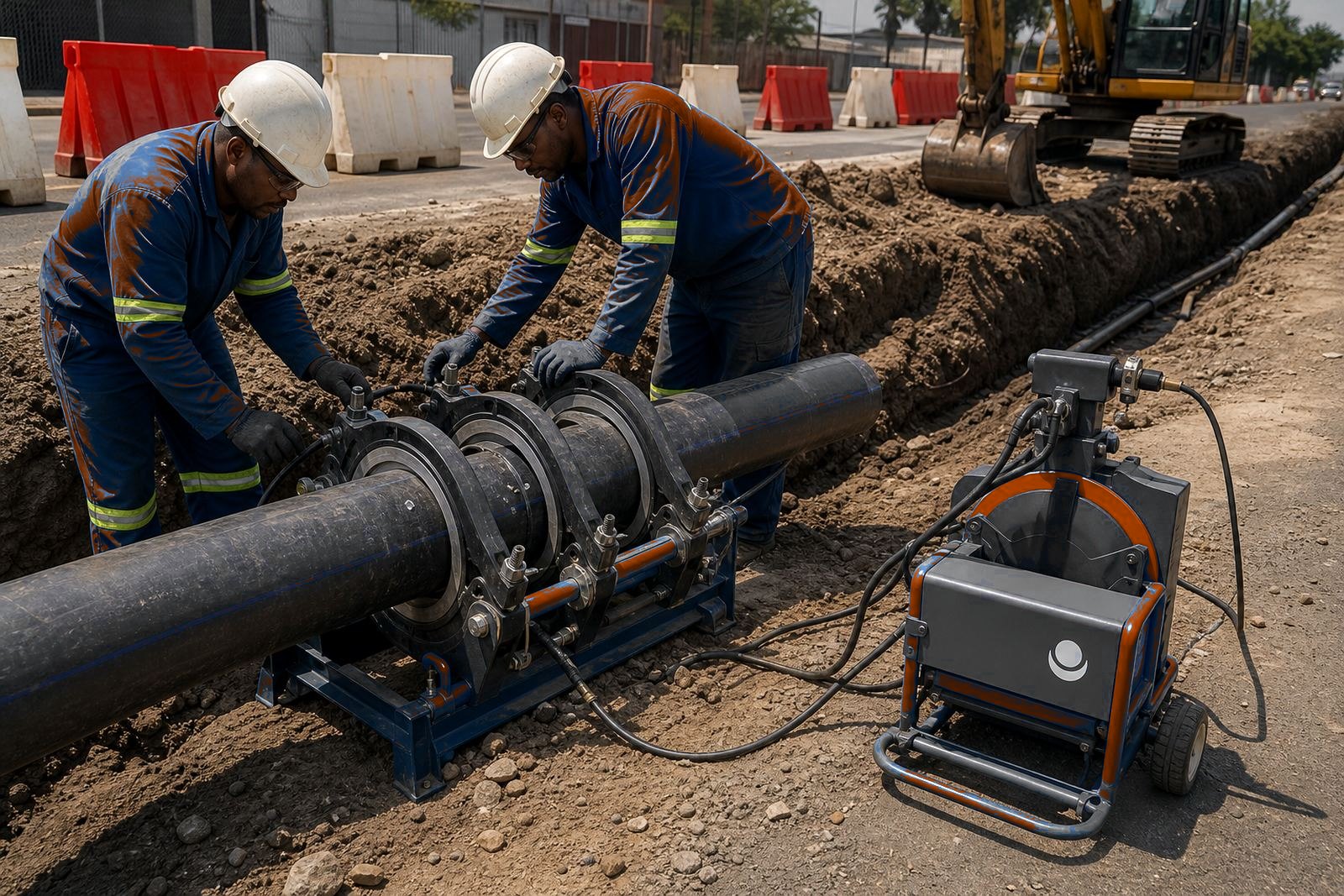
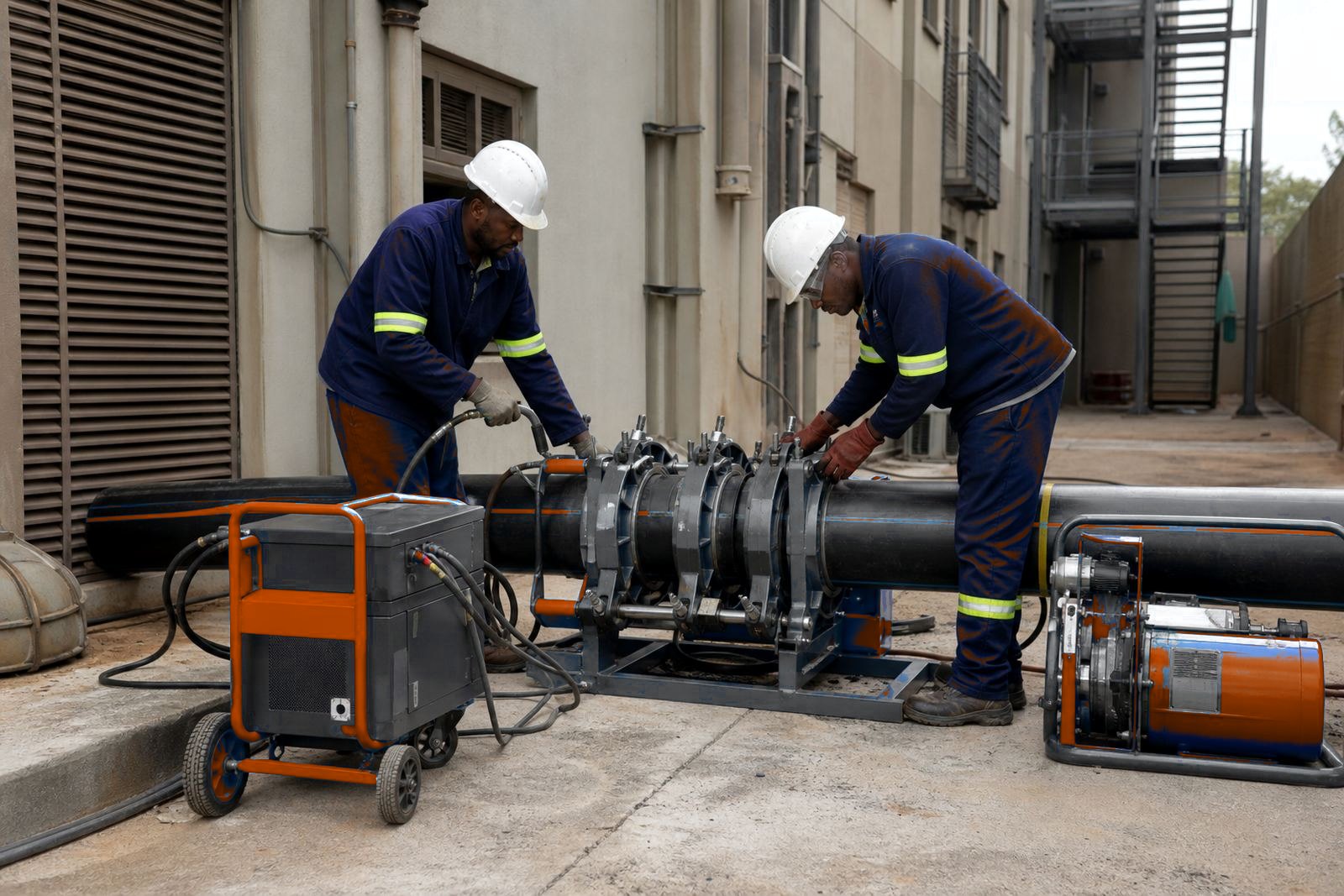
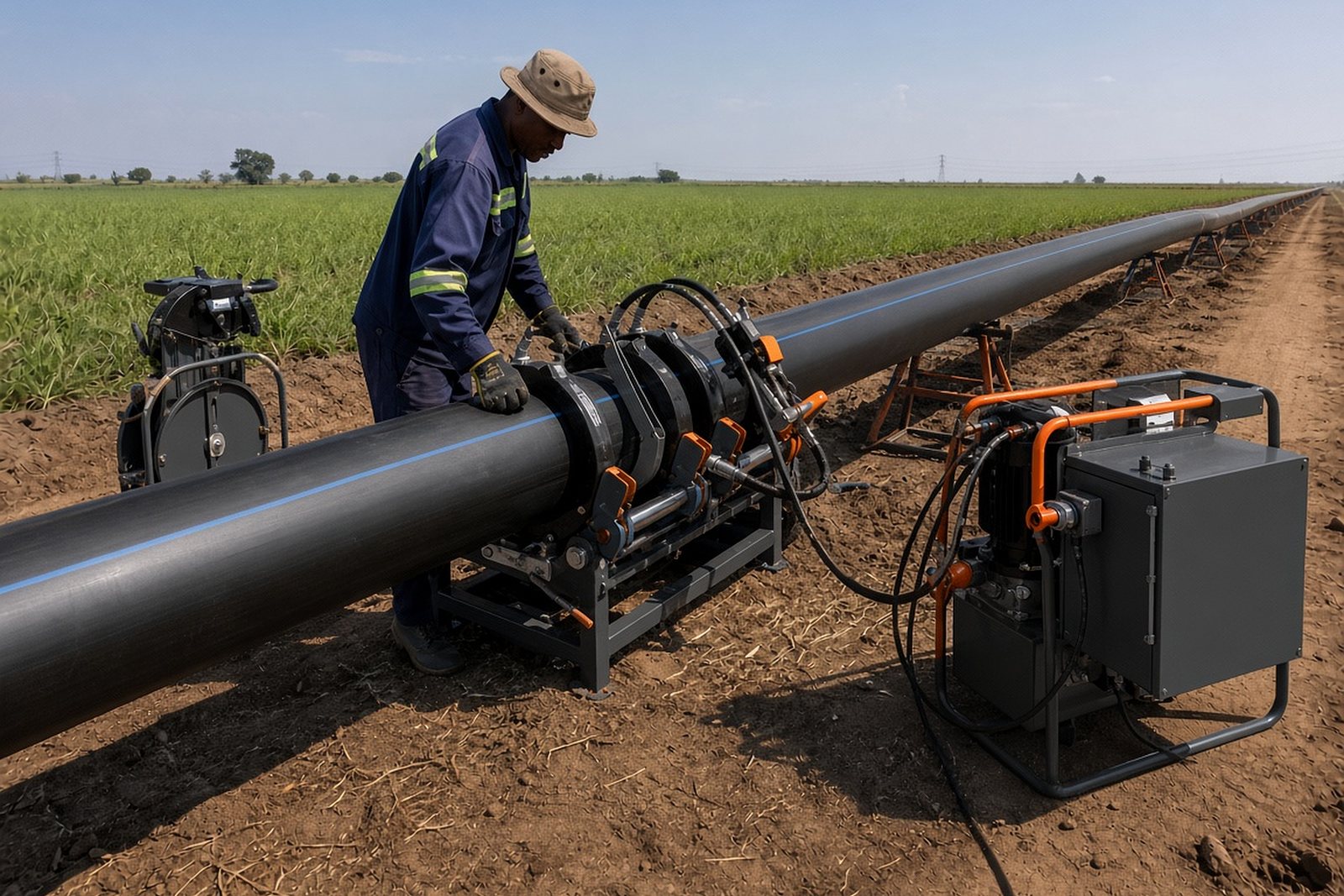
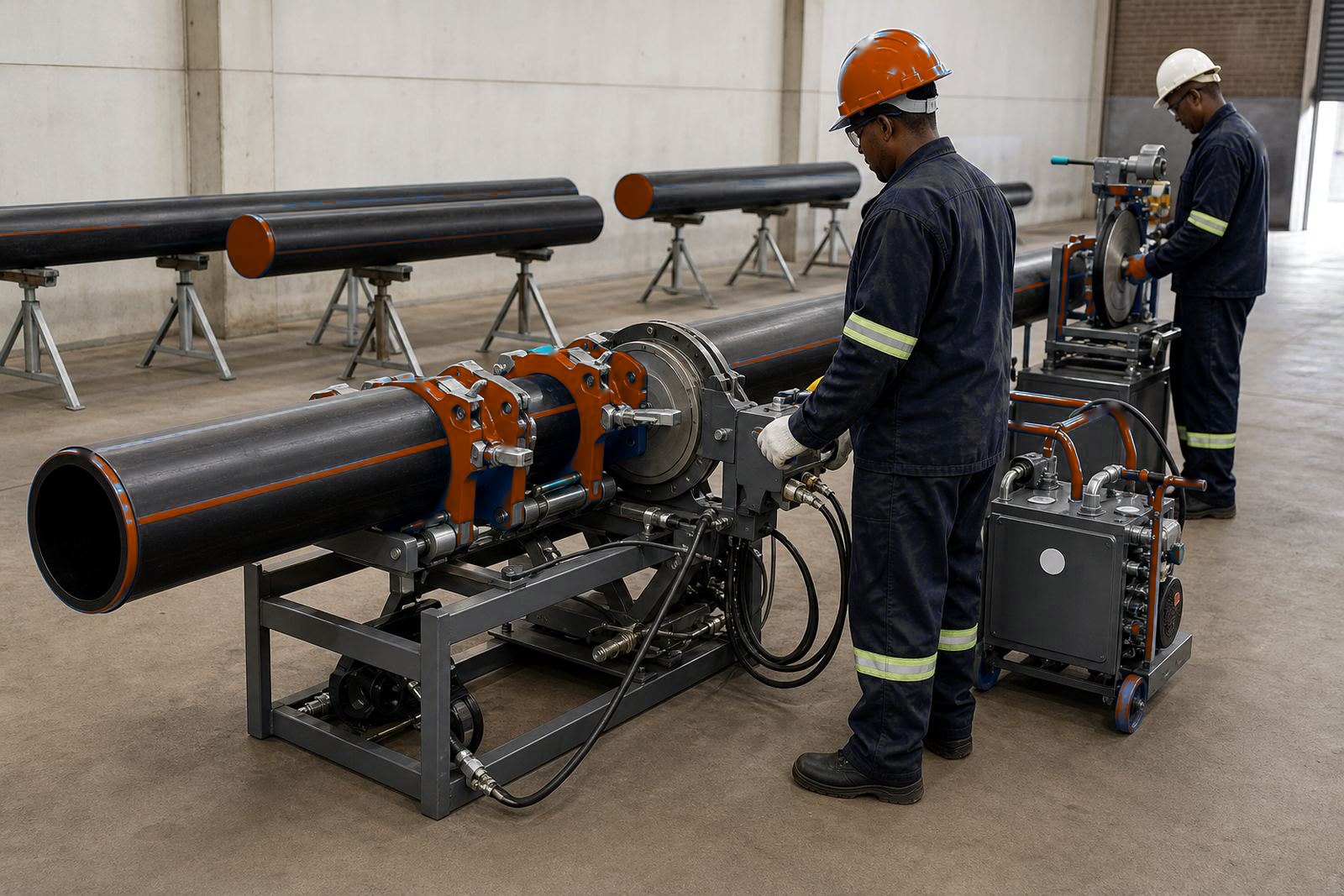
Most chemical transfer jobs call for welding equipment matched to the pipe diameter and wall class, along with facing tools, heater plates, clamps and a clean support table or stand. Larger runs may need hydraulic control, while smaller workshop jobs can use lighter equipment if the pipe sizes and SDR range are suitable.
- Square-end facer for chemical-resistant HDPE.
- Temperature-controlled plate for chemical transfer pipe grades.
- Alignment held by the clamps through heating and pressure.
- Data logging where the site wants weld records
- Marker tools, clean cloths and pipe support rollers
We also supply hire units for short programmes, shutdowns and remote site work, with setup checks before the machine goes out.
How the joint sequence usually runs on site
Prepare the pipe fully before heating. The ends need facing until both sides show a full, fresh ring of material.
Take the cooling time from the weld table. Early release distorts the bead or pulls the chemical line out of alignment. Operators watch bead shape closely on chemical lines, where a rushed joint is a leak risk. Internal bead look and fit-up are important where the line carries chemicals and the bore has to stay smooth.
- Confirm pipe size, SDR and wall thickness before setup
- Face both ends until the full surface is even
- Keep alignment through changeover
- Hold fusion pressure for the correct cycle
- Leave the joint to cool before handling or moving
Site layout for a transfer line
Transfer lines often run through narrow bays, bunded areas or pipe racks, so the weld plan must match the physical space. Long pipe sticks need support, and the machine position should let the operator work without dragging the pipe or forcing the joint into a twist. If the route changes direction near pumps, tanks or dosing areas, the line should be laid out so the welds stay accessible for inspection.
On a live project, the practical questions are simple. Can the machine clamp the full diameter? Is there room for the facer travel? Can the joint cool without being disturbed by other site traffic?
- Allow straight access for the machine and pipe supports
- Leave working space around the clamp line and heater plate
- Plan for safe lifting of larger pipe lengths
- Keep weld points visible for bead inspection and logging
- Separate clean pipe storage from dusty work areas
Dusty ends and a dull facer on chemical lines
Pipe ends stay dusty, the facer is dull, the heater plate is handled badly, or the operator shortens the cooling time because the crew wants to move on. A clamp range that does not match the pipe stops the line sitting straight.
In chemical transfer work, small faults can spread along the system. A slightly out-of-round joint can affect flow in a chemical line and complicate inspection. A wrong SDR on the pipe, or a mix of pipe classes in the same run, can also create a weak point where the line changes pressure or direction.
Budget ranges that help with planning in Rand
Chemical line budgets depend on diameter, joint count and whether the machine is hired or bought. Smaller workshop jobs can sit in a lower range, while larger site programmes with hydraulic machines and extra support gear move higher.
For planning only, many customers work from these broad ranges:
- Hire of a smaller butt-fusion set for short runs: from about R2 500 to R6 500 per period, depending on size and kit
- Full machine purchase plans for larger pipe sizes: from around R45 000 upwards, depending on capacity and accessories
Those figures move with the pipe size, site location and the amount of preparation needed before the first joint is made.
What our team handles on transfer lines
Chemical transfer crews book operator training through Ayanda Naicker.
For chemical transfer lines, weld logging help gives the client a record of every joint. Book a machine for a planned weld shift, or a service check on equipment already in use.