Old Water Mains, Short Shutdowns, Clean Reinstatement
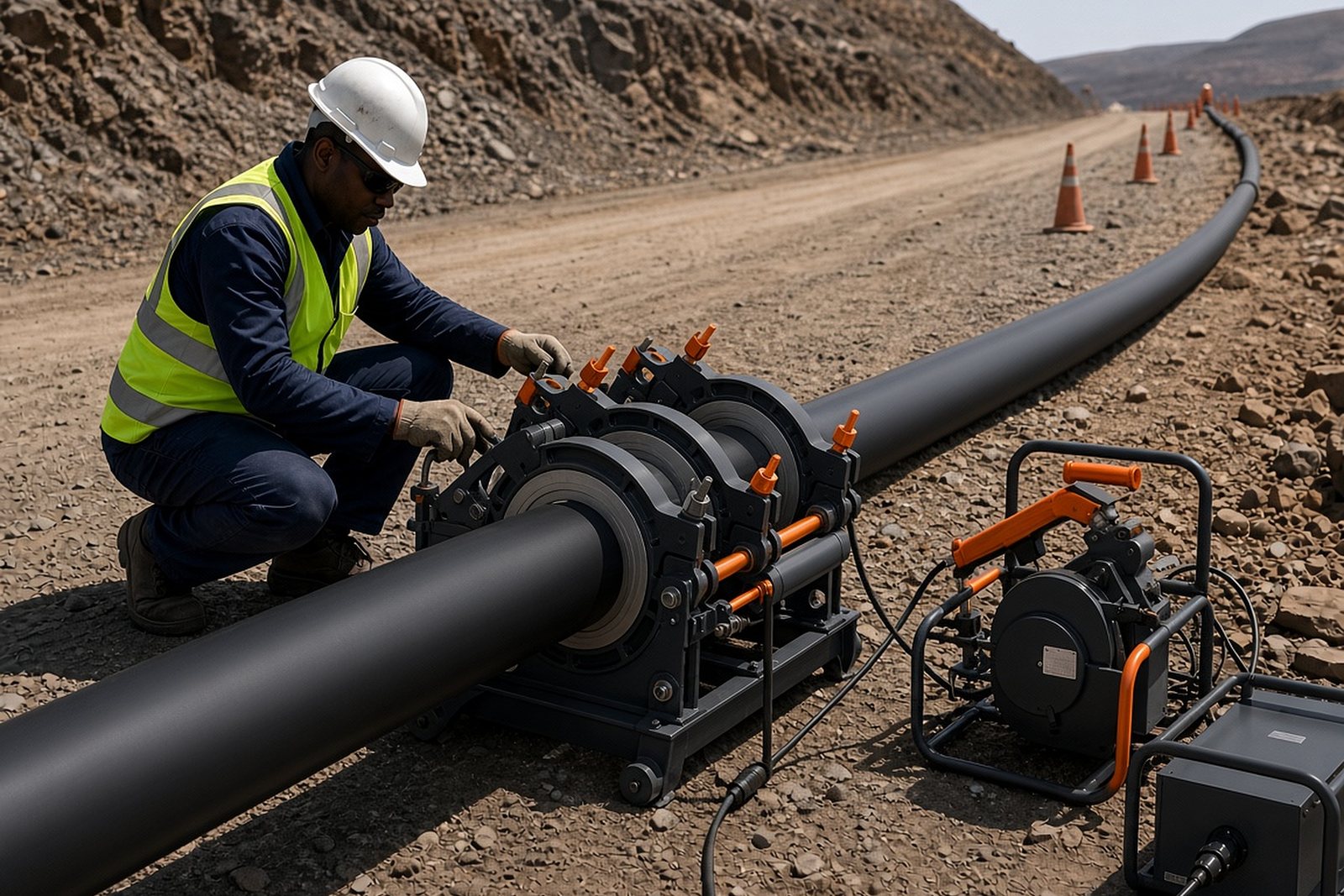
Municipal pipe replacement is usually triggered by a failing section of ageing line, patchy pressure, or repeated bursts after rain and ground movement. The work must fit into a tight corridor, often beside traffic, services and chambers already packed with valves, bends and tie-ins. Butt-fusion HDPE sections make sense where long welded lengths reduce the number of joints and give a smoother internal bore.
A repair crew needs to match pipe size and SDR before the first cut goes in. The joint faces have to be clean and square, then brought together under the right fusion pressure after heating. Shutdown windows on municipal replacement mean planning the pipe string, trench order and test points before the machine arrives.
- Typical pipe work includes 110 mm to 630 mm, with larger sets used on main runs and smaller sets on branch lines.
- Shorter welded strings help in streets with limited laydown space.
- Bead inspection after fusion helps the crew spot uneven pressure or poor alignment before backfill.
What the Crew Normally Sets Out on Site
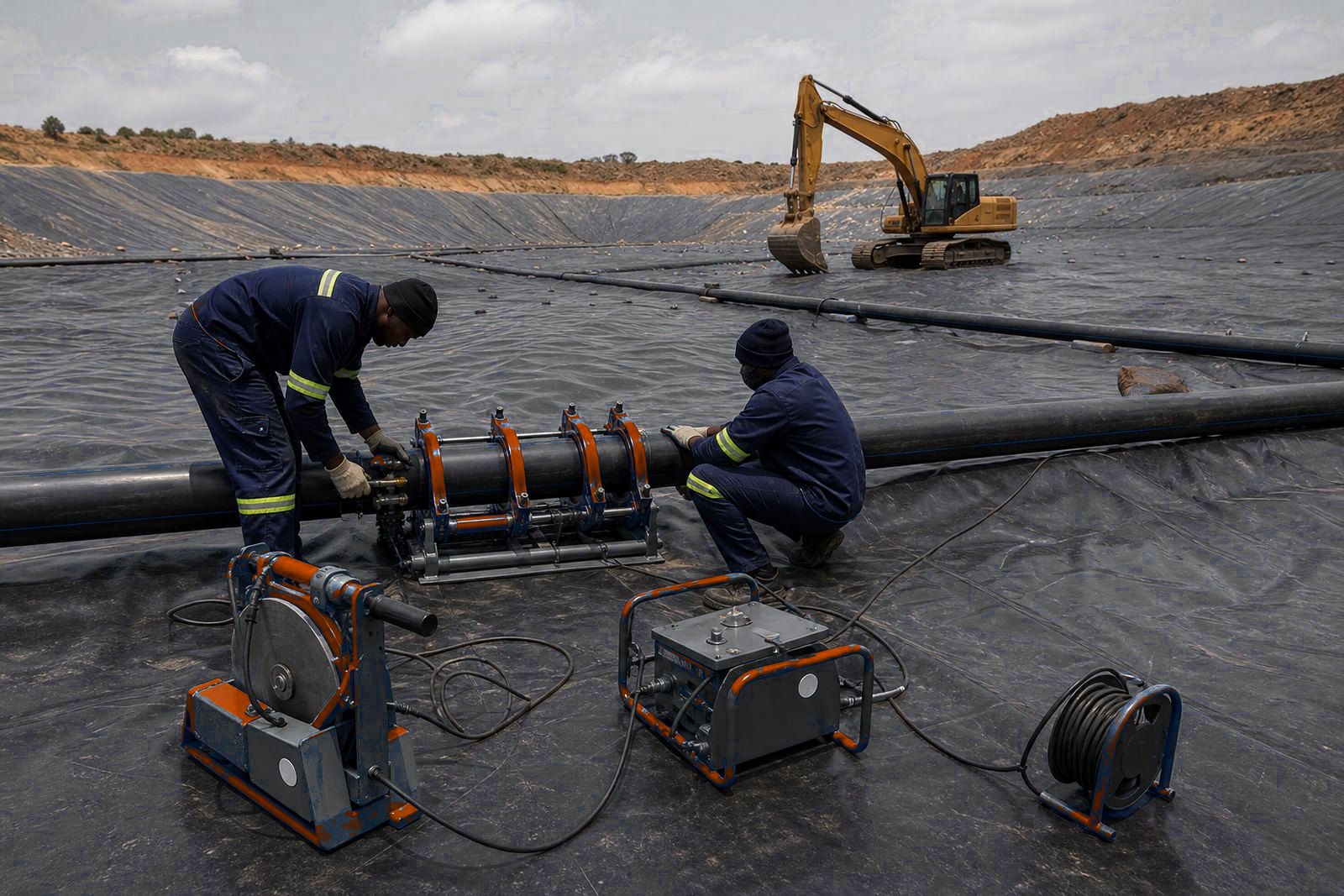
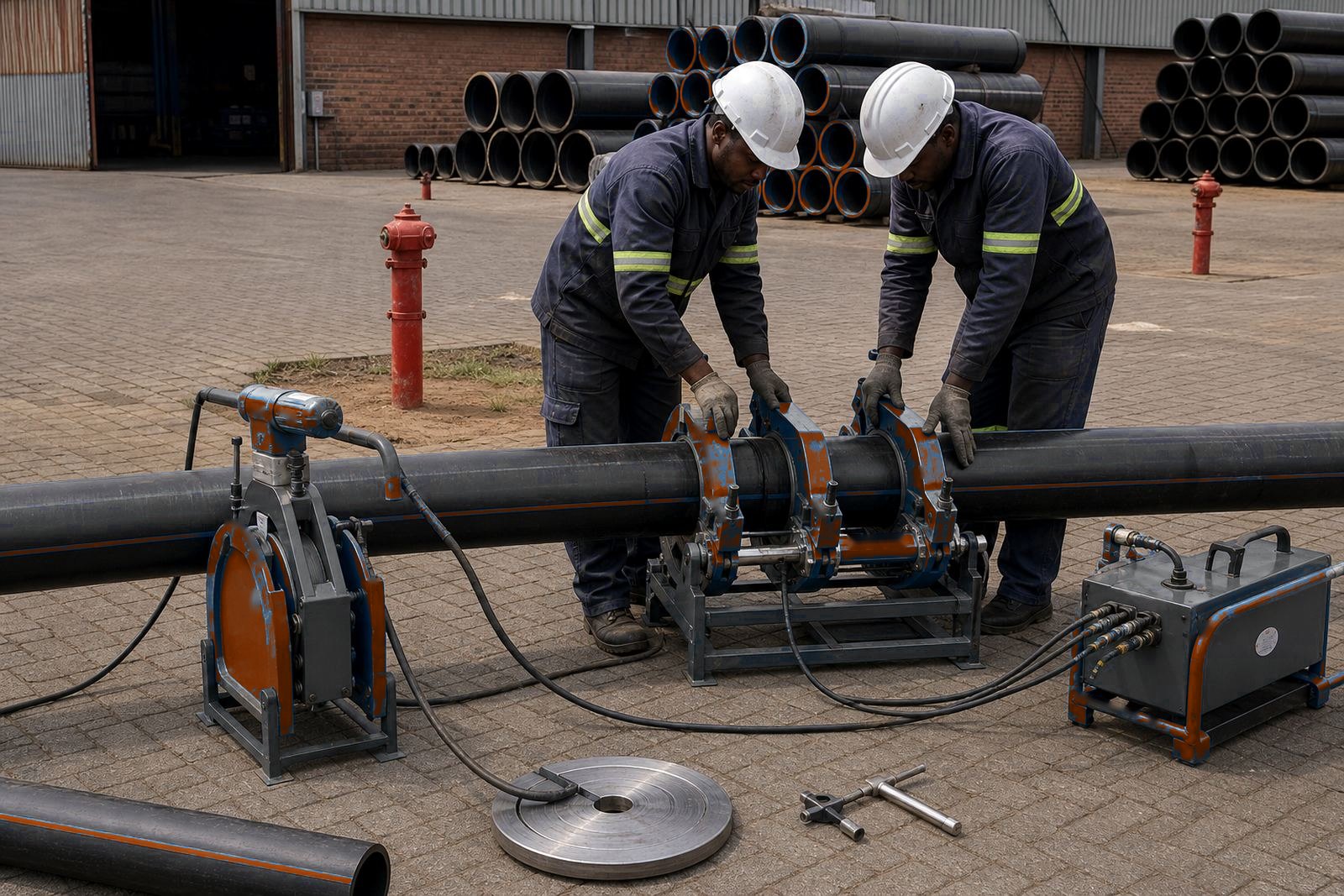
A practical setup for this kind of work usually includes the fusion machine, facer, heater plate, clamps and support gear for lifting and line-up. For longer municipal runs, a data logging unit can help record heating cycle details, fusion pressure and cooling time for each weld. Site engineers or municipal inspectors can use that record to follow the work sequence clearly.
The team often helps contractors choose between hire and their own kit. Hire suits one-off replacements and emergency cut-ins. Owned equipment suits repeat work where the same crew moves from ward to ward or from suburb to suburb. Either way, the machine has to suit the pipe size, trench width and weld position, because an awkward setup slows the whole chain.
- Facing tools should cut a true, even surface with no chatter marks.
- Check clamp alignment on long strings, especially where pipe is resting on uneven bedding.
- Hydraulic pressure should be checked before the first weld, before the line is prepared.
Planning the Fusion Line Before the Trench Closes
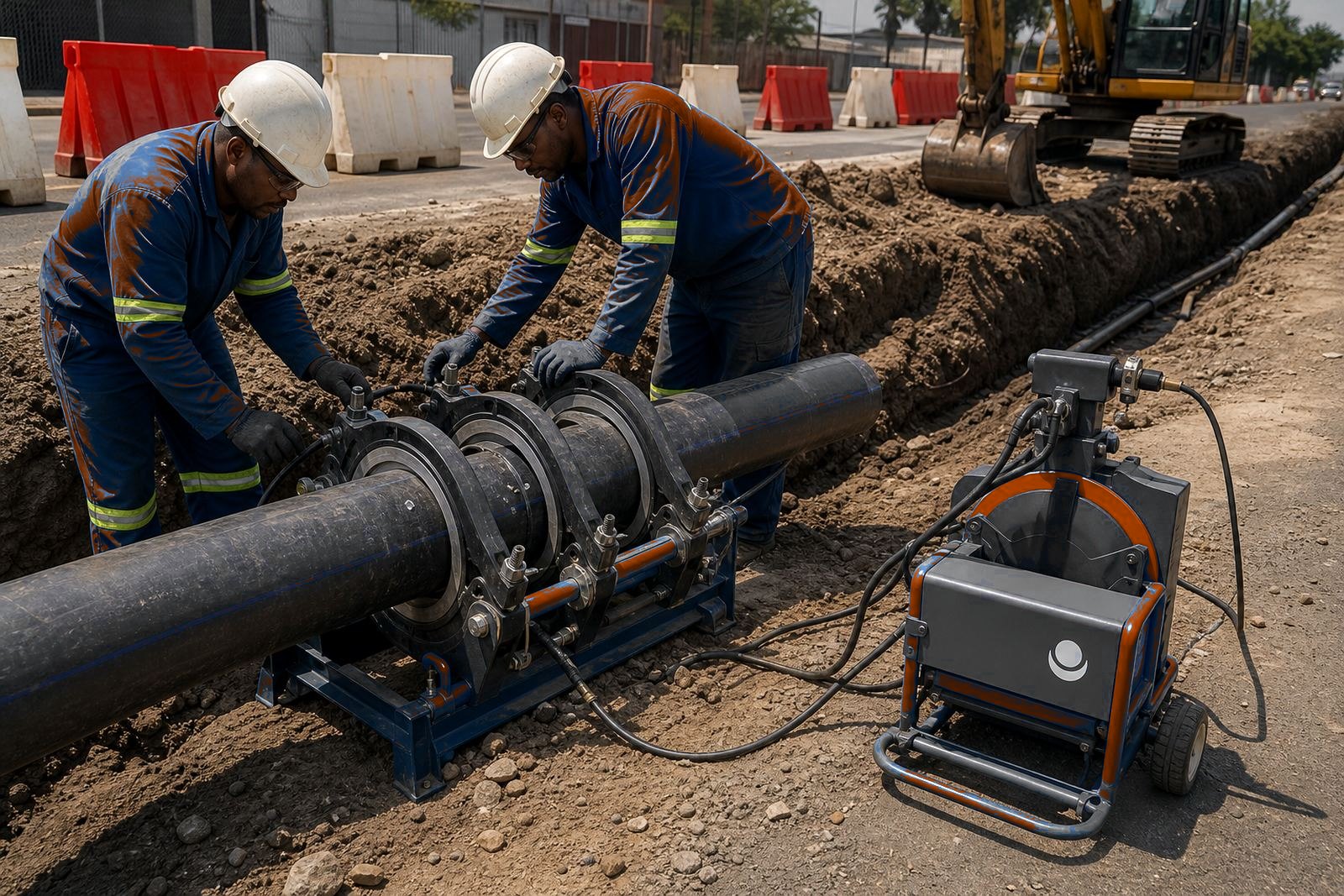
Good municipal pipe replacement work is organised around access and pipe length. The crew needs space for the machine, pipe racks, heater plate stand, and a safe path for lifting the heated ends into position. In cramped streets, the welding station often sits beside the trench while the next lengths are staged on level ground. This layout cuts handling distance and the risk of scoring the pipe.
For changing over from one section to the next, the operator must keep the pipe ends clean and free of grit. Any dirt on the heater plate or on the trimmed face can upset the bond. On large diameter jobs, the cooling period should not be rushed because movement during that stage can leave the bead uneven. Where a line serves schools, clinics or municipal stores, every joint is logged and inspected.
- Lay the pipe so the weld area is easy to reach from both sides.
- Keep mud and spoil away from the joint face.
- Plan the weld sequence before excavation reaches the final connection points.
Ends trimmed out of square
The same mistakes show up on many municipal line changes. Ends trimmed out of square. The operator sets fusion pressure by feel and skips the machine settings. Sometimes the cooling time is shortened because the next weld is waiting and the trench crew wants to close up. Each of those errors can cause a failed pressure test or a leak after the line is back in service.
A uniform bead around the pipe suggests the ends met properly and the pressure held steady. A thin side, a burnt patch or an offset line can point to poor alignment or heat loss during transfer. Temperatures and site conditions vary from job to job, so the operator checks each joint against the logged settings.
- Do not move the pipe while the joint is cooling.
- Do not mix pipe grades or SDR ratings on the same weld sequence.
- Do not skip facer checks when the day begins with a cold setup.
Machine Hire for Public Works Teams
PlasticWelder hires machines to contractors and municipal teams. A hire package can cover the fusion machine, facing tools, clamps and heater plate, while servicing keeps the hydraulic system, clamps and heater face in working order. Where a crew is taking on a long water replacement run, refresher training helps align the team on setup, fusion timing and bead inspection.
Budget varies with pipe size, hire period and how much site support is needed. Smaller replacement work may be planned around lower hire spend, while large diameter municipal pipe replacement needs a stronger machine and more handling gear. As a broad working range, a short hire with basic support may start at about R3 500 to R12 000, while larger fusion sets, logging support and field setup can sit between R15 000 and R45 000 or more, depending on the pipe class and site conditions. Servicing, checks and overhauls are usually priced separately after inspection.
Startup help covers a crew moving onto a new section of line.