Preparation for mine water runs
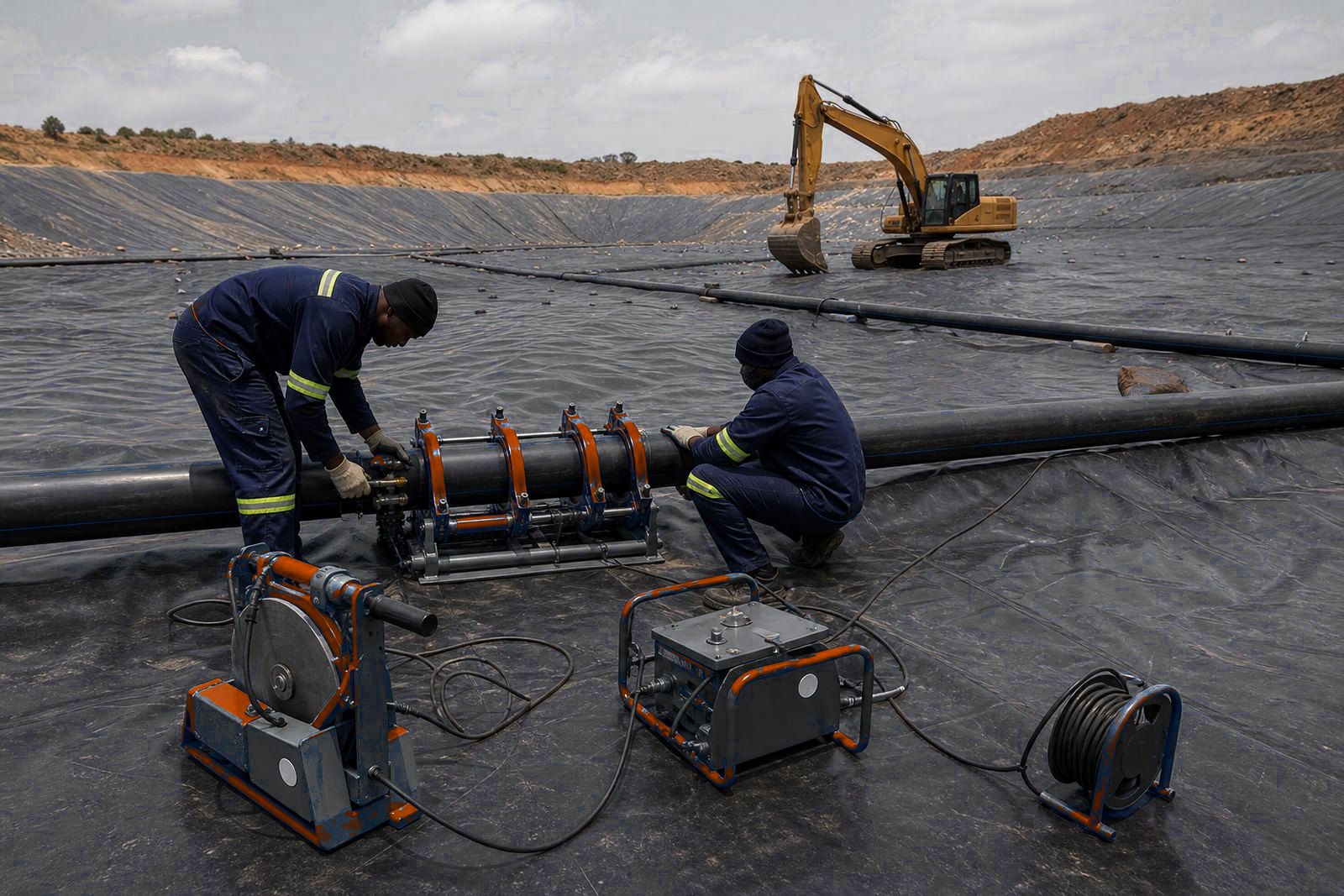
Mine water transfer work usually means long lengths of HDPE pipe, patchy ground and crews working close to live plant. The line may move dirty water, decant water or return water between tanks, sumps and treatment points, so the joints need to stay steady under pressure and constant movement. A butt-fusion weld needs clean facing, even heating, a proper changeover and controlled cooling. Misaligned ends or a dirty plate give a patchy bead on mine pipe.
In this setting, contractors often work with SDR 11, SDR 13.6 and similar wall classes, with pipe sizes ranging from smaller service lines to large bore transfer runs. The exact pipe size and wall thickness set the machine choice, clamp size and hydraulic pressure needed for the job. When the site is rough or the trench is cramped, the gear must be easy to align and simple to inspect.
The set-up that usually leaves the yard
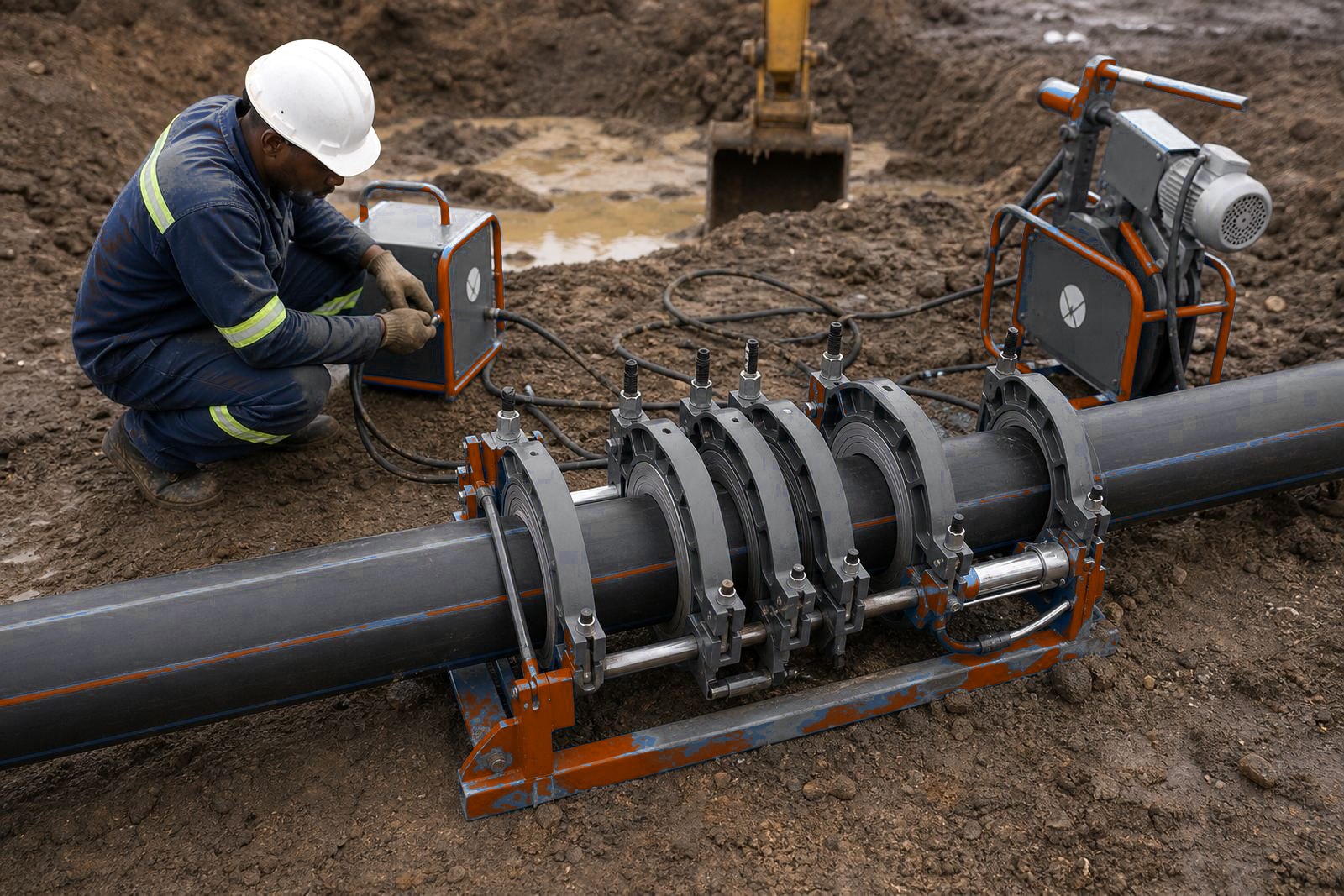
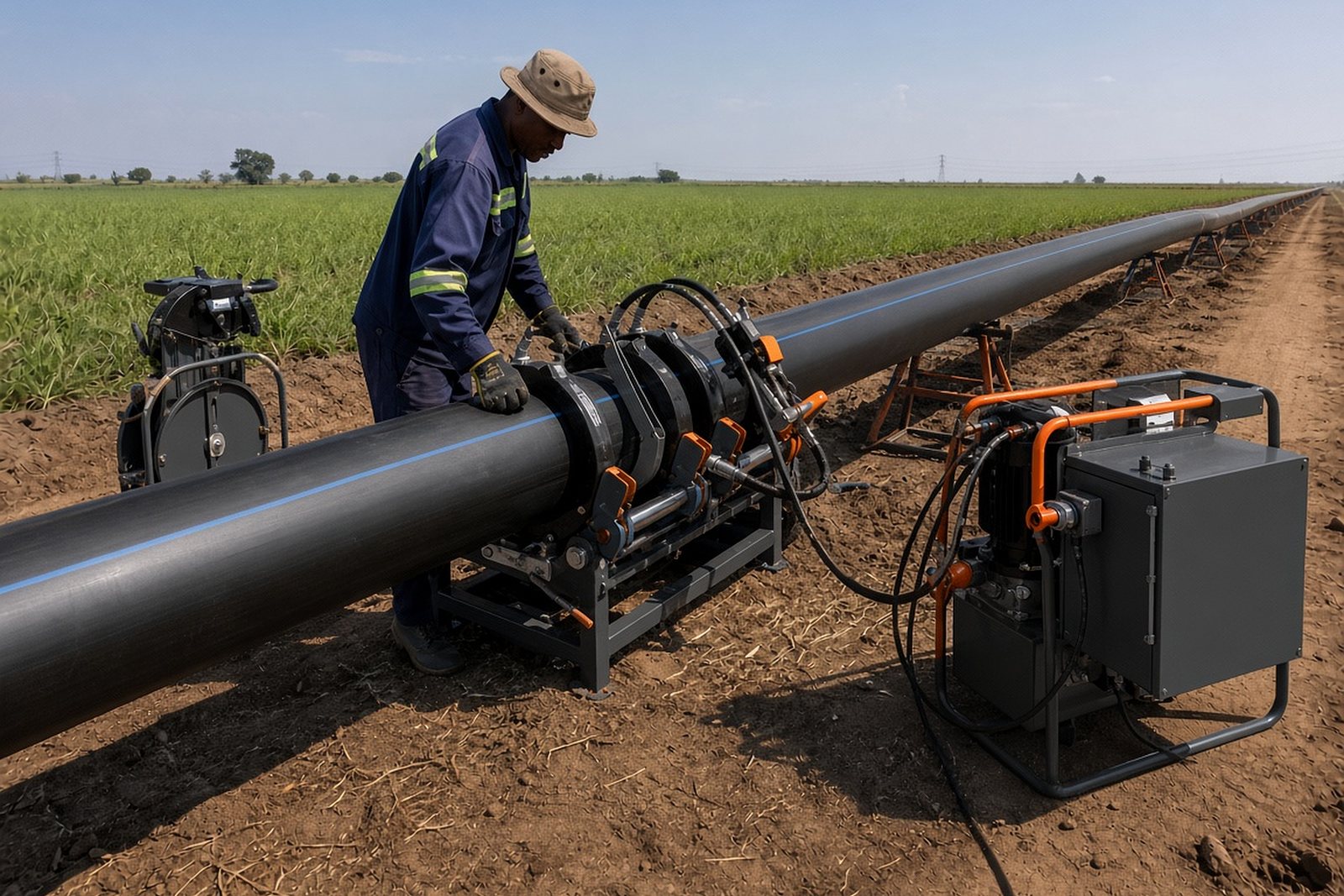
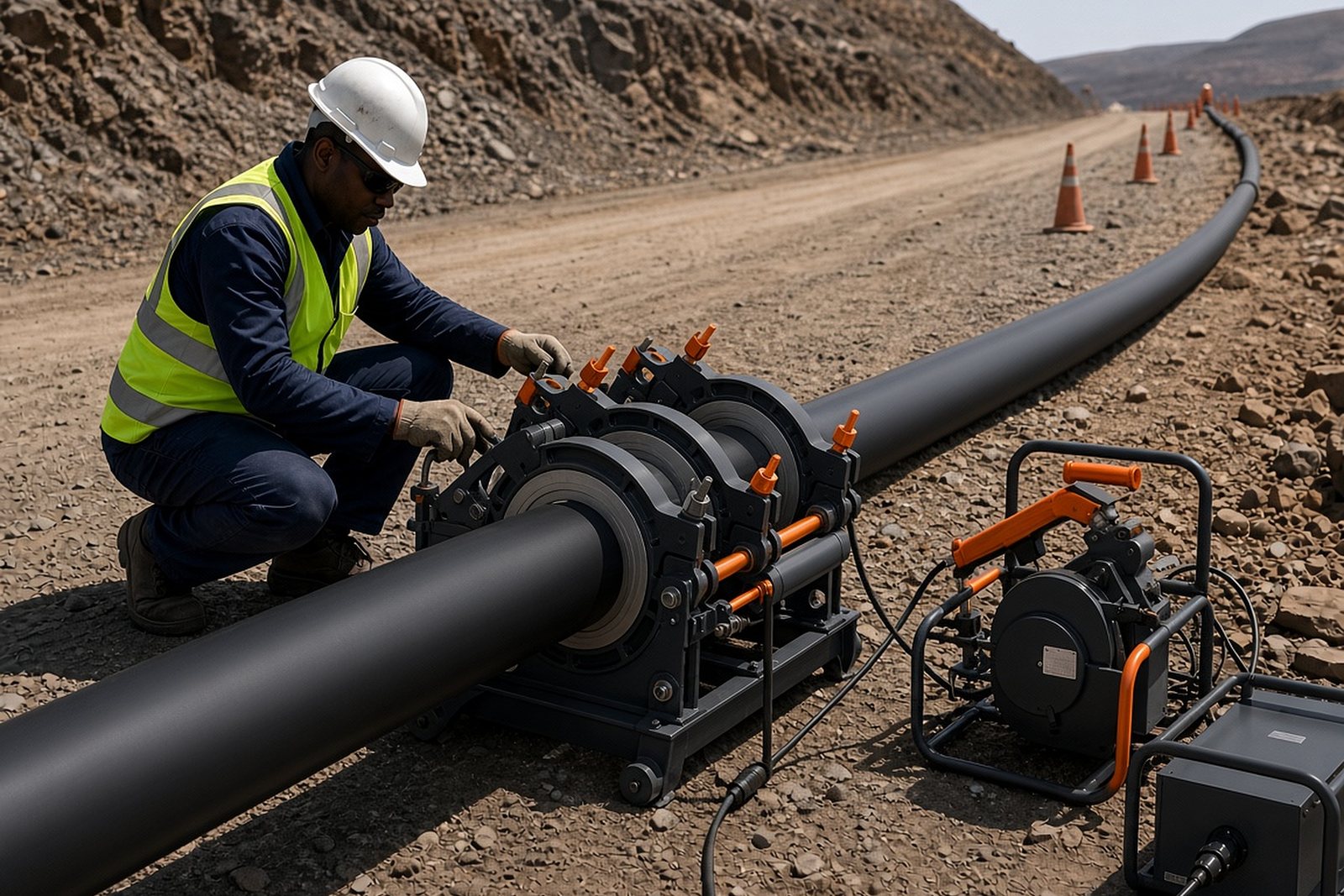
A mine water crew normally needs a butt-fusion machine, facing tool, heater plate, clamps and pipe supports. On larger runs, a data logging unit records temperature, pressure, soak time and cooling time for the job pack. Mine site machines sit on a stable frame with clearance for the pipe ends and facer.
- Frame sized for the job's pipe diameters.
- Facing tool with sharp cutting condition and steady feed
- Clamp set that holds round pipe without slipping
- Hydraulic unit for controlled fusion pressure
- Data logging help where records are required
Some jobs also call for spare inserts, scrapers, cleaning cloths and shade or shelter around the weld area. Dust and wet grit get into everything near a shaft or plant edge, so the crew needs a work area that is kept clear before the first face is cut.
Layout advice for shaft and plant edges
Mine water welding works better when the pipe path is planned before the machine arrives. The crew should know where the line is going, where a weld can sit, and where access is tight around pumps, valves or bund walls. Long pipe strings need room for handling and for the heat cycle, while short service lines may need compact equipment and a quicker set-down. On sloping ground, support the pipe so it cannot sag and pull the weld out of line during heating or cooling.
Plan for wind, rain and the route for moving pipe sections. Even a short weld fails if the pipe ends are contaminated with water or the changeover is rushed. Large mine lines need enough crew to lift, centre and hold the pipe square while the plate is in.
Water on the pipe ends and rushed changeover
The common faults are familiar: poor pipe end preparation, dirty heater plates, uneven clamping, wrong pressure and a rushed cooling period. Bead inspection is still one of the best checks on site. A sound bead should run evenly all round the joint, without obvious mismatch, burn marks or a thin weak side. If the fusion pressure is off, the bead can look narrow or lopsided, and that usually means the weld needs attention before the line is put under load.
- Do not skip facing just because the pipe looks clean
- Keep pipe ends dry and free of grit before heating
- Hold the pressure steady through fusion and cooling
- Allow the full cooling time before moving the joint
Site teams use the log to record the weld cycle. It tracks set temperatures, soak times and pressure values on long mine water runs where several crews may work on the same line over a week or more.
Training for site crews and workshop staff
Mine water work needs operators who know the machine and understand the plant around it. Training should cover pipe preparation, clamp alignment, heat soak, changeover timing, pressure build-up and cooling time. Refresher training helps when the crew has moved onto a larger diameter, a different SDR or a tighter site layout. Site startup help includes support on the first few welds of the line.
Any hired machine can come with a short operator handover. The team should know how to check the heater plate, test the hydraulics, inspect the facer and read the weld record if data logging is in use. A good handover keeps the weld routine practical, especially where shift changes and access windows are tight.
Budget ranges for mine water projects in Rand
Costs vary with pipe diameter and hire period. Smaller service-line jobs may only need a compact machine for a short period, while larger mine water runs call for a heavier set-up and more clamps. In Rand terms, a short hire can sit in a lower bracket, but larger diameter weld equipment and longer site use move the figure up quickly.
Budget lines for mine water work are machine hire, operator support, collection checks and consumables. Count transport and equipment handling when the job runs across several shafts or plants. The cheapest option is often the wrong choice when a failed weld means lifting pipe, recutting ends and losing time on a wet site.
- Short hire for smaller pipe work
- Higher budget for large diameter mine water transfer runs
When the job is spread across several mine sites, the crew budgets for transport and handling alongside the machine.