Containment runs that need tight joint control
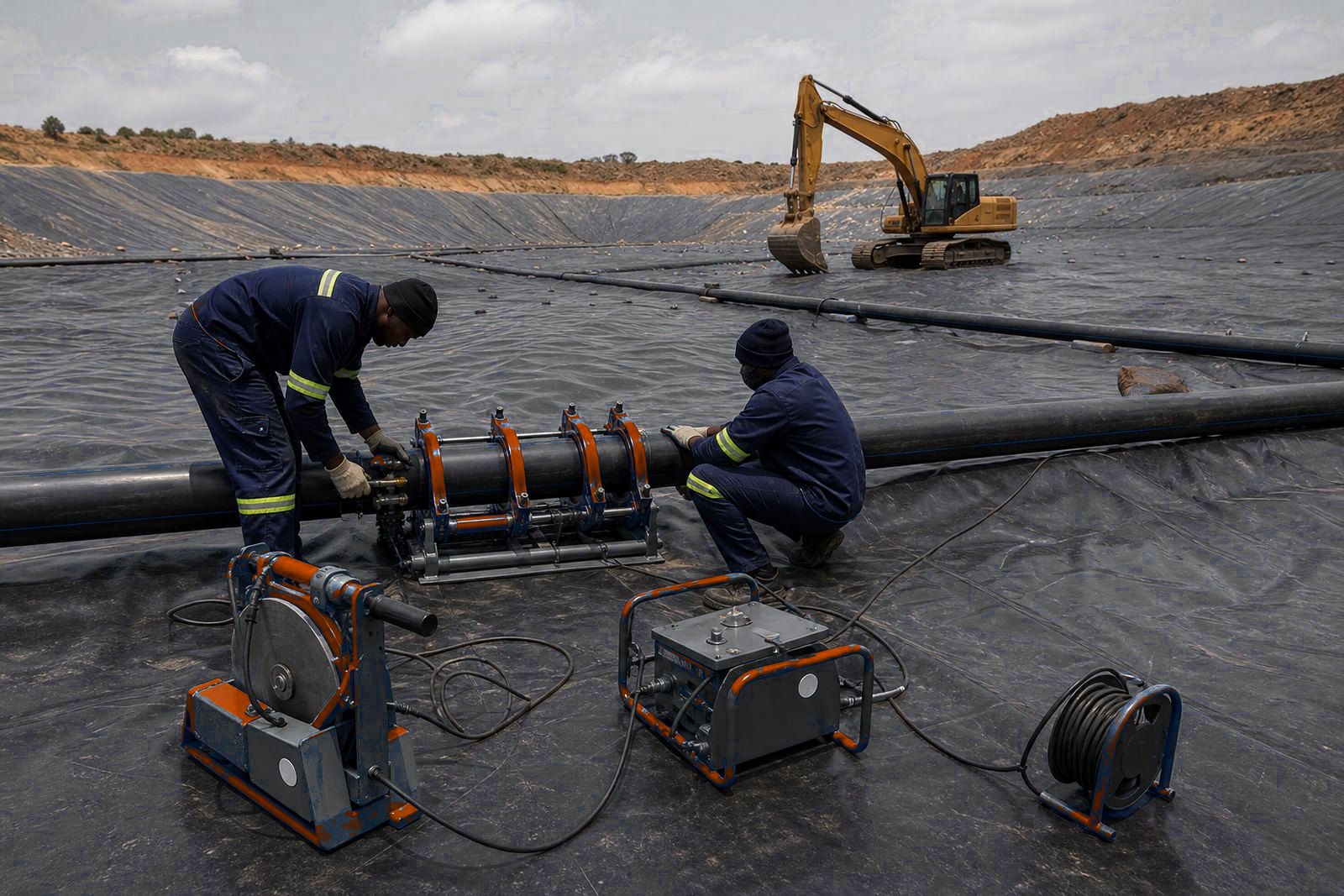
Leachate systems put a lot of pressure on the welding crew. The pipe may run across compacted ground, along cell edges or through service corridors where alignment is awkward and the pipe ends do not sit perfectly still. For that reason, the equipment has to hold the pipe securely, face the ends square, heat evenly and keep fusion pressure steady through the changeover and cooling stages.
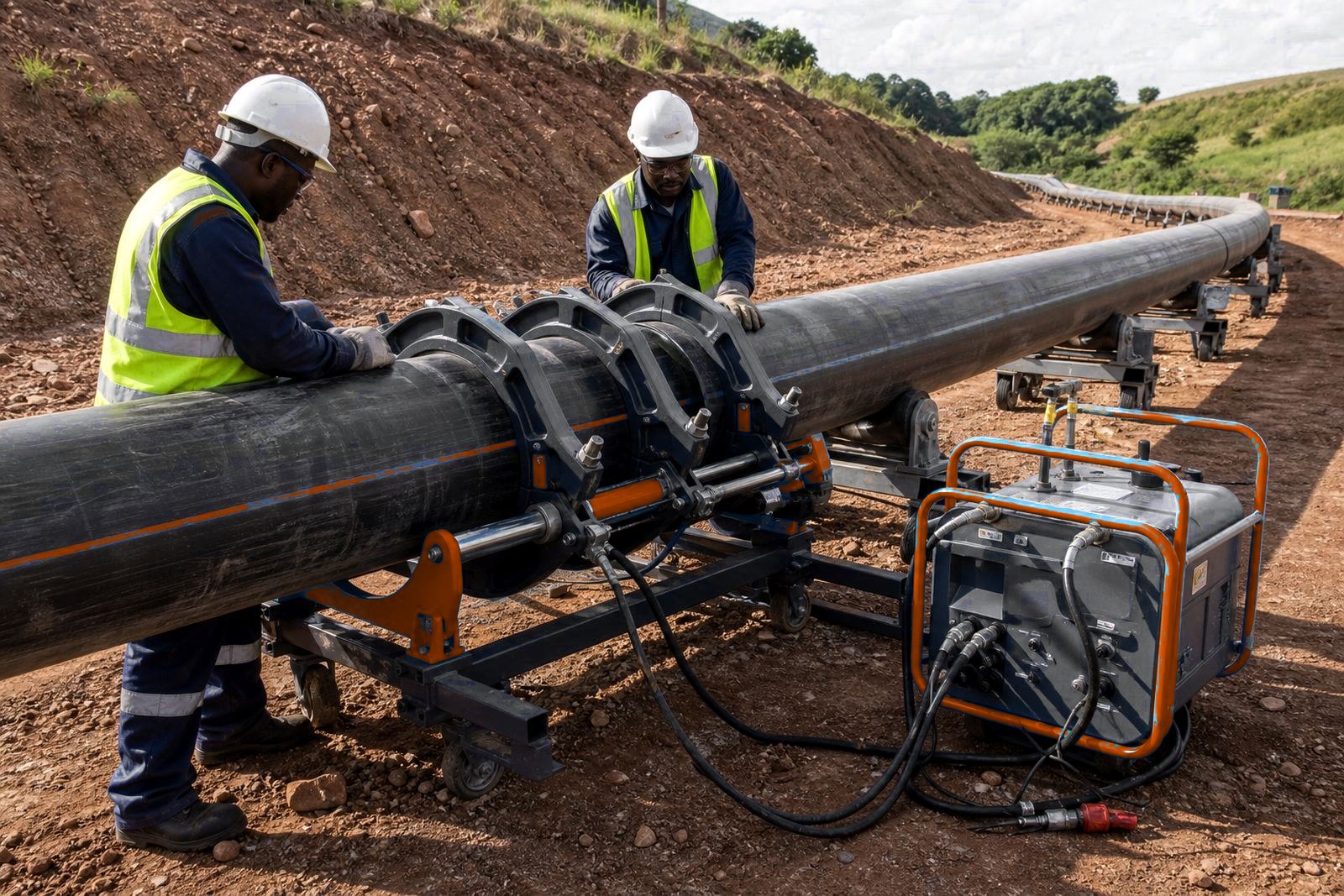
Most landfill jobs use HDPE because it handles moisture and corrosive liquid better than many other pipe types. In practice, pipe size, SDR and wall thickness set the join. Smaller lines can be worked with lighter kit, while larger diameters need a stronger frame, proper pipe support and enough clamp travel to keep the faces true during heating and fusion.
When the line carries leachate away from a collection point, every joint is checked. Bead shape, melt upset and cooling time all need to be checked before the next section is moved or backfilled.
Typical kit for landfill leachate welding
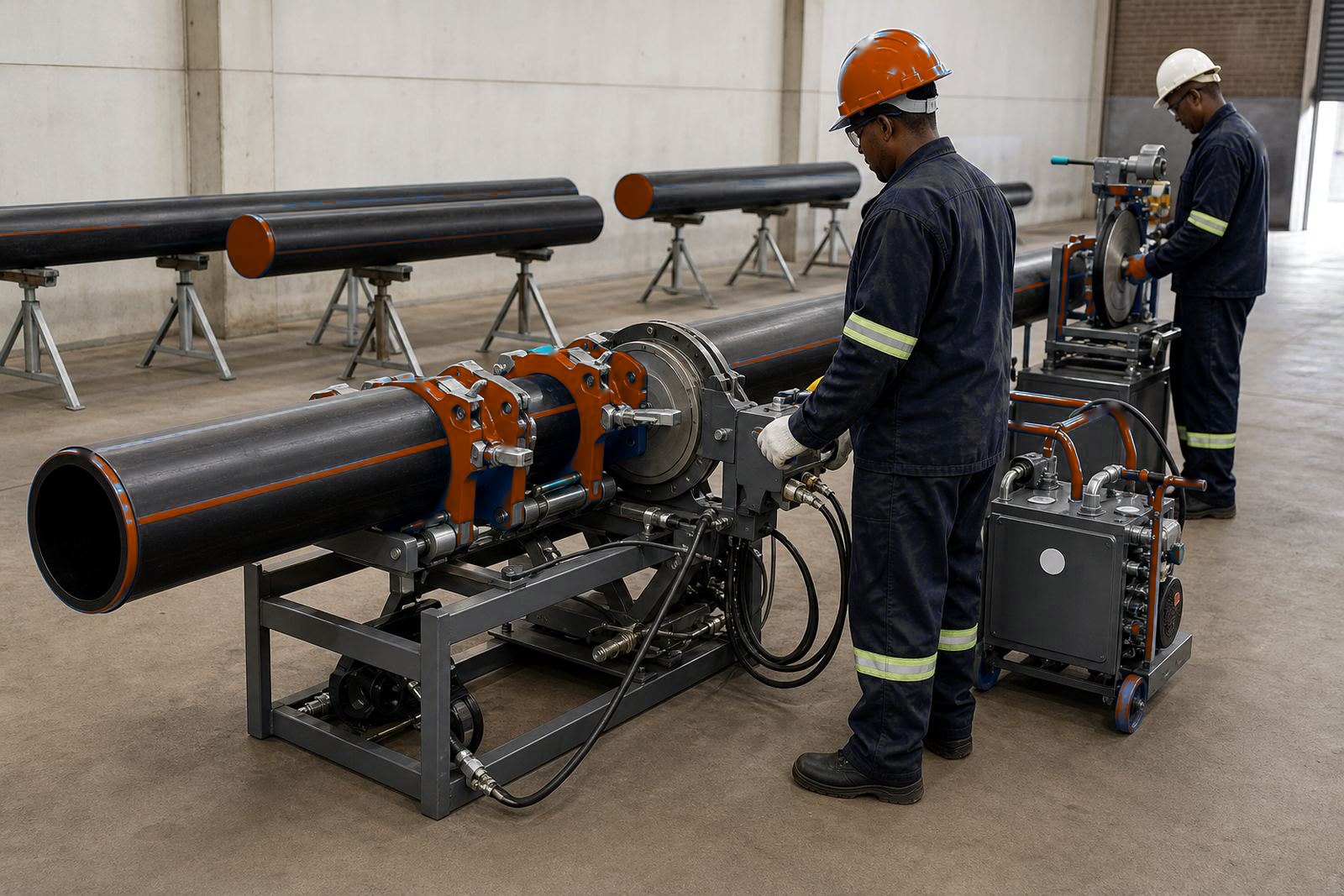
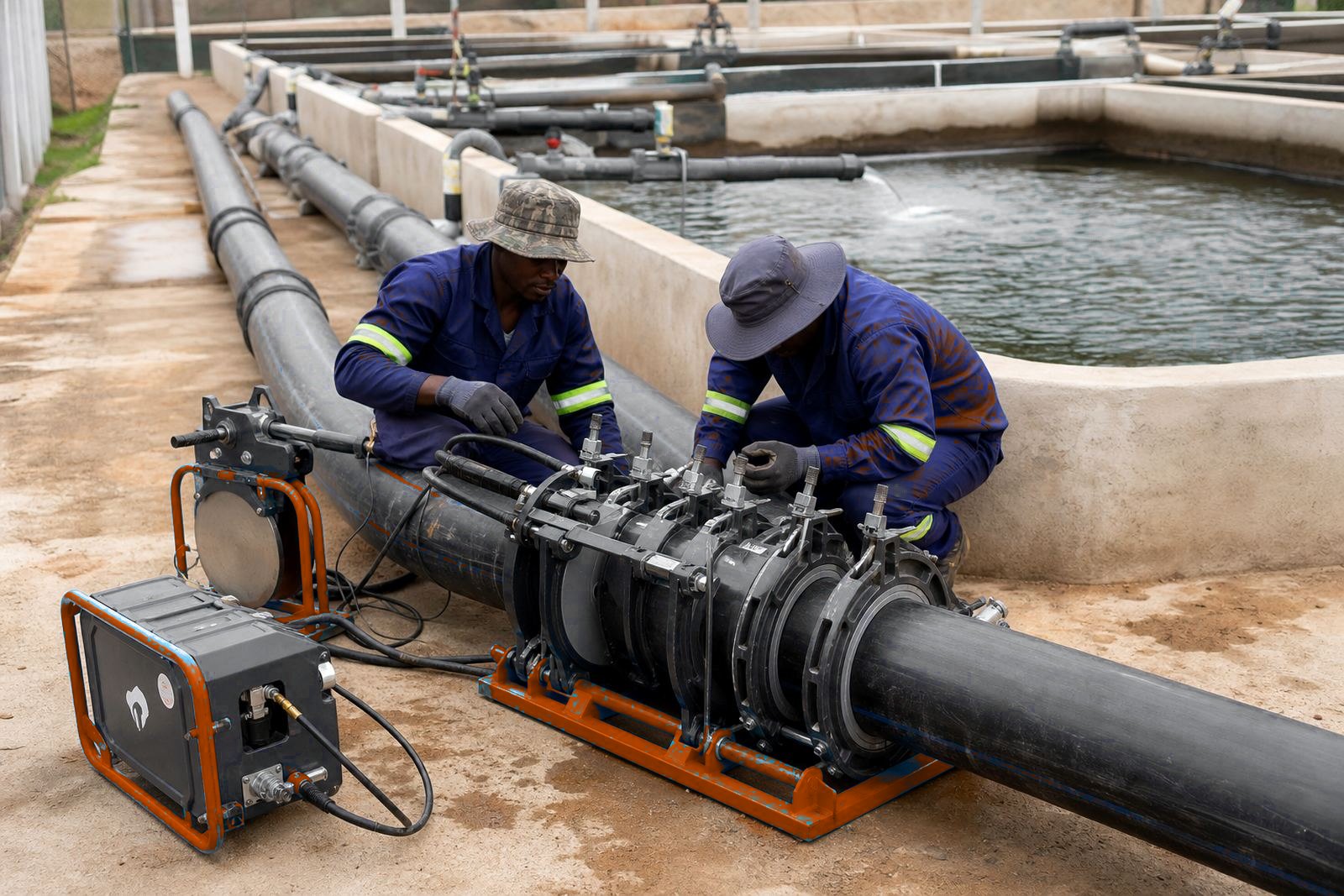
A leachate team normally needs a butt-fusion machine matched to the pipe range on site, plus a facer, heater plate and pipe clamps. Long leachate runs need rollers, lifting gear and a tidy weld record. Where the work shifts between cells and plant areas, hire units can keep the crew moving without tying up capital in spare machines.
- Welding unit matched to the pipe diameters on site
- Facer for clean, square pipe ends before heating
- Clamp set that keeps the pipe aligned through fusion and cool-down
- Landfill files covering pressure, time and joint details.
- Field spares for seals, blades, hoses and wear parts
For landfill use, the machine should also be easy to inspect and service. Dust, slurry and fine grit get into the moving parts, so clean the facer and clamps daily.
Layout planning around cells, sumps and access roads
The line layout often has to work around earthworks, temporary berms, access roads and drainage channels. We may weld on uneven ground, with limited space for pipe handling. Stage the pipe in straight lengths, keep the pipe ends supported, and leave room for the machine to open fully during insertion and removal.
Before welding starts, the crew should confirm the SDR, wall thickness and joint sequence. A thinner wall behaves differently from a heavy wall section, so set fusion pressure from the pipe spec. On longer transfers, it is also worth planning where bead inspection will happen and where the welded string can cool without being disturbed.
For landfill work near active containment areas, the route often changes as the site develops. That is normal, but it needs a machine setup that can move with the job and still hold a consistent clamp line.
Weld steps on leachate pipe
We clamp the pipe ends, face them, and check for a full, even shave. Fusion pressure is applied, the bead forms and the joint stays under control while it cools.
- Square facing before every weld
- Clean pipe ends with no grit or moisture film
- Correct heater plate temperature and contact
- Controlled changeover without dragging or twisting
- Fusion pressure held steady for the joint size
- Cooling time allowed before unclamping or moving the line
An even bead should run around the full circumference, with no obvious gaps, slips or signs of poor alignment.
Grit and dust in the facer on landfill sites
Faults on leachate lines usually trace back to dirty or badly faced ends. Dirty pipe ends, poor clamping, a dull facer and rushing the changeover can all spoil a joint. On landfill work, another issue is movement after fusion. Lifting, twisting or backfilling before cooling stresses the soft joint.
Uneven support is another problem. When a long pipe sits on rocks, spoil or a bent timber support, the ends do not meet at centre height and the bead can run unevenly. That is one of the reasons our refresher training spends time on the cooling stage.
Check the machine's condition. Worn hydraulics, poor clamp alignment and a heater plate that has hot and cool spots will make the weld harder to control. Book servicing and heater plate checks before a run starts.
Budget ranges for landfill leachate welding gear
Budgets are driven by pipe diameter, the number of crews on site and whether the machine is bought, hired or shared. Smaller setups for lighter HDPE work sit at a different level to heavy frames for larger landfill transfer lines. A full setup usually includes the welding machine, facer, heater plate, clamps and the support kit needed to move and inspect pipe safely.
- Hire for smaller site works or short programmes: from about Rand 2,500 to Rand 8,500 per day, depending on machine size and support kit
- Entry level purchase for lighter diameter work: often around Rand 85,000 to Rand 180,000
- Mid-range systems for more regular field use: often around Rand 180,000 to Rand 420,000
- Larger diameter machines with stronger frames and logging options: from about Rand 420,000 upward
Those figures shift with the pipe range, the condition of the machine and the extras needed for the job. A short landfill repair may only need hire, while a long leachate run can justify a purchase.