Joint timing on thick slurry lines
Slurry pipelines carry abrasive mixtures, so the joint has to hold shape under internal pressure and movement from settlement, vibration and repeated shutdowns. On long runs, the pipe wall is often heavy and the SDR low enough that handling takes planning before the first face is cut.
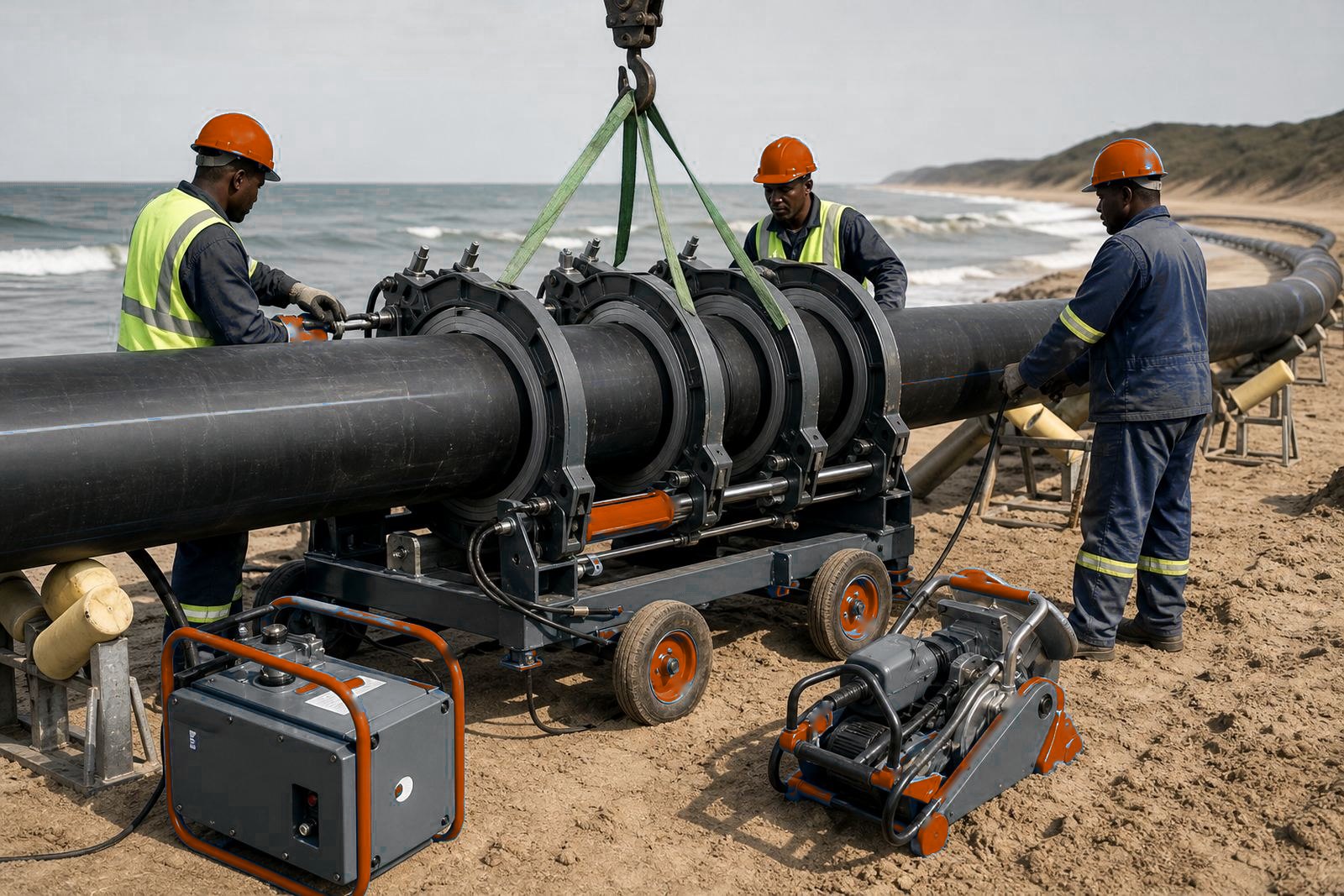
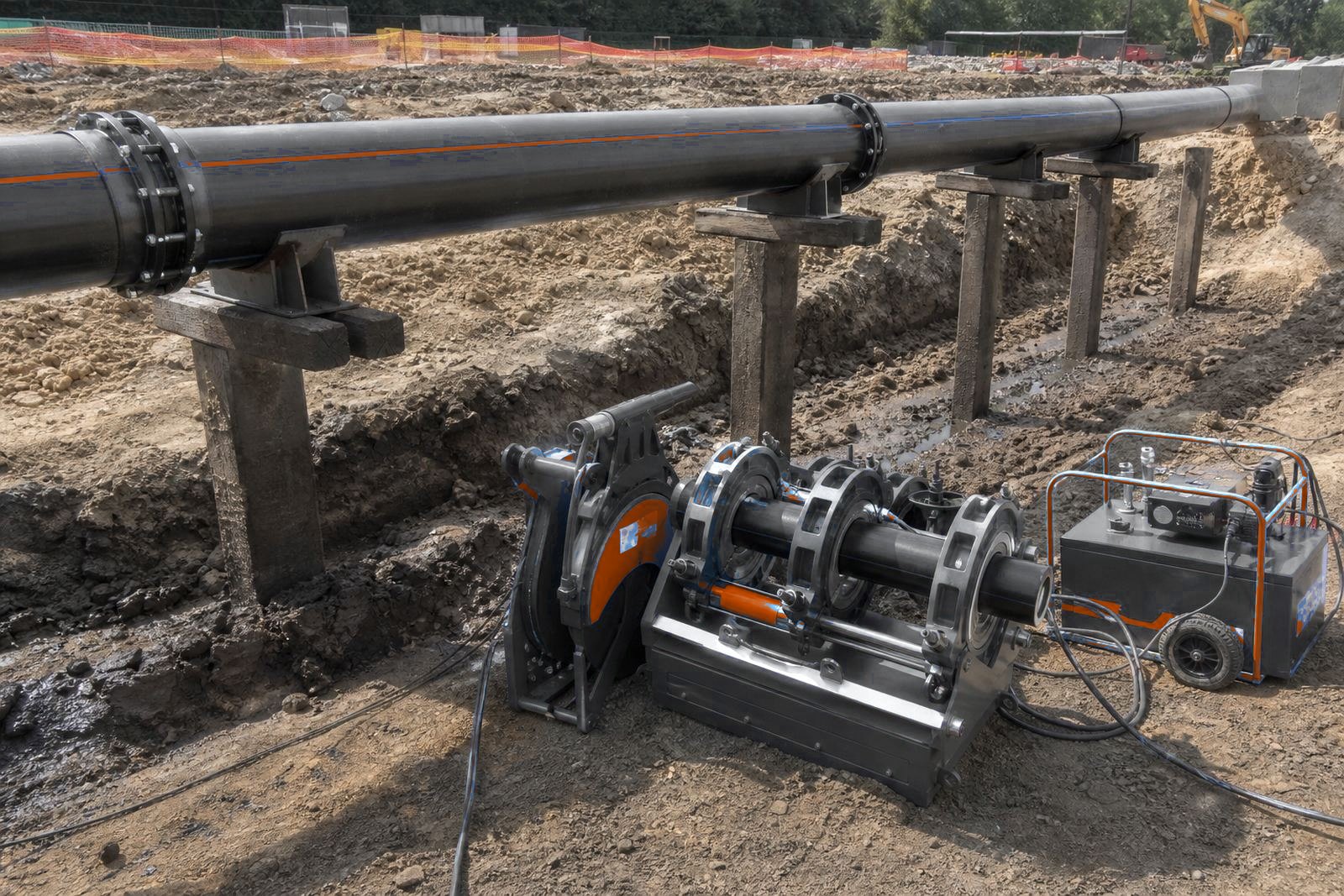
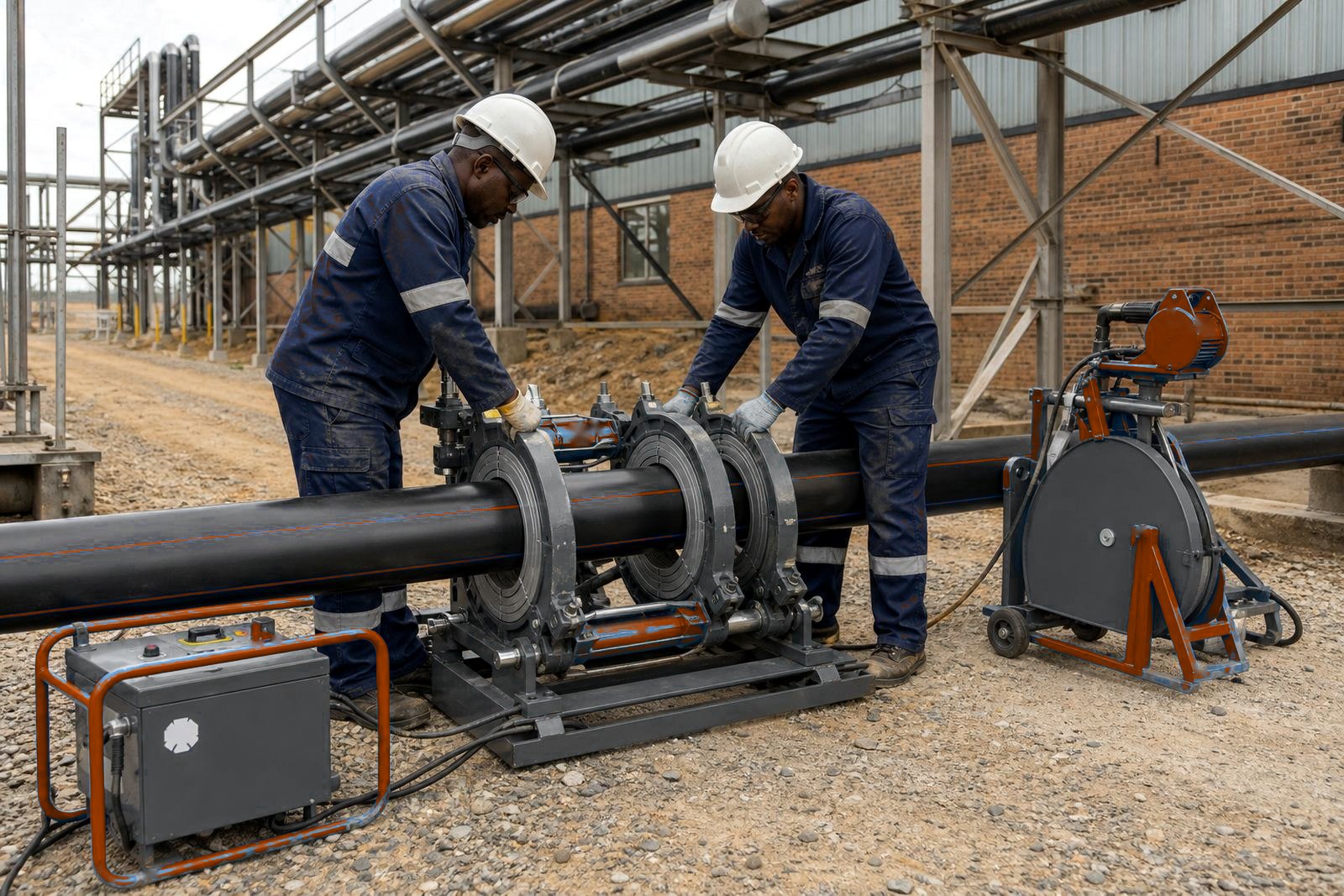
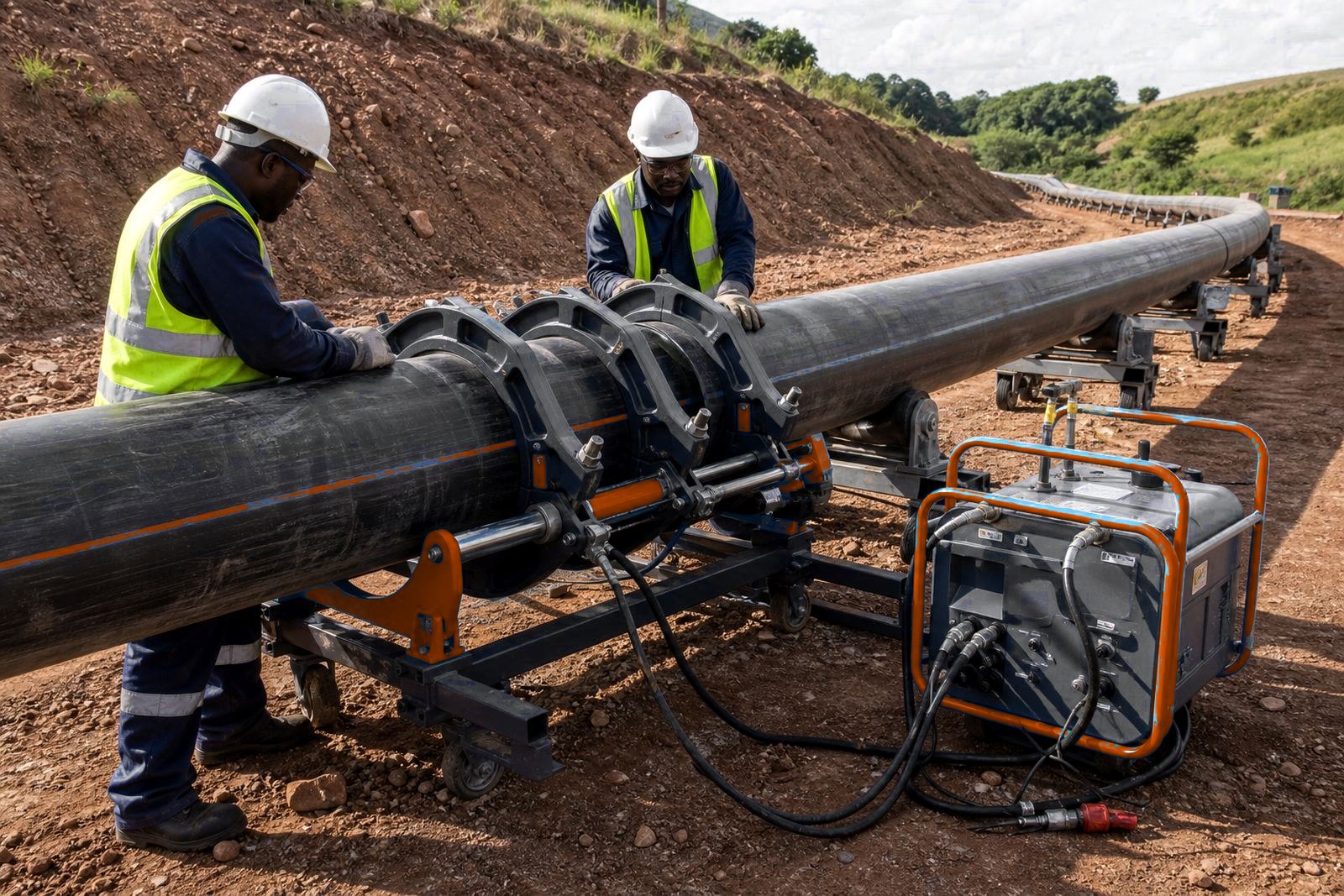
For this type of work, the usual set-up is a butt-fusion machine matched to the pipe diameter, a facer, a heater plate, central clamps and stable pipe supports. Smaller crews may work with portable units on feeder sections, while larger mining teams often need a machine that can handle long, thick-wall lengths without the line sagging out of line.
- Pipe ends must be round, clean and dry before facing.
- Space supports closer together as wall thickness increases.
- Clamp alignment should hold the pipes true during heat and changeover.
- Keep slurry joints clamped for the full cooling time, even on a tight schedule.
The weld sequence for a sound line
Slurry pipe is welded in the usual butt-fusion steps, with extra care on facing because of abrasion wear. The ends are clamped, faced square, checked for fit, then heated until the melt face forms evenly.
Cooling comes last and gives the joint time to build enough strength for the next move, especially on thick-wall pipe where temperatures stay high.
- Facing must remove contamination and leave a true surface.
- Heater plate temperature needs checking before every shift.
- Fusion pressure should match the pipe diameter and wall section.
- Bead shape is inspected for even roll, symmetry and full contact.
- Logged heat, pressure and cooling for each weld
Layout notes for yards, trenches and long site runs
Slurry lines are often welded in a yard before the pipe is moved into place. Alignment stays true when the pipe is stored flat and protected from grit. On uneven ground, the machine should sit on a level base, with roller support or skids arranged so the pipe does not lift out of the clamps during heating.
Wet weather and wash bays bring moisture control into slurry line work. Even a light film of slurry, mud or oil on the pipe face can spoil the bond. On coastal work into Durban, salt air and damp mornings call for a full wipe of every pipe end before facing.
- Keep enough straight pipe on each side of the machine.
- Keep the plate clear of slurry dust and drag marks.
- Mark weld numbers early so logs stay linked to the right joint.
- Plan enough room for lifting, rotation and coil or chain handling.
Abrasion and dull facer blades
The common failures are usually poor alignment, dull facer blades, dirty heater plates, rushed changeover and pressure that is not held steady through the cycle. On a slurry line, these faults cause joint stress or seepage.
Another frequent mistake is ignoring SDR and treating all thick pipe the same. Cycle times and cooling rates on 160 mm and 355 mm slurry pipe are different. The wrong settings can leave the joint soft inside while the outside already looks set.
- Do not skip dry fit checks on fresh pipe ends.
- Do not move the line before cooling time is complete.
- Do not mix worn clamps with a straightness-critical run.
- Do not rely on bead appearance alone without the weld record.
Preparing slurry crews
Some crews bring their own machine and only need a check on the heater plate, facer or hydraulics. Others need operator training on facing, heating, changeover and logging. Refresher training gives new staff and the existing crew one shared method.
Before slurry work, the clamps are aligned and the hydraulic unit is pressure tested.
- Machine Servicing for pumps, hoses, clamps and moving parts.
- Clean, dry pipe ends before every joint.
Budget ranges that suit slurry line work
Slurry quotes are based on diameter, wall thickness, number of welds, site access and any hire or transport. For short slurry runs, a hire package may start around R8,500 to R18,000, depending on the machine and checks needed. Medium diameter work with setup, training and logging support can move into the R25,000 to R65,000 range.
Large diameter slurry lines, especially where heavy clamping, extended support and multiple shifts are involved, can sit well above that. In those cases the important item is the full working set, including facing, heater plate condition, pressure control and transport to the site.
The machine set and support level are chosen for the line being welded.