Coastal jointing before the pipe touches water
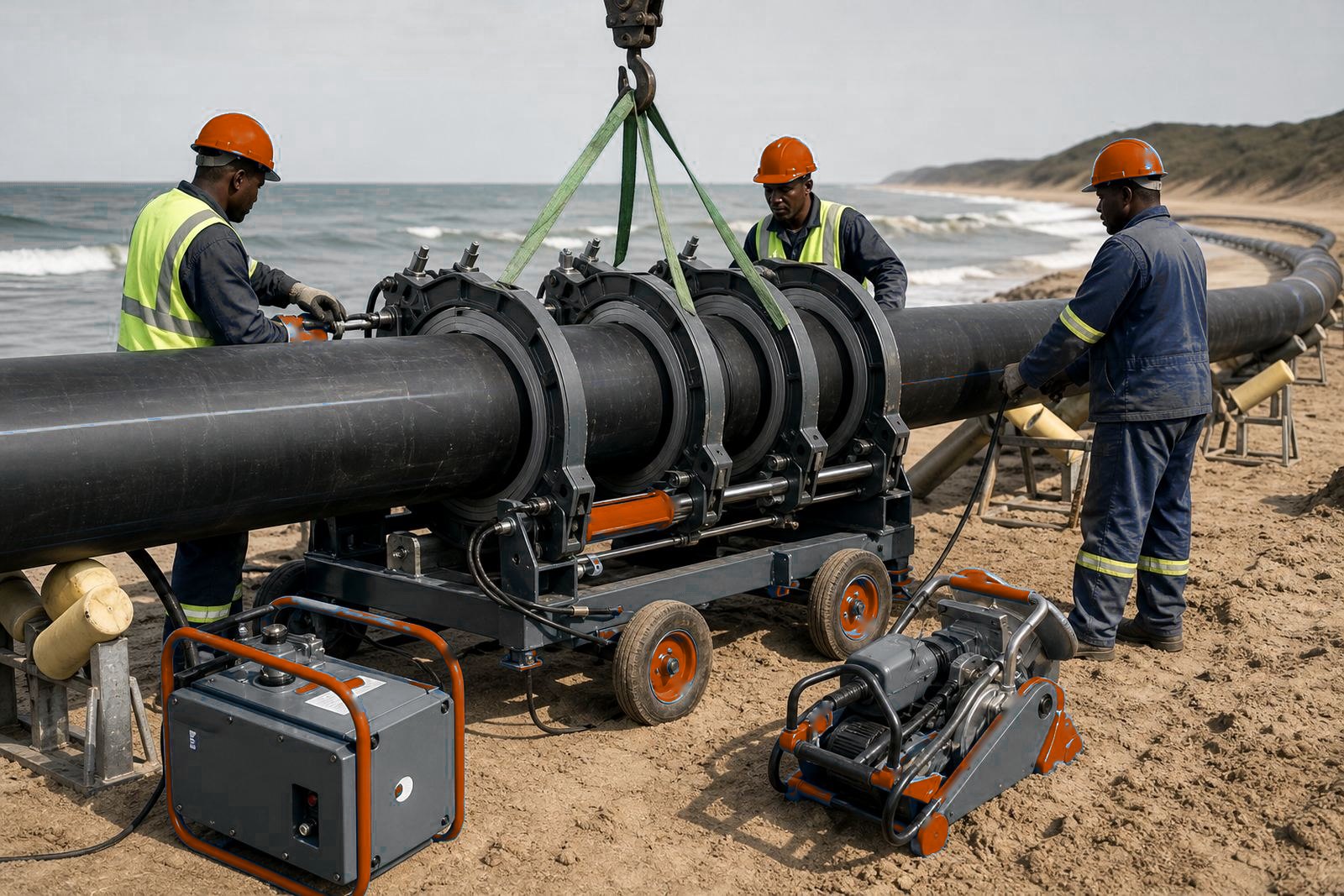
Marine outfall sections are often built in lengths that can be handled safely on land, then lifted, skidded or floated into position. So the butt fusion line has to be organised around the pipe and how it is set up on site. Outfall crews need room for pipe support, clear access for the facer and a stable line for square plate contact. On shore jobs, sand and salt can creep into open ends fast, so plan end protection and clean staging early.
For these jobs, the pipe size and SDR drive the machine choice. Larger diameters need a frame with enough clamping force and alignment control to hold round pipe true through facing, heating and changeover. The weld area should be level, and the rollers or supports must take the pipe weight without dragging the ends out of line. On exposed coastlines, a bit of wind screening helps keep grit off the fusion faces.
The machine set that usually leaves the yard
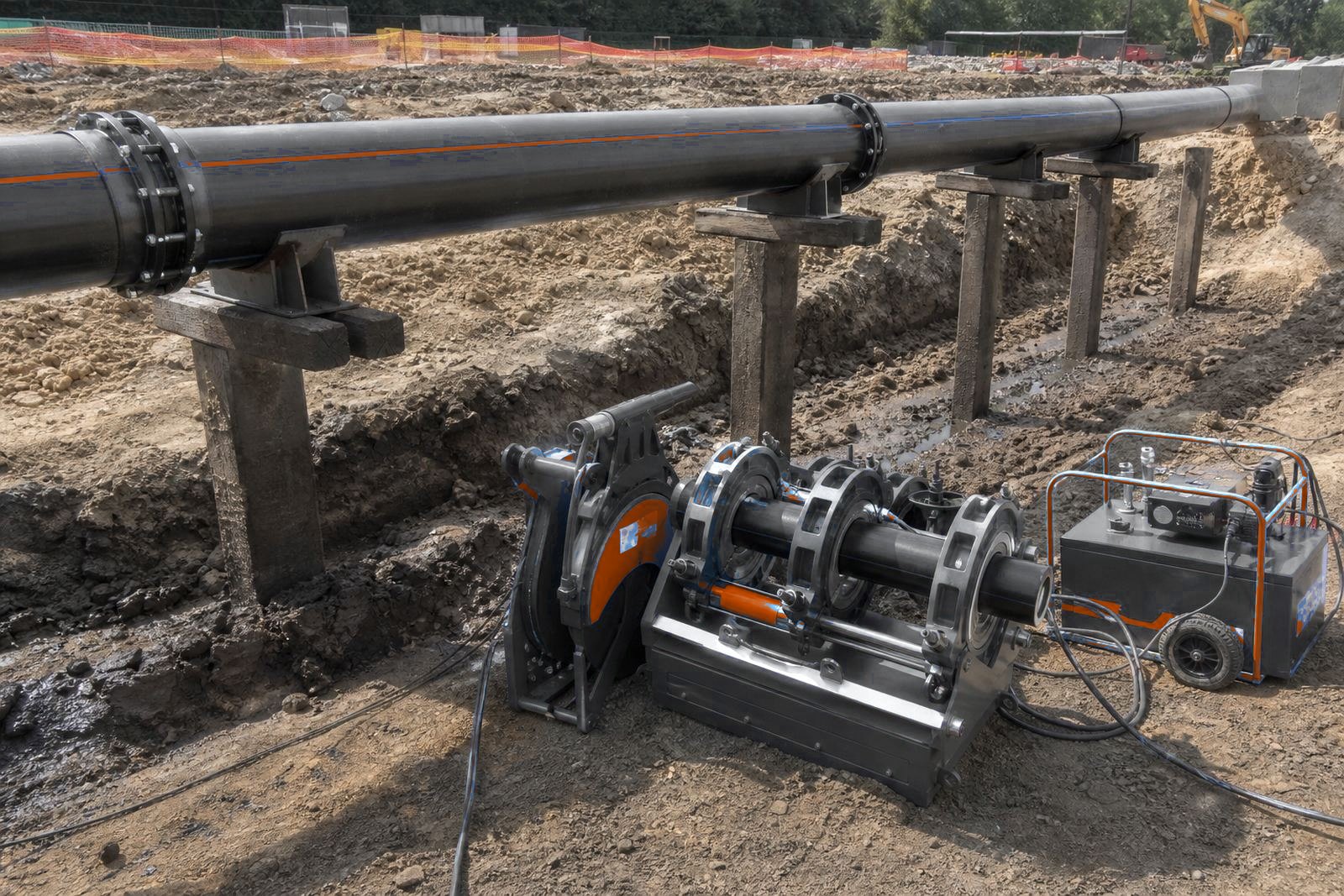
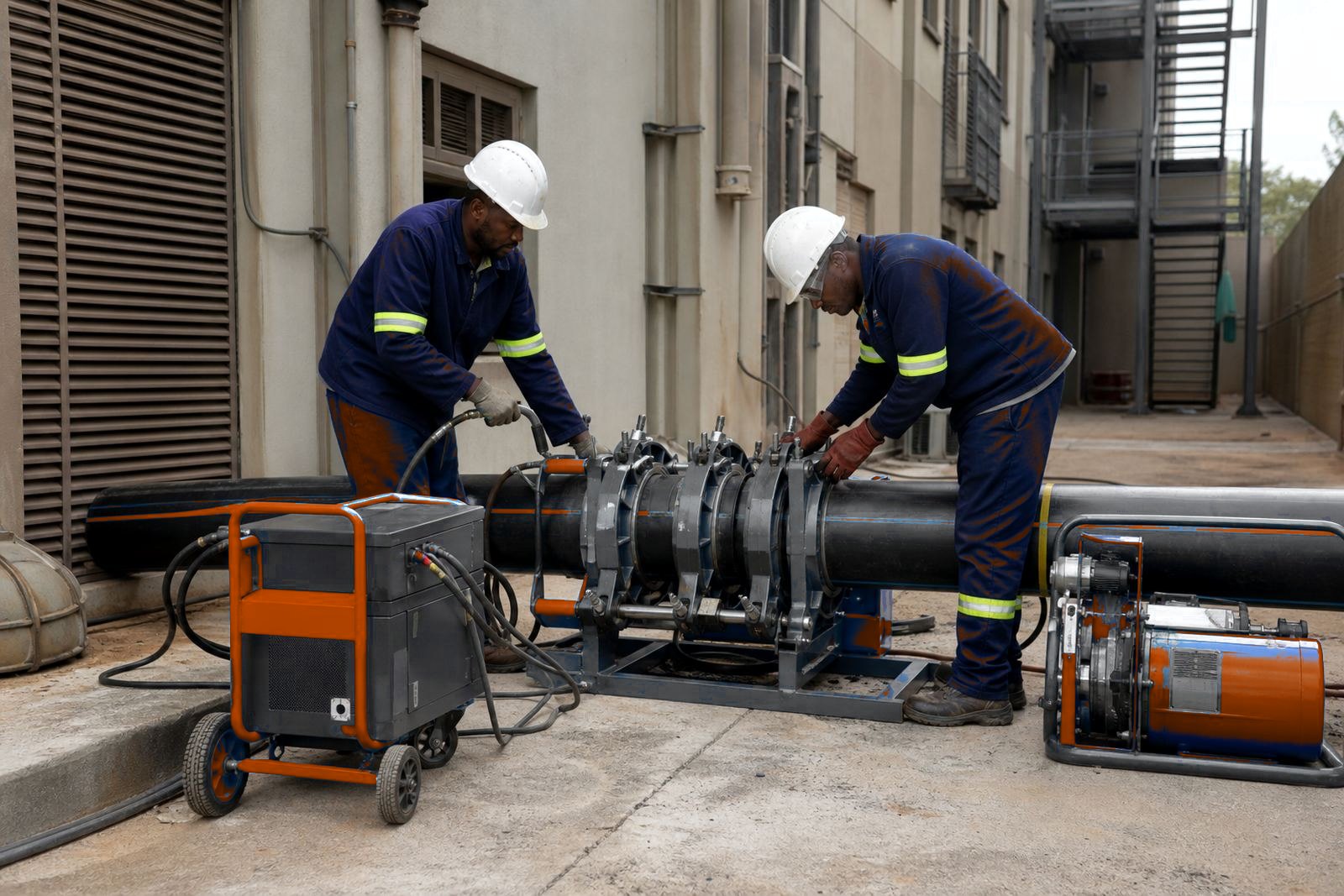
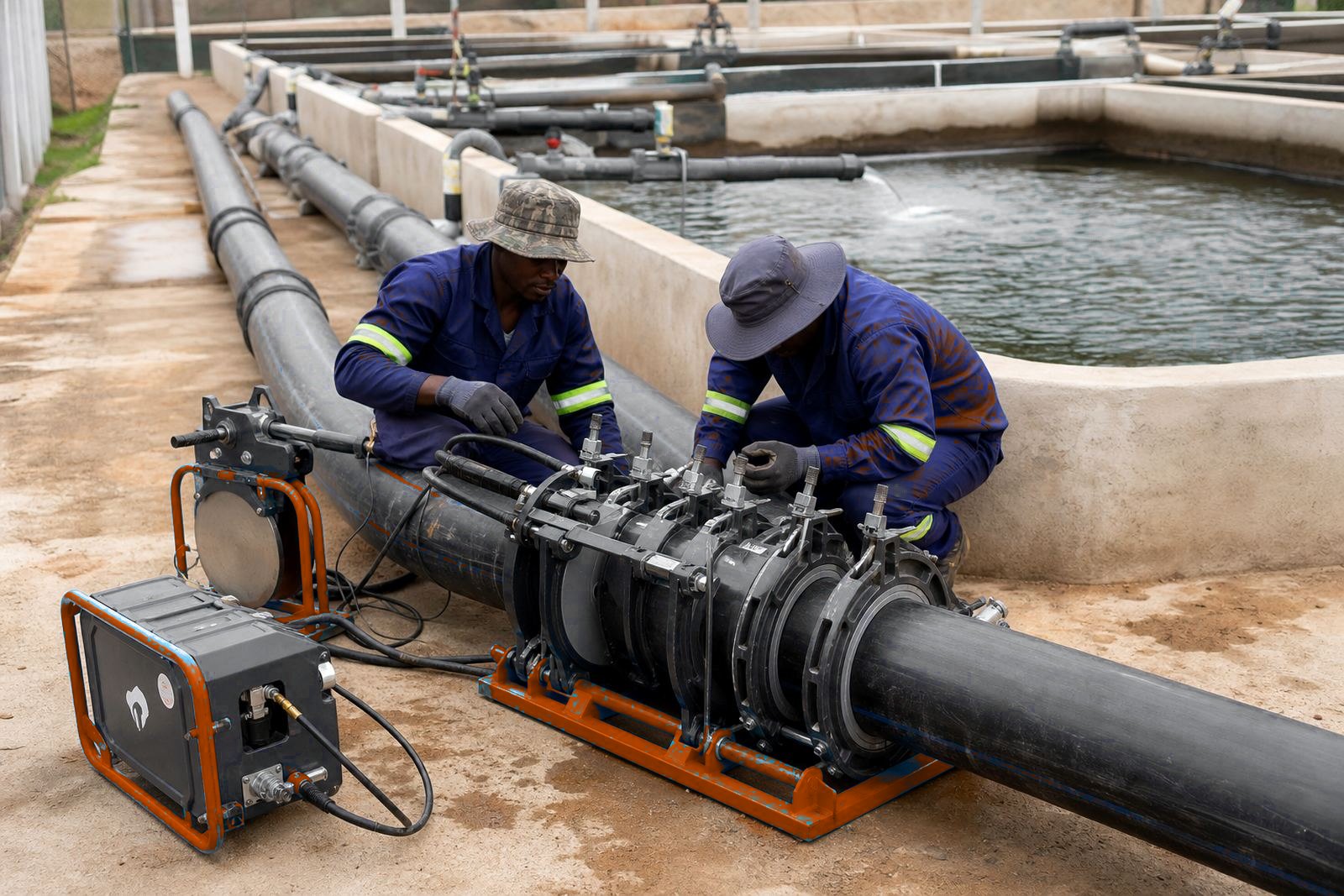
A marine outfall spread usually centres on an HDPE welder matched to the diameter sizes, plus a facer, heater plate and clamp set with the right inserts. For larger wall thicknesses, keep pressure control steady through the melt and hold phases so the fusion pressure stays steady. Switch on data logging where the client wants a weld record, especially when sections are built over several days and stored before launch.
- Machine sized to the outfall pipe range and beach staging area.
- Facing tool with sharp cutters and stable drive
- Clamps and inserts matched to the OD and SDR
- Pipe stands, chain blocks or support rollers for long sections
- Data logger for pressure, temperature and cycle records
On long lengths, carry a spare heater plate, clean cloths and basic spares. Assign one person to surface cleaning, another to pressure checks and one to the fusion cycle itself.
How the joint sequence should run on the shore
Marine outfall sections are welded on land and then floated or pulled into place. We clamp the pipe ends, face them until full contact shows around the entire diameter, then check alignment. After that the heater plate brings both ends to fusion temperature, the plate is removed in the changeover window, and the ends are brought together under controlled fusion pressure. Cooling time must be kept intact, because moving the joint too early can distort the bead or pull the line off true.
The bead should be even around the pipe, with no obvious cold spots, slippage or heavy mismatch. A neat bead shows good pressure, cleanliness and pipe alignment, and machine settings must still suit the wall thickness. Settings are reset for each wall thickness where outfall pipe sizes change along a run.
Layout advice for launch lines and shoreline access
Plan the laydown area before the first pipe arrives. Marine outfall sections need enough clear ground for pipe stringing, welding, inspection and turning. Near a launch point, the route to the shoreline is kept free of loose stone, steep drops and snag points. Durban or Cape Town coast jobs face salt spray and wind that shift the work pattern, so the fusion set-up position needs careful placement.
- Keep the fusion line level and supported every few metres
- Allow space for the heater plate to travel in and out safely
- Mark the full pipe centreline before clamping starts
- Protect open pipe ends from sand, rain and sea spray
- Set a separate clean area for facing tools and bead checks
If the sections are long, build in modules that can be handled without forcing the joint area. That reduces strain on the clamp set and keeps the fusion face more consistent from one weld to the next.
Grit on outfall pipe faces
A marine outfall section can look ready long before the welds are actually ready. Clean the face thoroughly when the pipe has picked up grit. Another is using the wrong support height, which bends the pipe slightly and leaves the ends meeting under stress. The third is cutting cooling time short because the site team wants the next lift moving. Rough handling can cause ovality or bead distortion.
Inspect the plate face at the start of every outfall shift. On long coastal runs, operators also need to watch for pressure drift in the hydraulic system and for clamp slip when the pipe is dusty or damp. Log each joint so these problems can be traced.
Outfall crew preparation
Some marine outfall jobs only need equipment hire. PlasticWelder supports that mix with machine servicing for pipe crews working along the coast or inland before launch. Outfall crews can book refresher sessions before launch.
For budget planning, smaller hire jobs for a short marine section may sit from about Rand 8 000 to Rand 18 000 depending on the machine size, accessories and duration. A fuller project package can move into the Rand 25 000 to Rand 60 000 range, especially where larger diameters or longer hire periods are involved. Transport, site access and spares can shift the total as well, so price the machine set and the support separately.
Where the crew wants their own machine checked before a shoreline run, a service visit can include the facers, heater plate condition, clamp alignment and the hydraulic system. That keeps the kit ready for the next phase without wasting time on avoidable faults.