What a borehole rising line asks of the weld
A borehole rising line carries pump pressure, surge and its own hanging weight. The pipe often runs from a pump chamber through a narrow shaft into a header, where pressure pulses and vibration load every joint.
For these jobs, butt-fusion on HDPE is common because it gives a full section joint when the pipe ends are faced square, heated evenly and brought together under the right fusion pressure. We match the work to the pipe size and SDR, from 63 mm on a small farm borehole to larger diameters on deeper holes.
If the pipe is oval, scratched or badly cut, the facer has extra work before heating begins. Cold gaps, sagging or signs of movement at changeover mean the joint is rejected.
- Check pipe size, wall thickness and SDR before the machine is set.
- Allow enough straight length for the clamps and facer to grip properly.
- Keep ends dry and free of grit, mud and stone dust at the borehole head.
The usual kit around a borehole weld bay
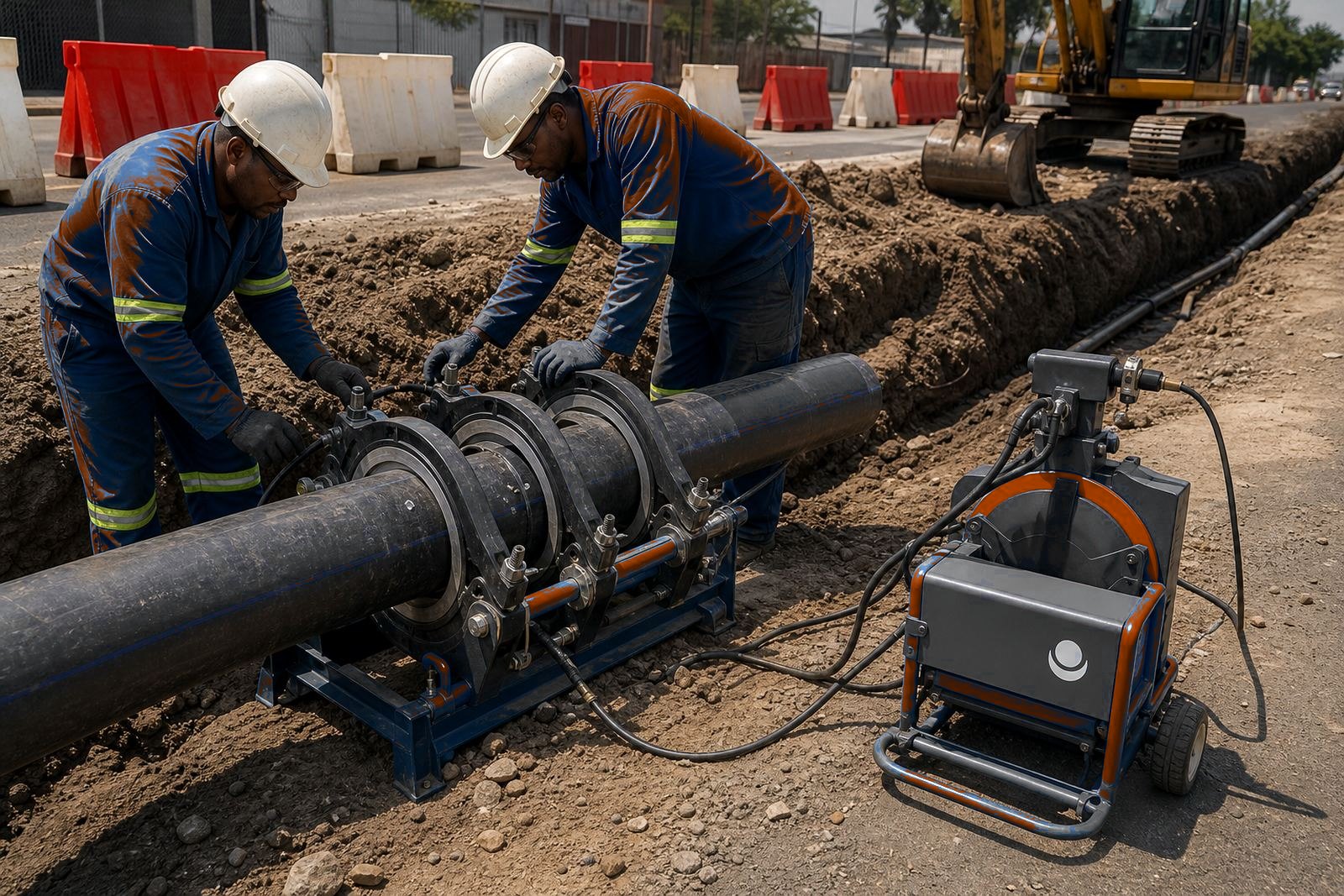
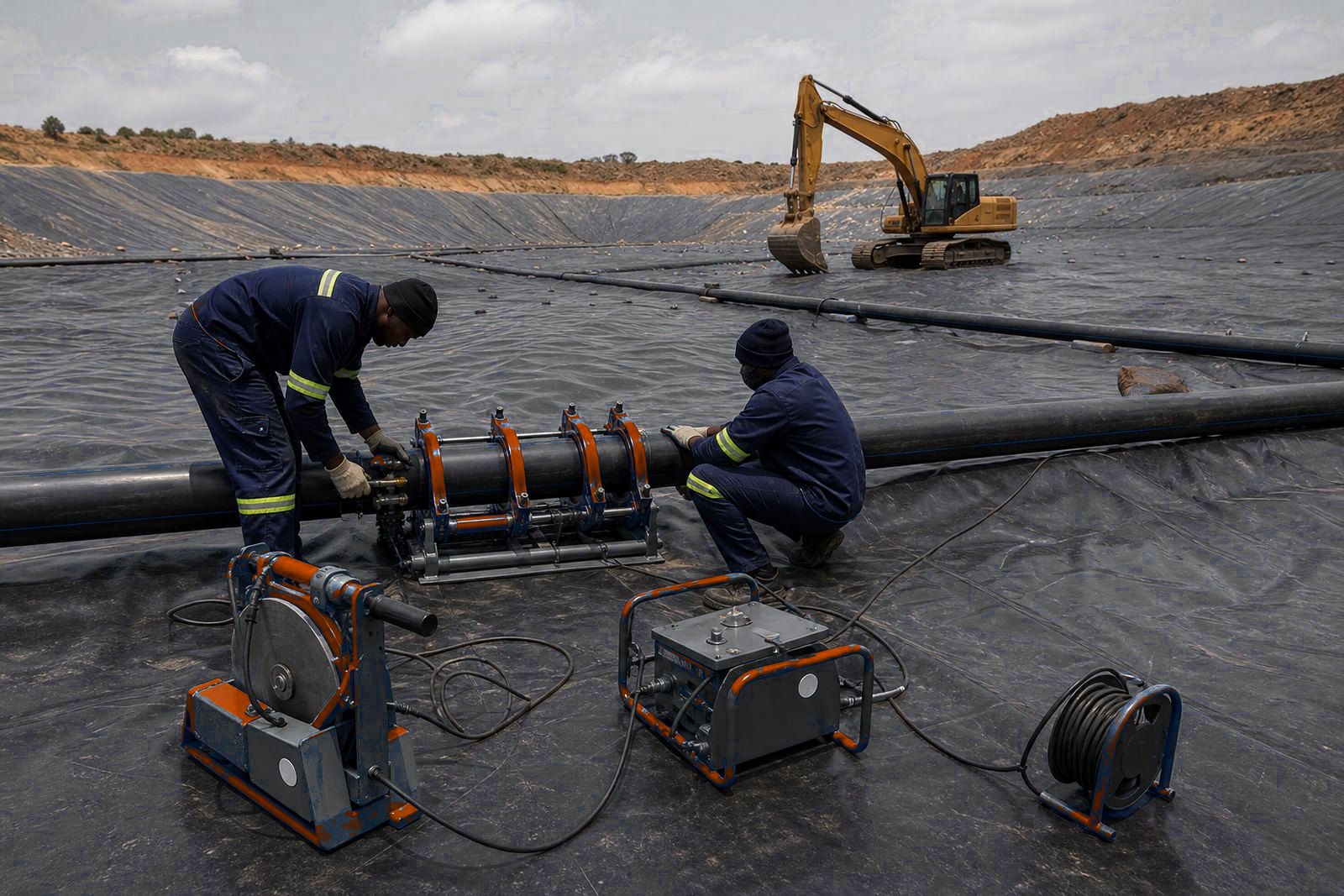
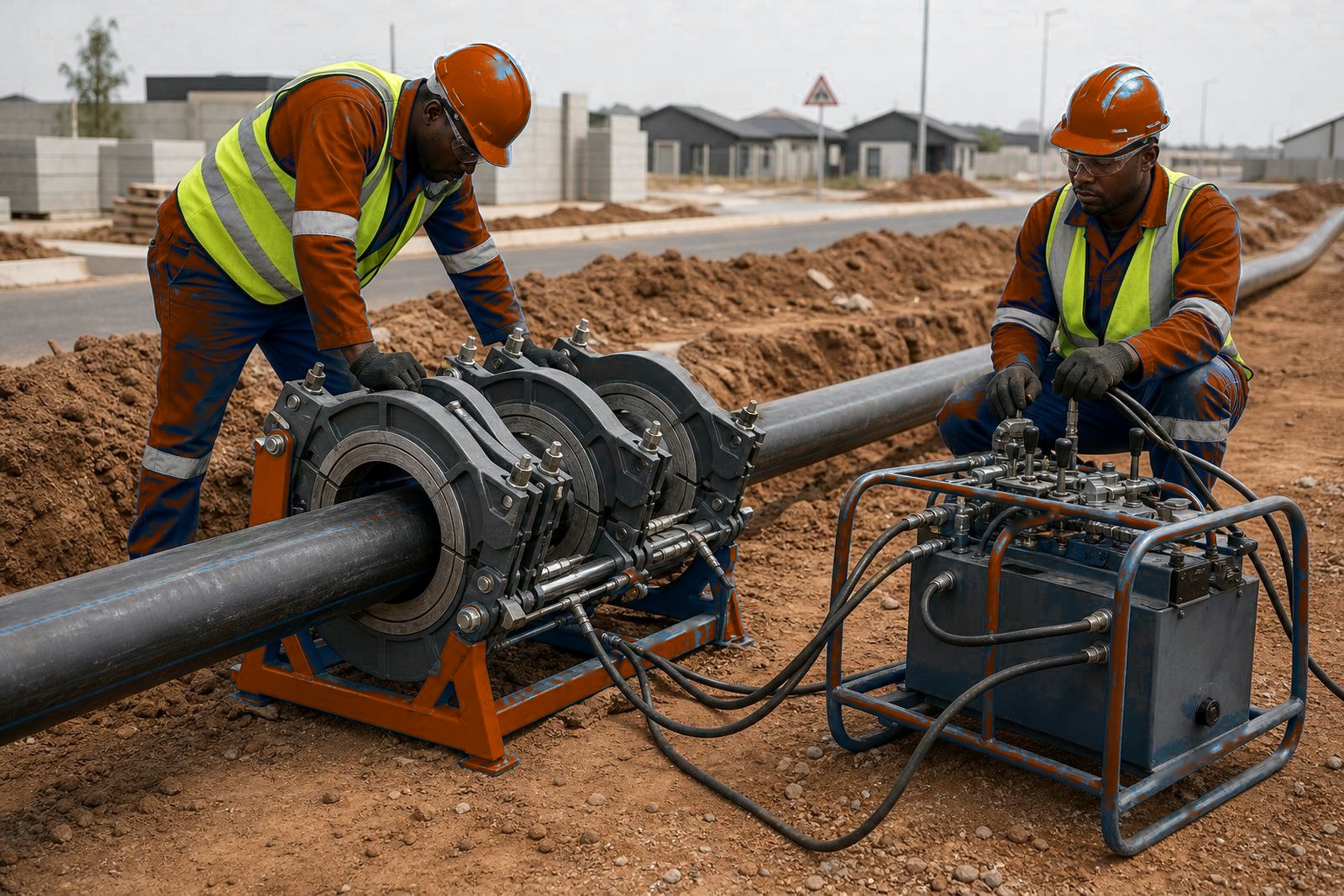
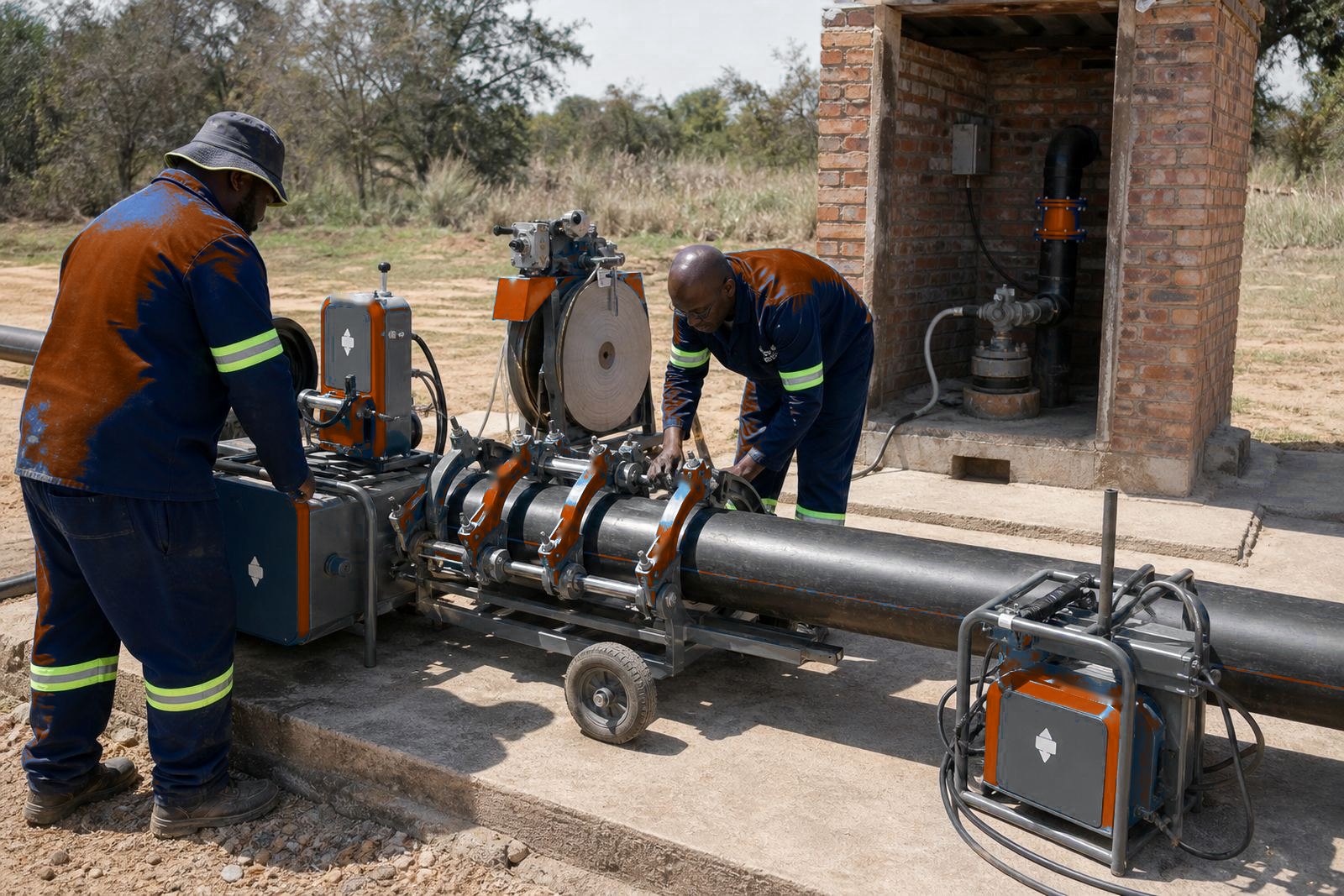
Most borehole rising line work uses a butt-fusion machine, a facing tool, a heater plate, clamps and a stable working surface. Rural bays may be built beside the borehole headworks, and peri-urban jobs often use a yard where pipe can be laid out before the lift into the shaft.
Our team helps with machine setup, because a small fault in clamp alignment or heater temperature can spoil a whole string of pipe. Where the line is long, keep a welding log so each joint can be checked against the pipe size, ambient conditions and operator settings.
Each step in the process is timed. Face the ends, inspect the shavings, heat the pipe faces, move through changeover without delay, then apply the fusion pressure and hold the joint through cooling time. Reducers, flange adaptors or transition pieces at the borehole headworks are settled at planning stage.
- Fusion machine with clamps for the borehole column diameter.
- Plate temperature checked before each rising-main shift.
- Joint records where the borehole owner wants them.
Site layout for borehole rising lines
Borehole rising lines usually fail at planning stage, long before the weld stage. Measure the space around the borehole cap, valve set, pump cable and access hatch before planning the pipe route. The welding bay needs enough room to line up the pipe and work properly.
On steep ground or in a cramped pump room, start by deciding where the longest straight section will sit. That lets the operator work with less strain and helps keep the pipe ends aligned before heating. Bends go where the pipe maker allows them and away from joints meant to stay straight.
Good planning also means checking whether the borehole discharge line will connect to a tank, manifold or pressure set with flanges or couplers. Those fittings change the sequence, and they should be in the stack before the last weld closes the run.
- Leave enough space for the machine, pipe stand and finished joint.
- Plan the flange, reducer and valve positions before welding starts.
- Keep the line supported so the pipe does not droop during heat soak.
- Allow for lifting access around the borehole head and pump chamber.
Rushed welds in pump chambers and shafts
The most common trouble comes from speed, dirt and poor alignment. A pipe end that was not faced cleanly can leave a weak interface. Dust or old plastic on the plate can mark the face. Delays at changeover cool the faces on borehole column pipe.
Another problem is the wrong fusion pressure. Riser joints use the weld-table pressure for their diameter and SDR. Deeper borehole risers face vibration and pump cycling, which test every weak point.
Bead inspection is also often skipped. An uneven bead keeps the line out of service until it is checked.
Borehole crews in the field
Some contractors own their own machine and only need support when a pump line job lands outside the normal size range. Others hire equipment for a few days and want the setup checked before work starts. PlasticWelder supports both approaches with machine hire.
Training covers borehole work: pipe preparation, heater plate handling, changeover timing, fusion pressure, cooling time and weld logging. We run refresher sessions for crews returning to the machine after a break and for newer operators joining the site team.
Pressure tests get the machine ready for the next borehole. For a small borehole run, budget planning often starts around R3,500 to R8,000 for hire, while larger field jobs can sit in the R9,500 to R28,000 range depending on pipe diameter and travel.
A clean weld leaves a clearer pump line
Borehole rising lines need recorded settings on every weld. Rising main joints are held through cooling before the line sees pump pressure. When that is done properly, the pipe gives the crew fewer surprises and the pump system is easier to hand over with confidence.
Borehole jobs are handled by one team from preparation to collection inspection.