Estate trenches need pipe in the ground, with long straight runs, short branch take-offs and careful coordination around roads and kerb
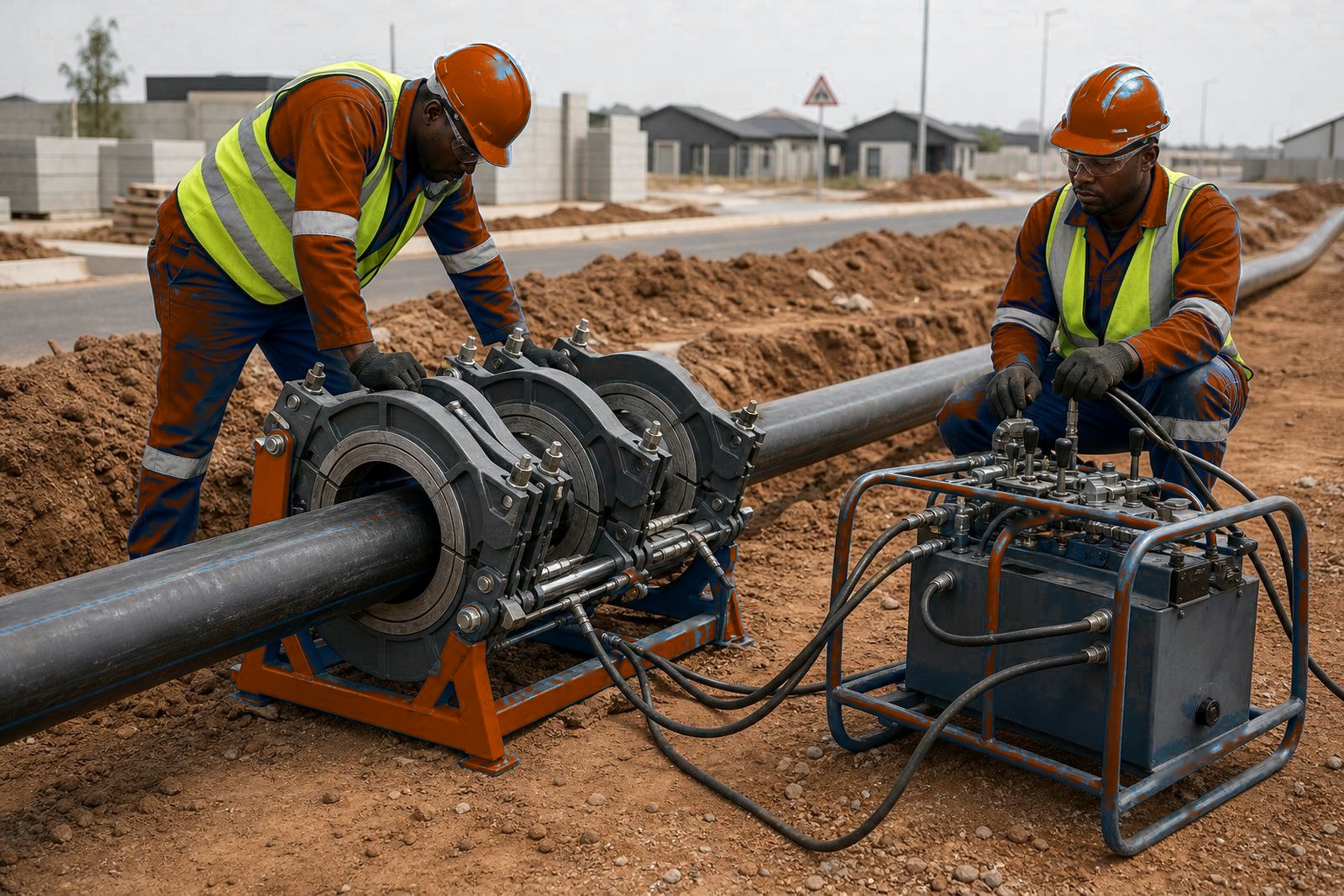
Residential estates usually mean long straight runs, short branch take-offs and a lot of coordination around roads, kerbs, service corridors and house connections. When the pipe arrives on site, the crew still has to manage trench line, fusion bay spacing, pipe supports and the joint sequence so the pipe ends meet square and stay clean before heating.
For HDPE reticulation work, the fusion set-up has to suit the pipe diameter and the SDR on the delivery docket. Smaller estate lines may run on 63 mm, 90 mm or 110 mm, while the main feeds can move into larger diameters where the machine, clamps and facing tool need proper capacity. Keep the pipe straight and the ends dry, with enough room for the machine to sit level in the trench or on the verge.
Estate crews often work across several plots in one day, so plan the layout first. If the fusion point is too close to a bend, valve chamber or tight trench wall, the pipe gets dragged during clamp-up and the bead loses shape. Check the bead up close: stress shows as an uneven or thin section.
A practical fusion set-up for estate reticulation
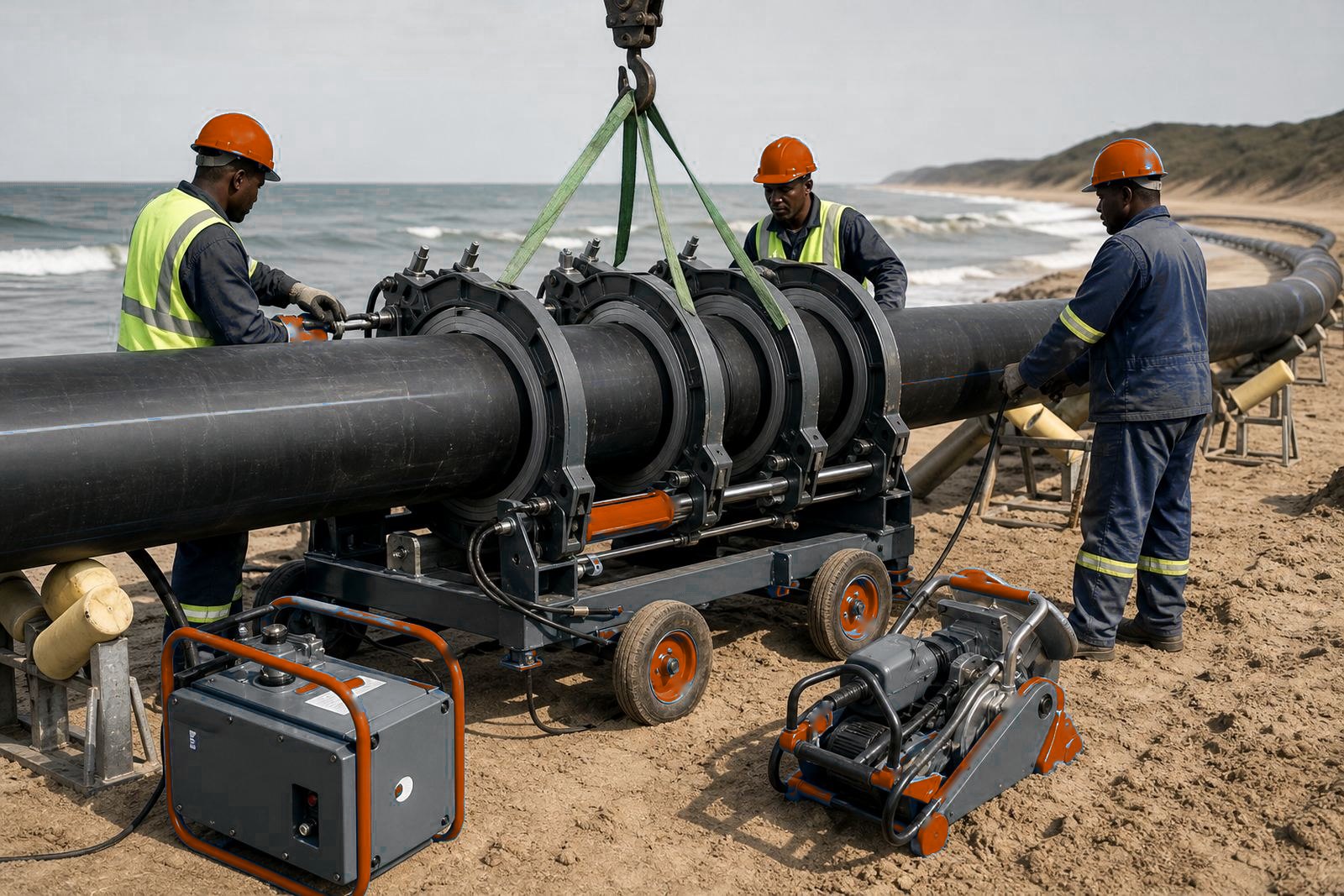
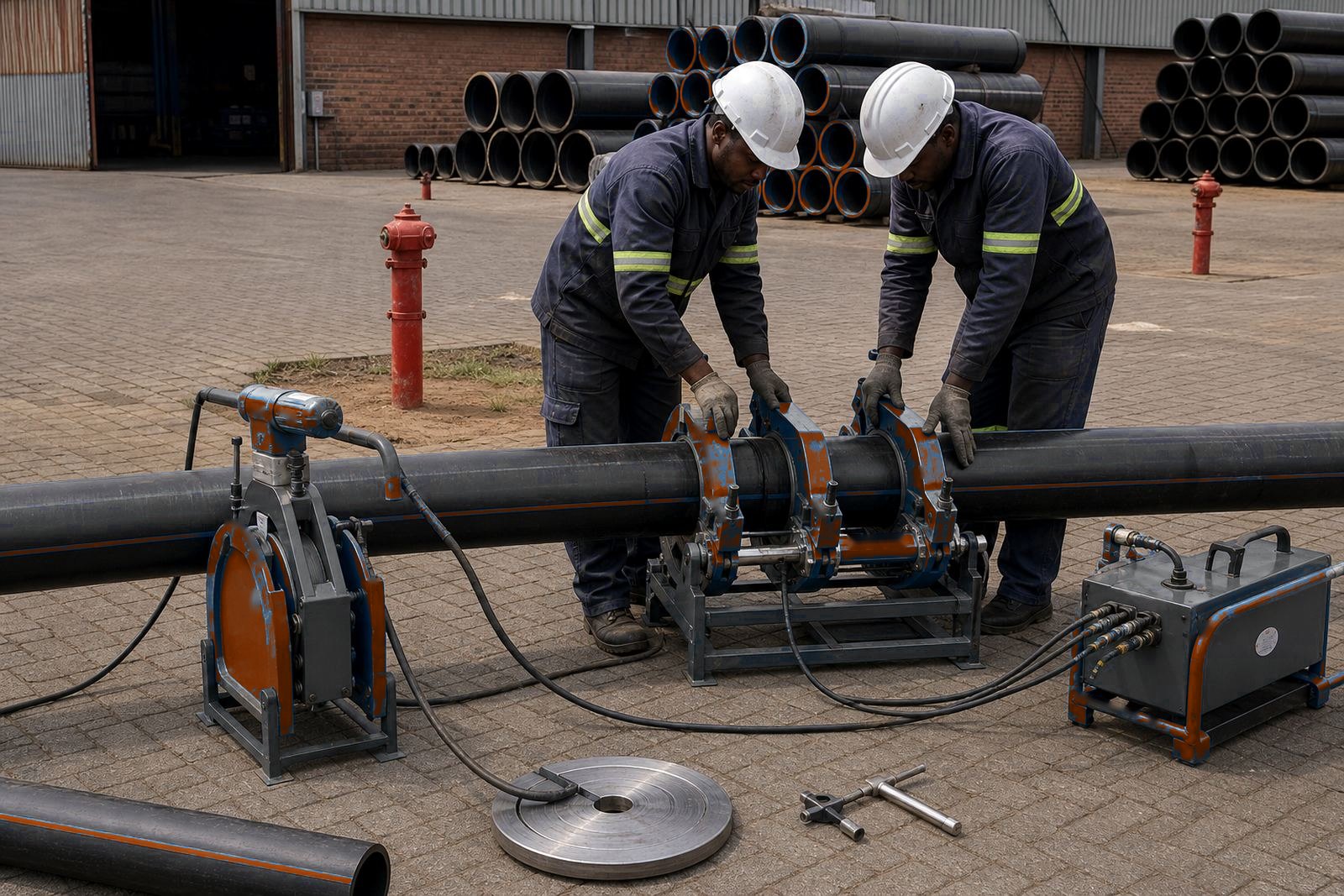
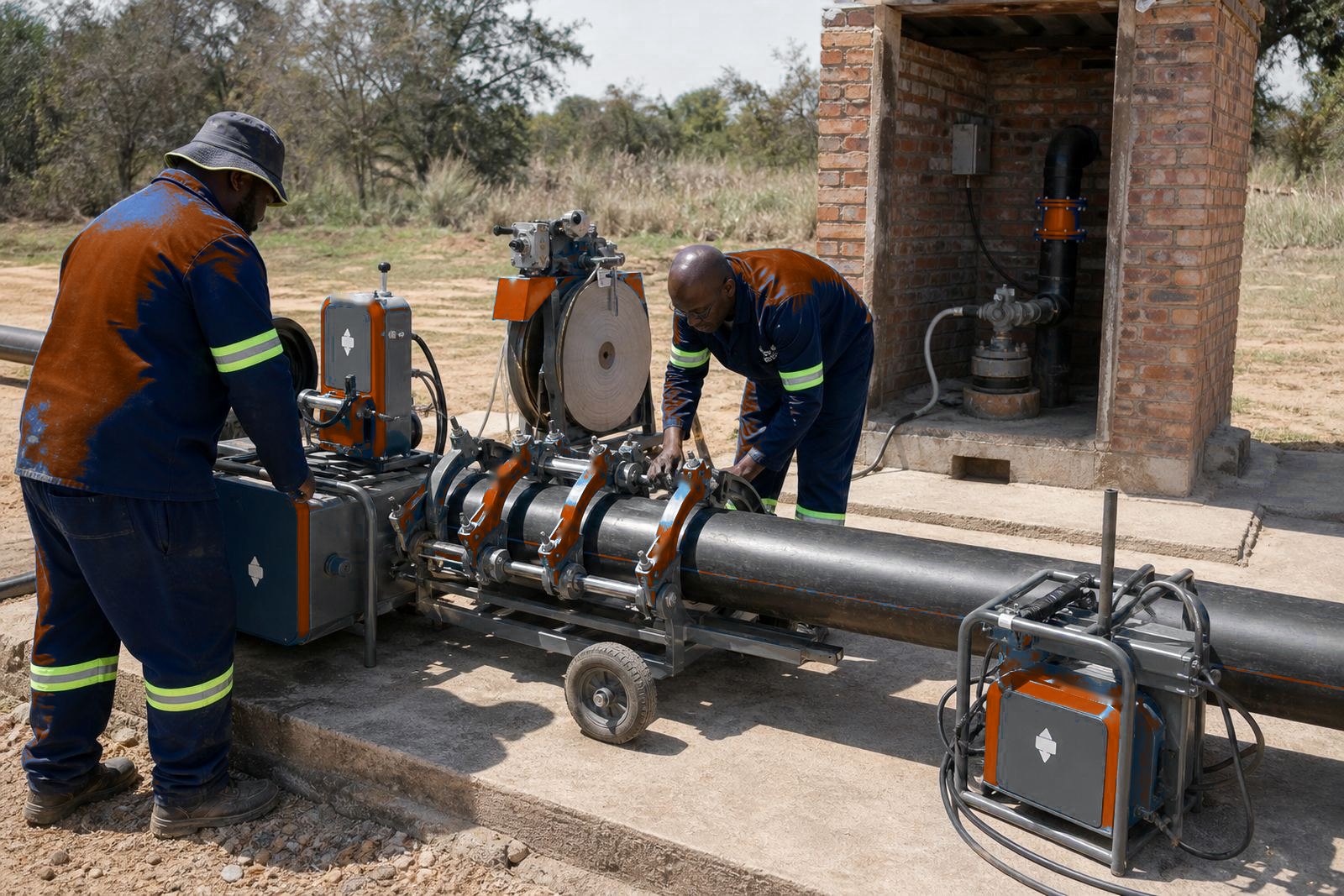
A typical estate water reticulation set-up includes the butt-fusion machine, pipe clamps, facer, heater plate, pipe stands or rollers, and marking tools for alignment. Longer runs with repeated sizes need a simple logging sheet or digital recorder for weld details where the contractor wants traceability.
- Facing tool that removes the pipe skin for a true square face.
- Clamps holding both estate pipe ends without twist or oval pull.
- Rollers, stands or trench support for long pipe lengths
- Weld log support for time, pressure, size and operator details
Estate crews face to fresh material, check for steps, heat, change over quickly and hold the full cooling time. A sound bead should be continuous, symmetrical and easy to read across the full circumference.
Site layout on a housing estate
Estate design often creates short bursts of work separated by waiting time for trench inspection, kerb work or chamber preparation. That means the fusion team needs a place to stage pipe, keep the heater plate off the soil and move the machine without grinding dust into the joint faces. Set the welding area on a dry, level section beside the trench, away from stockpiled spoil.
We often see trouble where the pipe is bent into position before fusion, or where one end is held higher than the other because the trench floor is uneven. Uneven ground pushes the pipe out of line in the clamps. A cleaner result comes from levelling the supports, checking clamp alignment and setting the pipe ends so the facer can cut both sides evenly.
- Keep the fusion bay level, even if the trench line dips
- Allow space for the heater plate to be removed cleanly
- Protect the cut ends from dust, wind and mud splash
- Separate traffic movement from the joint area where possible
- Plan the weld sequence so large reels and short pieces do not clash
Old plastic left on the plate face
Estate reticulation jobs fail in small ways long before a pipe leaks. A dull facer blade, poor clamp alignment or a heater plate that carries old plastic on its surface can spoil the face and give an uneven weld. If the operator rushes the changeover, the pipe loses heat at the very point where the bond should start to form properly.
Set the fusion pressure separately for each pipe size. Larger pipes need a different set of handling and timing checks from small estate branches. Flat, narrow or one-sided squeeze-out is checked on each estate joint after cooling.
Some crews also ignore SDR when setting the job up. That leads to incorrect machine settings and the wrong heating time. A failed joint on an estate line often means digging up finished landscaping, paving or boundary walls.
Training and machine support for contractors moving fast on site
Estate water teams usually book site startup help for the first welds on a new phase. Contractors moving between suburbs and new developments use our plate checks, facer overhaul, alignment and pressure tests.
Extra hire cover suits estates with overlapping trench sections or several pipe sizes in one week. Our team keeps the right tool on site, so one machine can stay focused on the jobs it was brought in for. Training covers new operators, and refresher sessions cover experienced hands when a project brings different SDRs, tighter access or a larger diameter joint than usual.
- Startup visits for new estate sections and changing pipe sizes.
- Collection Inspection before equipment leaves the base
Budget ranges for estate HDPE fusion work in rand
Small estate branch work with lighter pipe can sit in a lower equipment bracket, while larger main runs, longer hire periods and added logging support push the spend up. The machine package itself is one part of the cost, because support items and operator time also add to it.
Small estate sections may need a modest hire budget, and large reticulation with full logging needs more. Contractors should also allow for spare clamps, facing wear parts, heater plate care and transport between suburbs. Finish and test the joints before paving goes down.
Estate trenches need the set-up checked before every joint.