When a diversion line has to carry the load
A stormwater diversion often starts as a temporary measure and ends up carrying water for longer than the crew first planned. Fusion work must suit the pipe size, the site access and the pressure the line will see when rain arrives hard and the pumps are already running.
Stormwater diversions use HDPE in SDR ranges matching design pressure and trench layout. Face each joint cleanly, heat it evenly, bring it together at the right fusion pressure and hold it through the cooling time without movement. Thin-sided beads or unsquare ends let the diversion drift before backfill.
Hire for short bypasses and longer diversion runs is handled from our workshop.
The kit that usually goes onto a bypass crew
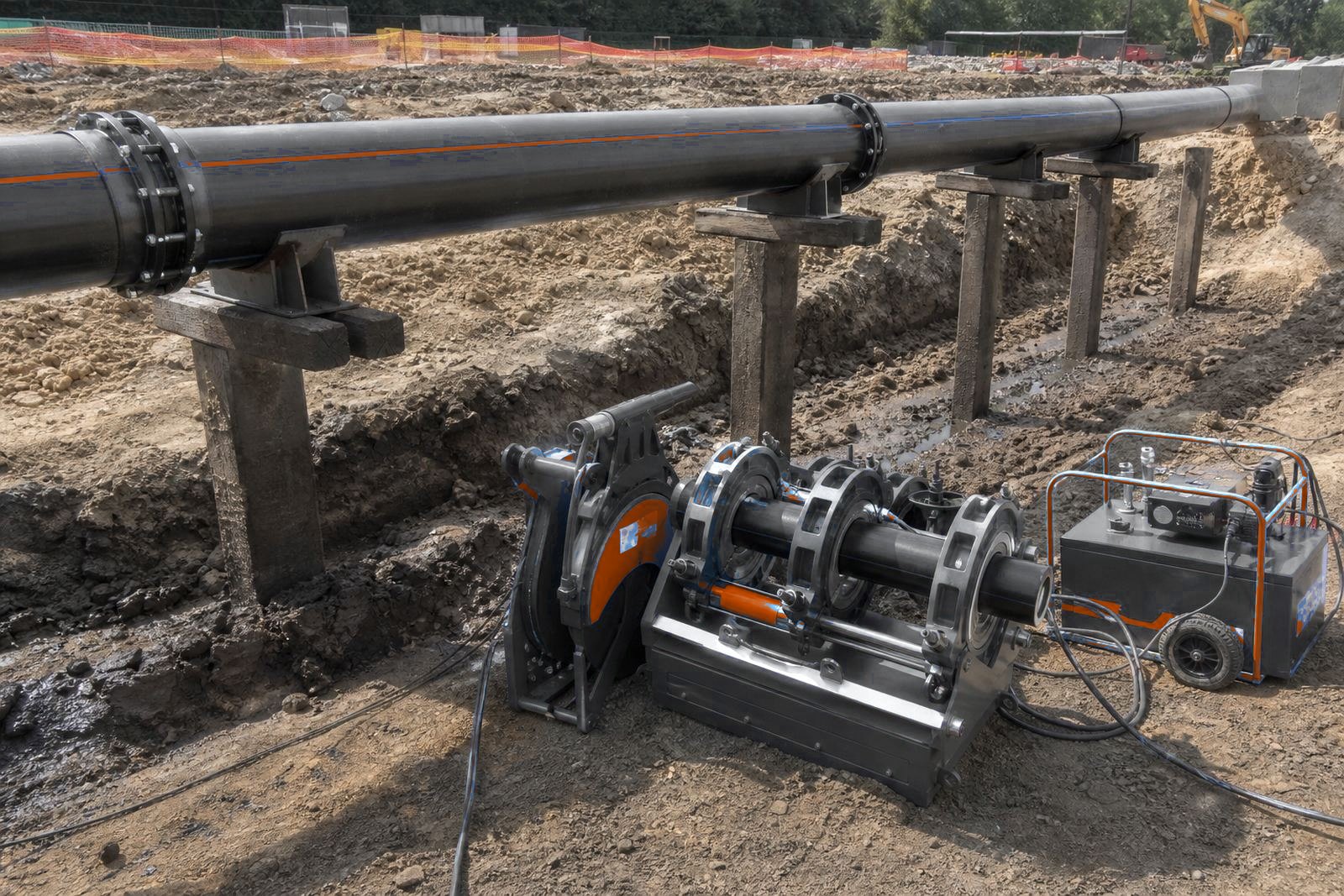
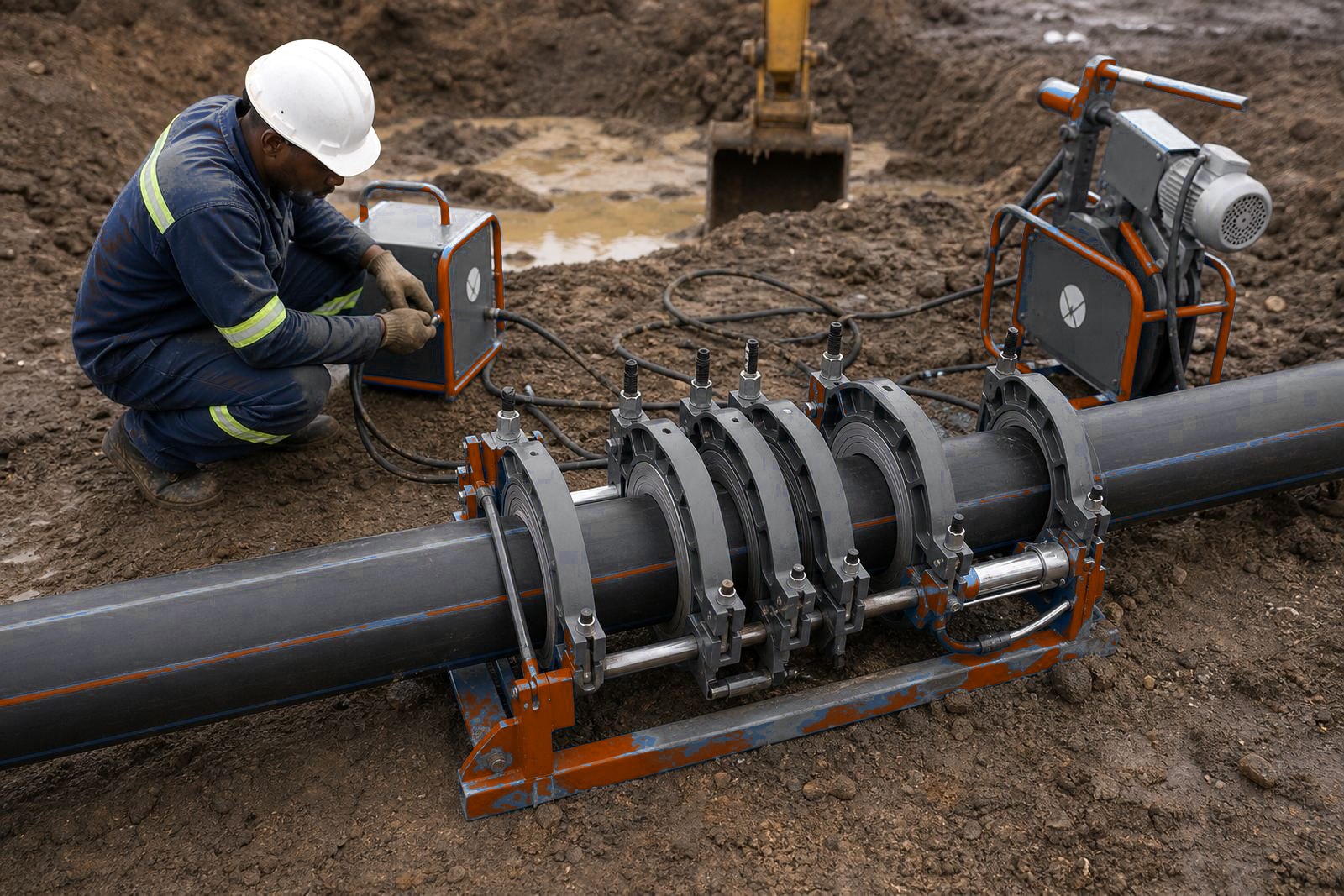
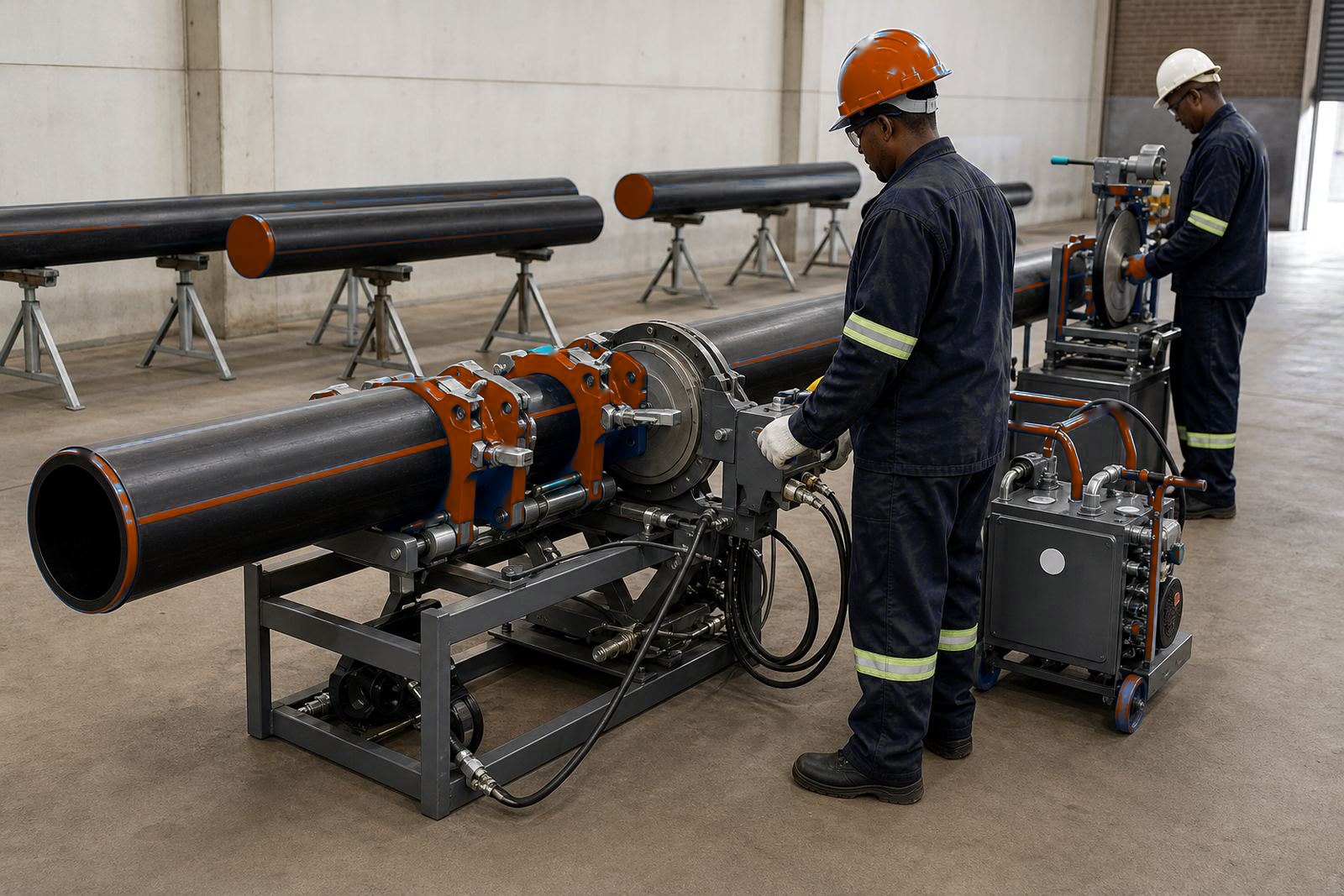
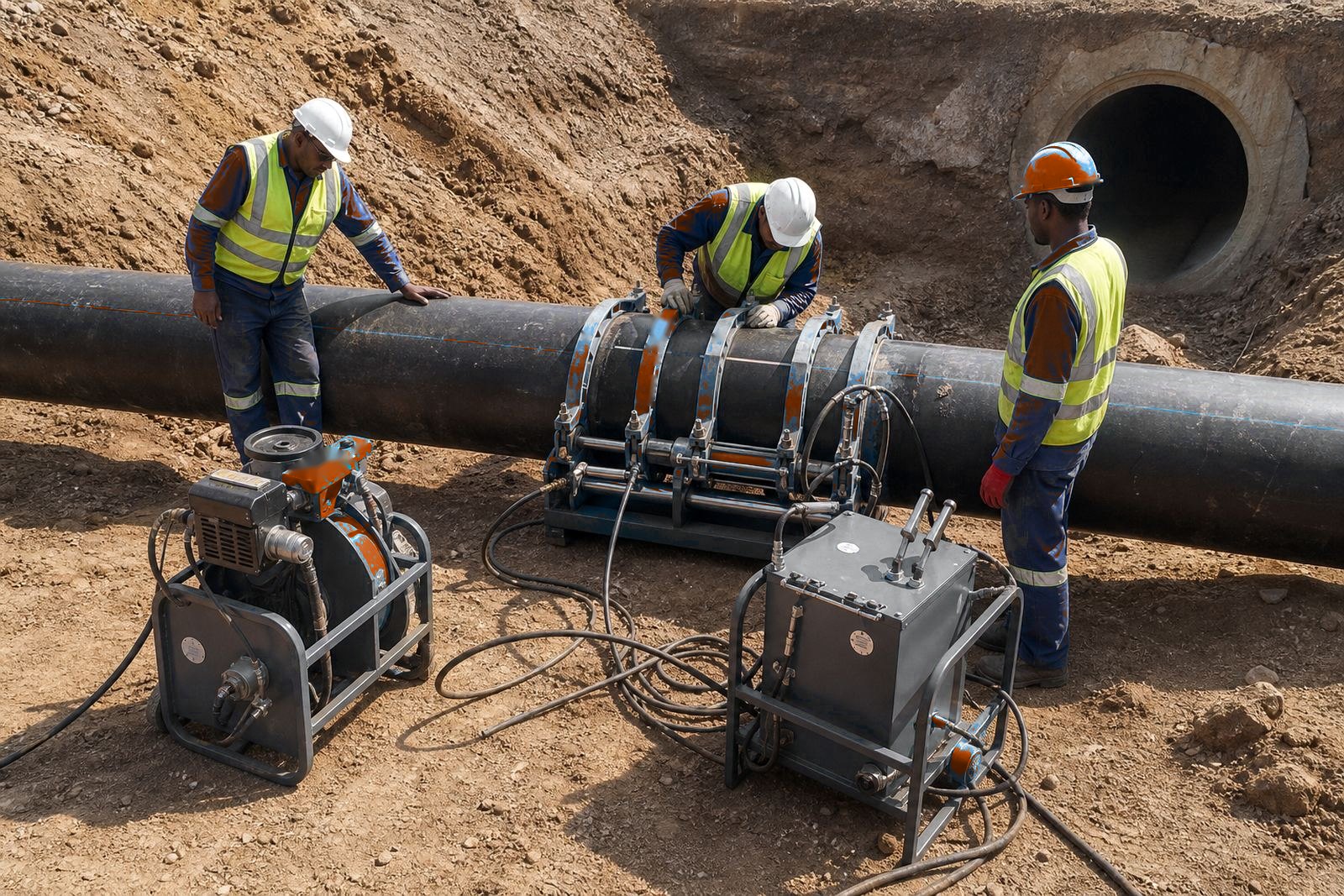
A workable diversion setup needs more than one machine. Diversion crews need a matched fusion unit, a sharp facer, a plate at temperature and clamps that keep both ends centred. On longer runs, logging tools and inspection checks help the foreman keep a record of each weld.
- Clamps that hold alignment through heating and fusion
- Hydraulic pressure test equipment where the job calls for verification
- Joint order for each diversion, logged with size and SDR.
Minor bypasses may need only a small welder. For larger drainage diversions with long pipe sections and a narrow trench, use heavier frames and wider clamp sets.
Planning the line before the first weld
Plan the stormwater layout before welding starts. The crew needs enough straight length for the machine, enough working room for the heater and facer, and a clean landing area for each pipe length. If the line turns too sharply near a manhole or pump connection, the weld area can be forced out of line during changeover.
Good planning also means checking pipe stock before the shift begins. Match the SDR, wall thickness and diameter in advance. Keep the pipe ends protected from dust, grit and standing water. In coastal jobs around Durban or Cape Town, moisture and salt on the pipe surface can spoil a neat joint if it is not wiped down properly first.
A field plan should also show where each joint number starts and ends, where the temporary anchors sit, and how the line will be lifted clear for inspection before burial or commissioning.
Changeover, fusion pressure and cooling time
Most problems on diversion lines show up during the handover from facing to heating, or during the changeover from heater plate to fusion. The faced pipe ends should meet cleanly, with no loose shavings left in the bore.
Fusion pressure must suit the pipe and machine setting and be applied correctly by the operator. Keep pressure at the machine setting for the full fusion time. Hold the full cooling time before the pipe is moved. Early clamp opening on a diversion can distort the bead and fail in the next storm.
- Keep the pipe ends aligned before heating begins
- Check heater temperature before every shift
- Remove the plate without dragging melt across the face.
When a temporary bypass becomes a repair job
Temporary lines get the same weld procedure as the permanent works. The water does not care whether the line is there for two days or two months. A rushed weld can leave a lopsided bead, a dirty face or a joint that was never properly centred in the clamp.
Another issue is poor handling between welds. Pipe dragged through mud picks up grit on the ends. A scratched plate leaves a rough surface, and dull facer blades leave a poor cut. On tight civil sites, a machine that is not checked before the shift can waste the first welding window and push the crew into a messy afternoon of rework.
For bypass work near active drains, the line should also be protected from settlement. If the supports sink or the trench edges cave in, the welds carry bending stress that they were not made for.
Budget bands for stormwater diversion jobs
Stormwater budgets depend on pipe size, duration and how much kit is hired. Smaller diversion lines and short-term bypass work can often be handled with hire equipment, while larger diversions may need a bigger frame and extra clamps.
As a working guide, hire and setup for smaller HDPE diversion work may sit from about R4 500 to R12 000, depending on machine size and duration. Mid-size civil bypass work often lands in the R12 000 to R28 000 range when machine hire and tooling are included. Larger diameter diversion packages, with operator training, field support and additional equipment, can move into the R30 000 to R75 000 range or more, depending on the pipe class and the length of the programme.
Those figures shift with travel, spares, wear parts and the kind of access the site offers. A narrow trench in an urban road reserve is a different exercise from a broad corridor outside Polokwane.
Diversion crews on the move
Diversion runs are often welded on short notice, so hire units are kept ready for collection.
That mix suits contractors who are moving from one diversion to the next and need the machine set ready before pipe starts arriving.
For stormwater diversions, the right fusion equipment is the part that keeps the temporary line behaving like proper infrastructure.