First setup on a live site
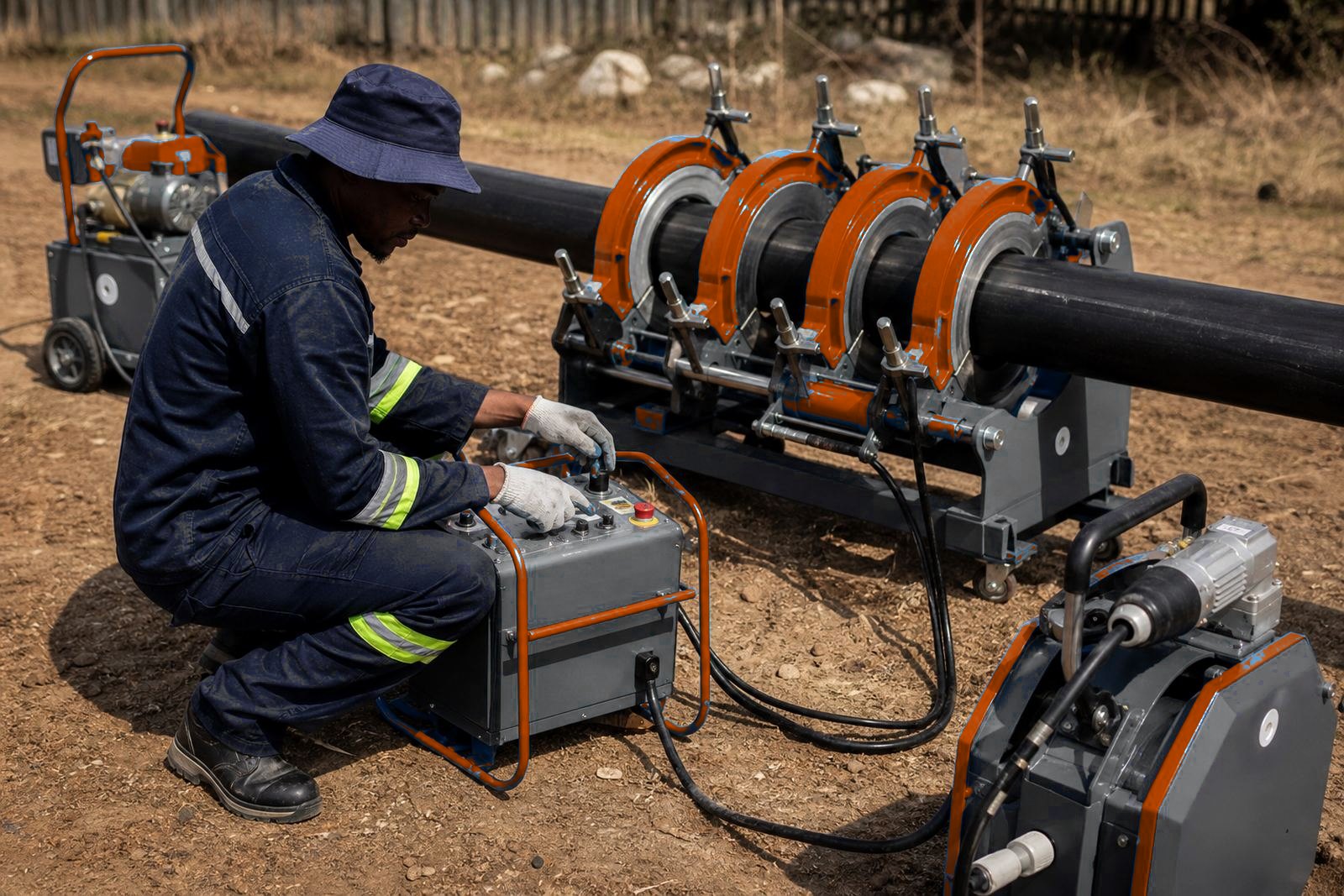
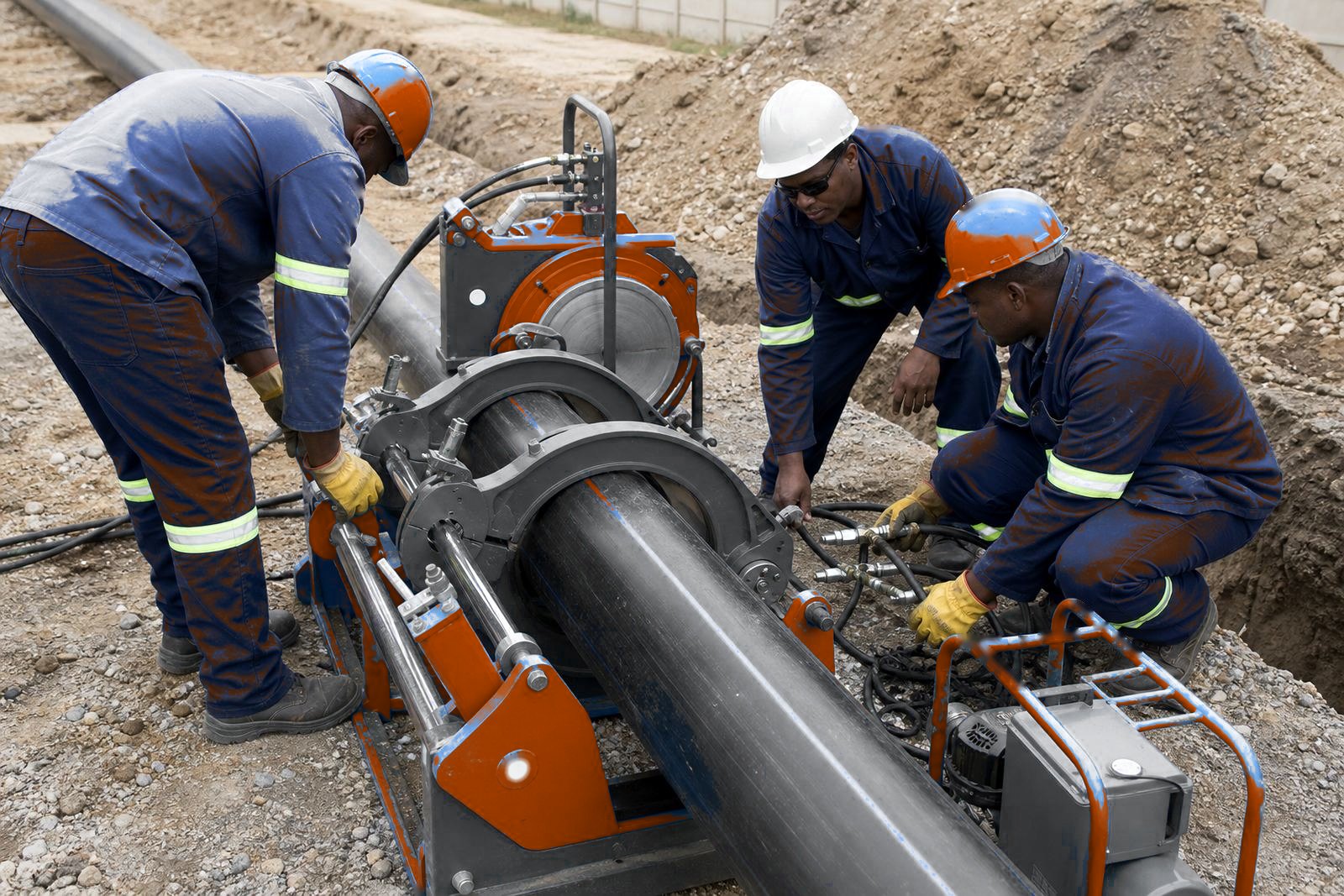
On site, we look at the machine, the pipe stack and the working area. We check that the butt-fusion machine is level, the clamps grip true, the facer cuts square and the heater plate reaches the right working range for the pipe size and SDR in front of the team.
The same visit covers the basics that affect every weld, including pipe alignment, surface cleanliness, wind exposure and the condition of the ends before fusion starts. On water jobs, a poor first setup leaves uneven beads and locked-in stress.
- Machine and hydraulic check
- Pipe size and SDR review
- Clamp and facer alignment
- Heater plate temperature check
- Trial bead inspection
Trial welds before production starts
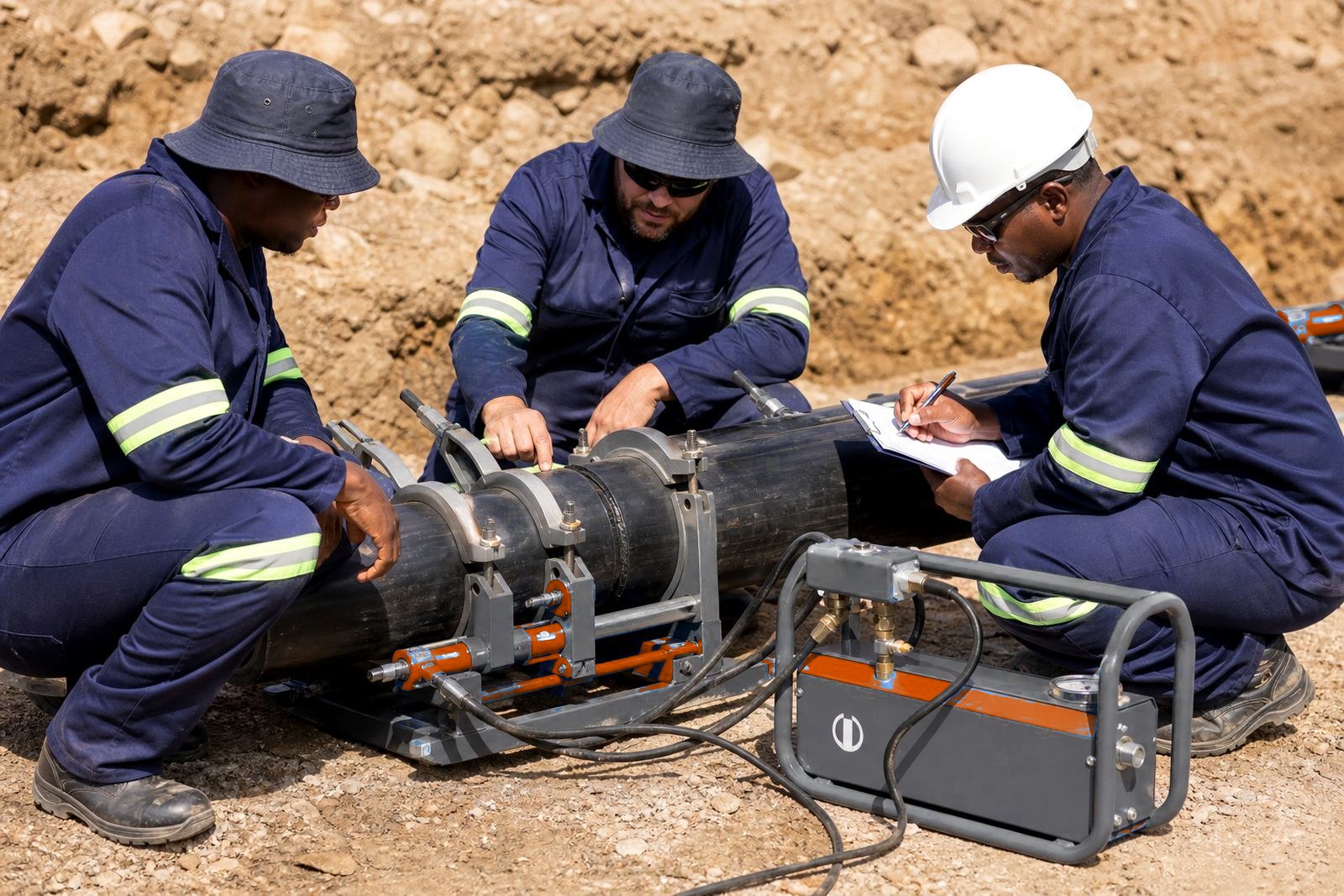
Trial welds are used to prove the setup before the crew moves into full output. We guide the team through facing, cleaning, heater soak, changeover and pressure application, then watch the cooling period without moving the joint or releasing the clamps too early.
That first set of welds often shows whether the machine pressure is steady, whether the heater face is clean enough and whether the operator is working to the correct timing for the pipe wall thickness. Corrections at this stage prevent rework later, especially on long runs in hot inland conditions or near the coast where moisture sits on the pipe longer.
- Facing and end preparation
- Heating and changeover timing
- Fusion pressure setting
- Cooling time observation
- Bead shape and width check
What the crew gets during the visit
The visit is hands-on and practical. We talk the operator through the machine controls, clamp sequence, pressure build-up and the point where the heater plate is removed and the pipe ends are brought together for fusion. Where the client keeps weld logs, we set out the record sheets or digital log fields before production starts.
Where the machine needs minor correction, we cover clamp alignment, hydraulic pressure test checks and facer condition on the spot. If a heater plate has surface marks or temperature drift, that gets noted. The aim is a proper start up that leaves the crew ready to weld with less hesitation and fewer false starts.
- Operator guidance on the machine controls
- Pressure and clamp checks
- Heater plate and facer condition review
- Weld log setup help
- Trial joint sign-off notes
Pipe sizes, SDR ranges and weld control
Smaller diameters heat and cool faster, and larger pipes need careful handling and longer cooling time before the joint is disturbed. We work through the size and SDR on site so the team understands what the joint will ask of the machine and of the people running it.
Startup checks on a mine line cover even heating across the face and close watching of the bead under pressure. A joint that is too cold, too hot or moved during changeover fails inspection. The startup visit includes a close look at the bead profile, the changeover sequence and the machine display.
- Pipe size review from small diameter to large diameter runs
- SDR check against wall thickness
- Changeover timing and manual handling
- Cooling time protection
- Bead inspection after fusion
Turnaround, pricing and how the visit is arranged
Site startup help is arranged around the project date, the pipe sizes on site and the equipment already in use. The visit may be a short setup check for a single machine or a fuller start-up session for a crew working on a fresh line with multiple welders. Travel to your site is arranged in advance.
Startup help is priced on machine type, travel distance, operator count and any pressure tests, plate checks or facer work. Hire machines can also be prepped before delivery so the crew receives equipment ready for the first run.
- Single machine or full crew start-up
- Local and national site support
- Extra checks priced by scope
Aftercare once welding starts
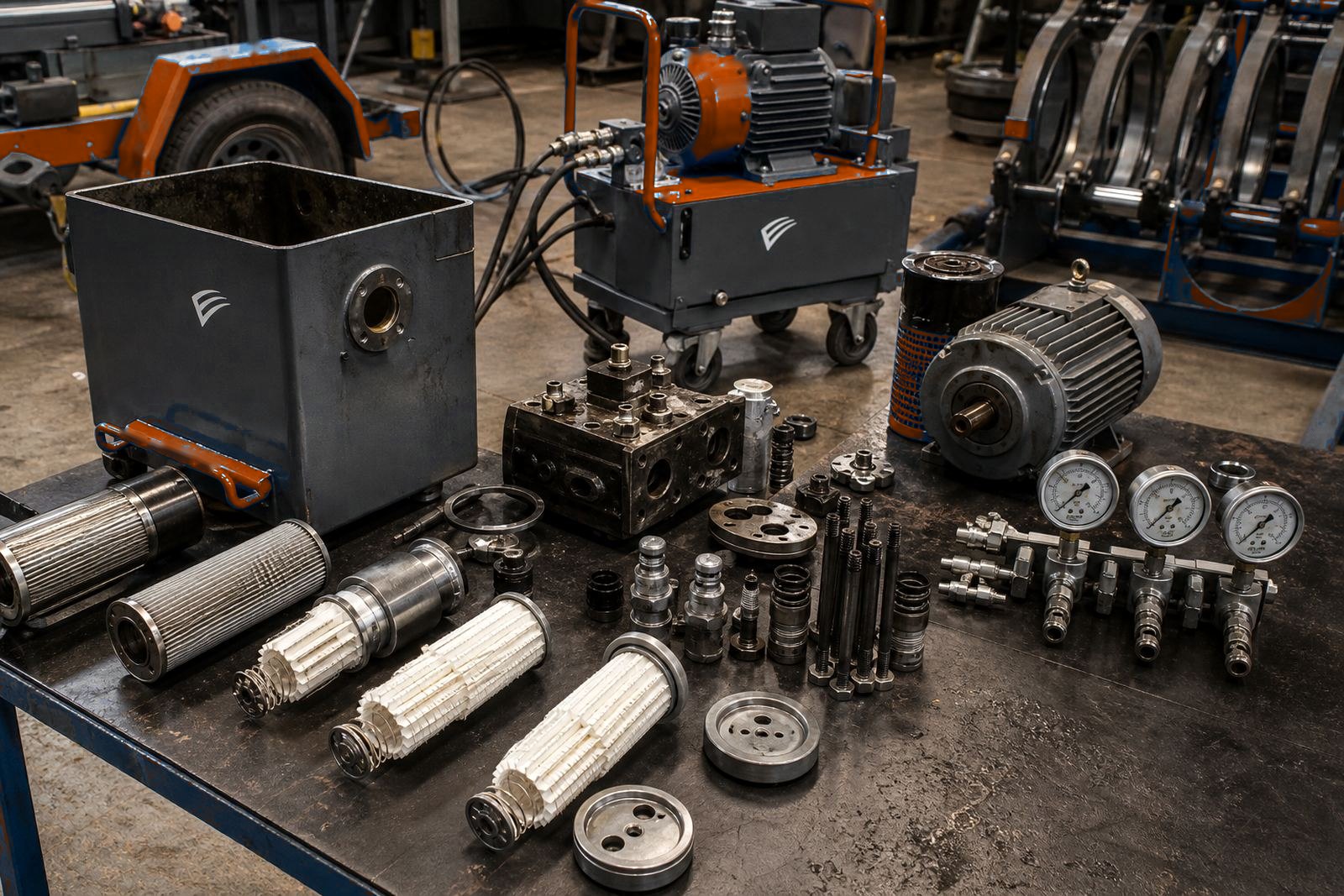
Once production begins, the same team can help with follow-up checks if the machine shows wear under site conditions. We also handle spares support for items that affect alignment, pressure and heater performance on long contracts where equipment runs hard and gets moved between locations.
If a crew needs refresher training after the first setup, that can be tied to the job so the operator sees the same machine under real working pressure. Mandla Maluleke and the team keep the support practical and tied to the way HDPE butt-fusion actually happens on site.
- Weld logging help after startup
- Field technician support where needed
Key facts
| Service | Site Startup Help |
|---|---|
| Coverage | |
| Pipe work | HDPE butt-fusion |
| Typical focus | Facing, heating, changeover, fusion pressure, cooling time and bead inspection |
| Equipment | Fusion machines, facing tools, heater plates, clamps and logging support |