What our servicing covers
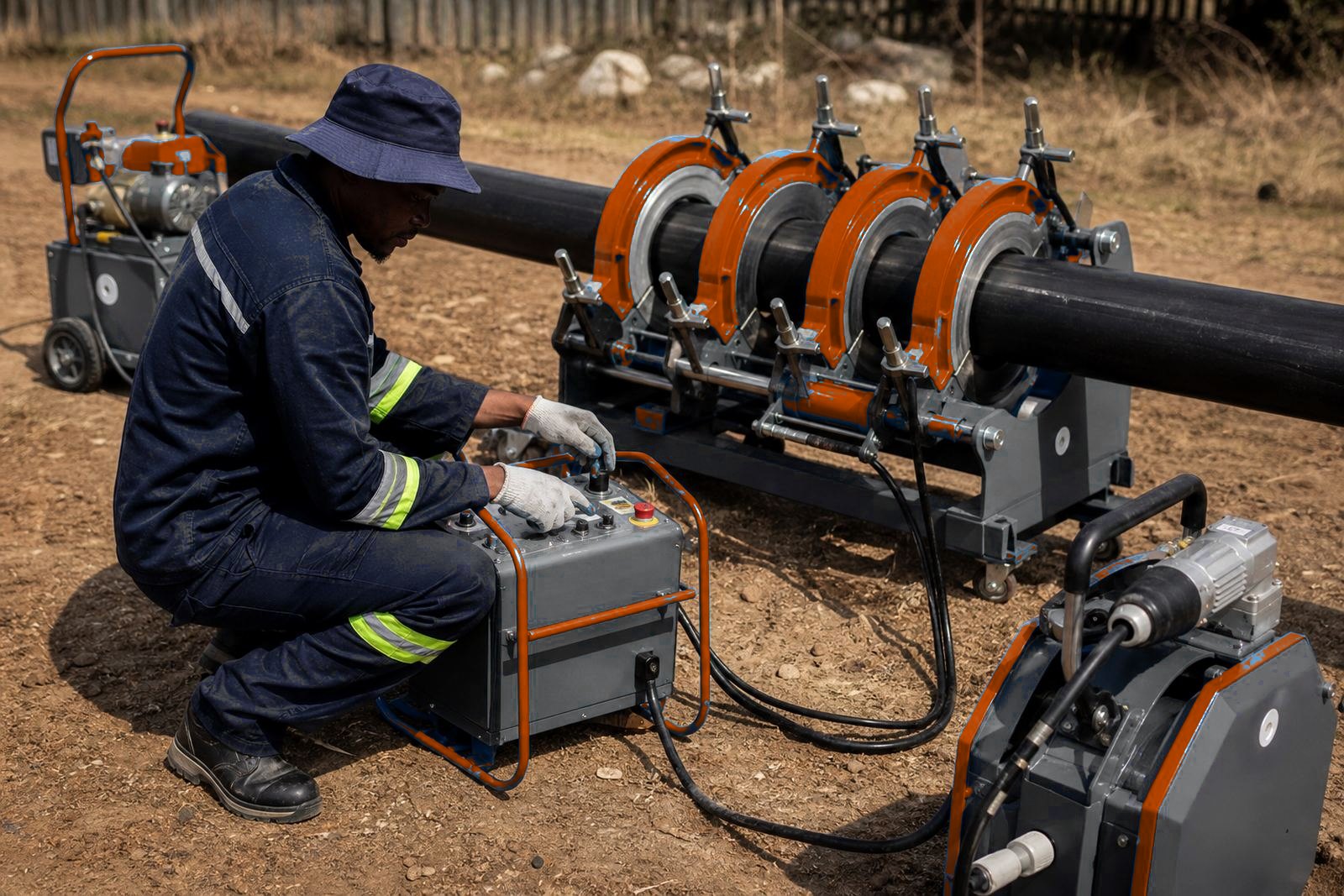
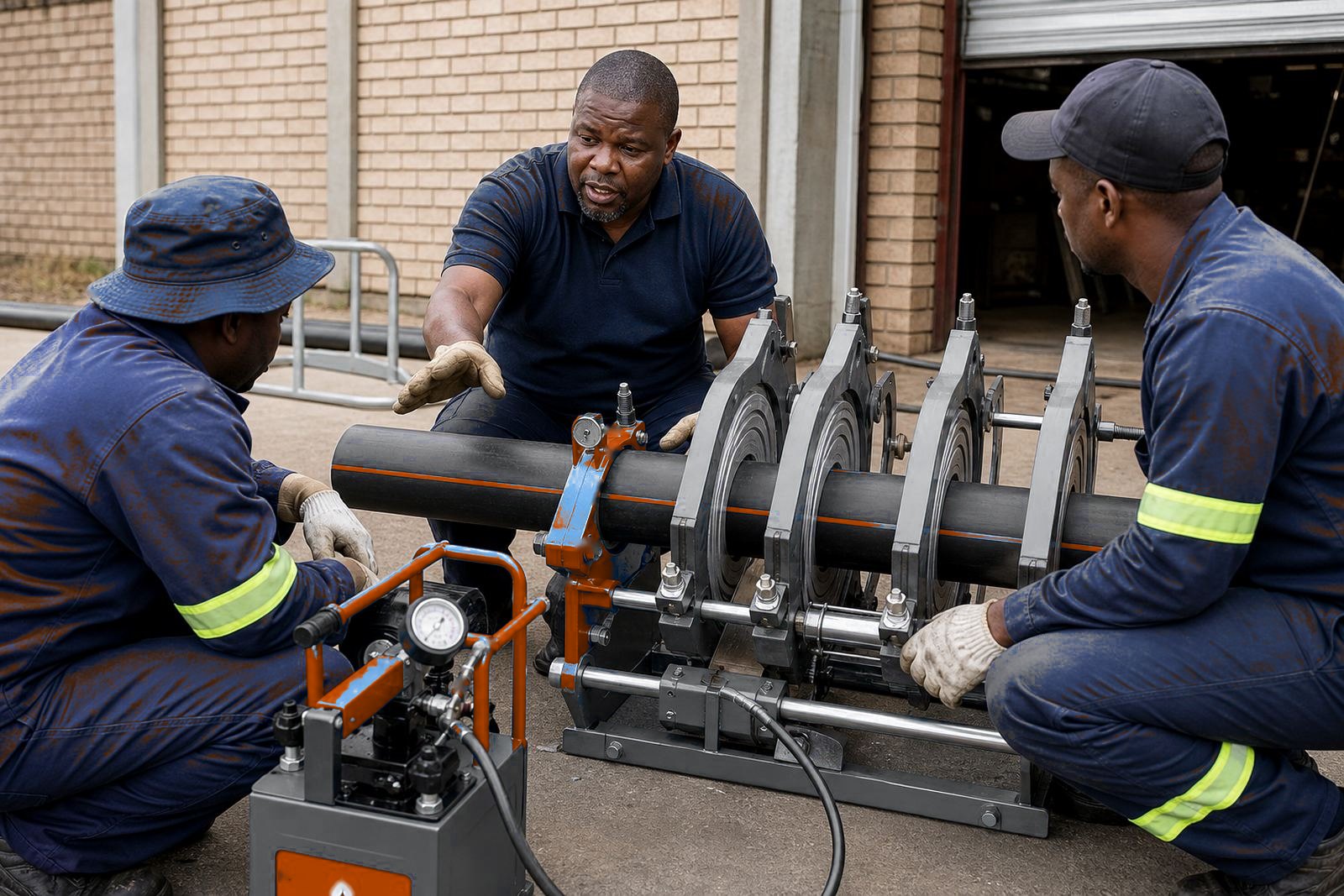
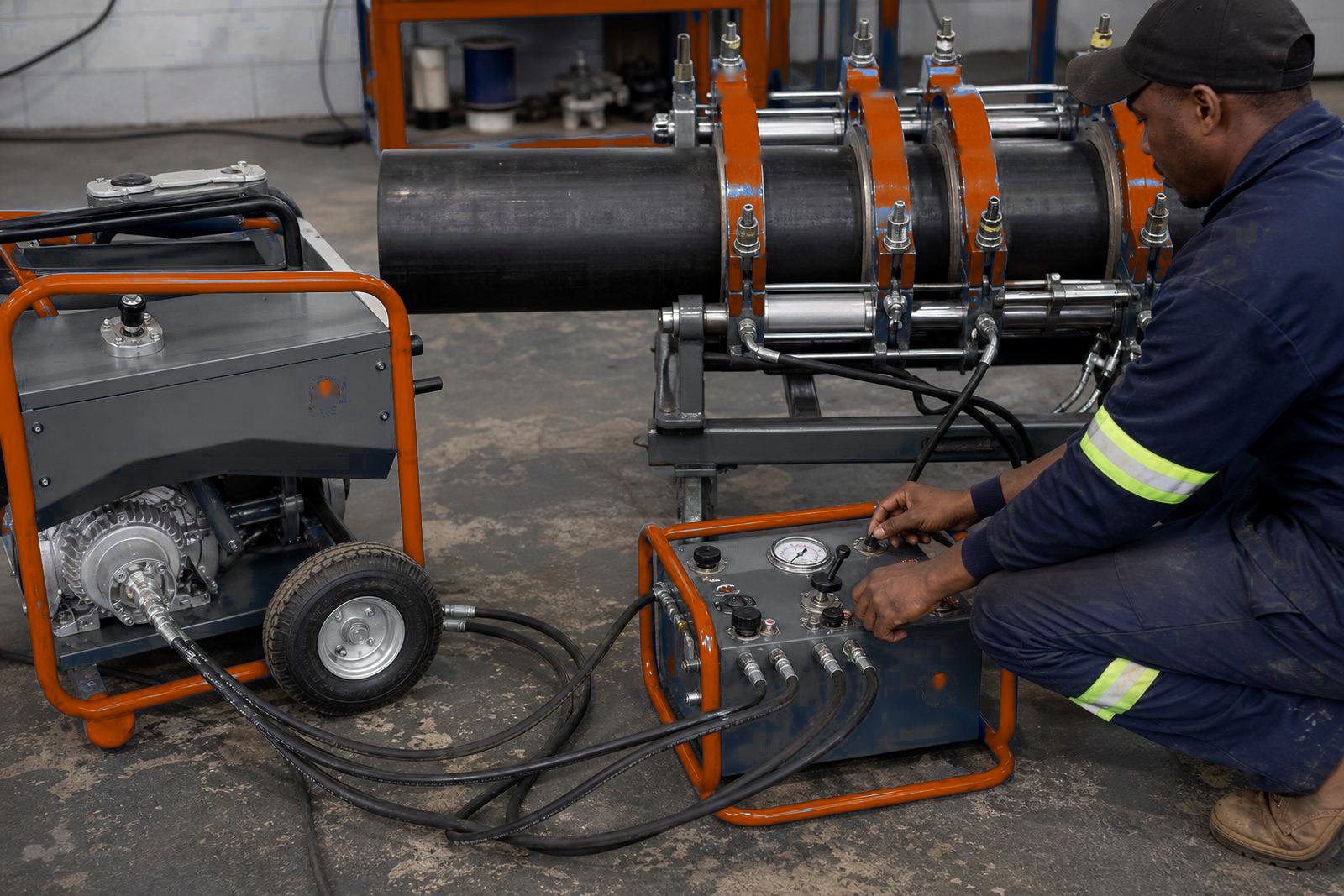
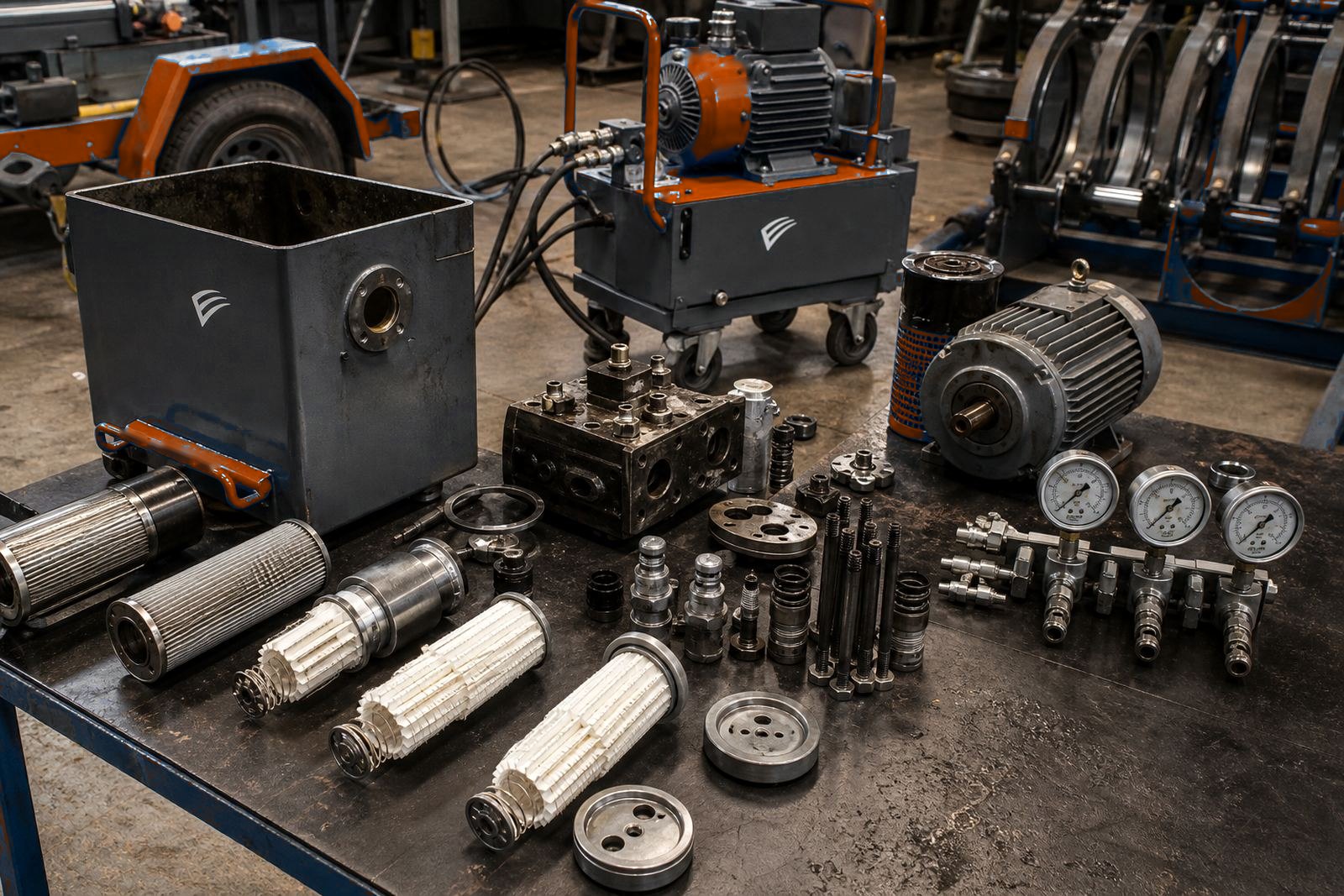
Our machine servicing work covers the parts that affect alignment, heat transfer and clamp pressure. A service can include oil checks, hydraulic leak checks, ram inspection, clamp wear checks, heater plate condition, facer blade wear, frame alignment, electrical checks and control panel review where fitted. We also look for damaged cables, bent bars, worn seals and contamination from transport or site work.
A serviced machine holds the pipe square from the first cut of the facer to the end of cooling. Small faults in the carriage, clamps or hydraulics show up fast in the bead. We inspect the full machine path, including parts that look worn.
- Fusion machines and hydraulic power packs
- Facers, heater plates and temperature control parts
- Clamps, inserts, guide rails and frame components
- Data logging units and recording accessories where fitted
The service bench and site checks
Some units come in for workshop servicing, while others are checked on site when transport or production pressure makes that the practical option. We inspect the machine, then test it under controlled conditions. Where a hydraulic unit is involved, we check pressure stability and look for drift under load. If the facer is noisy, uneven or slow to clear the pipe face, we strip and check the cutting parts and drive components.
Heater plates are checked for surface condition, temperature spread and damage to the coating or plate face. A plate that heats unevenly can leave a poor melt surface and uneven upset bead. Dirt and polymer residue on the plate affect the fusion line, so the plate is cleaned and inspected.
How the repair and overhaul work moves
Once the fault list is clear, we separate service items from repair items. A service can be light, but a unit with worn seals, bent guides or electrical damage may need more work before it is safe for site use. We fit replacement parts where needed, rebuild the worn sections and then run the machine through a dry cycle before final check.
For fusion equipment, we check whether it powers on. Servicing confirms the carriage closes square, the plate holds stable heat and the facer runs without chatter. On logging units we also check recording function so the weld record matches the actual cycle used on site.
- Strip down of worn assemblies
- Seal, hose and fitting replacement where required
- Electrical and control function testing
- Final run test on the bench before release
Pipe sizes, SDR and fusion fit for the job
Different pipe diameters and SDR classes place different demands on the machine. Smaller diameters need accurate clamping and even heating, while larger sizes need steady hydraulic pressure and a frame that stays true under load. We service machines used across a wide spread of HDPE work.
During inspection we check that the machine can handle the intended dimensions and that the insert sets suit the product the crew is running. Logging units are checked for clean recording of the weld cycle. Where operators are working in coastal humidity or dust-heavy environments, we also check for corrosion, water ingress and grime build-up around moving parts.
- Pipe size range matched to the carriage and clamps
- SDR suitability checked against machine pressure capability
- Bead quality reviewed after a test cycle
- Logging and printout function checked where fitted
How servicing is priced
Servicing is quoted on machine type, condition on arrival, parts needed and whether the work is done in the workshop or on site. Plate checks cost less than a full facer overhaul or hydraulic rebuild, so each item is quoted on its condition.
Each service quote is itemised per machine. If a machine only needs cleaning, adjustment and calibration, the scope stays lighter. If the service reveals damaged seals, uneven heating or worn clamps, we price the extra work separately so the handover is clear.
- Workshop service or site call-out pricing
- Parts listed separately where replacement is needed
- Quoted scope based on the equipment condition
Handover notes and operator support
After servicing, we give practical handover notes that cover the machine condition, any parts changed and anything the operator should watch on the next weld set-up. Crews can be walked through any logging, plate or clamp adjustments made during servicing.
Our aftercare is shaped for day-to-day plant use. If a unit goes back into stock, we prep it with a clean service record and working controls. For site crews, we can also support refresher training around facing, heating, changeover, fusion pressure and cooling time so the machine and operator stay in step.
- Service notes for the workshop file or site folder
- Operator walk-through on adjusted functions
Key facts
| Service type | Scheduled servicing for HDPE fusion machines, facers, heater plates and power packs |
|---|---|
| Machine focus | Butt-fusion units with hydraulic or mechanical clamp systems |
| Common checks | Pressure, alignment, heat surface, drive parts, seals and logging function |
| Job fit | Fusion machines, facers and hydraulic units |
| Coverage |