What the hydraulic test covers
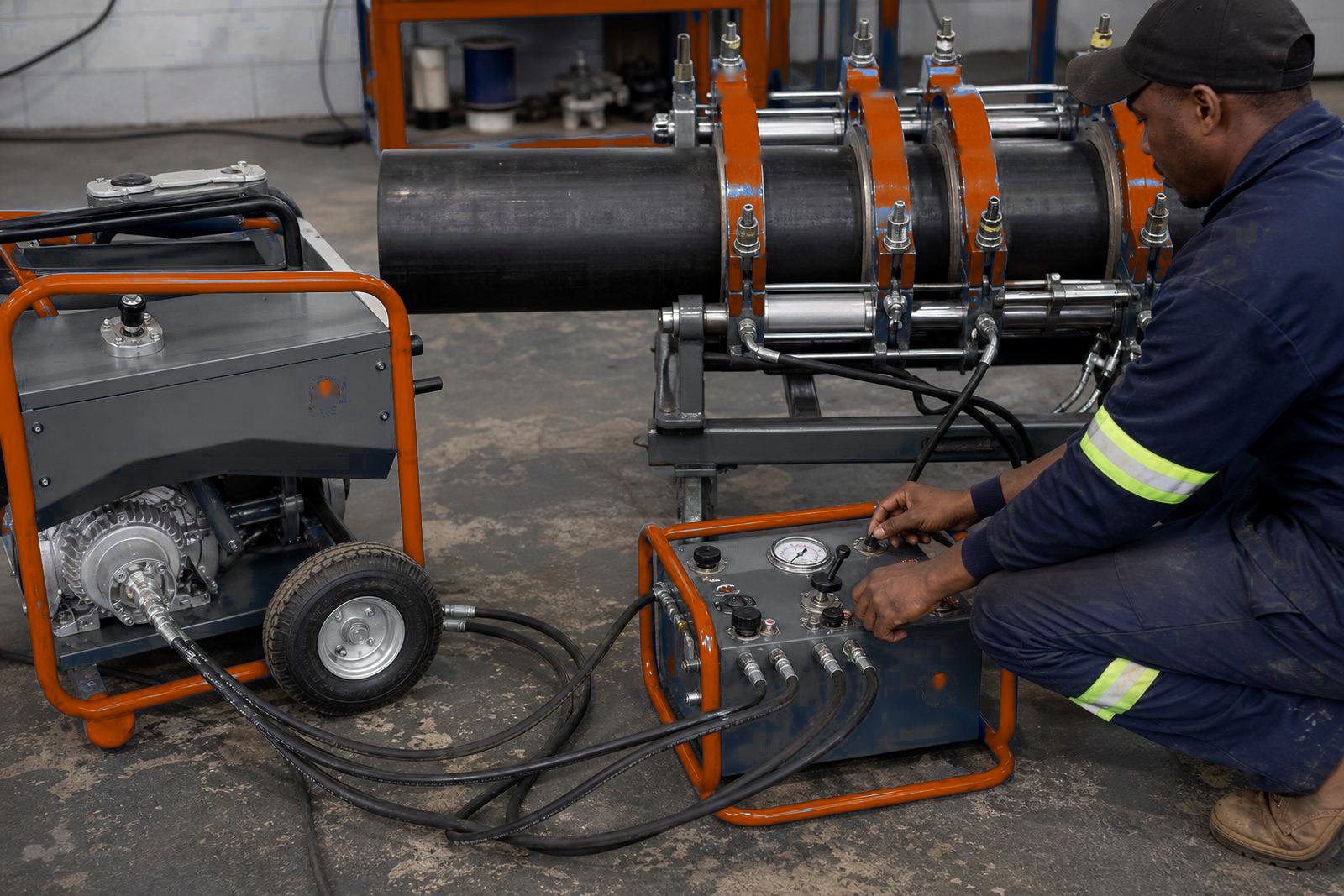
Our hydraulic pressure test looks at the parts that carry force through the fusion cycle, from the pump and hoses through to the cylinder action at the machine. Steady clamp force during facing, heating, changeover and cooling prevents pressure drift that can disturb bead formation or pipe alignment. We work on units used with HDPE pipe from small site sets through to larger diameter machines, and we check how the system behaves under working pressure as well as at idle.
The inspection covers visible hose wear, coupling condition, leaks around fittings, pressure drop under load and signs of uneven cylinder movement. SDR range changes the force profile and the pressure reading expected. Hydraulic control can fail at the point where fusion pressure must stay steady, even on a clean-looking machine.
Inspection points on site
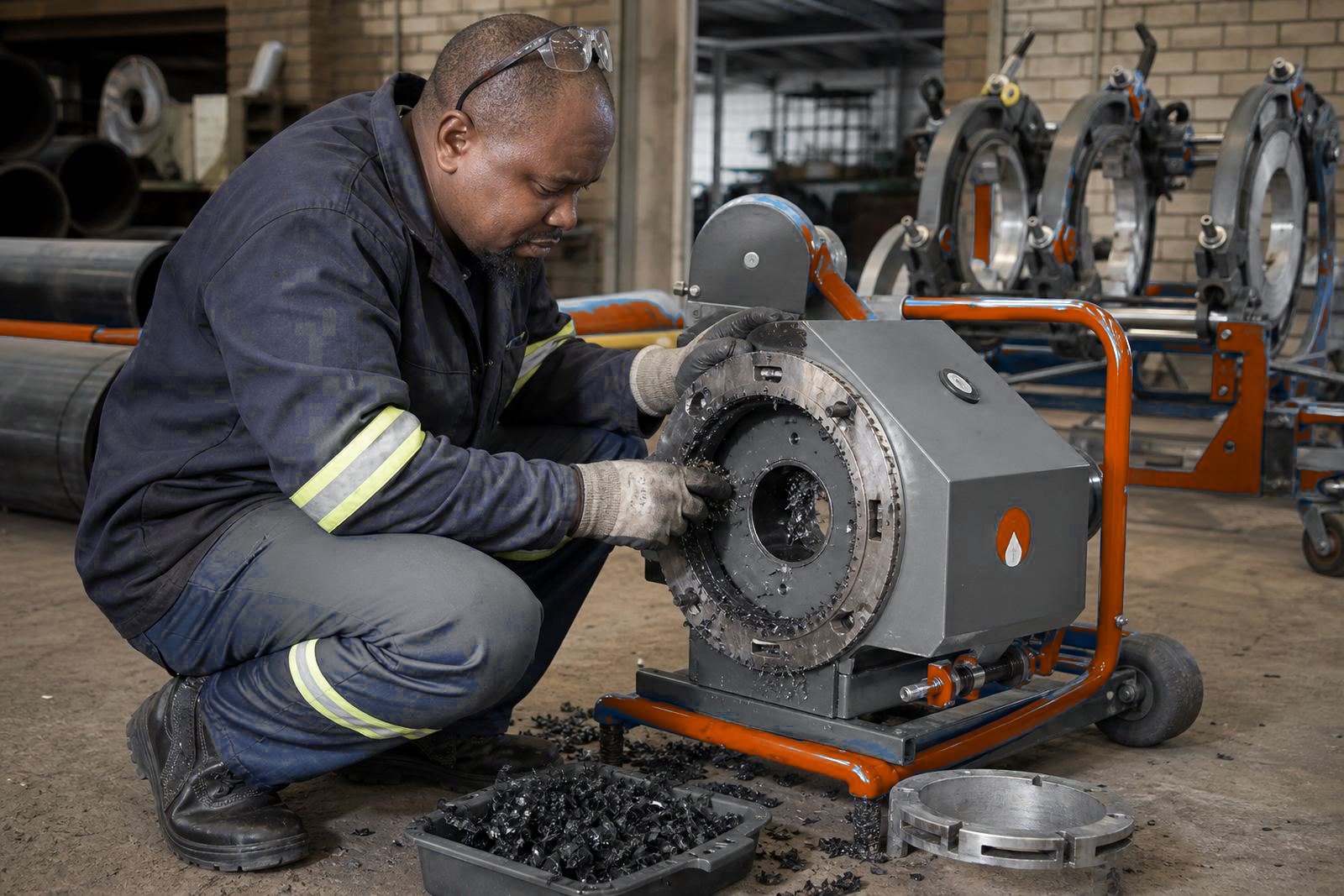
We open up the hydraulic side carefully and check the parts that affect control during a butt-fusion weld. We check the hose set, seals, ram movement, gauge condition and the handover between pressure build and pressure hold. We also look for oil contamination, damaged fittings and pressure loss that can show up only when the clamp load is applied.
- Hose condition, bend marks and rubbing points
- Couplings, seals and signs of seepage
- Pressure gauge reading under working load
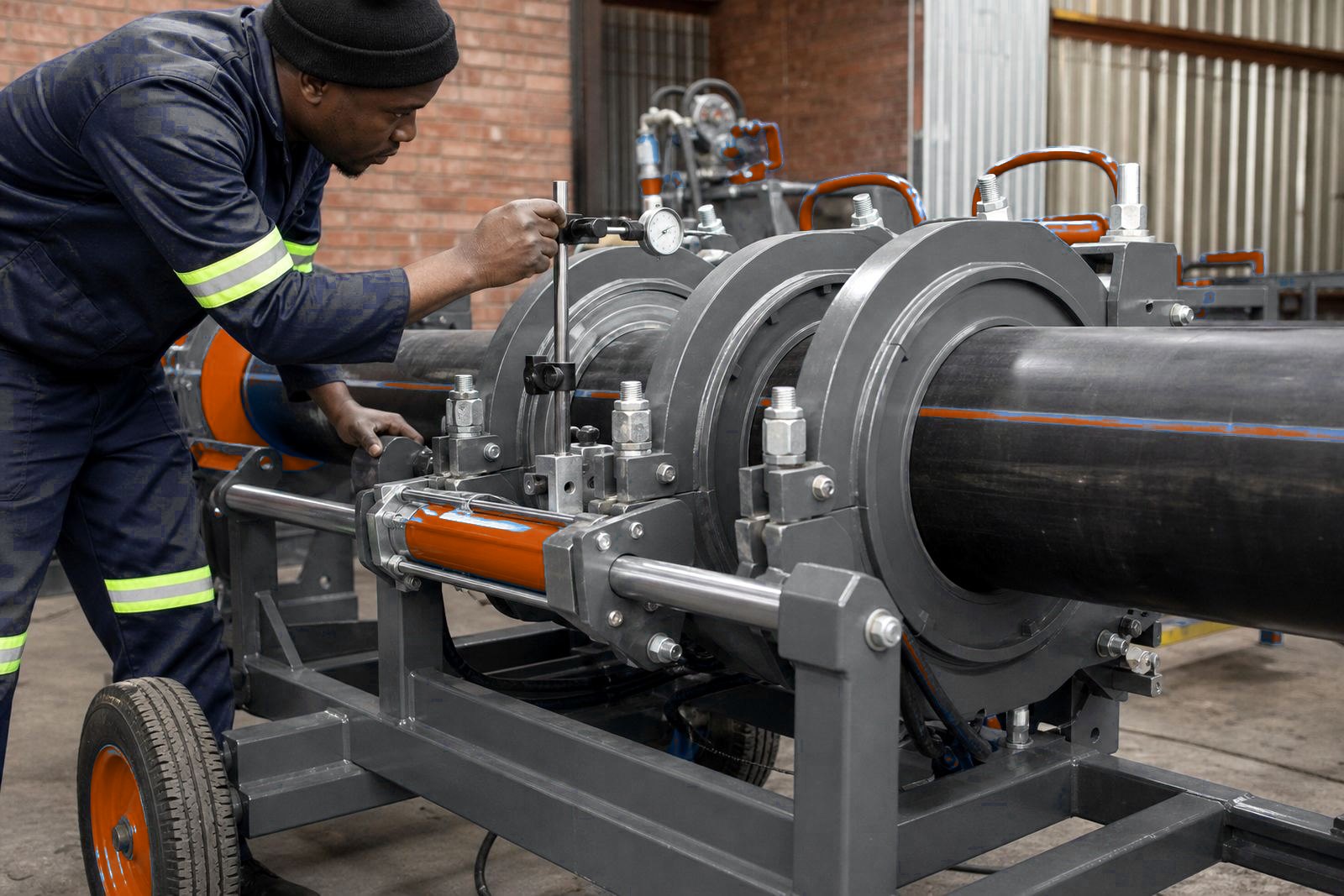
- Cylinder movement for smooth travel and return
- Clamp force behaviour during hold and release
- Overall leak check after the system is pressurised
Units from coastal air or dusty civil sites get extra checks for contamination and corrosion around fittings. Those small faults are often what upset repeatable force control on the weld bench.
How the service is carried out
Hoses and fittings are inspected, then a controlled pressure test is run on the machine's hydraulic circuit. We check the system at working pressure, watch the reading for drift and compare the response against normal fusion handling. Where needed we isolate a section of hose, replace worn seals or flag a pressure issue that should not be ignored before the next weld run.
Once the hydraulic system is sound, we can also check how the force control supports the rest of the butt-fusion sequence. The machine can hold pipe ends square during facing, keep pressure steady through the heating phase and settle cleanly during cooling time. Operators then work from true pressure readings and get a cleaner bead on the pipe ends.
Machine sizes and technical ranges we work with
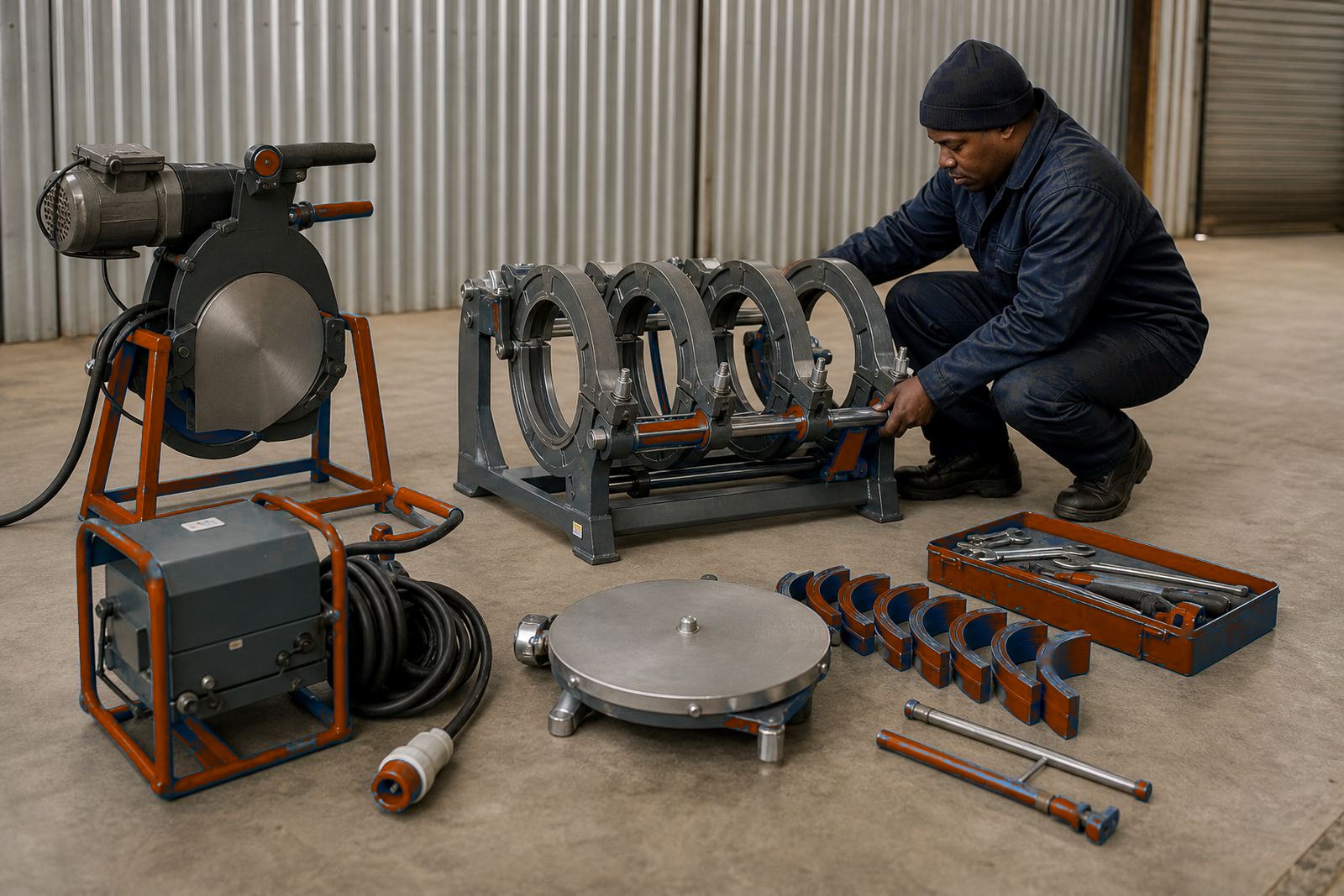
We service a wide range of butt-fusion machines used on HDPE pipe work in South Africa. Typical sets cover smaller site installations through to larger mining jobs, with clamp systems matched to common pipe diameters and SDR classes. Test pressure is worked out from pipe size, wall thickness and the machine's cylinder area, so the system is tested against its real duty.
- HDPE pipe across multiple SDR ratings
- Hydraulic pressure systems on manual and powered fusion sets
- Force control used during facing, heating and fusion hold
- Clamp frames, rams and hoses that need steady load transfer
Where a machine carries weld logging features, pressure stability also supports cleaner records. A poor hydraulic system can make the logged data look uneven even when the operator followed the right sequence.
Turnaround and pricing approach
We price hydraulic pressure testing according to the machine type, the condition of the hose set and whether the job needs repair work or only a test report. A unit with a clean pressure hold and sound hoses takes less work than a set that needs seals, hose ends or gauge attention. Visible leaks or uneven clamping are diagnosed before repairs are approved.
Timing varies with equipment condition and the parts required. Simple testing is straightforward, while a deeper strip and rebuild on the hydraulic side takes longer. For fleet machines, we can work through a group of units and separate the clean ones from the sets that need follow-up service, so the planning on site stays orderly.
Aftercare for operators and fleet managers
After the test, we talk through what the readings mean and what the operator should watch during the next fusion cycle. That may include a hose that is softening, a coupling that weeps under load, or a clamp that moves unevenly under pressure. Facer alignment, plate checks or clamp adjustment found during testing are noted for the wider service.
Where the machine records fusion data, the logger is checked during the pressure test. Stable hydraulic pressure makes the record more useful because the force trace stays steadier through heating and cooling. Contractors need this when different operators use the same kit on different sites.
- Reading the pressure gauge
- Faults noted before the next weld shift
- Hose and fitting issues flagged for repair
- Support for logging and record keeping
- Advice for safer clamp force control on site
Key facts
| Service | Hydraulic pressure test for HDPE butt-fusion machines |
|---|---|
| Focus | Force control, hose inspection and pressure stability |
| Machine range | Small to large butt-fusion sets used on site |
| Pipe scope | HDPE pipe across common SDR classes and diameters |
| Coverage |