What a proper facer overhaul covers
A facer used in butt-fusion work has one job, to leave both pipe ends square and true before the heater plate goes in. If the cut wanders, the fusion face can show gaps, raised lips or uneven contact that makes pressure control harder later in the weld cycle.
Our overhaul work focuses on the parts that carry load and the parts that create the cut. We open the tool, clean it, inspect wear, replace damaged parts where needed and test the unit under working conditions. A serviced facer should track straight, remove material evenly and run without chatter when the cut starts.
- Blade condition check and edge assessment
- Drive train inspection for play, drag and noise
- Bearing inspection and replacement where required
- Housing cleaning and fastener check
- Test cut for square finish and smooth feed
How we handle the overhaul in the shop
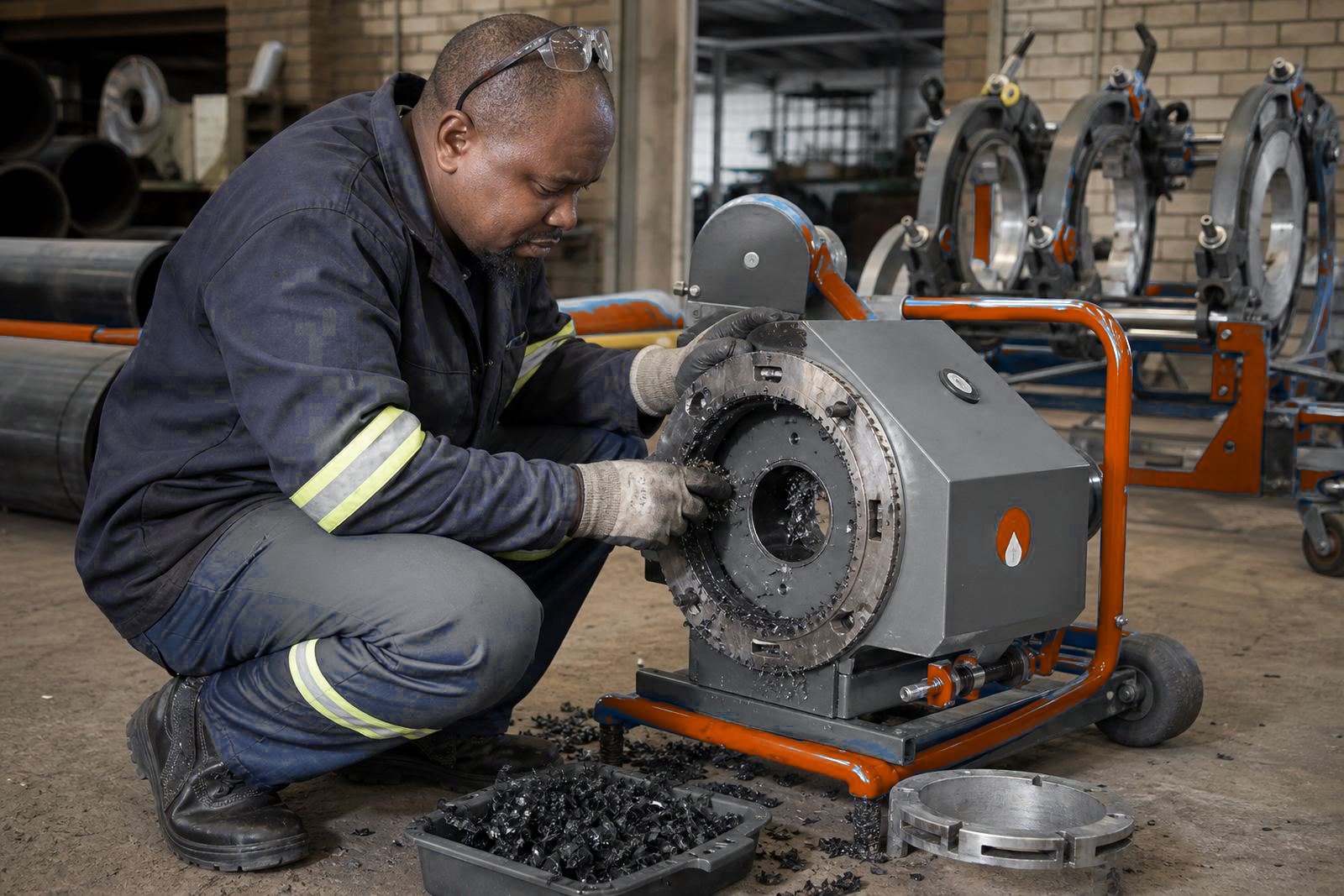
We strip the facer to access the cutting assembly, bearings and drive path. Each part is cleaned so wear marks and surface damage can be seen properly. Blades with rounded edges, chips or a dull cutting line are replaced or reset according to the machine type and condition.
After that we check alignment. A facer can look fine on the outside and still pull slightly to one side under load, especially after long site use, dust exposure or rough transport between jobs in Gauteng, North West or further afield. Bearings that have dried out or picked up grit are a common cause of rough feed.
- Strip down and clean of swarf, dust and pipe residue
- Drive check for smooth movement through the full travel
- Blade set position and contact review
- Bearing run and noise check
- Reassembly with functional test before release
Facing quality in butt-fusion work
A blunt or chipped facer leaves ends that will not meet flat on the heater plate. A neat facing pass gives both ends the same contact plane, which helps during heating, changeover, fusion pressure and the cooling period that follows. If the facer leaves one end high or low, the pipe can press unevenly against the heater plate and that affects the bead that forms afterwards.
Clean facing keeps joints consistent across different SDR classes and pipe sizes. Larger diameter pipe and thicker wall sections need a consistent cut, because any tilt or drag shows up fast once the heater plate comes out and the joint is brought together. A square face cuts rework where pipe runs are long and the material is handled often.
Sizes, settings and workshop checks
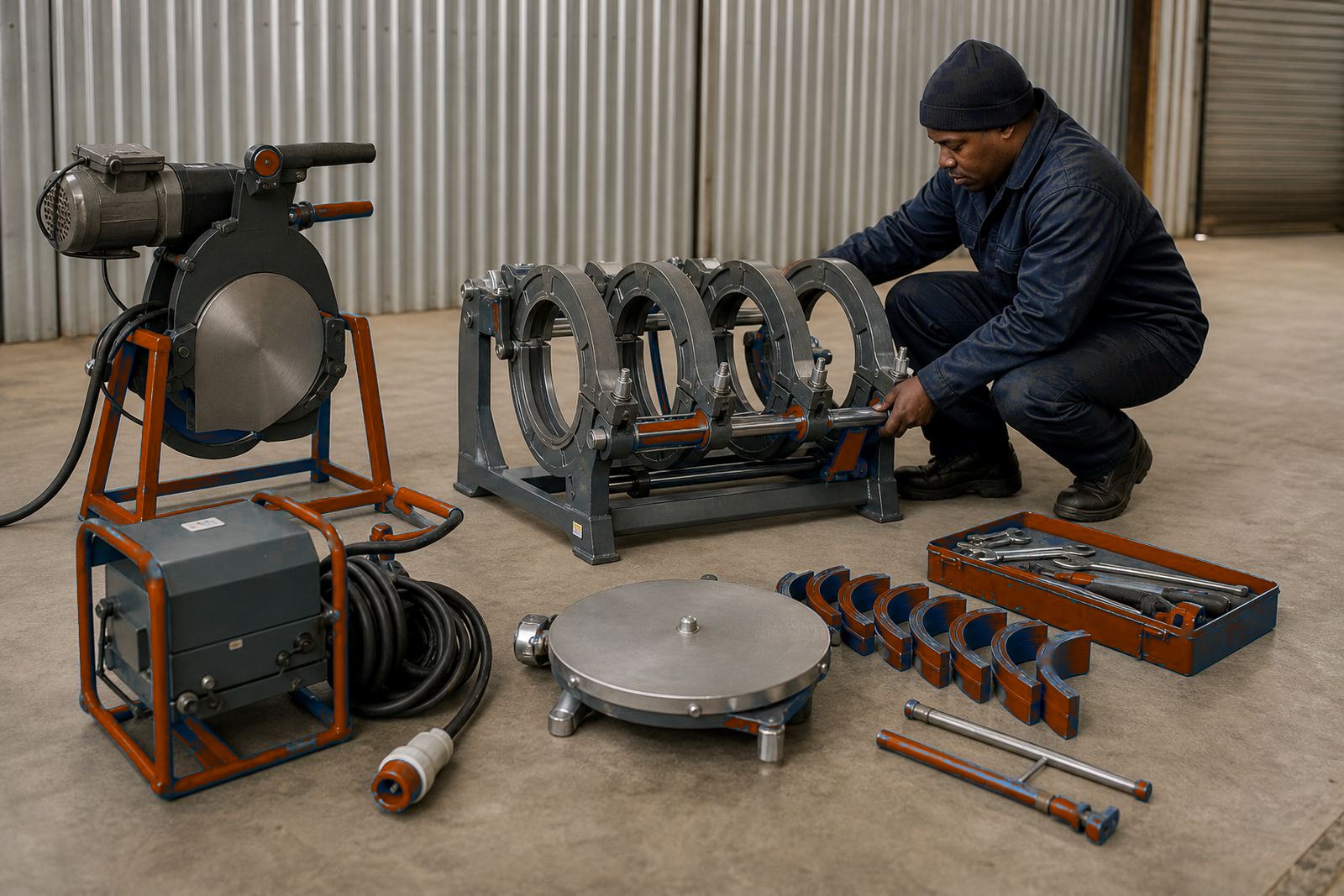
We service facer units used on a broad range of HDPE pipe work, from smaller site machines to equipment used on larger diameter welds. Tool frame, cutter head and the clamp arrangement set the exact capacity. The overhauled facer is tested across its rated pipe range for a clean edge and a steady drive load.
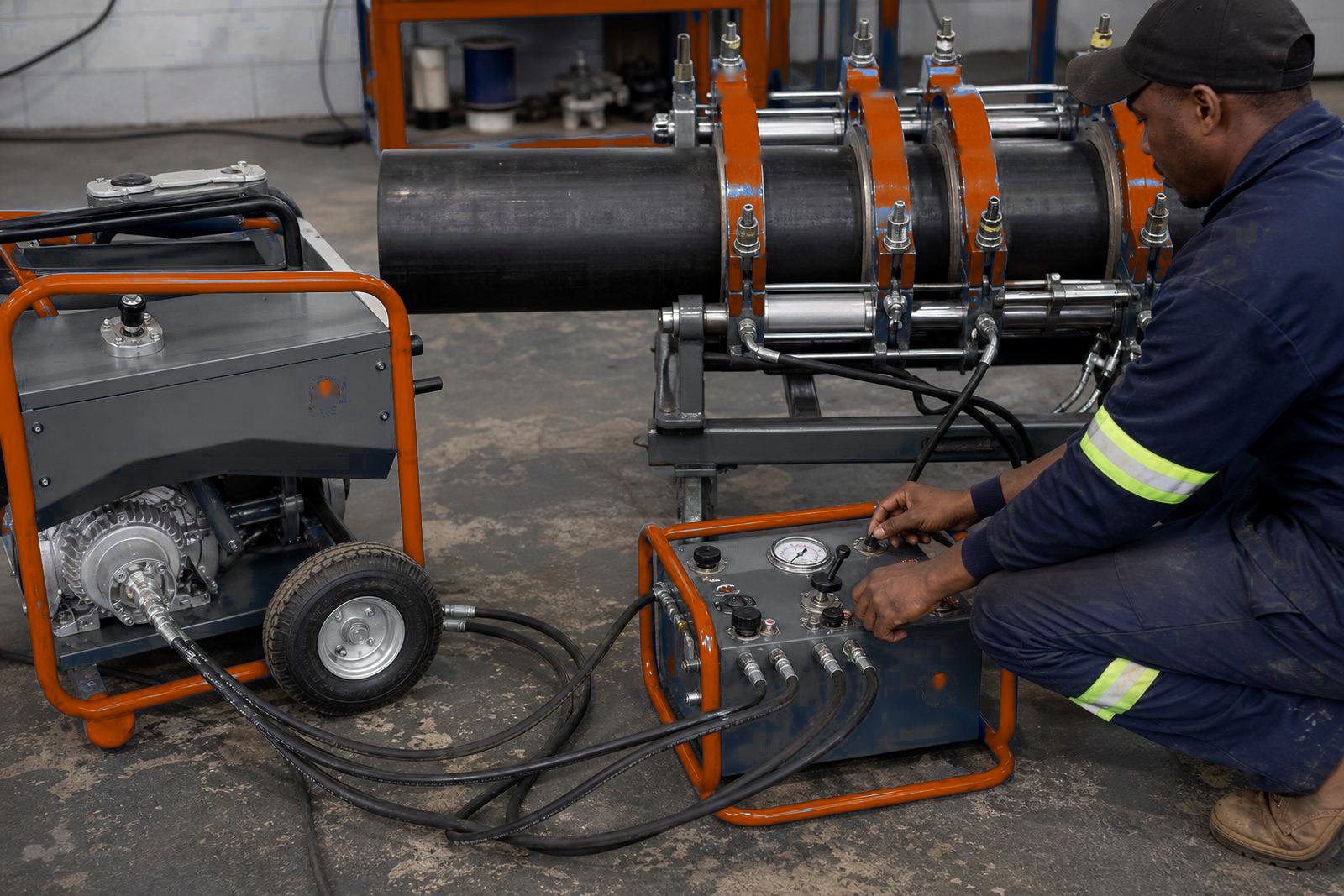
Where the unit is part of a complete butt-fusion set, we also look at how it sits with the clamps and the carriage. Poor fit there can make the cutter wander. A decent overhaul should leave the tool moving straight, with no binding at the start of the pass and no scraping as the blade exits the pipe wall.
- Suitability for common SDR wall thicknesses
- Clamp interface and carriage fit review
- Cut finish inspection under working feed
- General condition note for future use planning
Turnaround, hire support and pricing approach
We plan every overhaul around the unit condition and the parts that need attention. Some facers need only cleaning, bearing work and a blade reset, while others need more involved repair after site damage or long use on dusty ground. For a project tool, the facer overhaul can be done in one visit.
We work out the price from the facer’s current condition, the parts it needs and the labour the job takes. We quote for the machine in front of us. If a unit is badly worn, we set out the cost of the work before anything is done so the decision stays practical.
- Condition-led assessment before work starts
- Parts listed separately where replacement is needed
- Collection inspection for site-returned units
- Support for single machines and fleet tools
Aftercare once the facer is back in service
After the overhaul, we explain the signs to watch for when the tool is back on site. A facing tool should cut without heavy vibration, leave a clean shaving and feed without grabbing. If the blade starts to mark the pipe, or the cut loses its square line, the machine needs another look before the next weld run.
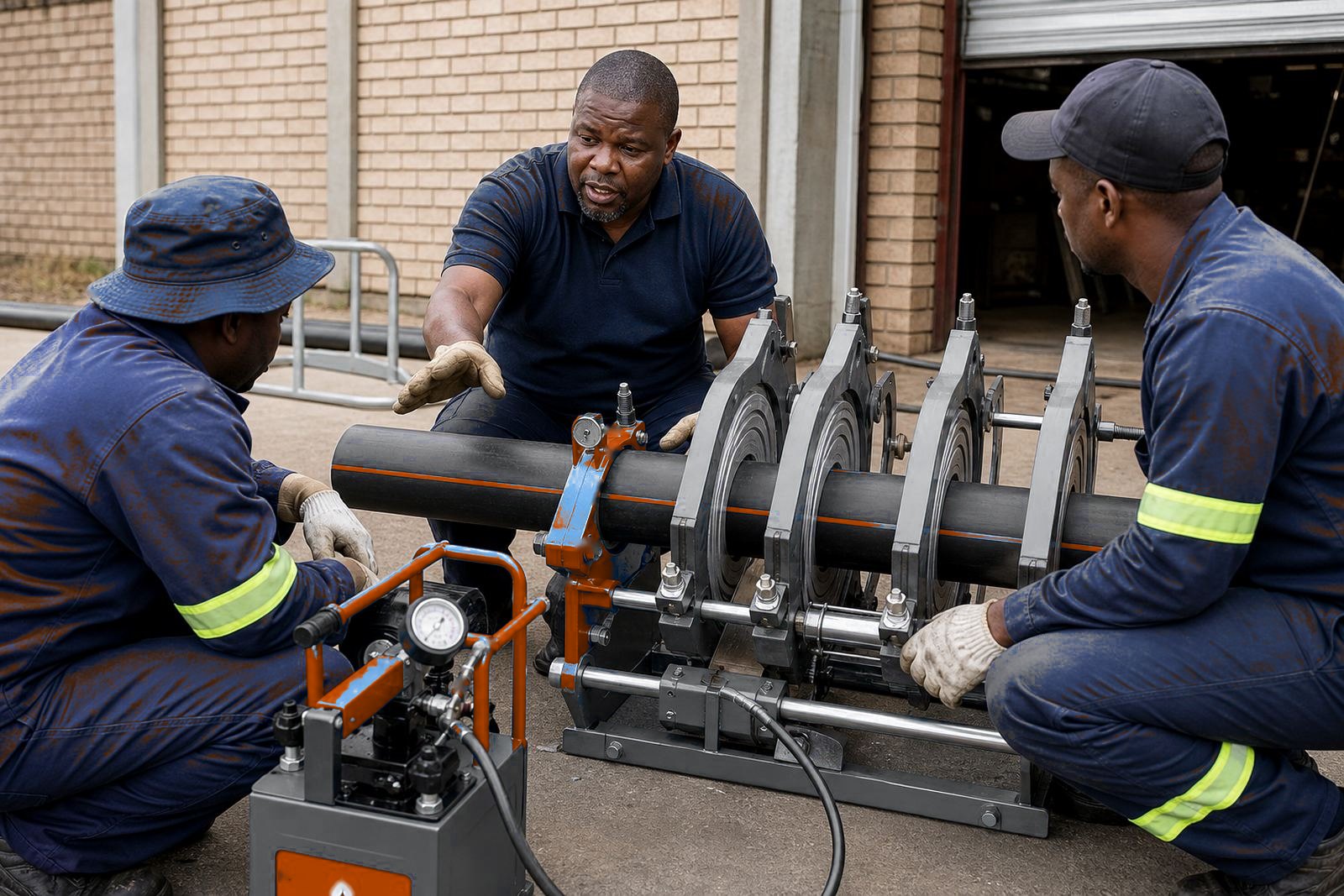
For teams using weld logging, a steady facer helps the whole record stay cleaner. The operator can note a better facing result, more consistent alignment and fewer interruptions during the heating and changeover steps. We can also assist with refresher guidance if the crew wants a better handover on use and care.
- Post-service operating note for the crew
- Guidance on blade care and safe handling
Key facts
| Service type | Facer overhaul for HDPE butt-fusion equipment |
|---|---|
| Core checks | Blade, drive, bearing, housing and fastener inspection |
| Typical pipe use | HDPE pipe facing for butt-fusion work |
| Pipe range | Dependent on facer frame and cutter head size |