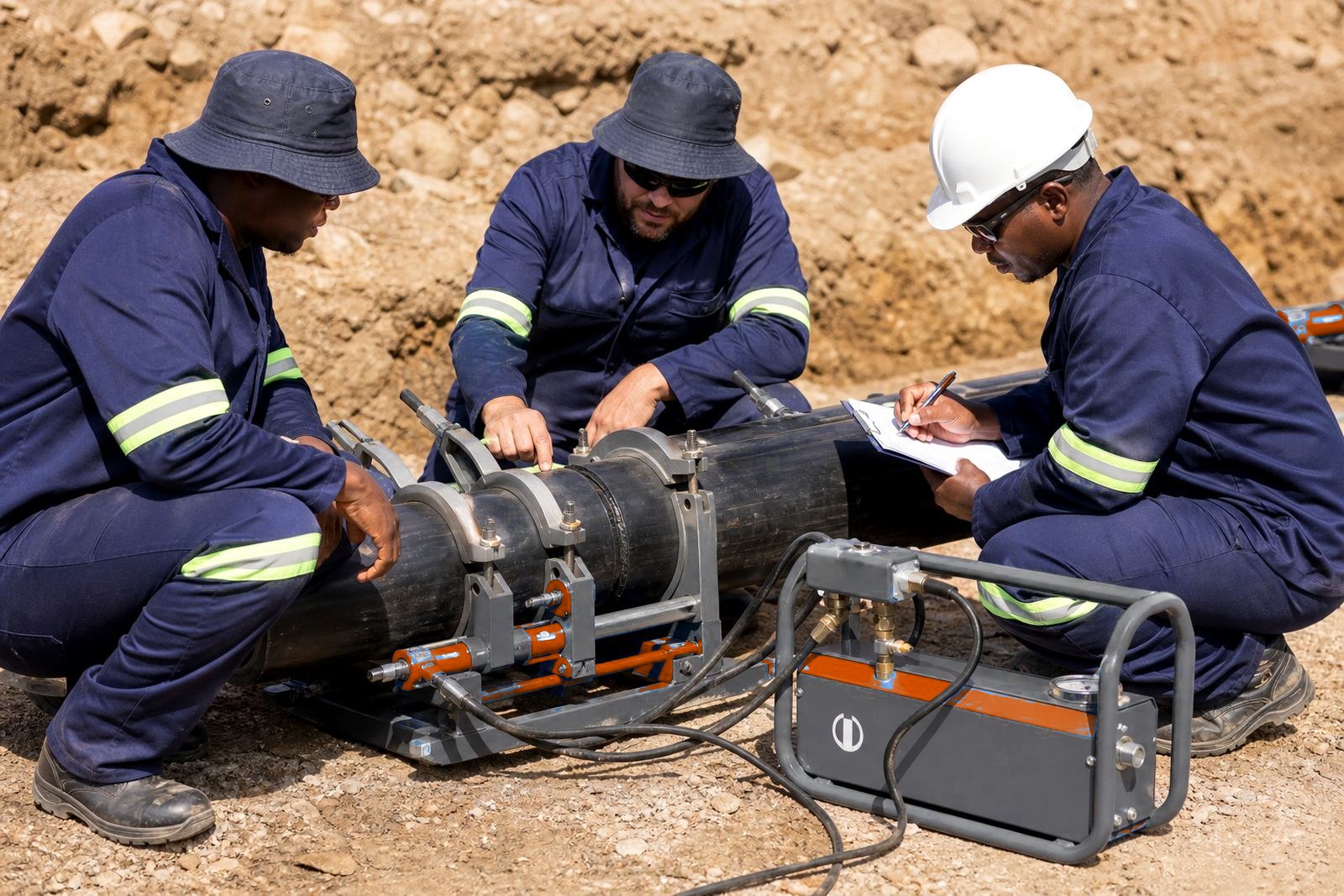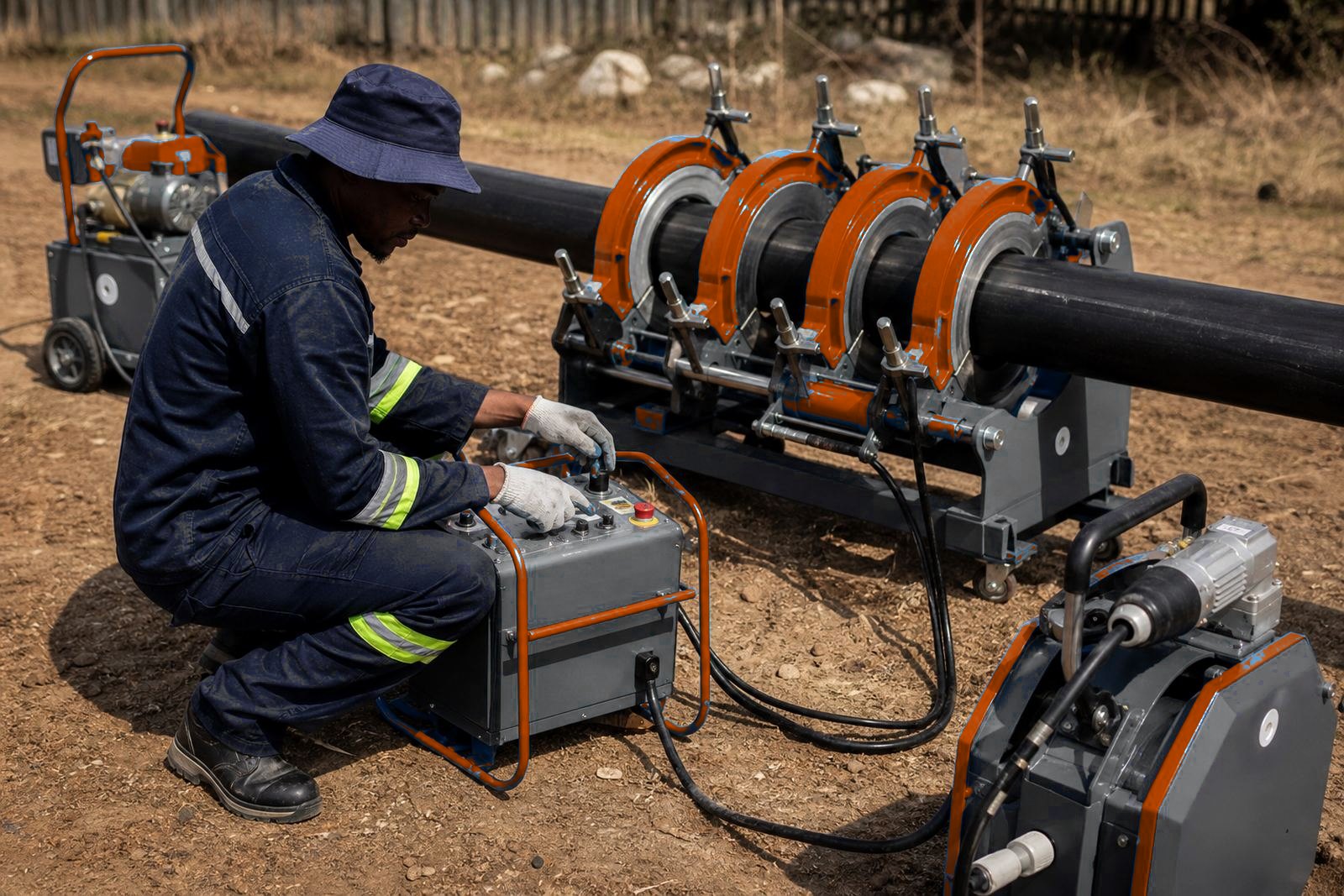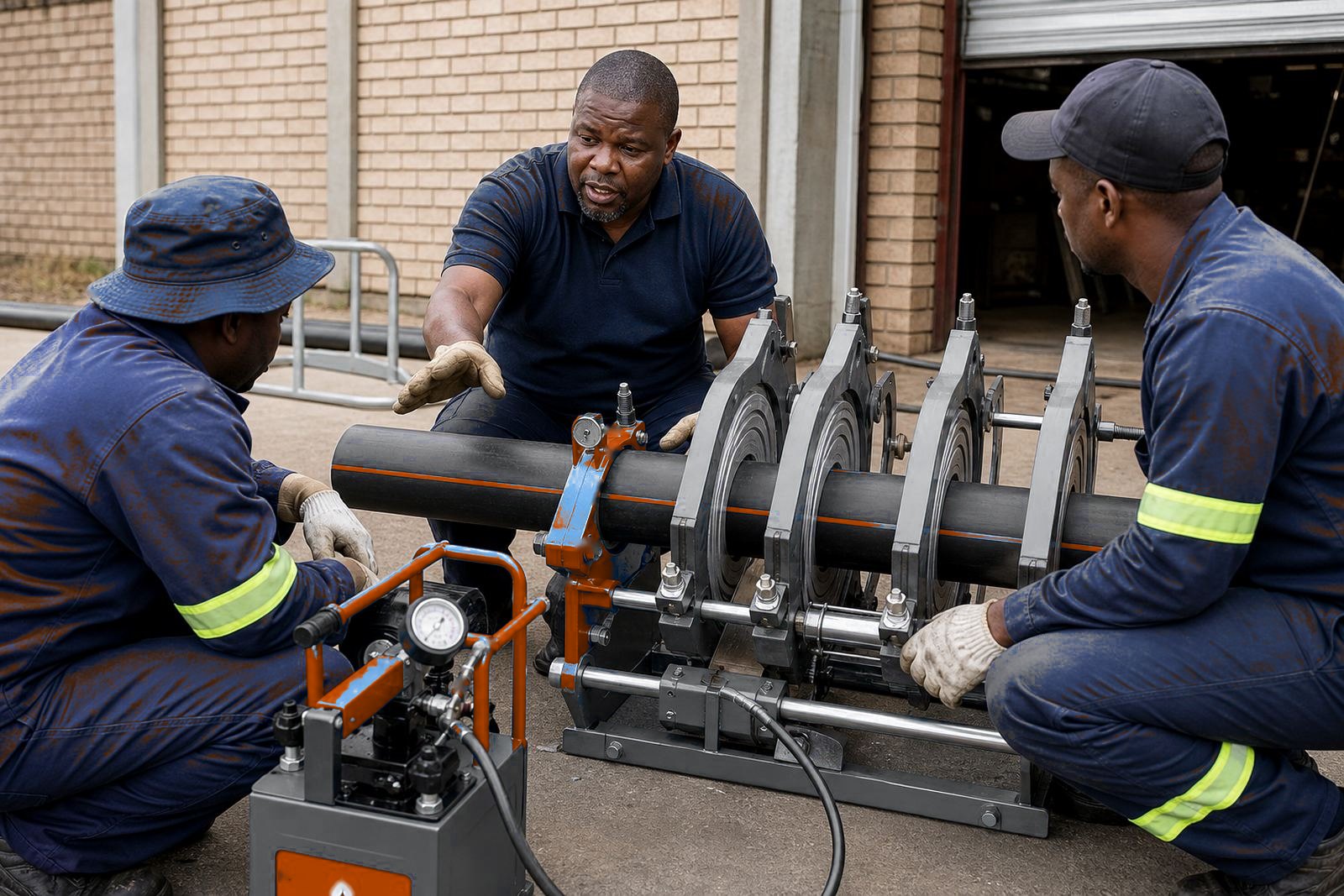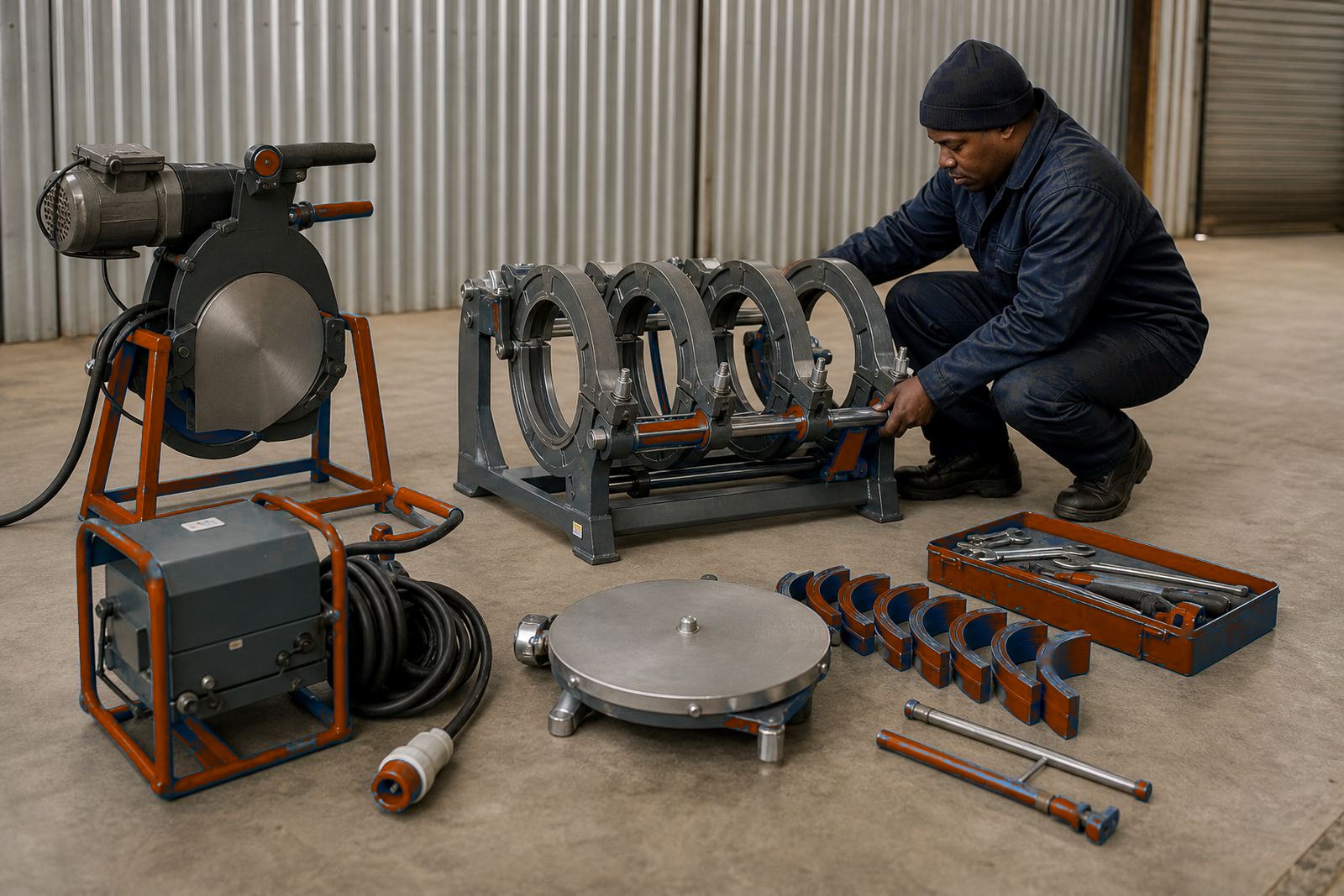
What goes through the prep bay before dispatch
Each hire unit is run through a working test before it leaves the yard. We inspect the facer, heater plate, hydraulic pack, clamps, skids, hoses and control gear, then look for oil leaks, worn bearings, loose fittings and damaged cables. The aim is to send out a machine that can face, heat, align and fuse HDPE pipe with consistent pressure and clean movement.
The machine size is checked against the pipe range booked for site. Real jobs can mean a contractor shifts from smaller service lines to larger main runs, or moves between SDRs that need different clamping and fusion pressure settings. If the set-up is wrong, the weld sequence becomes awkward and the bead shows it.
- Visual inspection of frame, jaws, clamps and guide bars
- Hydraulic check for leaks, pressure drift and smooth travel
- Heater plate surface check for clean contact and even heat
- Facer blade condition, cutting face and drive action
- Control and logging check where the machine records weld data
The sequence we follow before a machine leaves
Each machine is cleaned and given a working test. The machine is powered up, the hydraulics are cycled and the heater is brought up to operating temperature. We confirm the facer removes a true shaving, the pipe stops close square, and the clamp alignment keeps both ends on the same centre line before fusion.
Once the base functions are right, we run through the actual weld steps in a dry sense. Check changeover timing, heater removal, closure speed, fusion pressure and the cooling period needed to keep the joint steady. A good HDPE weld needs controlled heat, clean faces, correct pressure and no movement while the joint sets.
- Facing test for a true, even shaving
- Heater test for temperature stability across the plate
- Changeover check to reduce open time between heating and fusion
- Clamp and ram test under working pressure
- Cooling hold check for joint stability before release
Pipe sizes, SDR and machine fit
Hire Fleet Prep suits the specific fleet, pipe range and weld set on site. A machine set for a narrow pipe range may be a poor fit for a larger weld set on site, especially when the job mixes different wall thicknesses and SDR values. We match the hire unit to the pipe size range, the access on site and the kind of joints the crew will make through the day.
For some contracts the emphasis is on light, frequent moves between trenches. For others it is heavier pipe, longer weld cycles and more control over clamp pressure and hydraulic movement. Accessories sent out, from inserts and reducers to support gear for long lengths, are checked against the diameter range.
- Machine capacity checked for the job
- Check SDR and wall thickness against the machine set-up
- Confirm clamp inserts and reducing rings where needed
- Review portability for trench work or yard-based welding
- Check accessory pack against the site brief
Weld logging and site records
Data loggers on fleet machines are checked for recording the details crews need. A fleet logger records weld time, pressure readings and the heating and cooling phases, where the unit supports it. For contractors keeping a traceable job file, the logging setup helps to keep the paperwork aligned with the weld sequence.
Bead inspection is covered in the same handover. The operator should be able to read the external bead and spot uneven rollover, cold weld signs, misalignment or pressure issues before the joint is put into service. Hire Fleet Prep makes sure the machine supports that check.
- Data logging function checked where fitted
- Clock, pressure and cycle records reviewed
- Bead visibility and access considered
- Notes prepared for the crew using the machine
- Paperwork and hire handover matched to the unit
How hire prep is handled
From the booking details, we pull the machine, accessories and any extras required for the site. After the inspection and test cycle, we package the unit for transport and make sure the hire handover list matches what is leaving the yard. If a machine needs service work before it can go out, that is dealt with first so the contractor does not collect a unit with hidden problems.
Hire machines are prepared in our workshop and sent out to site. Alicia Jacobs runs the hire counter where prepared machines are signed out. That helps when a crew needs a machine ready for a shift start or for a move between sites.
Pricing and aftercare on hire fleet prep
Fleet prep is priced by machine type, check depth and wear found. A basic pre-dispatch check is quoted separately from heater plate, facer or hydraulic work. If the hire package needs special accessories or a logging setup, that is worked into the quote for that specific machine.
Aftercare is practical. Once the unit is on site, we can support operators with setup questions, handover notes and servicing planning if the machine comes back with faults or wear. We also inspect each machine on collection and record its return condition. Cleaner handovers and fewer stoppages keep the hire fleet moving.
- Quotes based on machine type and prep scope
- Extra work priced separately when faults are found
- Support available for handover and collection checks
- Records kept for the hire unit and its condition
Key facts
| Service | Hire Fleet Prep |
|---|---|
| Coverage | |
| Machine type | Butt-fusion HDPE pipe welding machines |
| Included checks | Facing, heating, fusion pressure, cooling hold, clamps, hydraulics and logging |