Training built around the weld for teams working with HDPE pipe on site, in the yard or at a workshop.
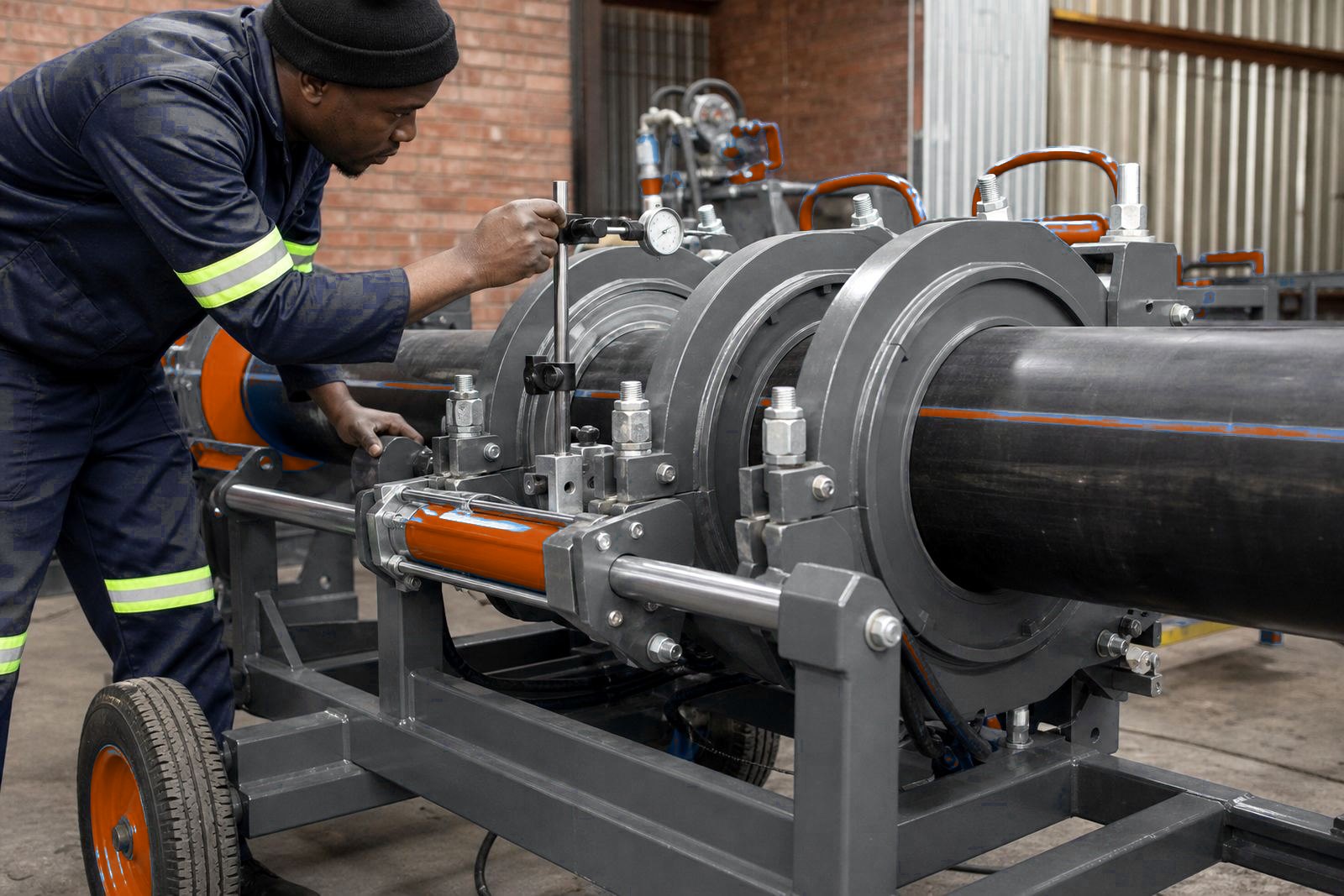
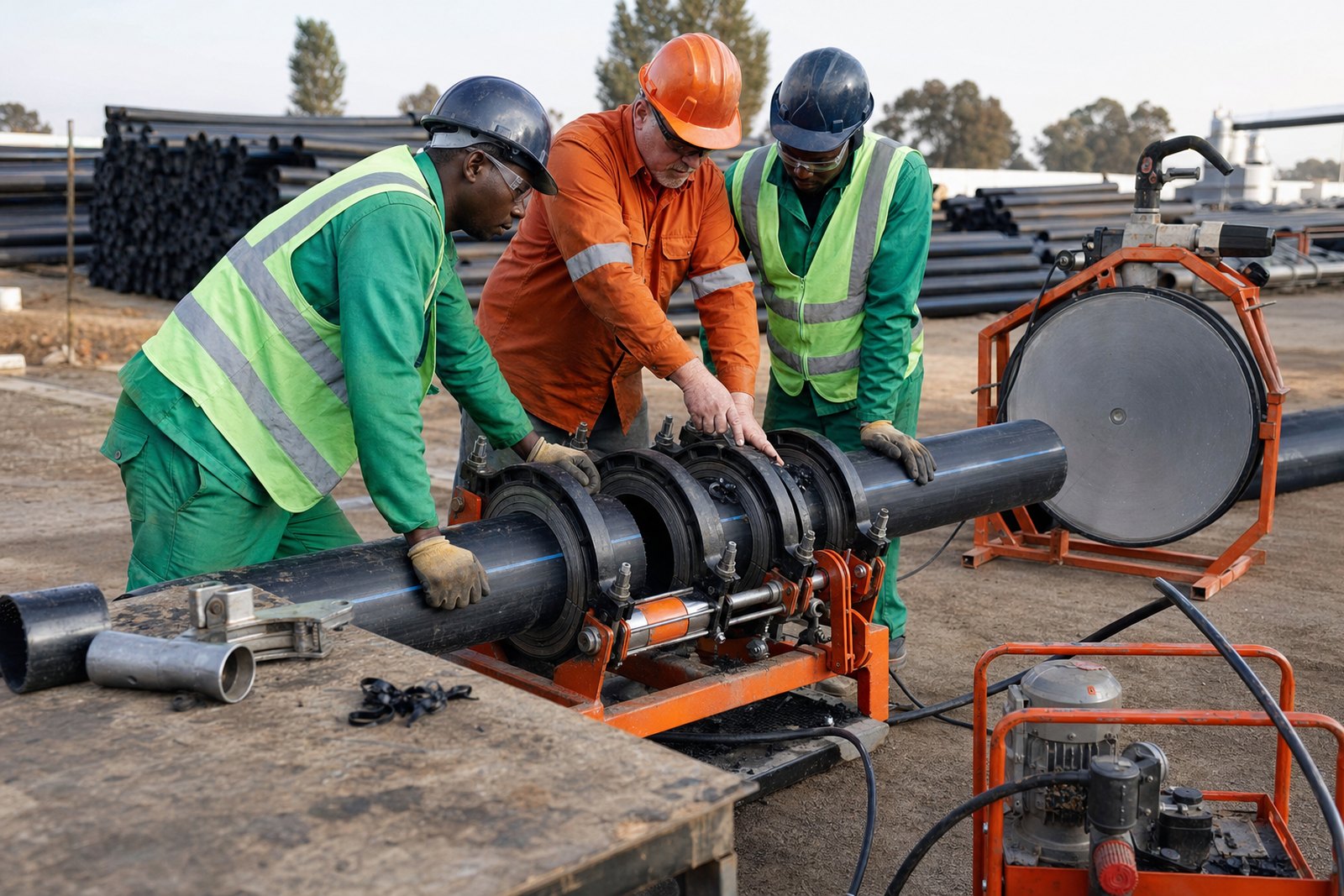
Our operator training is for teams working with HDPE pipe on site, in the yard or at a workshop. The focus is the actual butt-fusion sequence: selecting the right clamps, checking alignment, trimming the pipe ends, setting the heater plate, controlling the changeover and holding fusion pressure through the cooling cycle.
We work through pipe sizes from small-diameter service lines to larger mains, and through common SDR ranges so operators understand how wall thickness affects heating, bead formation and pressure settings. This helps the operator read the machine, the pipe and the weld line with care.
- Machine set-up and pre-use checks
- Pipe clamping and centre line alignment
- Facing and end preparation
- Heater plate handling and temperature control
- Changeover timing and fusion pressure
What the operator learns on the day
The course opens on the machine layout, safety checks and the parts of a weld table. Operators learn how to fit the pipe, check that the facer is cutting true, and confirm that the heater plate is clean and at working temperature before the first joint is attempted.
We then work through the weld cycle step by step. The operator practises heating time, changeover time, bead roll observation and cooling time, because a sound joint needs each step in turn. Operators learn to spot poor preparation, uneven pressure or movement during cooling, which can spoil a joint even with correct machine settings.
- Fusion pressure and hydraulic control
- Bead shape and visual inspection
- Recording weld details in paper or digital logs
- Reading SDR and pipe wall thickness
- Basic fault finding on facing, clamp and heater issues
Site startup help for crews under pressure
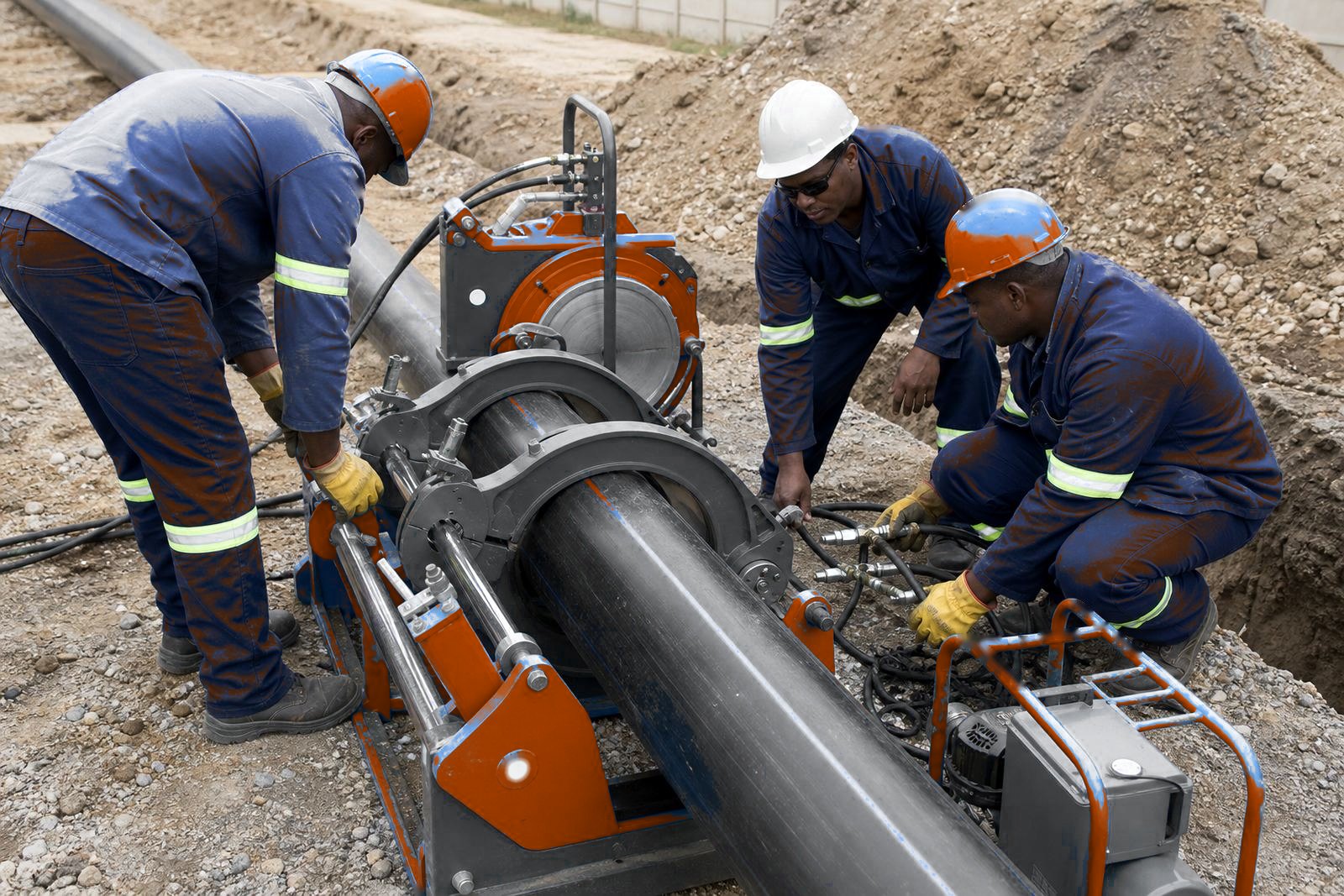
For new crews, contract start-ups and busy shutdown work, we can include site startup help alongside the training. That covers machine placement, checking level ground, pipe handling on uneven surfaces, and working around site rules without slowing the weld sequence to a crawl.
We also talk through how to keep weld records neat when several joints are happening in a day. Data logging is common on jobs where traceability is part of the handover. A clean record makes later inspection less messy and gives the supervisor a clear line of sight over the work.
- Set-up for workshop or field use
- Weld log entries and traceability notes
- Pipe handling in dusty or wet conditions
- Supervision support for mixed operator teams
Machines, sizes and checks we work with
Training is matched to the equipment and pipe sizes a crew actually uses. Sessions use the butt-fusion machine, facer, heater plate and clamp set suited to the diameter range on site. We explain how the machine behaves under load, where pressure loss shows up and how to spot a clamp that is not holding pipe square.
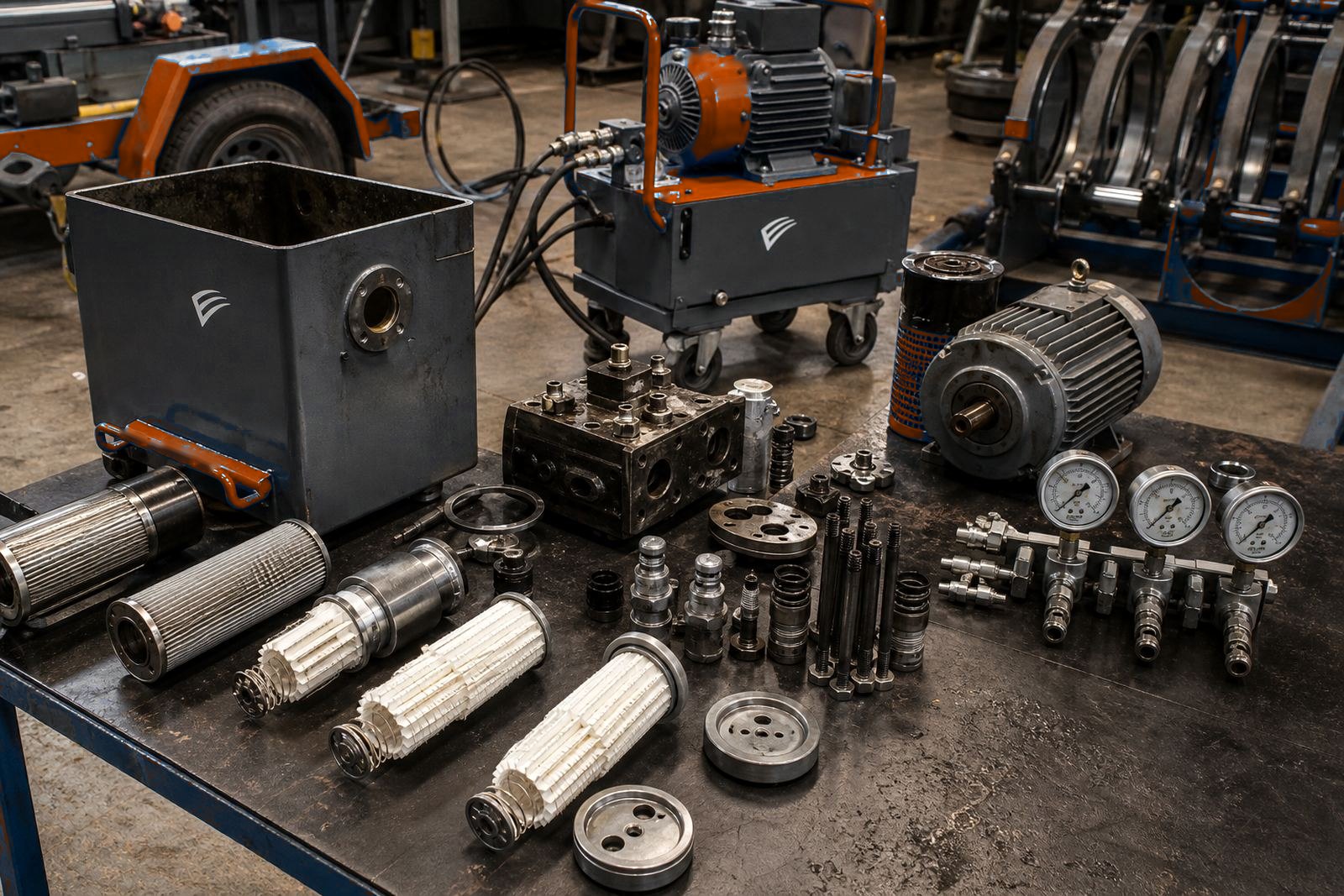
Operators practise the checks that get rushed: heater plate cleanliness, hydraulic pressure test basics, facer blade condition and clamp alignment. Prepare every joint carefully, because a poorly prepared face gives a weak weld. On larger diameters, the operator must know the normal bead size and gauge pressure.
- Pipe sizes commonly used on water work
- SDR matching and pipe wall awareness
- Heater plate surface condition
- Facer overhaul indicators
- Clamp alignment checks before welding
Training format and pricing approach
Training can be done at our base or on your site. Crew size, machine type and whether the work is introductory or refresher training set the format. We keep the scope practical so the session suits the job.
Pricing is based on the machine type, number of operators, the amount of hands-on practice required and whether travel or site attendance is needed. Extra time on weld logging is built into the training brief. Costs stay tied to the work actually done.
- One operator or a small crew
- Workshop, site or mixed format
- Introductory or refresher training
After the lesson, the weld still has to hold
Aftercare is straightforward and practical. Operators leave with clearer control over set-up, a better eye for bead inspection and a cleaner routine for recording weld details. If a team later needs refresher training, it can be arranged through the same office team.
We also support crews that hire equipment for short runs. Before the machine goes out, we can check clamps, heater plates and hydraulic pressure. That reduces avoidable stops when the pipe is already on the trestles and the weld window is open.
- Refresher training for returning crews
- Bead checks with the supervisor after the lesson
Key facts
| Service area | |
|---|---|
| Core process | Facing, heating, changeover, fusion pressure, cooling time and bead inspection |
| Equipment covered | HDPE butt-fusion machines, facer units, heater plates and clamp sets |
| Pipe range | Small service lines through larger diameter mains, matched to the job and SDR |
| Records | Weld logging help for manual and digital traceability systems |
| Support options |