What clamp alignment covers on a fusion frame
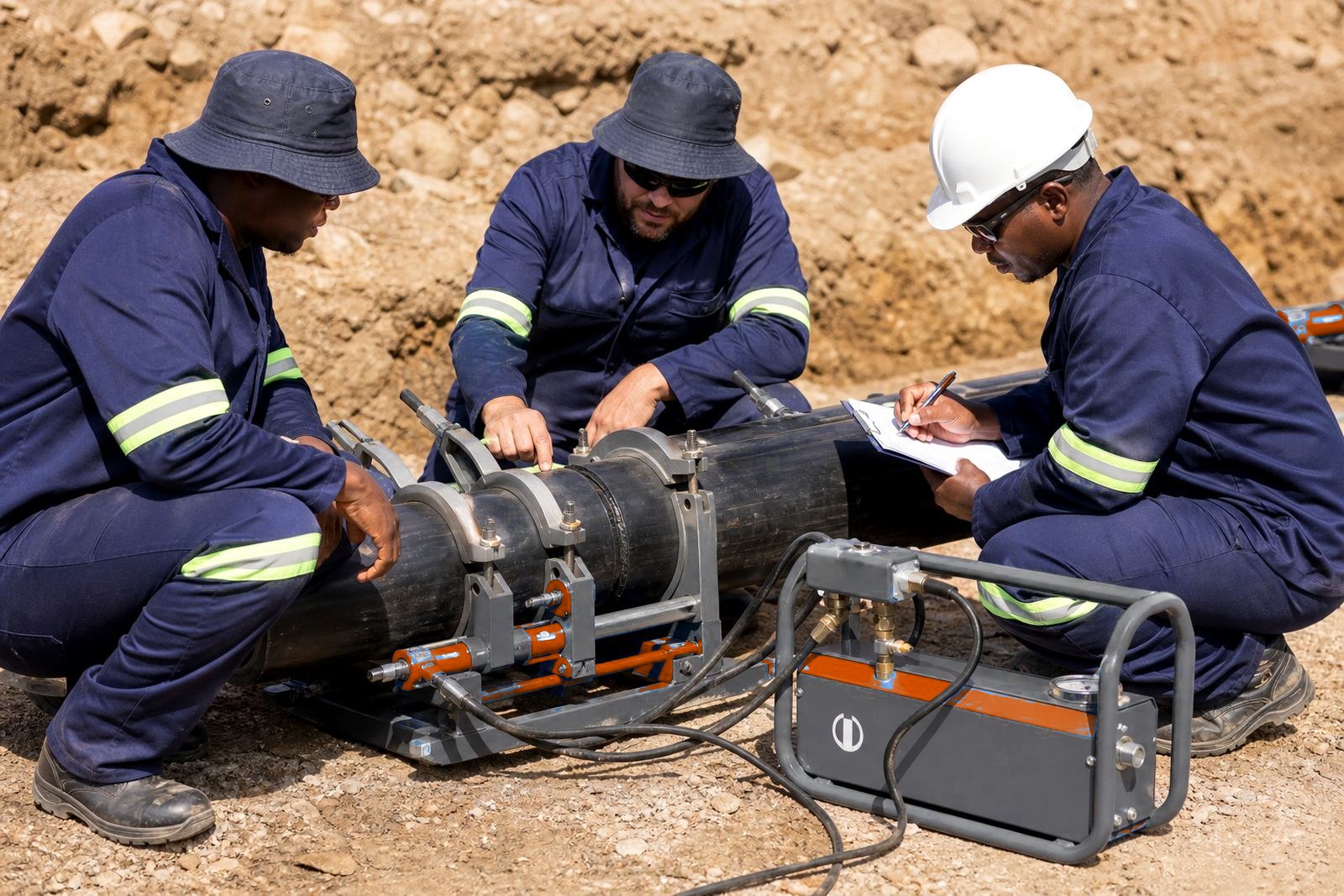
Clamp alignment deals with the way the pipe sits in the machine before the weld starts. We check whether the clamps hold both ends on the same centreline, whether the carriage runs true, and whether the pipe can move without twist when the facer comes in. Even a small offset gives uneven bead build-up or drag marks.
The alignment service suits butt-fusion frames on site pipework from 63 mm through to large diameter pipe. On sites using different SDR classes, the machine keeps the faces square across repeated welds. Badly seated clamps stop a clean joint even with a good plate and correct pressure.
- Clamp jaw position checked for centreline shift
- Carriage travel checked for side load and binding
- Pipe hold points checked for grip, slip and ovality issues
- Facing line checked for square cut and even shavings
How we work through the alignment check
We inspect the frame, clamps, guides and carriage travel by eye and by hand. Then we load a test length or the machine pipe size set, depending on what the workshop or site needs. We check how the machine behaves under a normal clamping cycle as well as when it is empty and clean.
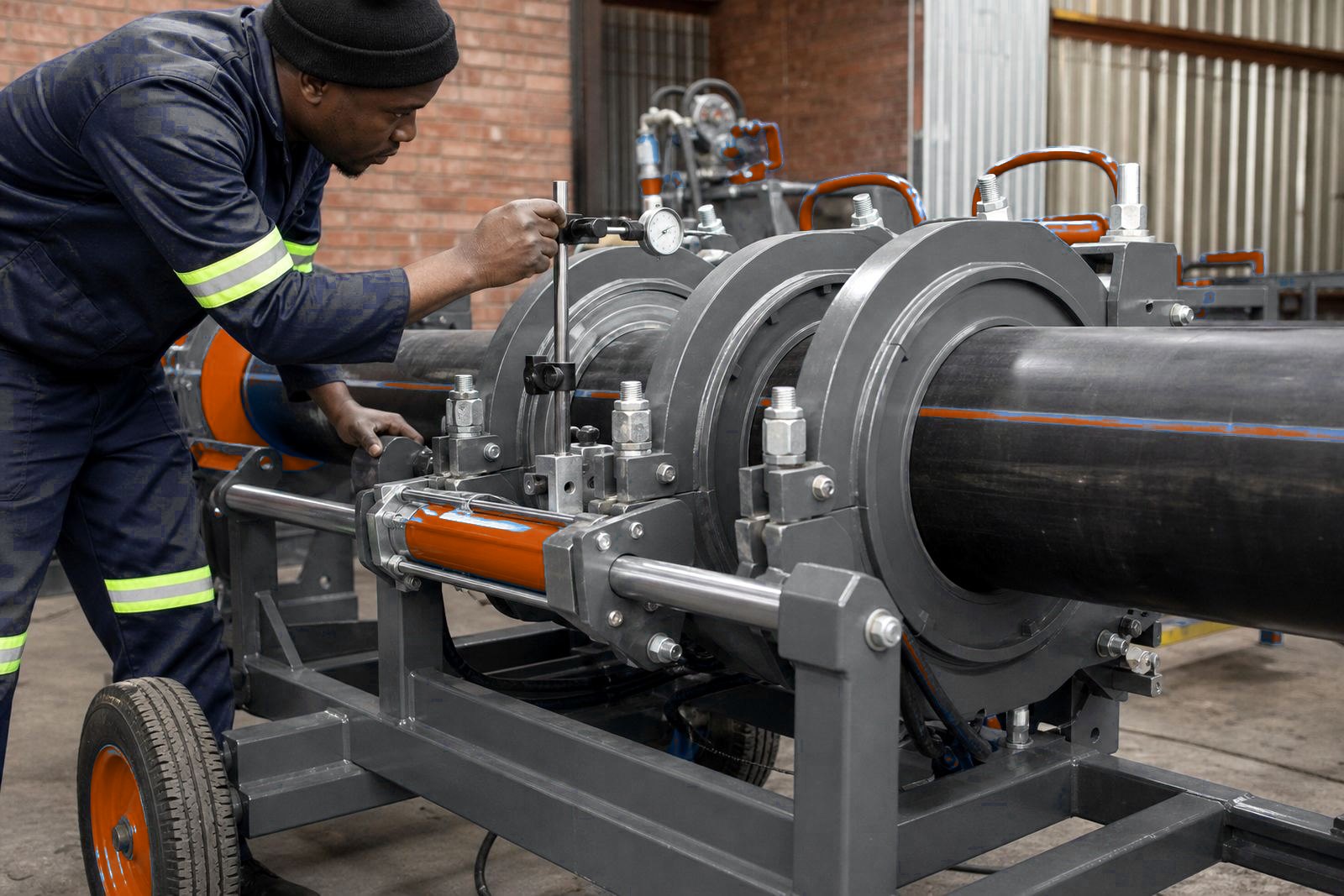
From there we measure the high and low points across the clamp faces, the gap between pipe ends, and the way the facer enters the pipe. If the set drifts, we trace it back to worn jaw surfaces, bent guide bars, loose bearings, damaged mounting points or hydraulic unevenness. Clamp adjustment, carriage realignment and a pressure test are done before release.
- Frame set-up and visual wear check
- Clamp seating, jaw condition and pipe grip review
- Carriage path, guide and parallelism check
- Test fit, adjustment and recheck under load
Job specs
Misaligned clamps leave a step between the pipe ends, which shows up as an uneven bead. On larger pipe, a small misalignment can put extra load into the joint during the heat soak stage and make the bead look thin on one side and heavy on the other.
We work across common butt-fusion ranges used in South African contracting, from small bore pipe to heavy wall HDPE for bulk water lines. The machine must hold the pipe without creep, keep the pipe ends level during the heater plate cycle, and stay stable while the operator removes the plate and closes the joint under controlled pressure. If the carriage is not true, the cooling phase starts from a poor position and the weld can carry that error through to the finish.
- Clamp alignment covers frames for 63 mm to 630 mm, with larger frames by arrangement.
- Material: HDPE pipe with matching SDR on the joined lengths
- Alignment target: pipe ends held square and concentric before facing
- Weld control: steady fusion pressure, controlled changeover and cooling time
Turnaround on workshop and field work
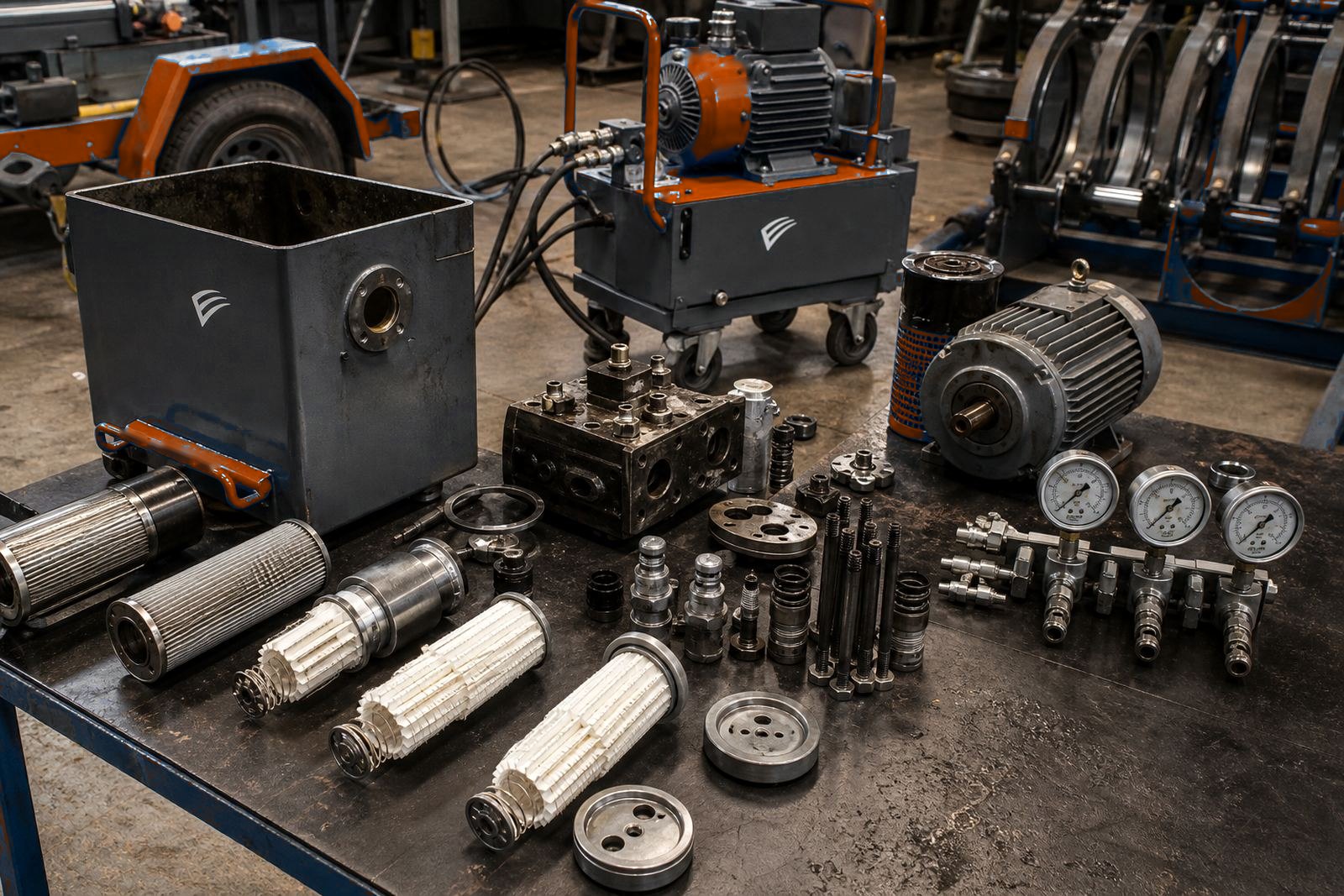
Some frames only need a minor adjustment, while others need worn parts replaced or a deeper strip-down. In the workshop we can usually work through clamp alignment together with facer checks, heater plate inspection and carriage testing as one service package. On site, access, machine size and safe setup on level ground set the scope.
Each job is handled through its support area, with field work arranged around the machine condition and the pipe programme on the day. We return a frame that sits true, holds pressure properly and gives the operator a clean base for the next weld sequence. That reduces wasted pipe ends and cuts down on repeated setup work.
- Workshop alignment for routine correction and verification
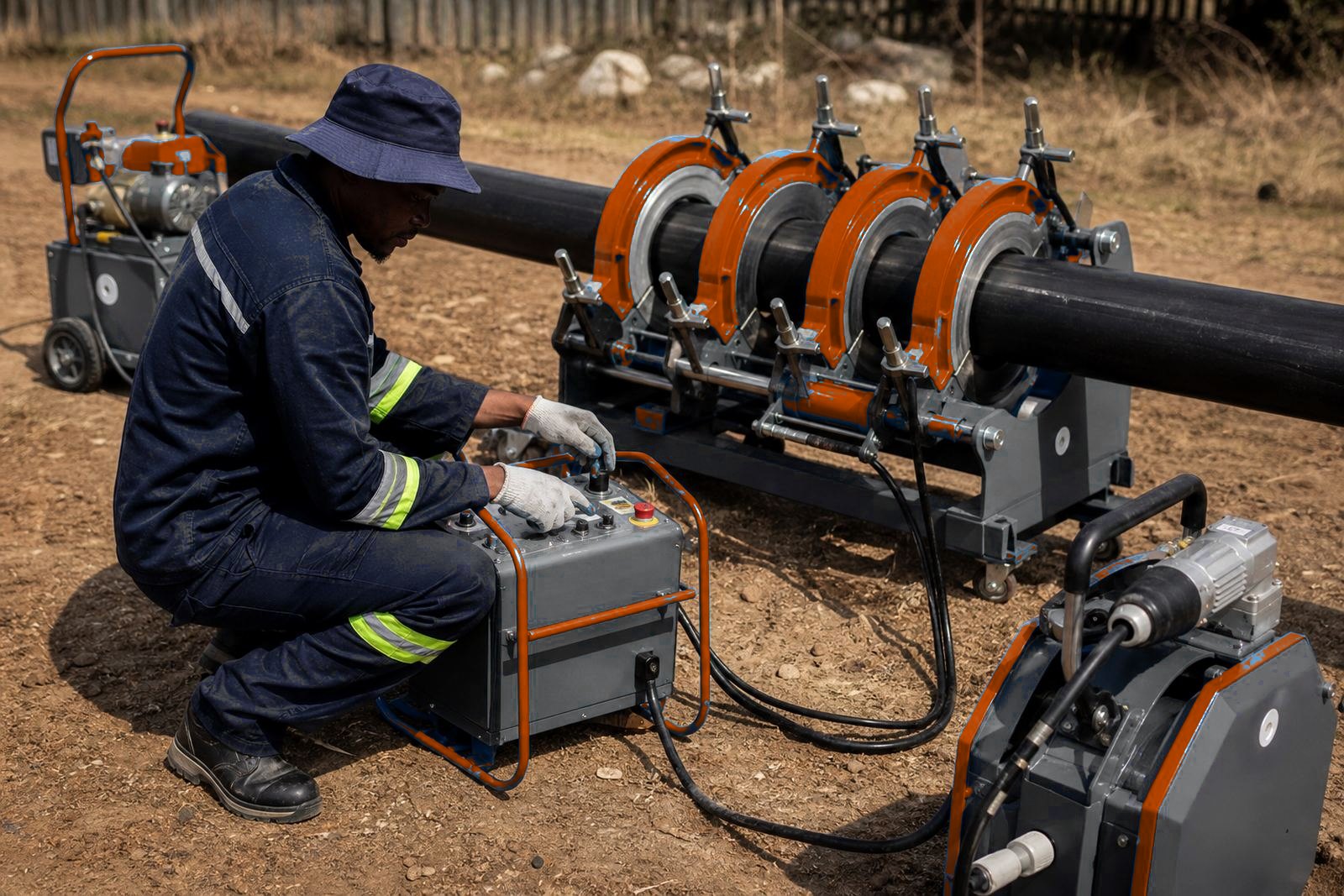
- Field alignment for active sites and remote programmes
We price it according to the machine model and the alignment work found
Clamp alignment is priced from the actual condition of the machine, the size of the frame and the amount of correction needed. A touch-up on a compact unit takes less time than resetting a large hydraulic frame with wear in the guides, jaws and mounting points. We also factor in whether the job needs inspection only, adjustment only, or a full strip and reset with parts.
Where clamp alignment is bundled with other work, the pricing is kept as a single scope so the client can see what is being checked and what is being corrected. For hire fleet prep, the focus is on making the machine ready for field use and keeping the clamp set reliable for repeat welds. The quote is built around labour, parts if needed, and the practical time on the unit.
- Inspection-only pricing for condition checks
- Adjustment pricing for clamp, guide and carriage correction
- Strip, repair and reassembly pricing for worn frames
Aftercare after the frame has been reset
First welds after realignment are made carefully so the operator confirms the pipe still seats square. We can talk through what to watch on the bead, where offset usually shows up, and when the carriage feels tight or uneven under pressure. On site, humidity, dust and rough handling can knock a frame out again.
Aftercare can also include spares for clamp parts, guide components and worn fittings. After depot transport, the frame is checked again for trueness before the next run. A clean alignment holds its shape better when the machine is stored properly and handled with a bit of care.
- Bead reading support after the first welds
- Operator guidance on seating, pressure and changeover control
- Follow-up inspection for transported or heavily used frames
Key facts
| Service | Clamp Alignment |
|---|---|
| Coverage | |
| Machine types | HDPE butt-fusion frames, facing tools and hydraulic carriages |
| Pipe range | Commonly 63 mm to 630 mm, larger units by arrangement |
| Related checks | Carriage travel, clamp seating, facer entry, hydraulic pressure test |