What gets checked on the heater plate
A plate reading fine on the dial can still drift under load or show hot spots. Our checks focus on the parts that affect real welds: surface condition, temperature control, cable and plug condition, handle security and the way the plate sits in the machine frame.
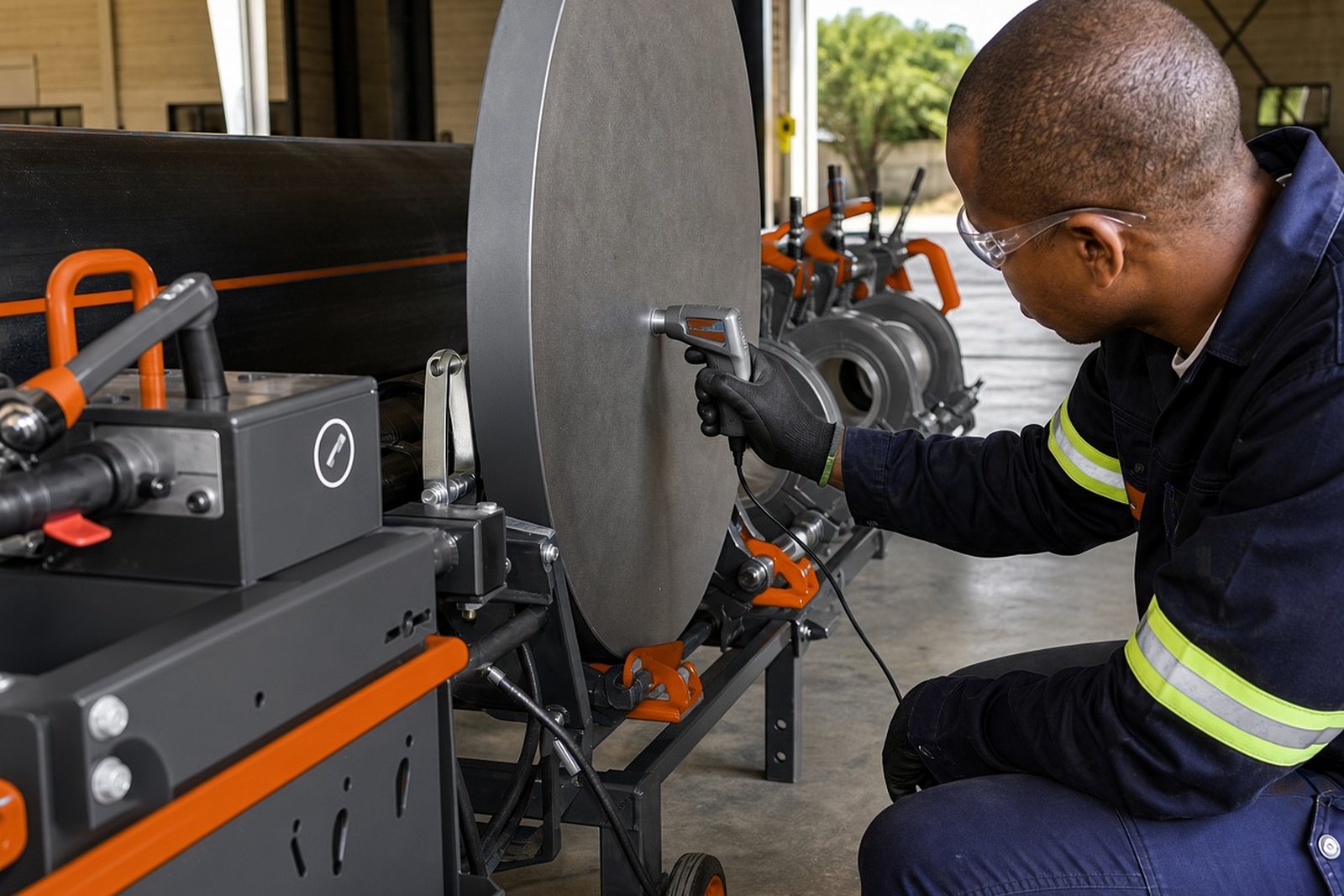
We look at the face for scoring, polymer build-up and uneven heating marks. Coated plates are inspected for flaking and wear at the contact area. The control unit is checked for stable setpoint behaviour, display accuracy and any fault signs that point to ageing components or a tired sensor.
- Surface inspection for scratches, contamination and wear
- Temperature check across the working face
- Control unit and sensor review
- Lead, plug and handle condition
- Fit-up and seating in the machine
How the plate affects a butt-fusion weld
In butt-fusion, the pipe ends are first faced square. Narrow, rolled-over or rough beads come from a plate that is uneven, too cool or too hot.
Machine setup and pipe material set the temperature, and the plate has to hold a steady working range through repeated cycles. SDR pipe needs the right heat soak and cooling time when wall thickness changes. A plate that recovers slowly between cycles can make the next joint look good at first and weak later on.
The face must melt evenly without dragging or sticking. On larger diameters, that becomes more obvious because the contact area is bigger and the heat loss is harder to hide.
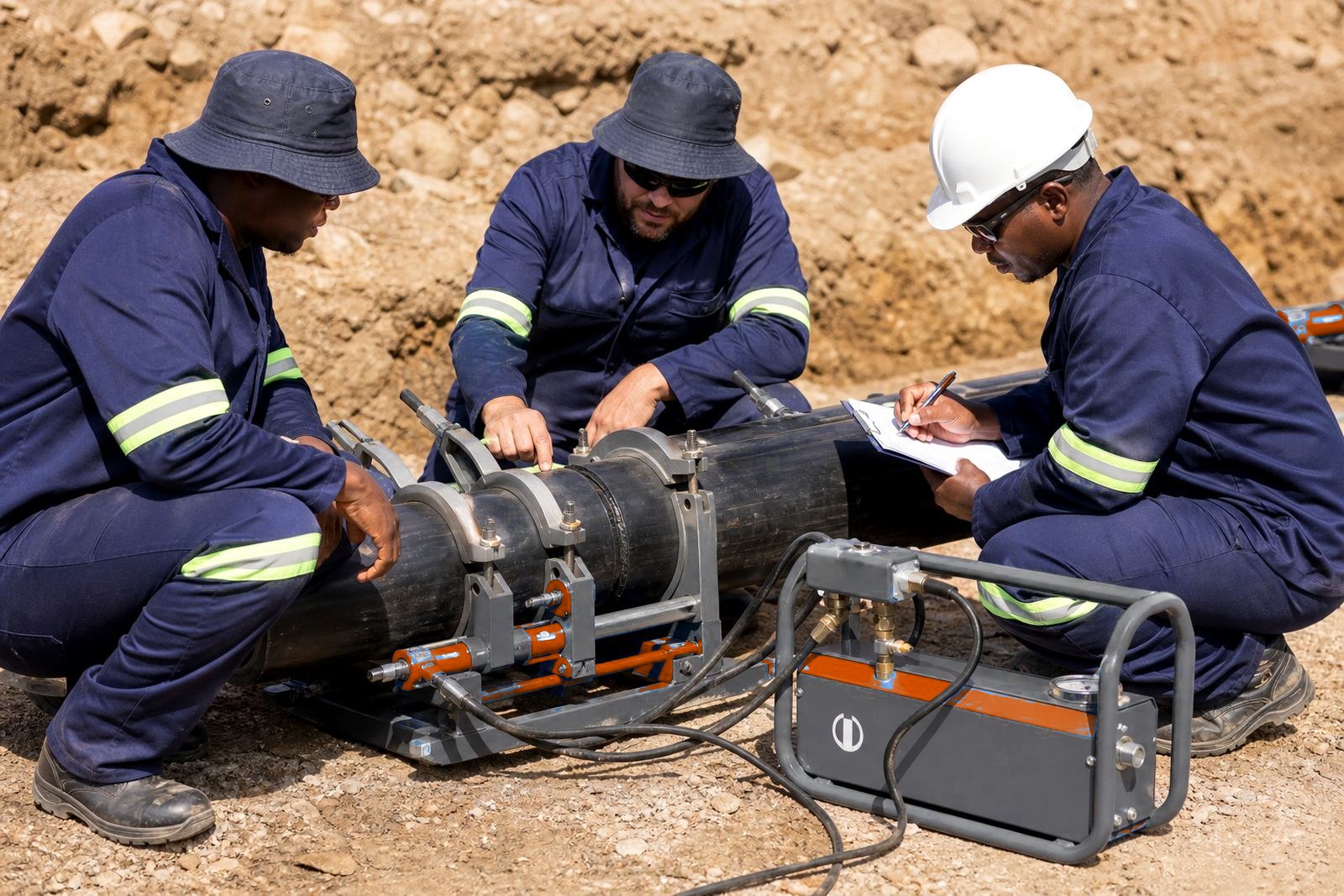
Checks are done at our workshop or at your site
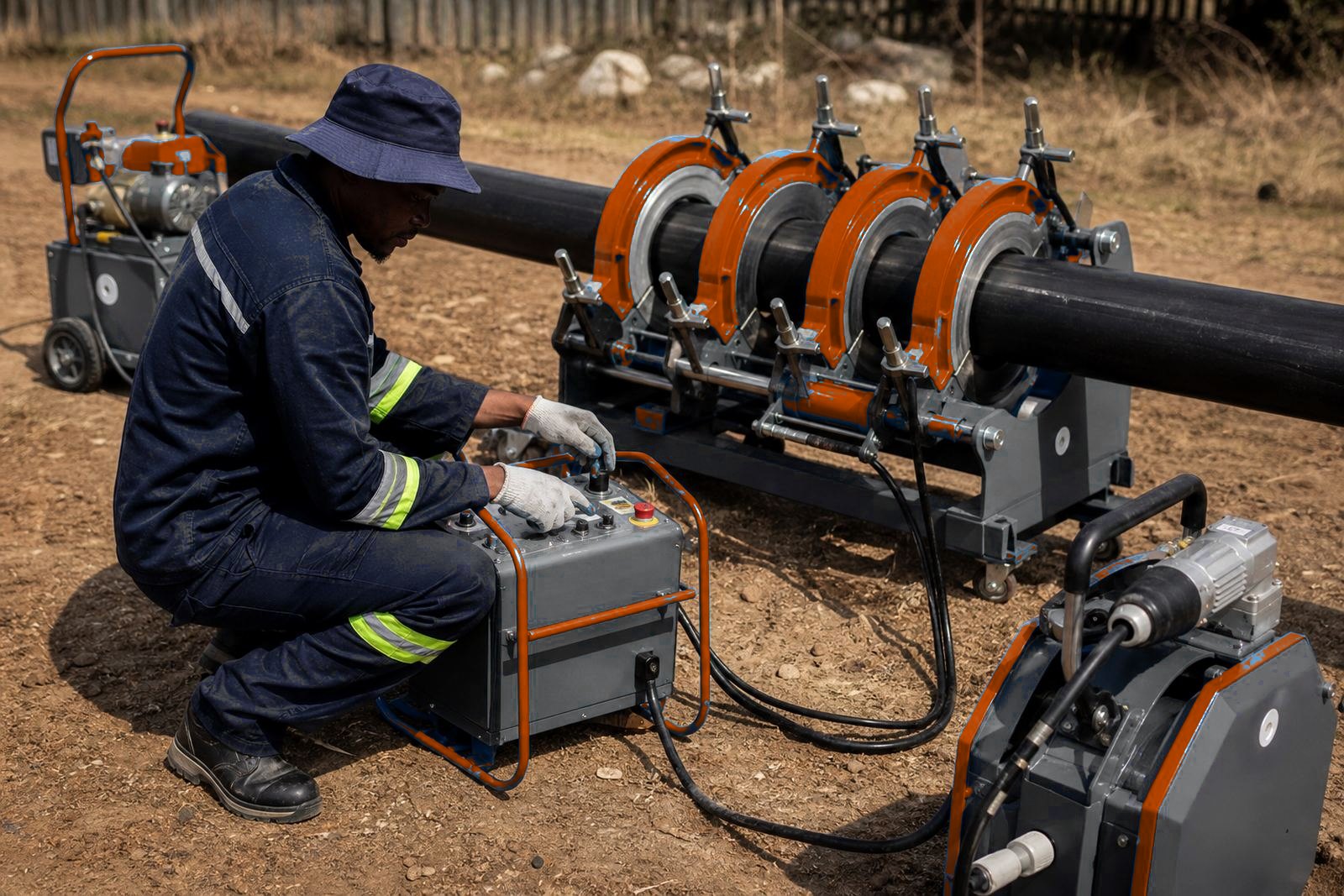
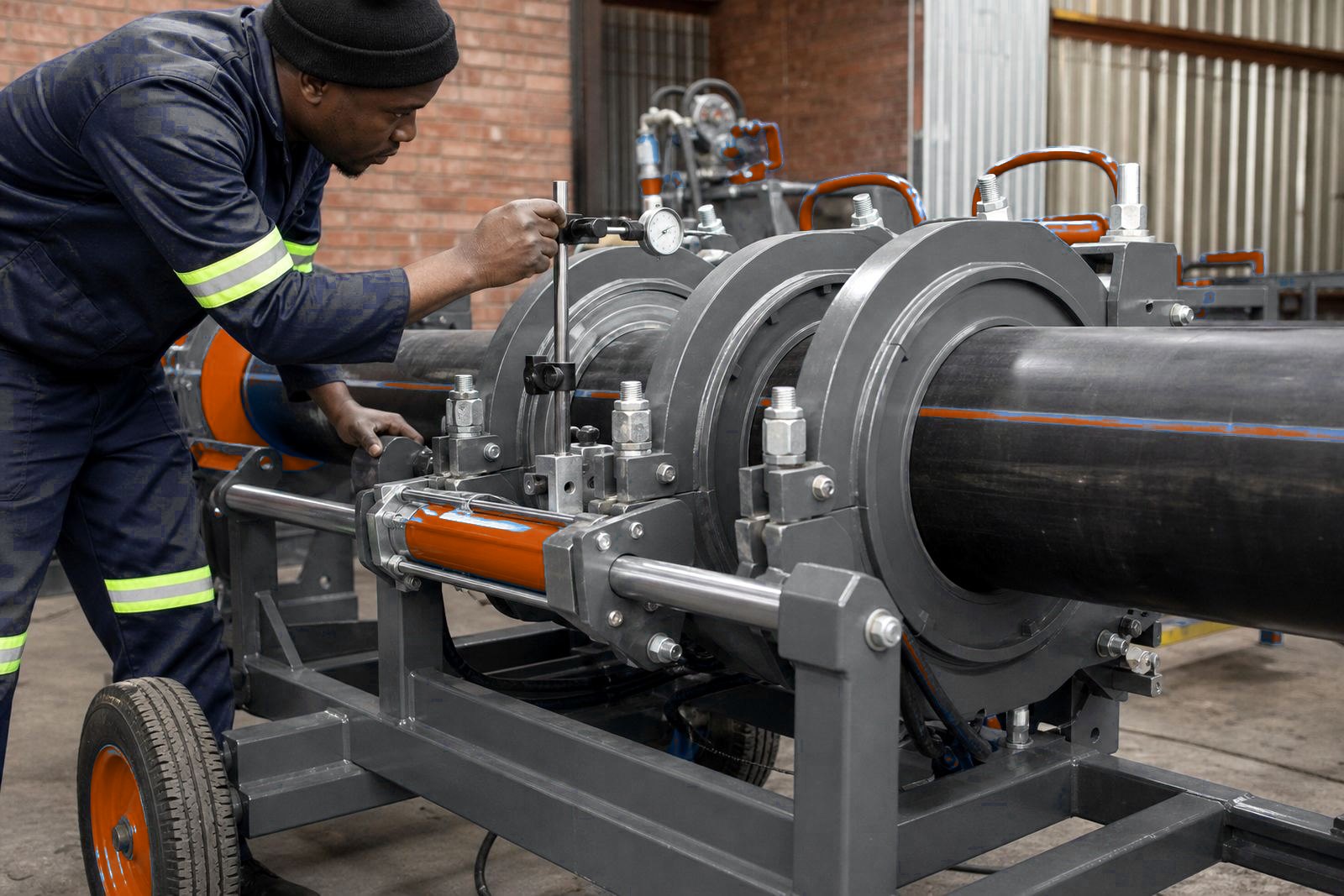
Each heater plate check has a visual assessment and a test of the control against its set temperature. When the plate comes in with the welding machine, we confirm alignment against the clamps and facer setup to rule out a machine fault that looks like a heater fault.
Deeper checks cover the thermostat, elements, thermal cut-out and cable assembly. Where appropriate, we clean the face, remove polymer residue and test the plate through a heat-up and stabilisation cycle. For jobs that need deeper work, the plate can be logged for repair, reconditioning or replacement planning.
- Initial visual inspection and fault note
- Temperature performance test
- Cleaning of welded-on residue
- Component assessment for control or element faults
- Re-test after adjustment or repair
Sizes, controls and spec points we work with
Our heater plate checks cover portable units used on small site work as well as larger machines. We work with units used on pipe sizes from smaller municipal runs up to heavy diameter systems, and the checks are matched to the machine frame and clamp set.
The useful spec points are practical ones: working temperature band, face flatness, recovery after load, sensor accuracy and whether the handle and support points keep the plate stable during changeover. Data logging units are also checked for a clear temperature history and readable records.
- Typical working range for HDPE fusion plates: 180 C to 250 C
- Pipe sizes handled in the field: 63 mm to 1200 mm and larger on request
- Checks for heater face flatness and contact evenness
- Support for data logging on recorded welds
- Review of temperature recovery between weld cycles
Pricing is shaped by condition, face condition, the control system and whether the unit needs cleaning only.
A heater plate check is priced on face condition, the control system and whether the plate needs cleaning, parts or an overhaul. A light service on a plate with surface build-up is a different job from a plate with unstable heat control or damaged wiring, so we price against the actual findings.
Where a unit is part of a hire machine, we also check whether the plate is suitable for the next hire issue and whether it needs a fresh inspection note for the file. If the work includes machine collection or site visit support, the cost will reflect travel, access and the number of units to be checked.
The scope is written on the service sheet before work starts. We estimate from the plate's condition and the labour needed.
Aftercare that keeps welds cleaner
Once the check is complete, we talk through what was found and what to watch on the next weld run. That may include signs of surface contamination, a drifting temperature display or a plate that takes longer than normal to recover after changeover. Where the plate has recovered well, we note that too so the crew has a clear record.
We can also run refresher training if the heater plate issue was part of a wider welding problem. A plate that is in good order still needs the right sequence: facing, heating, clean changeover, fusion pressure and full cooling time before handling the joint.
- Workshop feedback on the plate condition
- Notes for weld logs and site records
- Guidance for operators on clean plate handling
- Follow-up servicing for related machine faults
Where these checks are done
The team includes Mandla Maluleke, Riaan Salie, Ayanda Naicker, Leanne Matlala, Thabo Mabena and Alicia Jacobs, who service the plate and machine.
Key facts
| Service type | Heater plate inspection, cleaning and performance check |
|---|---|
| Typical temperature band | 180 C to 250 C |
| Pipe size range | Available in sizes from 63 mm up to 1200 mm, and larger sizes can be supplied on request |
| Machine types | Manual and hydraulic HDPE butt-fusion units |
| Checks included | Face condition, controls, wiring, sensor stability and heat recovery |