Set the machine square before the first cut
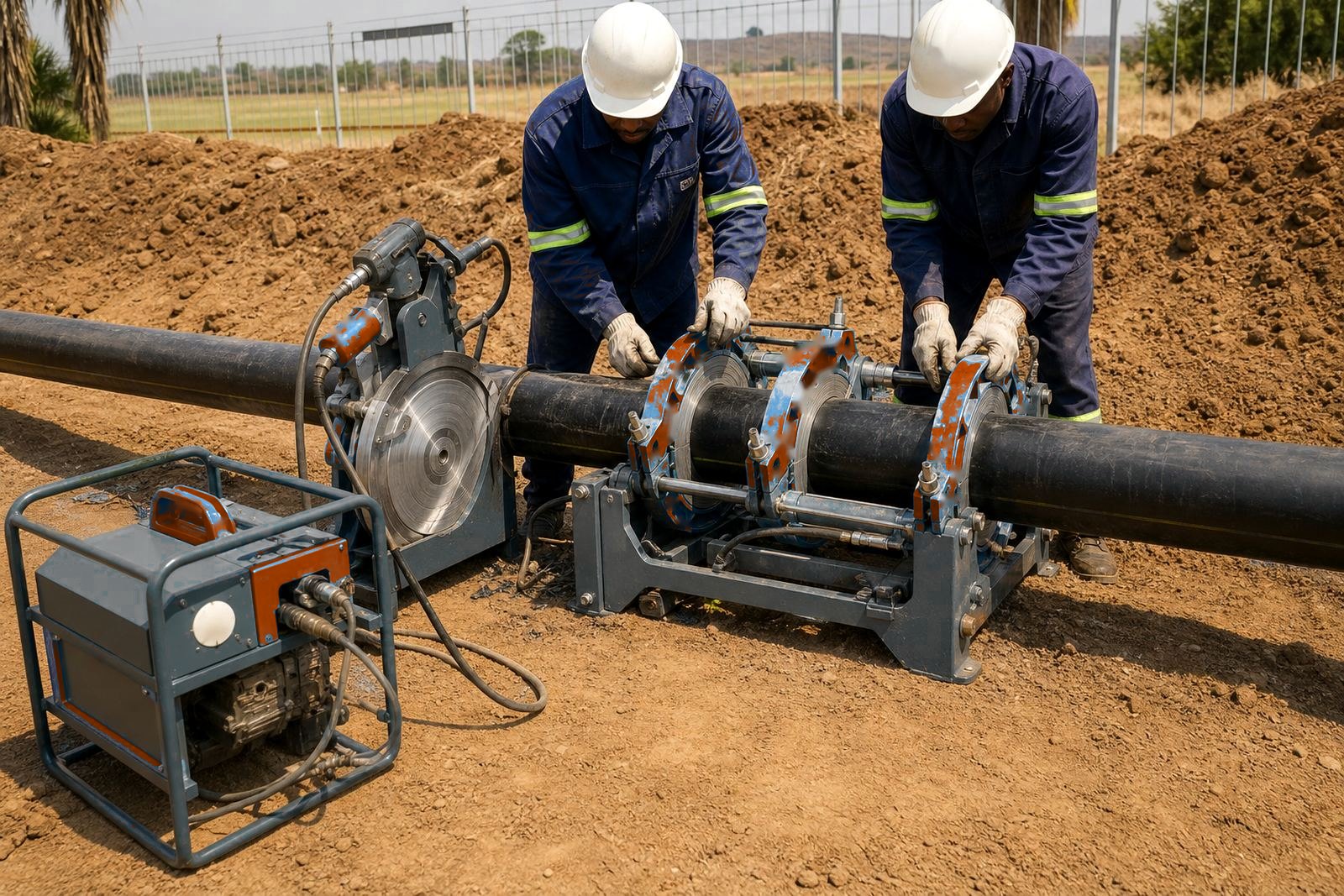
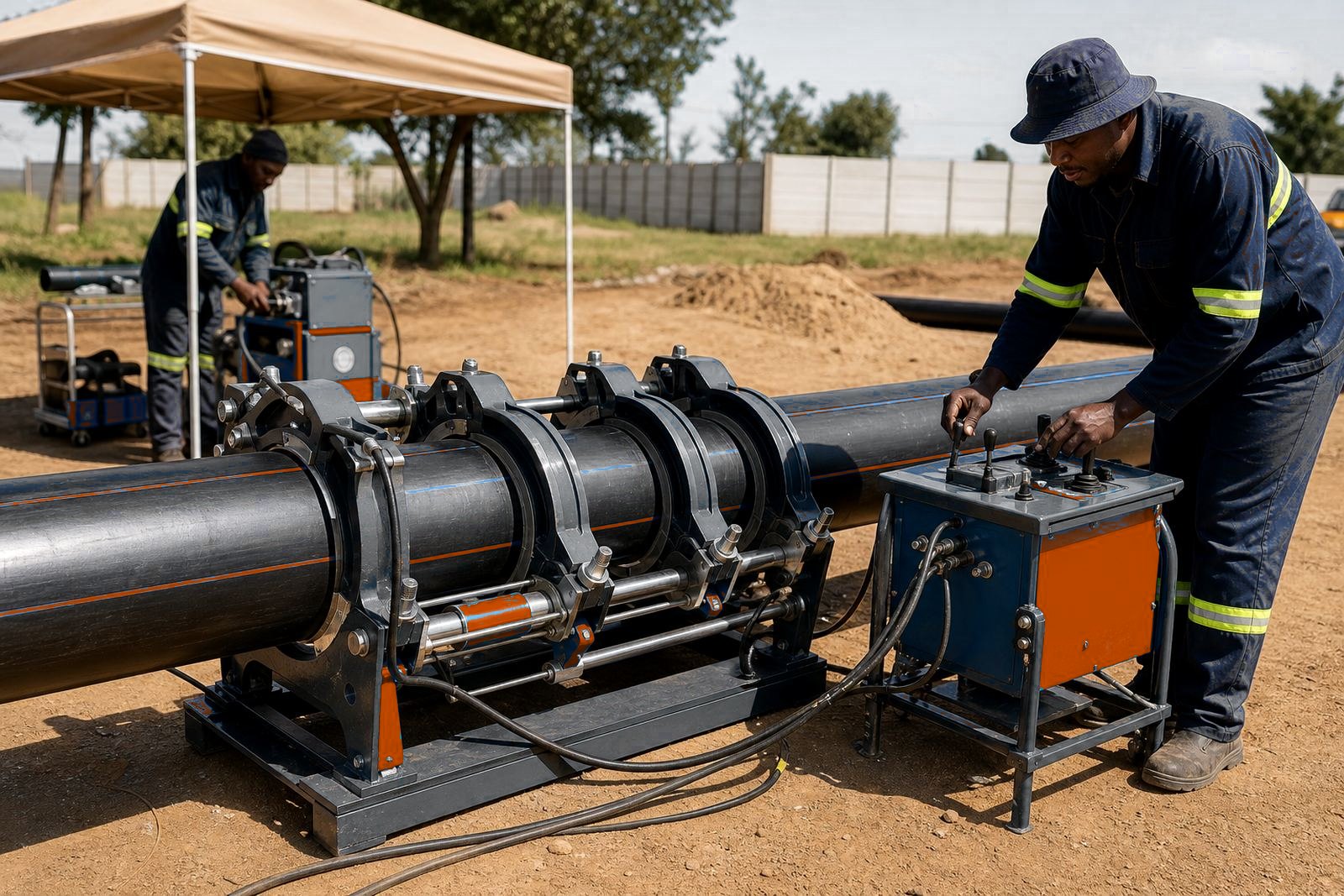
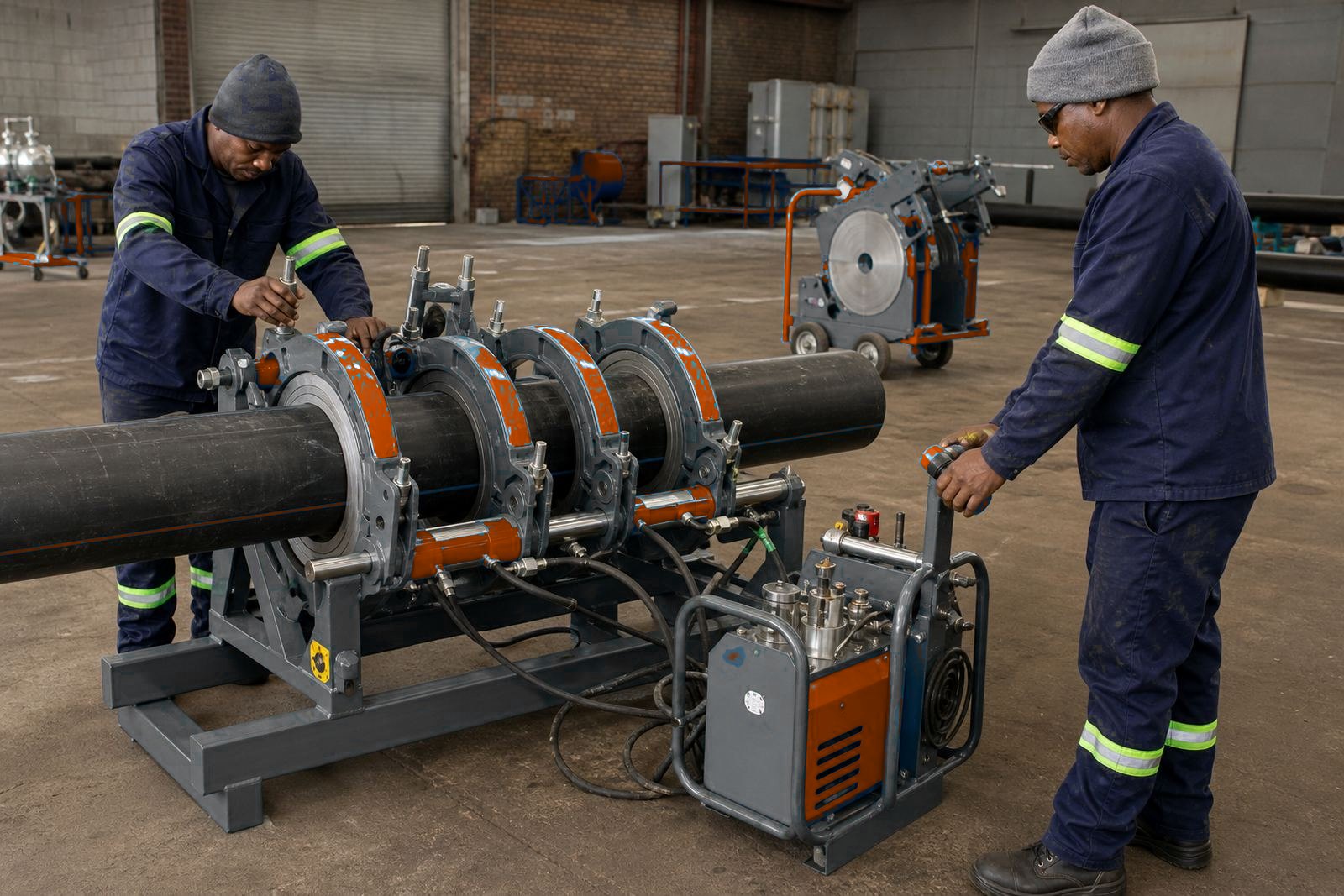
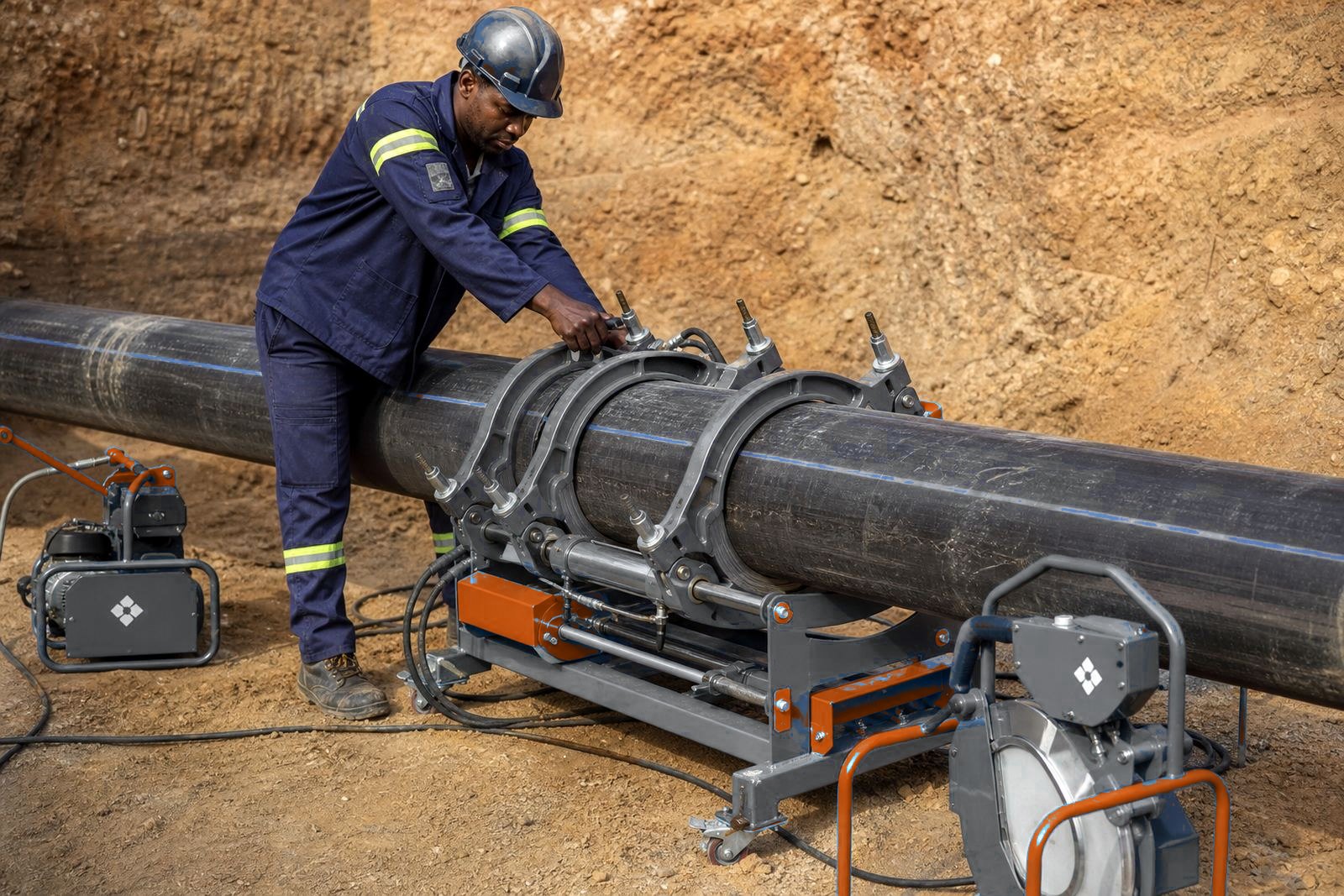
Start with a firm base, clean clamps and the right jaw set for the pipe size in front of you. Sort out-of-round pipe first so the facer takes an even skim.
- Clamp both ends so the faces sit true without forcing.
- Confirm the hydraulic system holds steady pressure without drift.
- Use the facer until both pipe ends show full, even contact.
Facing, heating and the changeover window
Good facing gives you clean, parallel faces with no chatter marks or loose shavings left in the gap. Contact under heat soak pressure, then open and close for changeover without dragging the soft face.
- Watch the melt face for an even bead build-up.
- Move quickly but calmly during changeover.
- Hold the correct fusion pressure once the pipe closes.
Fusion pressure, bead shape and cooling time
The weld needs pressure, timing and a steady hold through cooling. Set the pressure to match the pipe wall and machine setup. Heavy ridges, cold lines or burnt patches on the bead are reasons to call for technical help.
- Maintain fusion pressure through the full cooling period.
- Leave the joint undisturbed until the pipe has set.
- Inspect bead shape around the full circumference.
- Check for alignment, squeeze-out and surface colour changes.
Data logging and weld records that hold up on site
Where logging is required, record the pipe size, SDR, heater temperature, pressure settings, soak time, changeover time and cooling time. Weld logs filed with the job let crews trace each joint on long runs.
- Record joint number before the next weld starts.
- Note any pause, pressure correction or equipment issue.
- Match the record to the pipe section and chainage.
- Keep the printout or handwritten log dry and legible.
An uneven weld ring
When the weld ring is uneven, check the jaw setup, pipe ovality, heater cleanliness and the timing of each step. A drift in hydraulic pressure, worn facing blades or a heater plate that is not holding temperature will give a faulty joint. Small issues show up fast on HDPE, so it pays to stop and read the signs before moving on.
- Lopsided bead: check alignment and clamp grip.
- Rough face: inspect facer blades and pipe support.
- Patchy melt: confirm heater temperature and contact.
- Weak record: fill in the weld log before the next cycle.
Help from the support team
Technical help is available for butt-fusion jobs of any size. Technical help extends to fault finding.