Picking the right fusion machine for the pipe on site
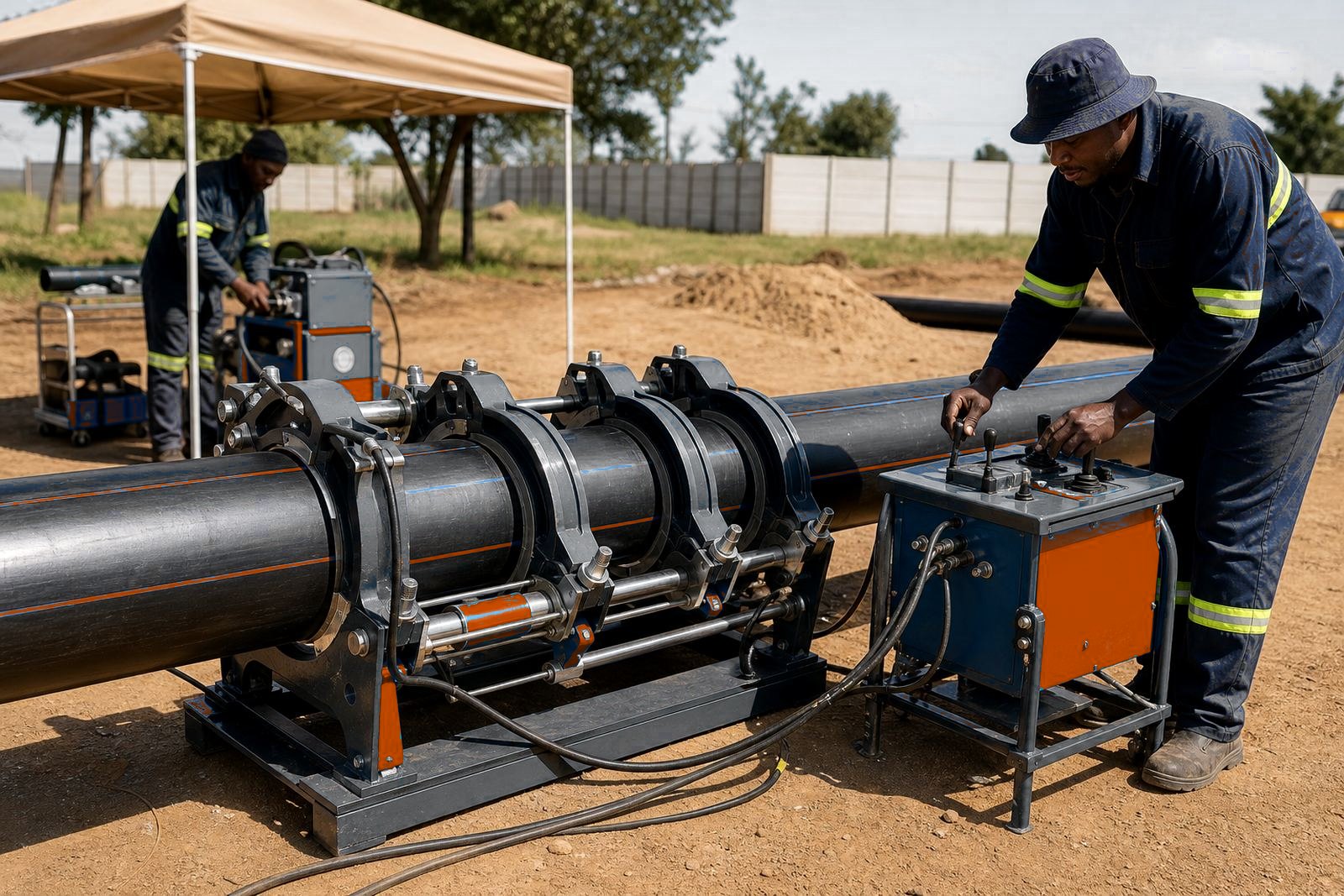
Machine choice depends on the pipe size, SDR and the working room around the joint. A small repair line in a plant yard needs a lighter frame, shorter clamp span and smaller heater than long rural water runs with heavier wall pipe.
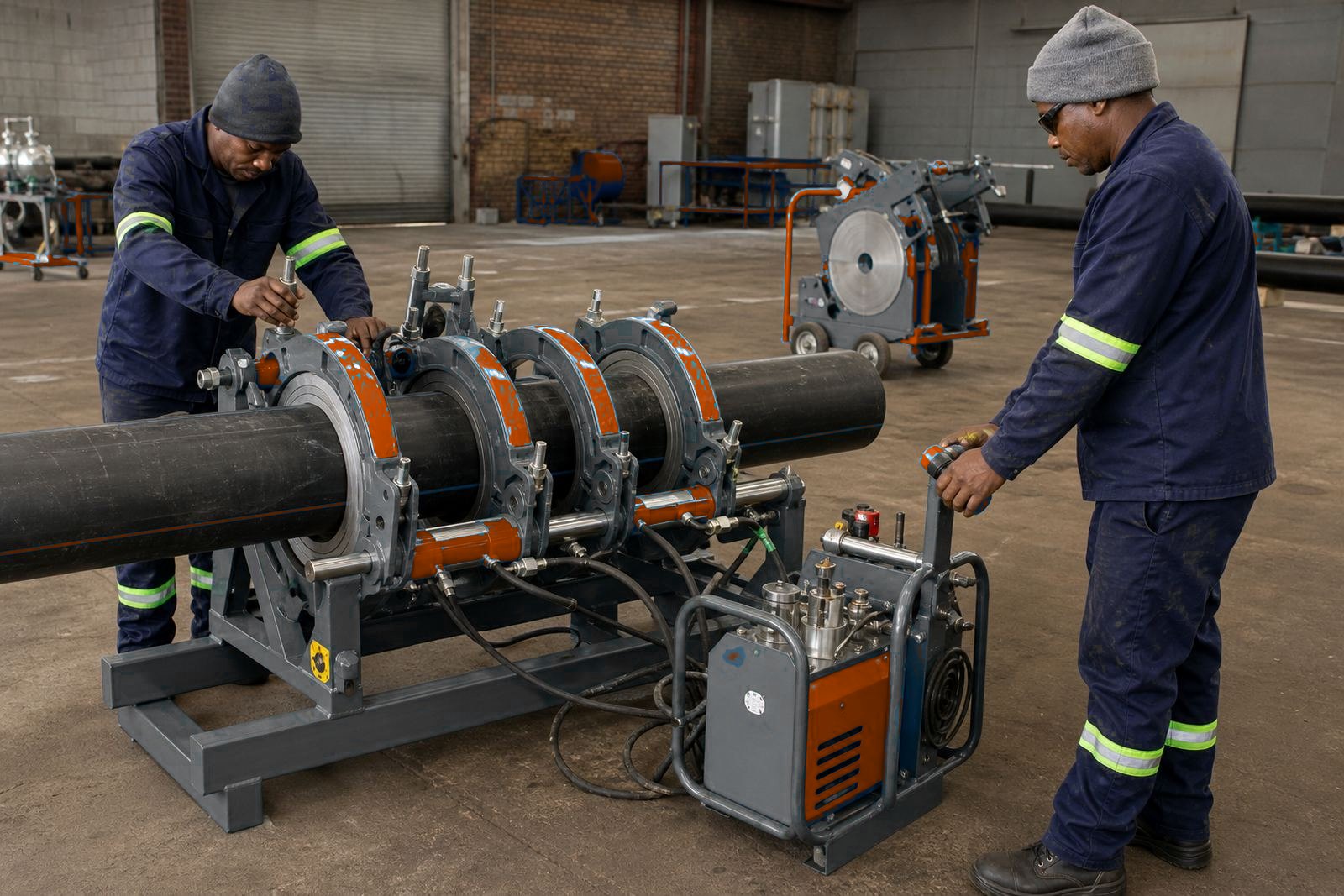
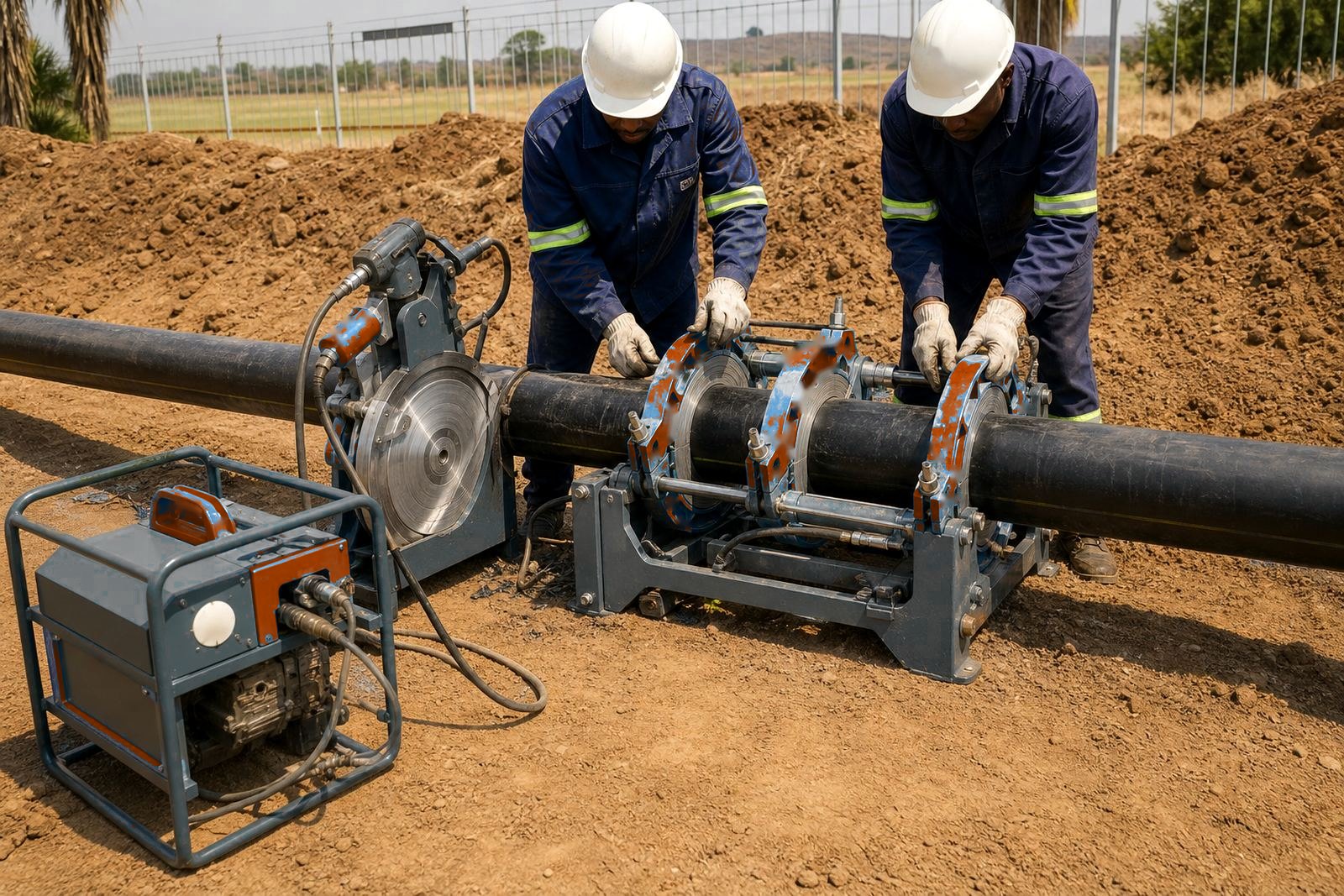
For most jobs, the first check is the outside diameter range and the pipe wall. A butt-fusion machine holds the pipe square, faces it cleanly and keeps the ends aligned while heat is applied. Oval, damaged or damp-sited pipe needs clamps and rollers chosen with care.
- Match the machine to the pipe diameter and SDR range.
- Allow room for facing, heating and changeover without rushing the joint.
- Check that clamps can hold the pipe true during pressure build-up.
- Ask for heater plate checks before long runs or hire use.
What happens during a butt-fusion joint
Once the molten ends meet, pressure is held for the set fusion period and then the joint is left to cool without movement. Cooling time needs enough time before a joint is moved, or it can show a bad bead, poor line-up or a weak bond at the root.
- Face the pipe until both ends are flat and clean.
- Heat only for the correct time and temperature.
- Keep changeover steady so the ends do not cool too far.
- Inspect the bead after cooling for shape, size and symmetry.
Pipe sizes, SDR and what they change
Clamps, heater plate and weld settings are all chosen for the pipe size. Larger diameters need more clamp force, more stable support and more care during changeover. SDR changes the wall thickness, which affects heating time, cooling time and the fusion pressure used on the joint.
Thin wall pipe needs careful handling because it can deform if the pressure is uneven. Thicker wall pipe needs enough heat penetration so the molten layer forms properly across the whole face. Mixed sizes on one job mean every setting is checked again for each weld.
- Check SDR so the correct pressure and timing can be set.
- Allow for thicker wall pipe to need longer heat soak and cooling.
Hire machines and first-day checks
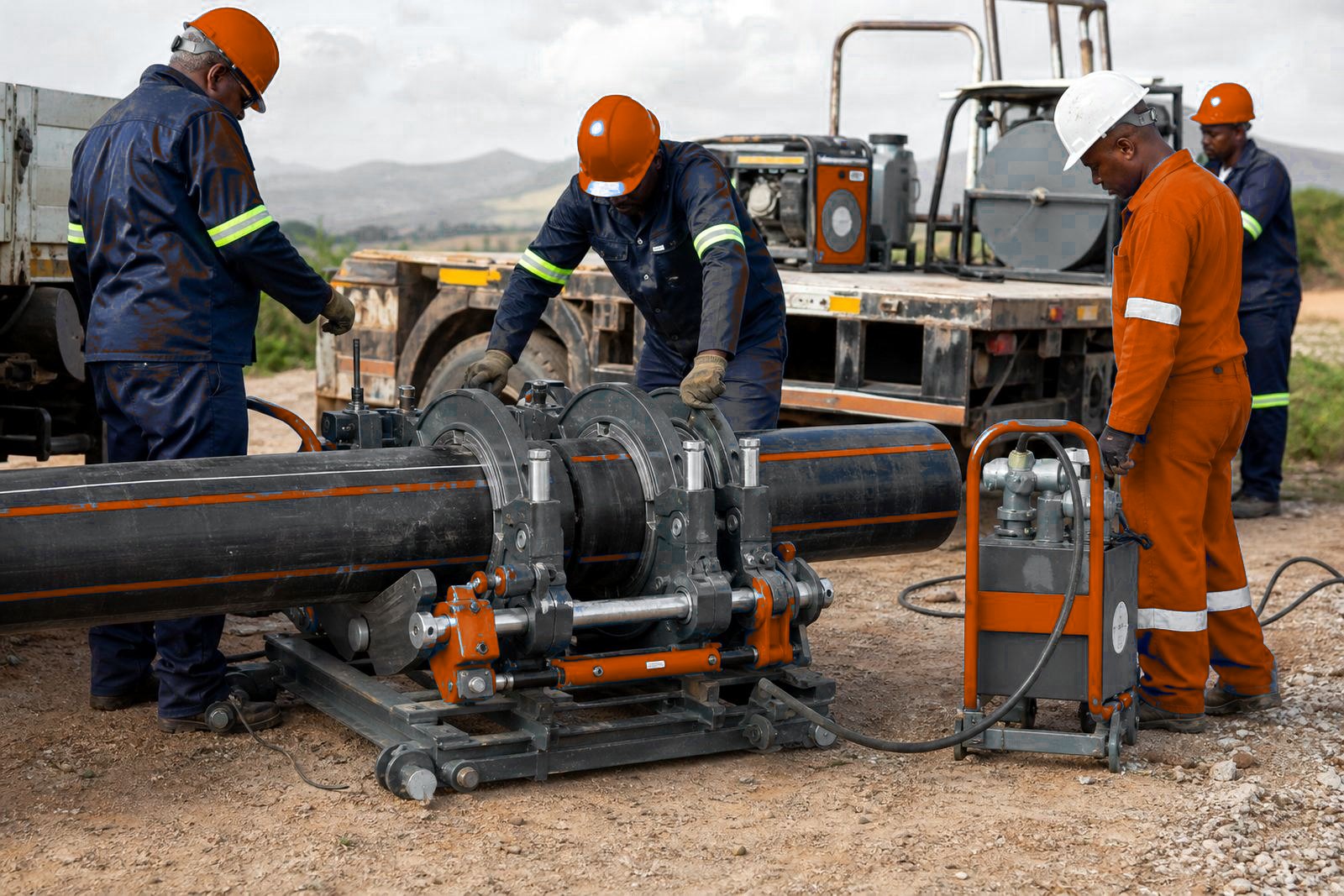
Hire works best when the job has a clear pipe schedule and the site crew knows what will be welded first. A hire unit should leave the yard with the right clamps, facers, heater plate, hydraulic parts and basic support items for the planned diameter range. Hire kits moving between areas travel with a full collection check.
We offer site startup help for teams new to fusion work and for jobs with mixed pipe sizes. Check the first joints of each shift closely and log them.
- List the pipe sizes and SDR values before collection.
- Make sure the clamps lock firmly and line up straight.
- Start the weld log at the first joint of the day.
Courses for operators and supervisors
Operator training covers the full weld sequence, from setup through to bead inspection and logging. Refresher training suits crews that know the process and need to tighten pressure control, facing quality or cooling times. Supervisors usually want the same language the machine crew uses, so the job records match what happened on site.
Training covers the faults seen on practical jobs: dirty pipe ends, poor clamp alignment, uneven heating, rushed changeover and movement during cooling. A crew that can read the bead and the record together usually spots trouble early.
- Training can cover new operators and mixed crews.
- Supervisors can join the session to learn the joint record.
When a machine needs servicing or a closer look
A rough facer cut, patchy plate heat or drifting clamps means attention before the next weld. Hydraulic pressure test work helps find leaks or weak pressure build-up.
Inspect hire equipment on collection with the same care as the first setup. Check for loose hoses, worn guides or a scratched plate after a hard shift in dust, heat or coastal damp. A fault like that can change the joint before anyone notices the cause.
Spares such as heater plate leads, facer blades and clamp inserts are kept at our base.