What to send with a service booking
Start with the machine type, its pipe size range and the problem you are seeing on site or in the workshop. State whether the unit runs 63 mm to 315 mm pipe or larger bore work, because facing, clamping and heater plate checks differ with size and SDR.
Include the service history you have, any oil leaks, pressure loss, uneven heat, damaged jaws or a facer that leaves a rough cut. Mention hire use so we plan collection inspection and repack the set with the right clamps, pins and plates.
- Machine type and size range
- Faults, wear points or leakage
- Whether it is workshop owned or hire fleet
- Any missing parts, leads or fittings
How workshop servicing is worked through
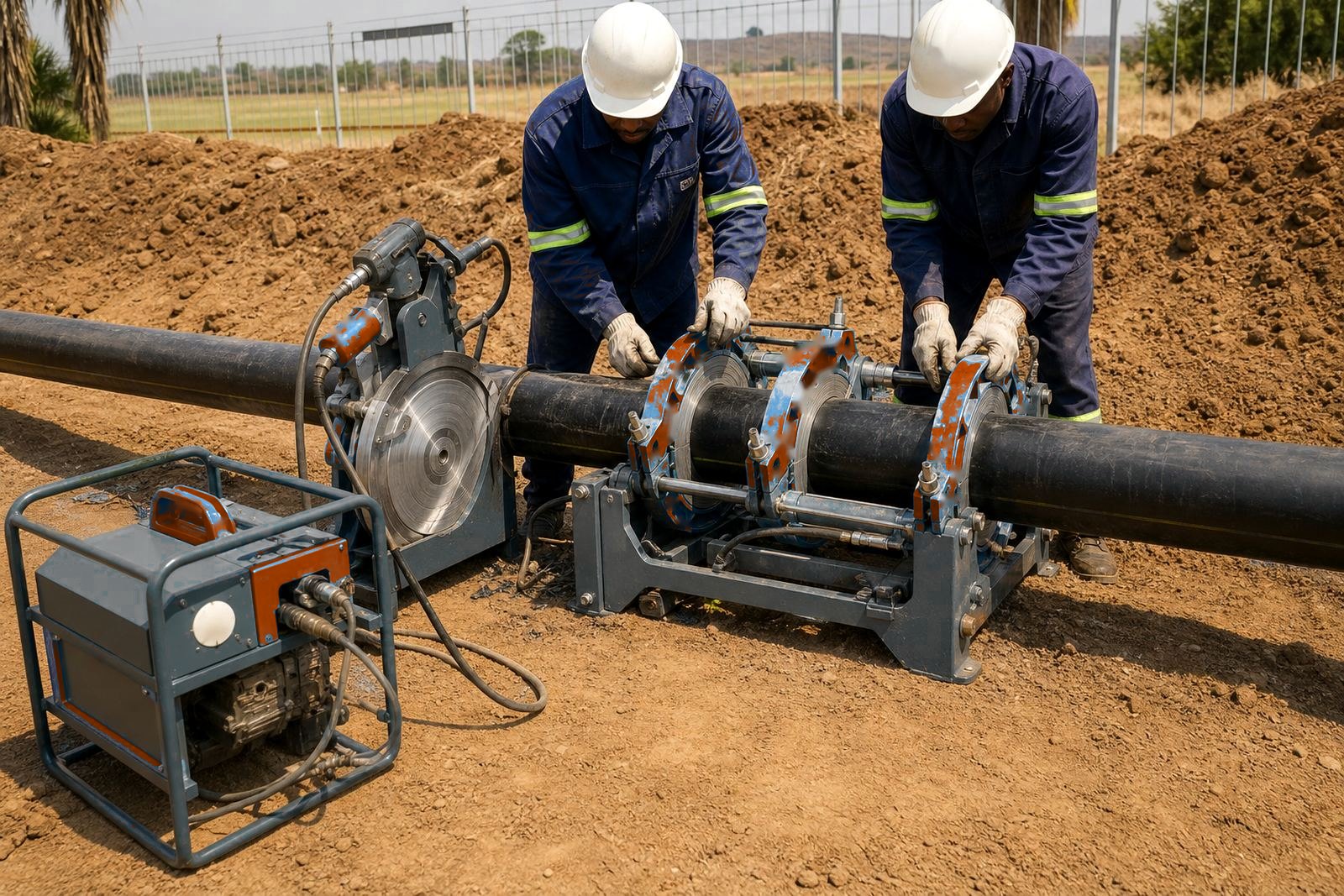
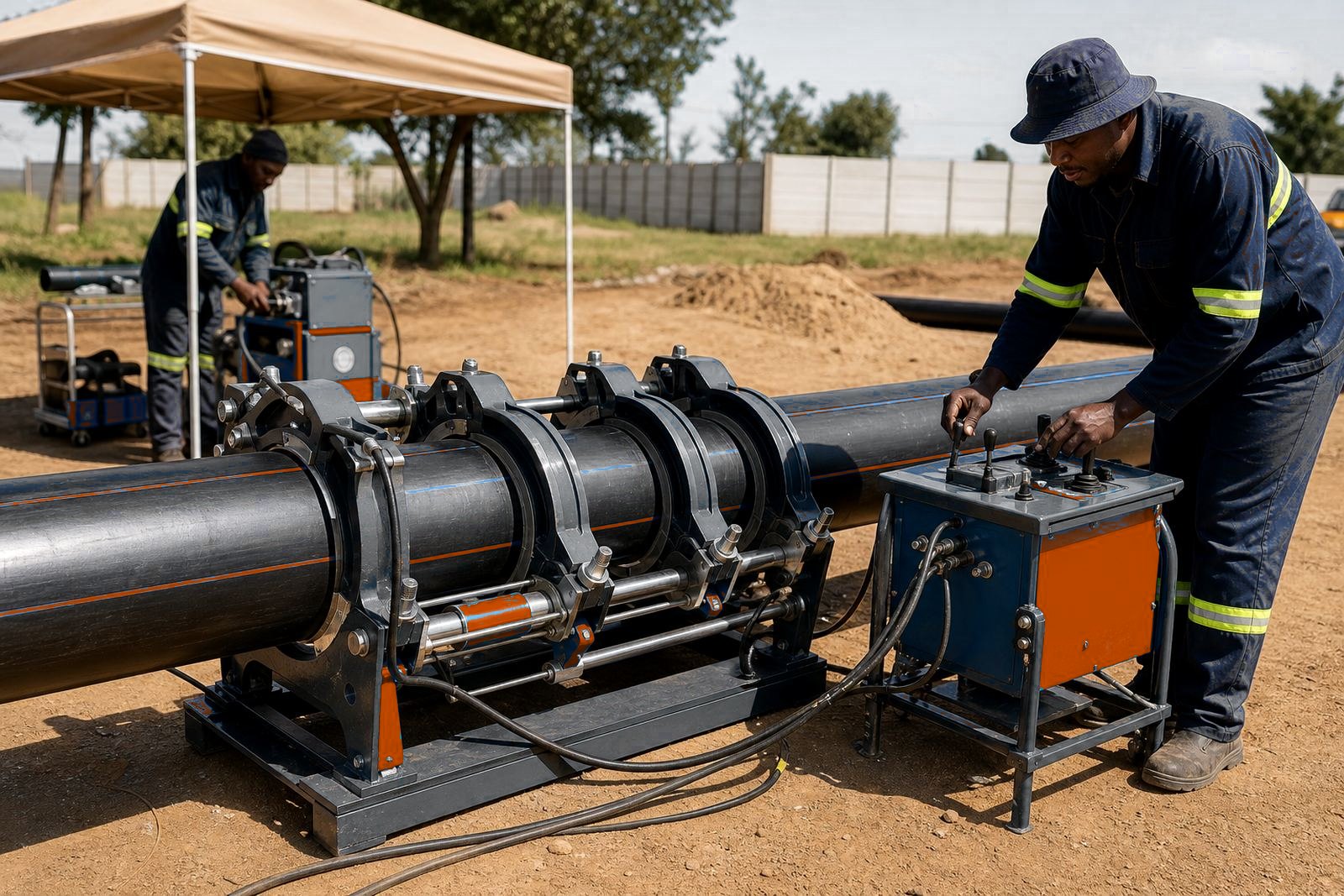
In the shop, the unit is stripped to the parts that affect fusion quality. Frame, hydraulics, plate, facer, clamps and alignment are all checked during a service.
A proper service covers moving parts and settings. Fusion pressure, heater temperature, bead formation and clamp travel all have to be within spec for the weld to pass a pressure test. Our machine setup keeps the bead uniform and the pipe ends meeting cleanly over the full face.
- Frame, jaws and clamp alignment
- Hydraulic pressure test and seal check
- Heater plate condition and surface wear
- Facer blades, drive and cut finish
HDPE weld quality checks
We face the pipe ends, heat them to the right surface condition, bring them together at changeover and hold fusion pressure until the joint is cool. Two pipe ends become one weld through that sequence, and each step needs control.
We look for even bead formation all around the joint, no cold spots and no signs that the pipe slipped in the clamps. For weld logging support, we set up the record sheet so the crew notes pipe size, SDR, heater setting, pressure and cooling time for every joint.
- Facing leaves a square, clean pipe end
- Heating is even across the full face
- Changeover stays short and controlled
- Cooling time is kept under load
When a heater plate or facer needs a full service
A service booking can be a basic clean or a deeper repair. Uneven plate heat, a facer that tears the pipe end or clamps that slip all need a service booking.
We inspect surface condition, blade wear, electrical parts where fitted and the movement of the unit under pressure. If something is beyond a workshop tune-up, we agree the repair with you before the job is started.
- Heater surface scoring or hot spots
- Facer blade wear and rough trimming
- Clamp jaw movement and bite strength
- Hydraulic seepage or pressure loss
Collection inspection
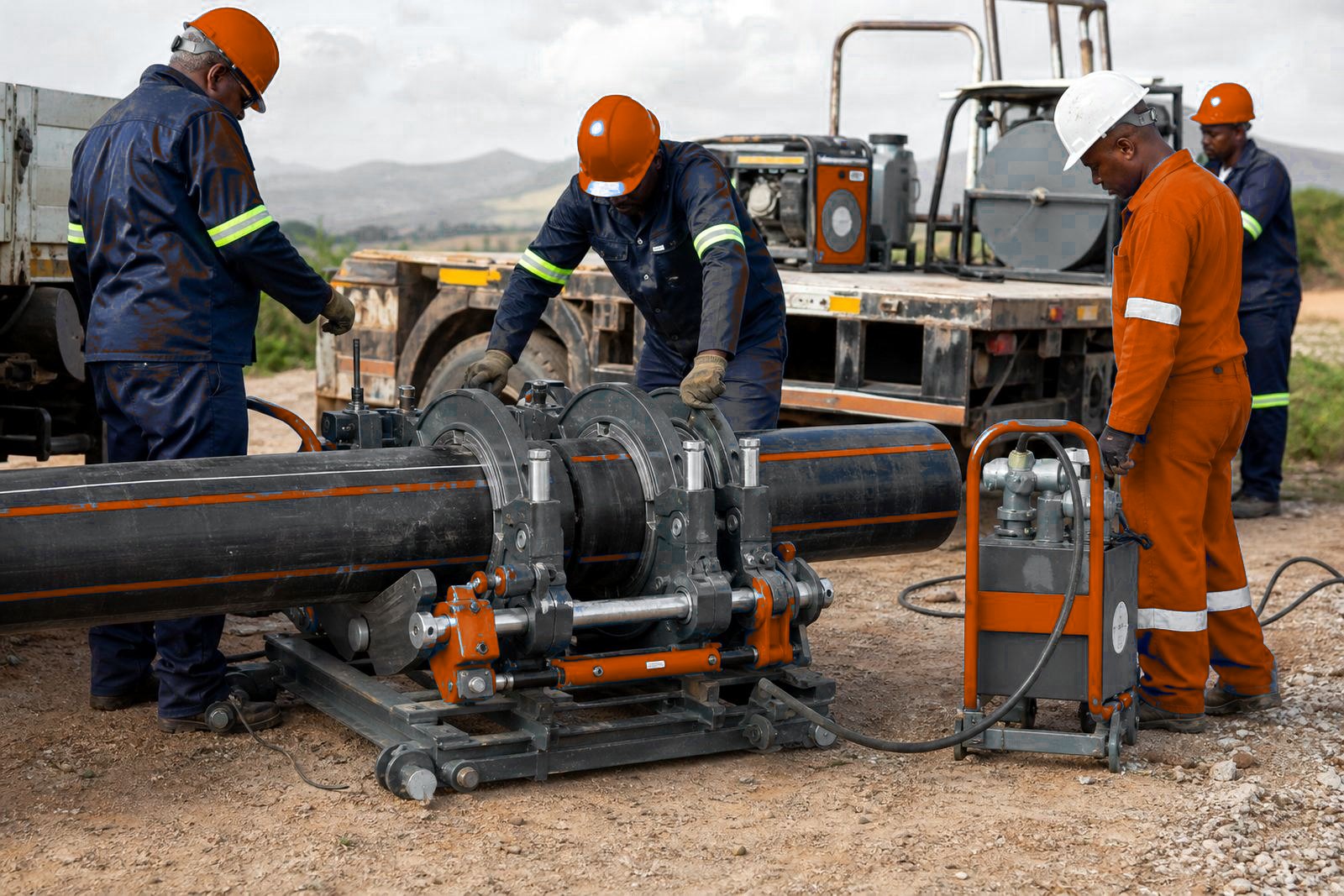
Hire machines need a different type of attention because they move between sites, crews and pipe ranges. Before a unit leaves the branch or returns from a job, we inspect the frame, controls, hoses, plates and clamp set so the next crew gets equipment that is ready to work.
Collection inspection also helps with missing pins, scuffed plates, loose guides and damaged carrying parts. In Gauteng, the coast and the more remote sites, dust and humidity both affect storage and handling, so we look at the state of the whole machine as well as the weld face.
- Hire fleet prep for dispatch
- Return inspection after site use
- Parts check for clamps, plates and hoses
- Repack of working accessories
Help on the first site day
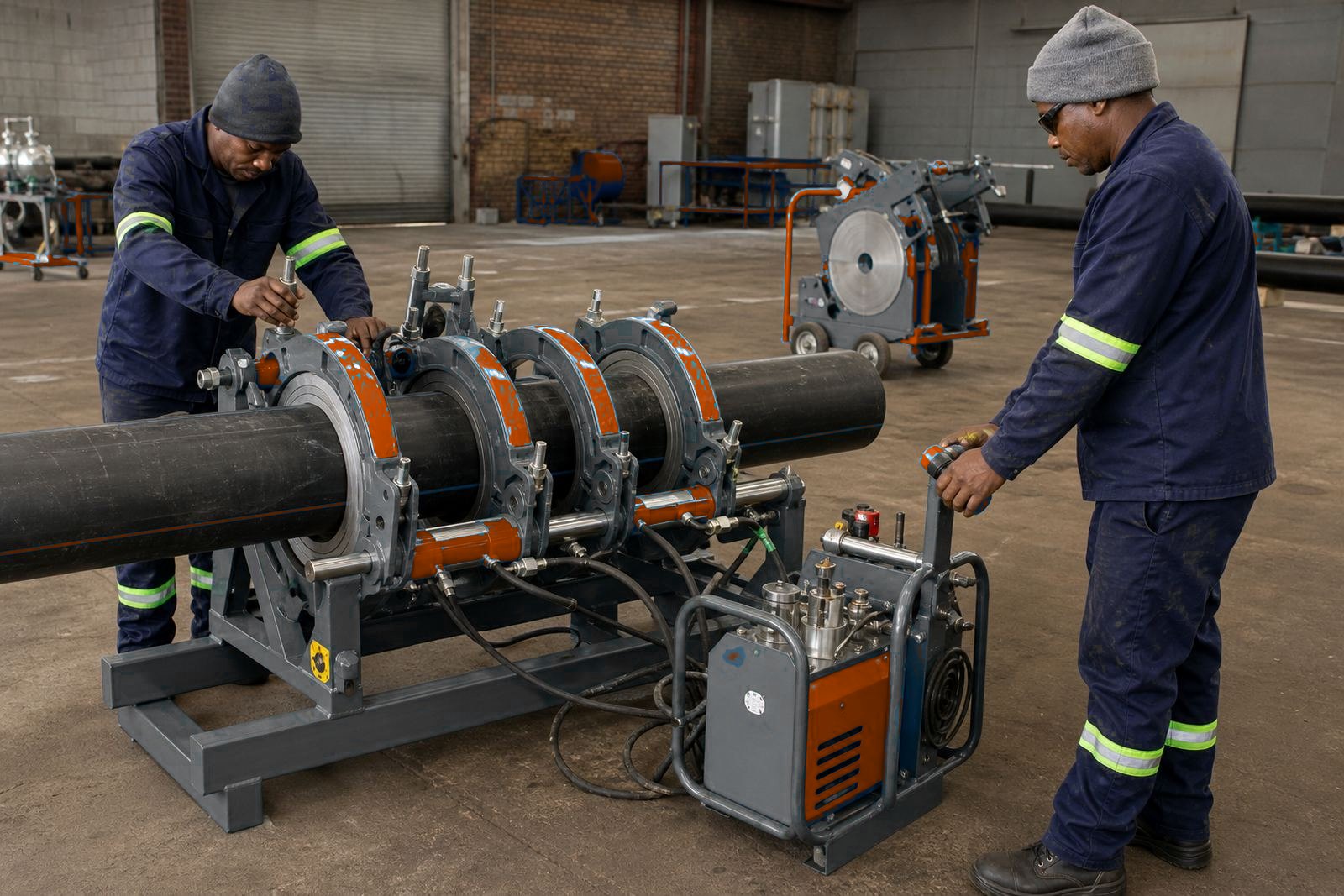
Some bookings add a short operator session at the bench. Refreshers on bead inspection can be built into the service visit. New sites often need the team to move between SDR classes or different pipe diameters.
Site start-up help can include machine set-up, clamp alignment, heater checks and the first weld sequence so the operator can see the correct routine before production begins.
Where the booking lands
Bookings are routed to the workshop team.
The service counter is led by Leanne Matlala, with field work handled by Thabo Mabena and technical planning by Riaan Salie. Mandla Maluleke oversees the branch, so a booking can move from inspection to repair.
Use the booking form to note the machine type and the fault.