Picking up the right set for the pipe size
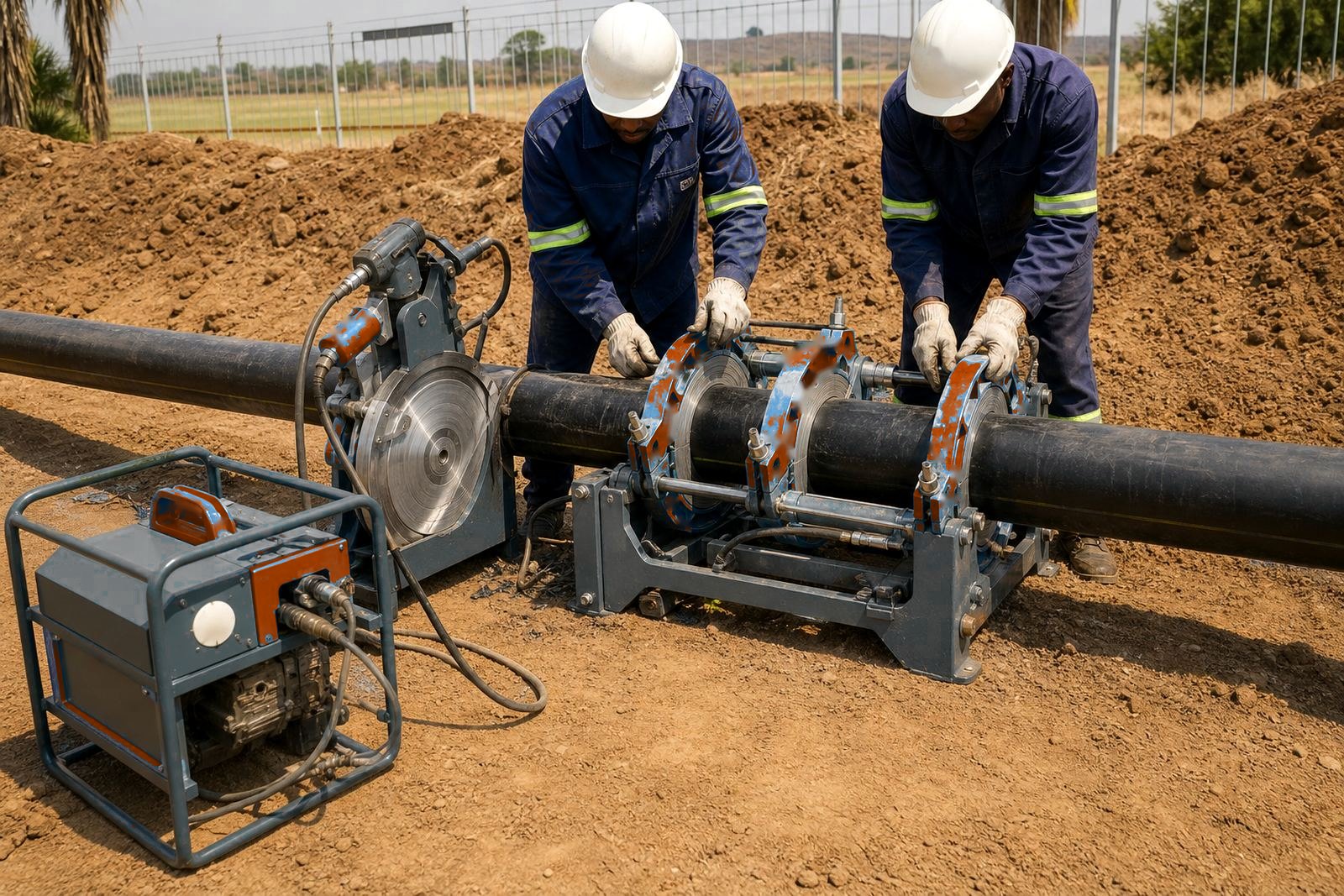
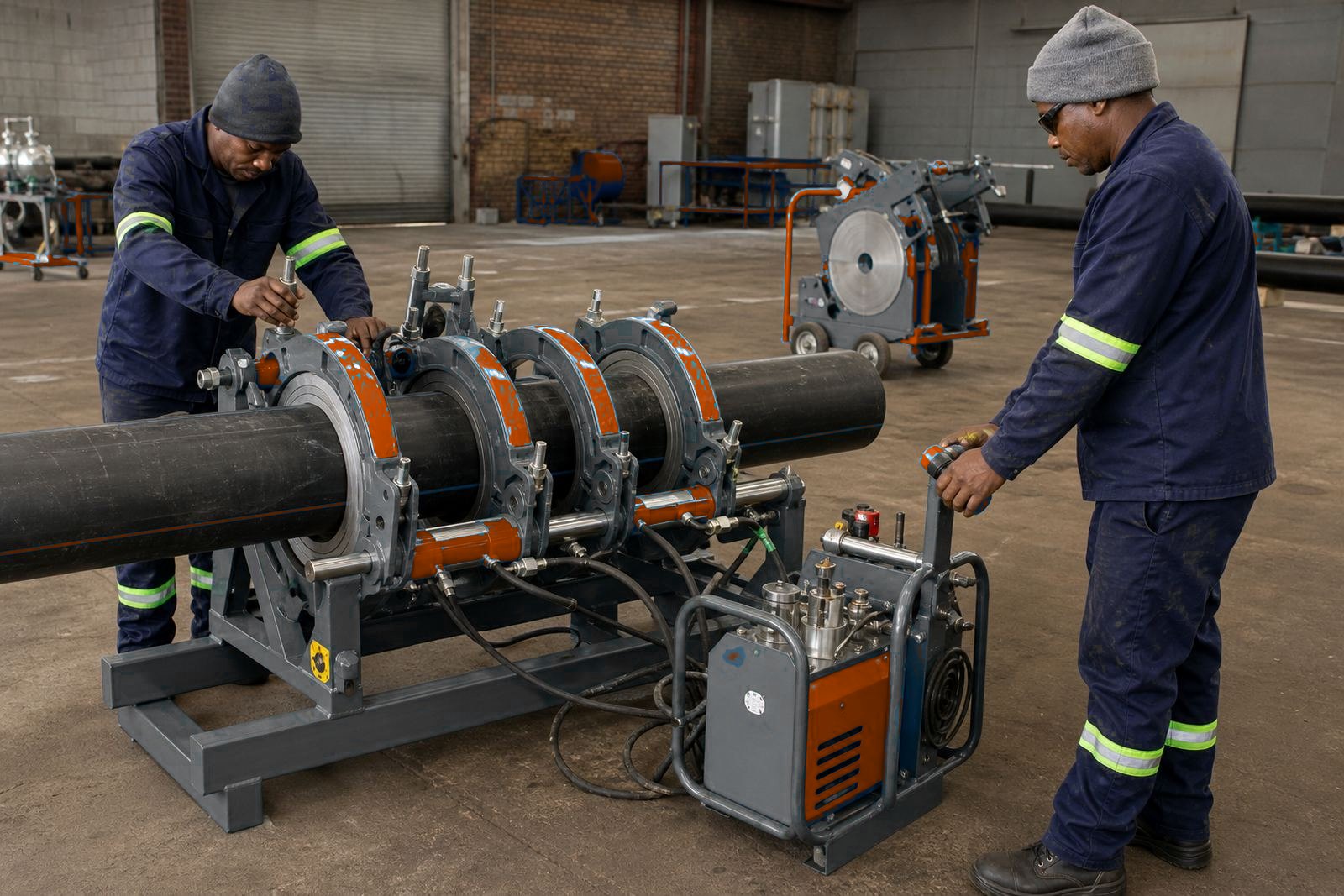
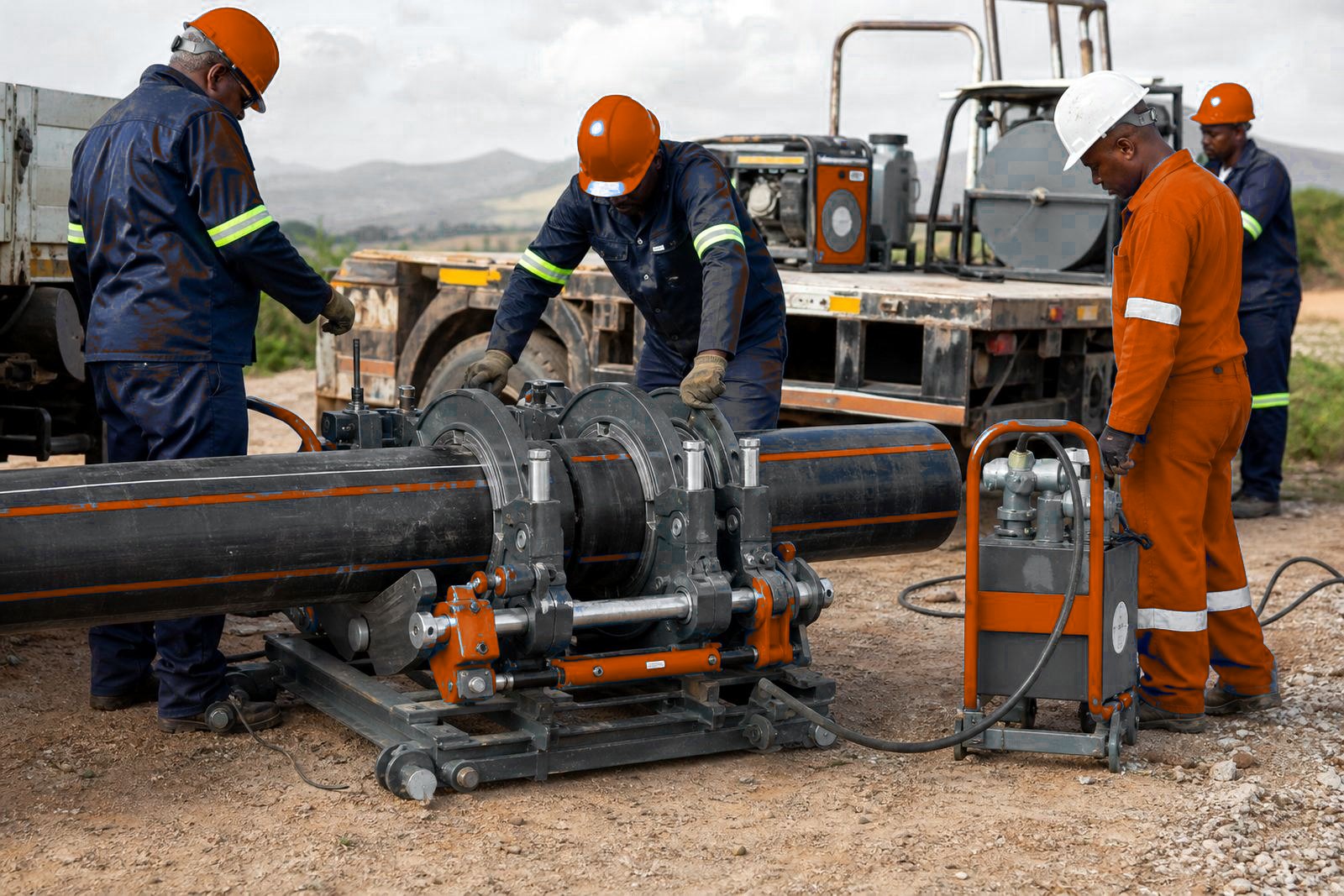
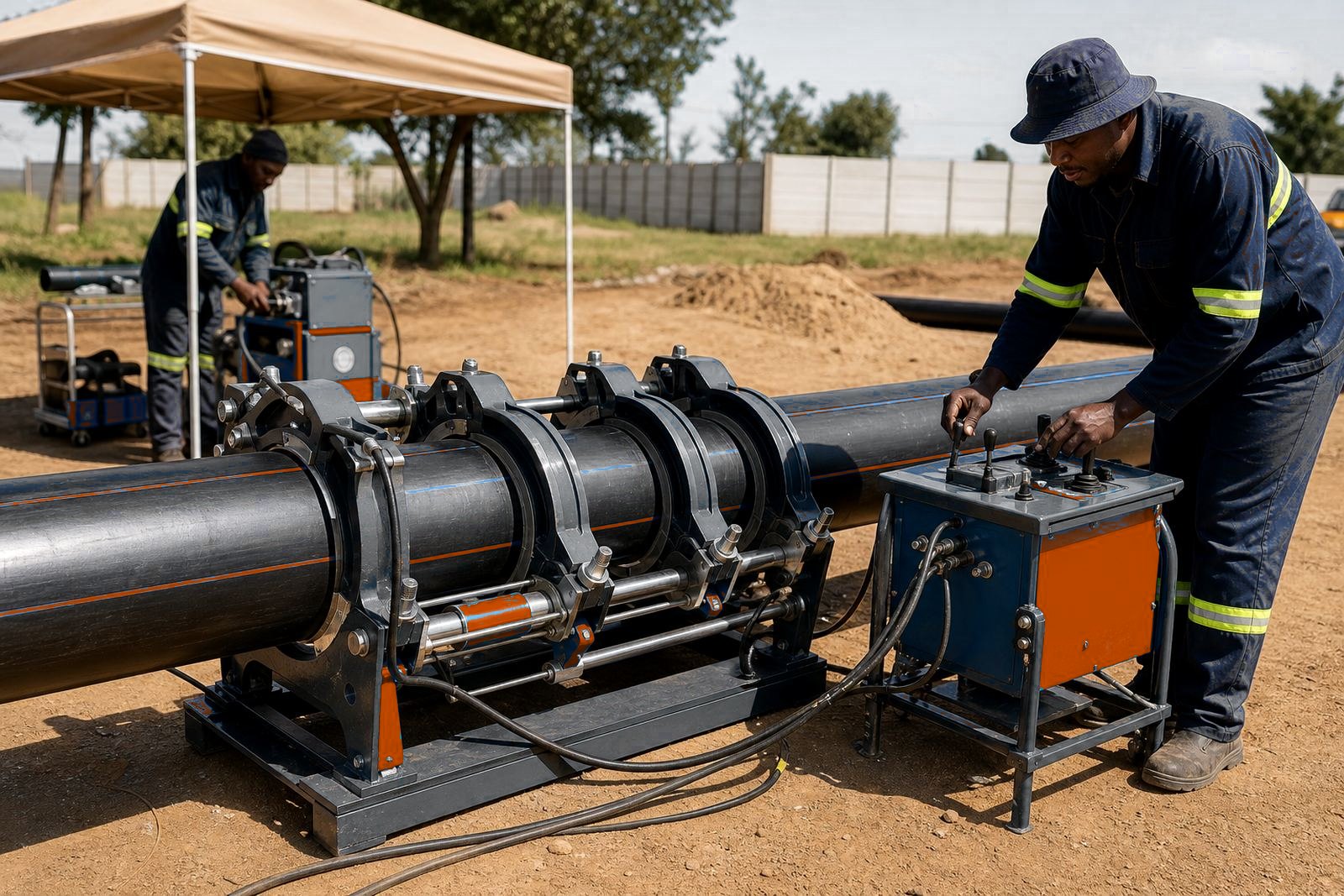
To book a hire, give us the pipe range, SDR and joint count. A set for 110 mm to 315 mm work is not the same as a set for larger diameter lines, and clamp sets, facer plates and heater plates must match the machine frame and pipe wall thickness.
When the hire is booked, the equipment is prepared for the type of work named on the order. Our hire covers the main welding machine, facing tool, heater plate, clamps and any accessories needed for butt-fusion work on HDPE pipe. If the job shifts to longer runs, or the pipe schedule changes, let the hire counter know before the load leaves the yard.
- Check the pipe outside diameter, SDR and wall thickness before collection.
- Make sure the team on site knows the joint sequence and cooling time.
- Carry the correct generator or power source if the site needs one.
- Plan for transport space, lifting and safe loading at the yard.
What we check before the machine leaves
Every hired machine should leave with clean platens, sound clamps and a facer that cuts evenly. The heater plate is checked for surface condition and temperature control, and hydraulic parts are inspected for pressure stability. Where the unit carries a data logger, the clock, memory and printout functions are checked before dispatch.
We also look at the site-side parts: clamp alignment, jaw movement, hydraulic hoses, and the condition of the cable or power lead where fitted. Worn clamp faces and a facer that does not sit square are checked before each hire. Those details apply on HDPE joints, especially where the line carries water or process flow under pressure.
- Heater plate condition and temperature control.
- Facer blades, drive and cutting face.
- Clamp alignment and hydraulic movement.
- Data logging, seals and visible wear.
Using the machine on site without damaging it
The operator should keep the welding area clean and dry, with the pipe ends cut square and free from grit. Facing must produce full, even shavings across the pipe end, then the heater plate is used for the set heating time before changeover. Once the molten ends meet, fusion pressure has to stay steady through the cooling period. Moving the joint early can spoil the bead and leave a weak line.
Bead shape. The bead should be even around the circumference, with no obvious cold spots, heavy squeeze on one side or scorched patches from an overheated plate. Do not use the machine to force a pipe size it was not set up for, and do not improvise with damaged clamps or loose guides. On longer runs, keep the joint area clear so the operator can work without knocks, mud or dust working into the fusion face.
Start-up help on hire jobs
A fresh crew, a new site supervisor or a smaller contractor moving onto larger diameters may need operator training before the first weld. That support covers pipe set-up, facing, heating, changeover, pressure control and the cooling stage that protects the joint.
Refresher training is useful where the team has worked on smaller mains, then moves to larger lines or longer lengths with tighter handling. The team needs a clean weld that can be repeated on the ground. If the job includes weld logs, the operator should record pipe size, SDR, time at heat, fusion pressure and the cooling period for each joint.
Return checks after the hire period
When the hire ends, the equipment should be returned with the same care it had at collection. Wipe off mud, slurry and grease, drain residue where needed, and keep the heater plate protected from scratches or impact. If a machine has been used in wet trench work or coastal conditions, salt and moisture must be cleared before transport back.
Return inspection covers obvious wear and the signs that tell us how the kit was used. Bent clamp parts, scored platens, damaged cables, missing bolts or cracked hoses need to be flagged. If anything felt uneven on site, such as low hydraulic pressure or a facer pulling rough, say so at return so the issue can be checked before the next job.
- Clean the machine before loading it for return.
- Pack loose parts, adapters and log sheets together.
- Keep the heater plate in its protective cover.
- Report missing items, wear or impact marks at handover.
Care rules while the hire is running
Hired equipment must stay with the site named on the order unless agreed otherwise. It should not be passed from one crew to another without instruction, and no one should open hydraulic or electrical parts if they are not trained to do so. Correct handling of a fusion machine is part of the hire and is included.
Use the machine only for the pipe sizes and fusion method it was set up for. Keep the heater plate off rough steel, concrete and wet soil when not in use. Store facing tools, clamps and gauges where grit cannot build up on them. If a joint is not behaving as expected, stop and inspect the pipe ends, the plate and the clamp alignment before you continue with the weld.
Where the hire support team sits in the process
The hire counter is at our base. Each hire machine is inspected on return before it goes out again.
Clients get in touch with us by using our contact form. Match the pipe size, job type and site requirements first so equipment is released in the right size for the job. If the work moves across branches or support areas, keep the hire notes with the machine for the next handover.