Durban jobs that need steady pipe fusion
Durban work brings its own mix of salt air, wet ground and busy sites near ports, depots, treatment plants and drainage runs. HDPE joints must hold line and grade, especially where pipe strings are long and the trench is narrow.
We support contractors on stormwater and repair work in the metro.
Pipe size and SDR both affect the setup. A thicker wall needs a longer heat soak than a lighter wall. Our Durban Support keeps field detail practical.
What we send to Durban sites
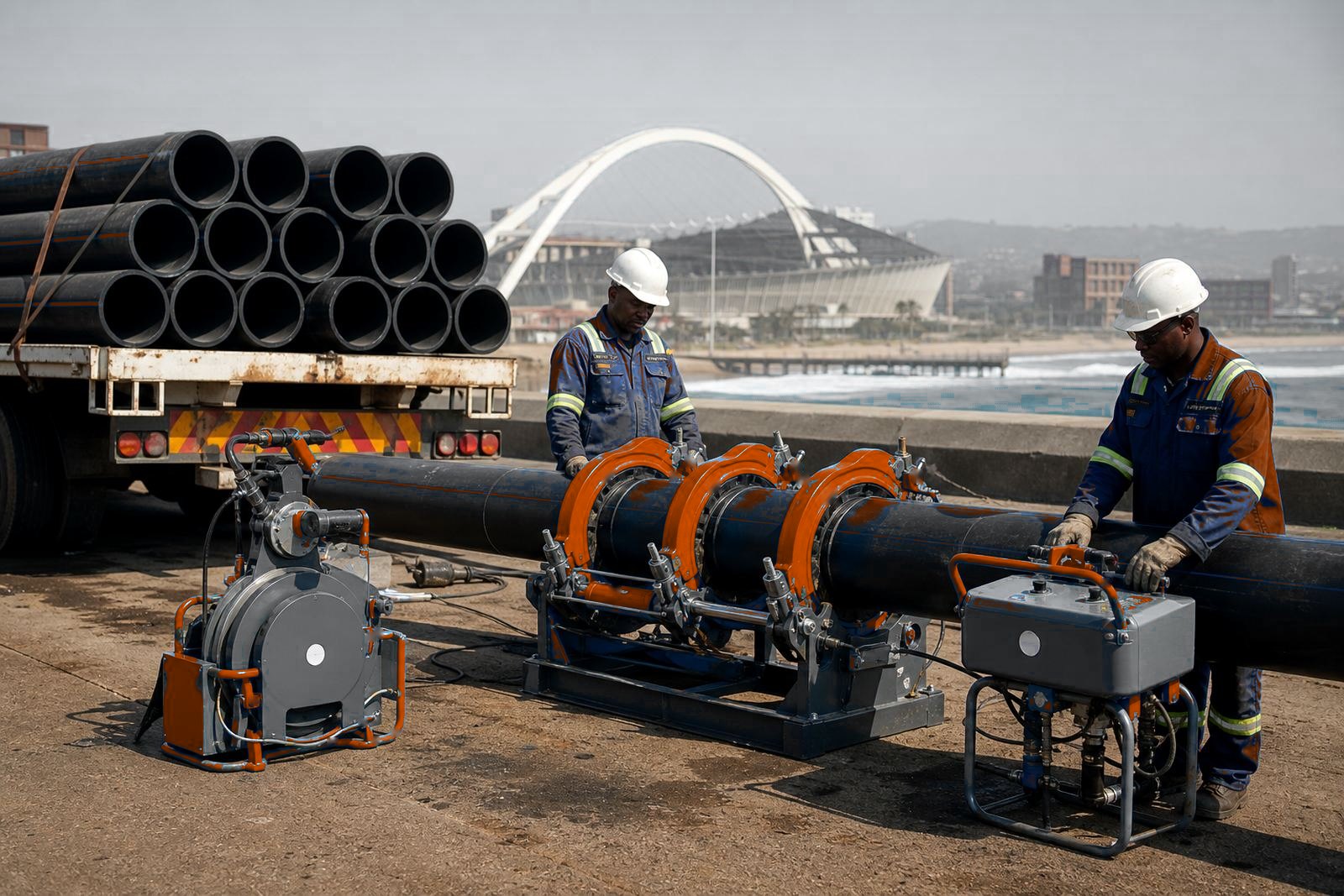
For Durban jobs, we bring the fusion machine, the supporting tools and the checks that keep the crew moving on site. Some locations need a full hire unit, others only need workshop support or a facer reset before the next weld run.
- Butt-fusion welding machines for HDPE pipe joins
- Heater plates for controlled melt faces
- Clamps and alignment gear for straight pipe setup
- Hydraulic checks for stable fusion pressure
- Weld logging help where site records must be kept tidy
Durban spares cover seals, fittings and wear items before the next shift. Service checks on hard-worked Durban machines catch drag, heat faults or pressure loss before pipe is scrapped.
How Durban crews use the equipment on site
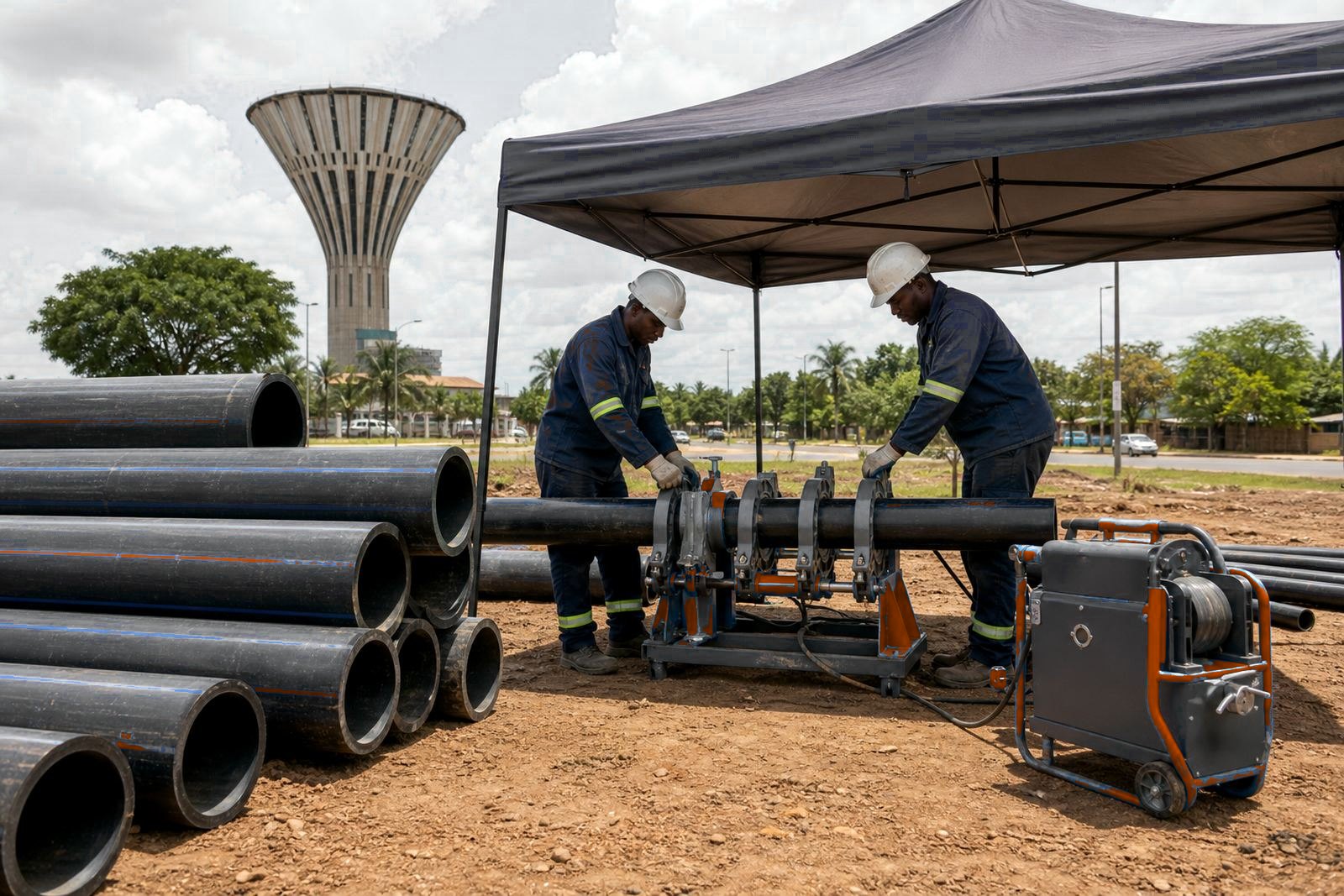
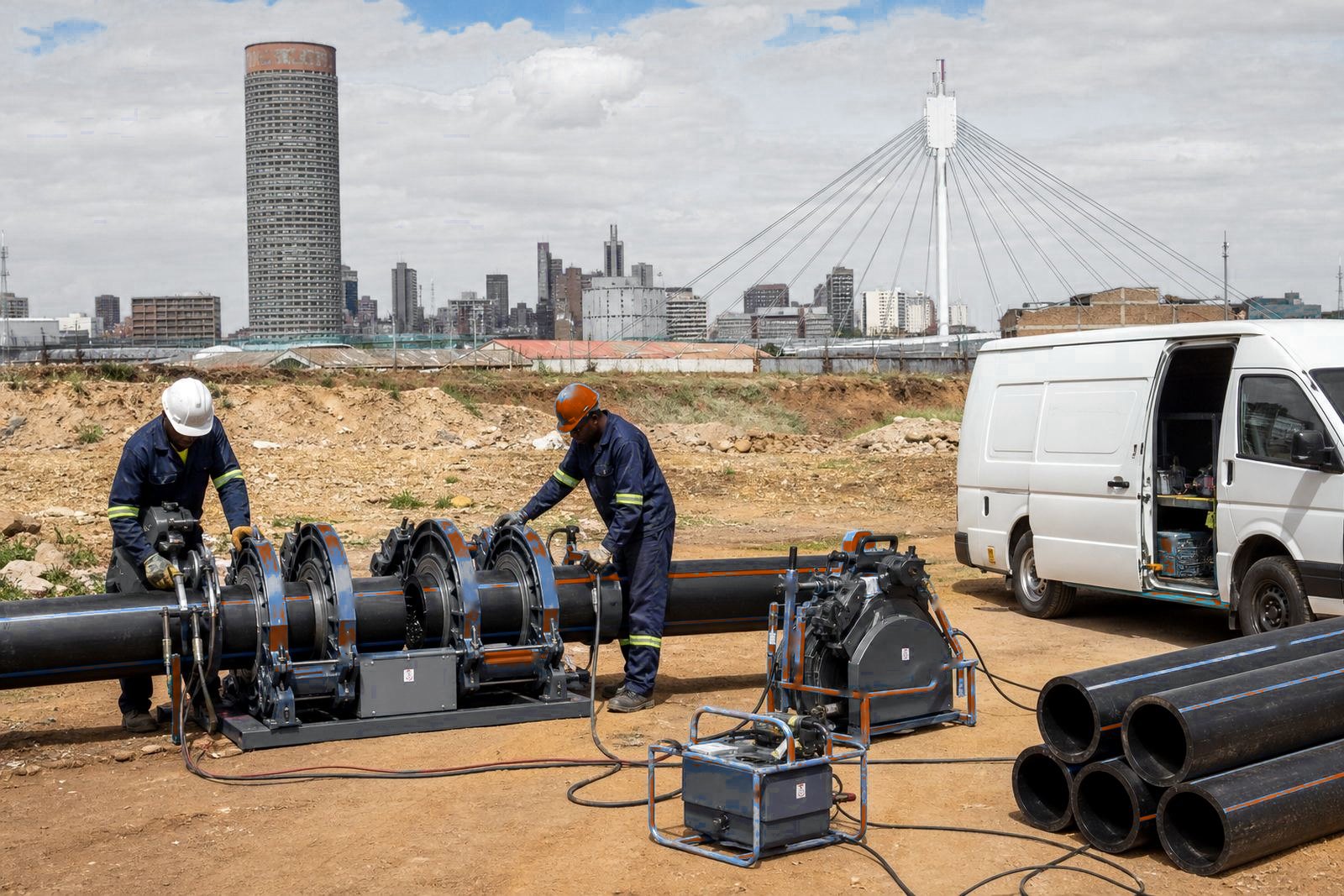
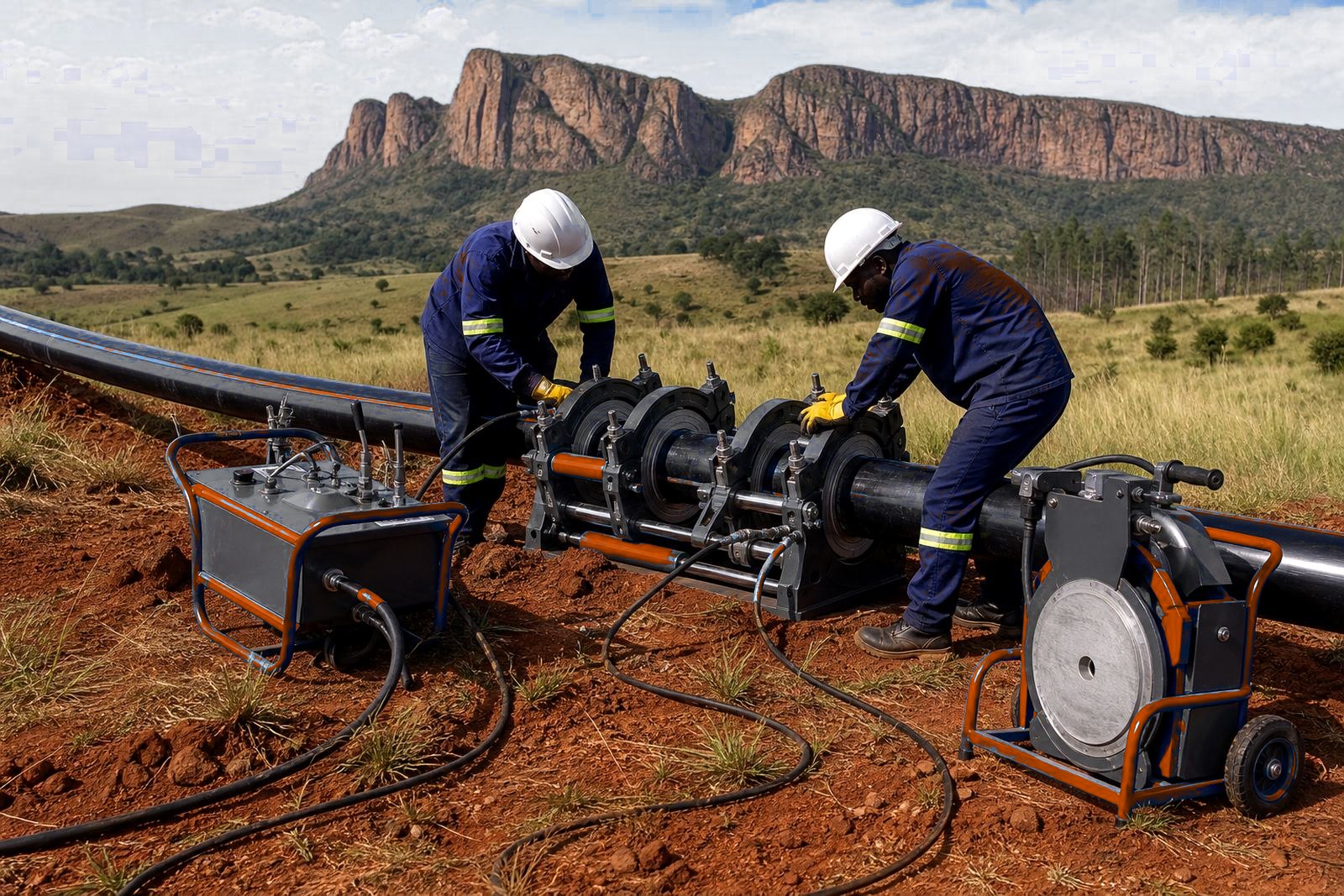
Most Durban crews work to a familiar sequence. The pipe is clamped, faced, checked for alignment and then heated against the plate until the melt face is right for the pipe size and SDR. Once the ends meet, they are held still until the bead has formed.
On Durban sites, slopes, coastal wind and narrow trenches beside live services all change how the operator works. A slope on a drainage run, a windy yard near the coast, or a narrow trench beside active services can all affect how the operator works. Clear training helps the crew keep the process controlled without rushing the weld.
We can set up weld logs with pressure, times and weld number for the job file. Bigger contracts ask for those records as a traceable weld history.
Training for operators who already work under pressure
Our Durban Support includes operator training and refresher training for crews who need to sharpen the basics or settle new staff into the job. Durban training covers clamp setup on the machine frame.
Training also covers the small mistakes that cost time on site. A dirty face cut can spoil a weld even when the machine itself is fine. Good crews learn to read the bead and the joint line after every weld.
Where a contractor needs a hand on the first day, site startup help can set the pattern for the rest of the job. That is often enough to avoid wasted pipe and awkward rework later in the week.
Hire units and field checks
Some Durban contractors need a machine for a short run, others need their own unit checked before a larger contract starts. Our service work covers both. We inspect the frame, controls, hydraulics, heater plate condition and facer alignment so the machine leaves ready for site use.
Heater plate checks are important in humid coastal conditions, because surface condition and temperature control affect the weld face. Hydraulic pressure testing helps confirm the unit can hold the force needed through fusion and cooling.
When a job is moving between suburbs or up the coast, book a collection inspection before the machine goes out. The check catches a loose clamp, a worn cable or a heater plate that needs attention before the unit is loaded.
Getting support into Durban and the wider coast
Durban Support serves contractors across the metro and the port side. Durban work that moves inland to other project areas is covered by the same team.
For some teams the need is simple: a hire machine, a checked facer or a heater plate that is ready for site. For others it is machine servicing before a major run starts. Either way, keep the weld sequence controlled and the pipe joint fit for the job.
- Durban metro and nearby industrial sites
- Coastal civil and drainage contractors