Mpumalanga sites with scheduled pipe work
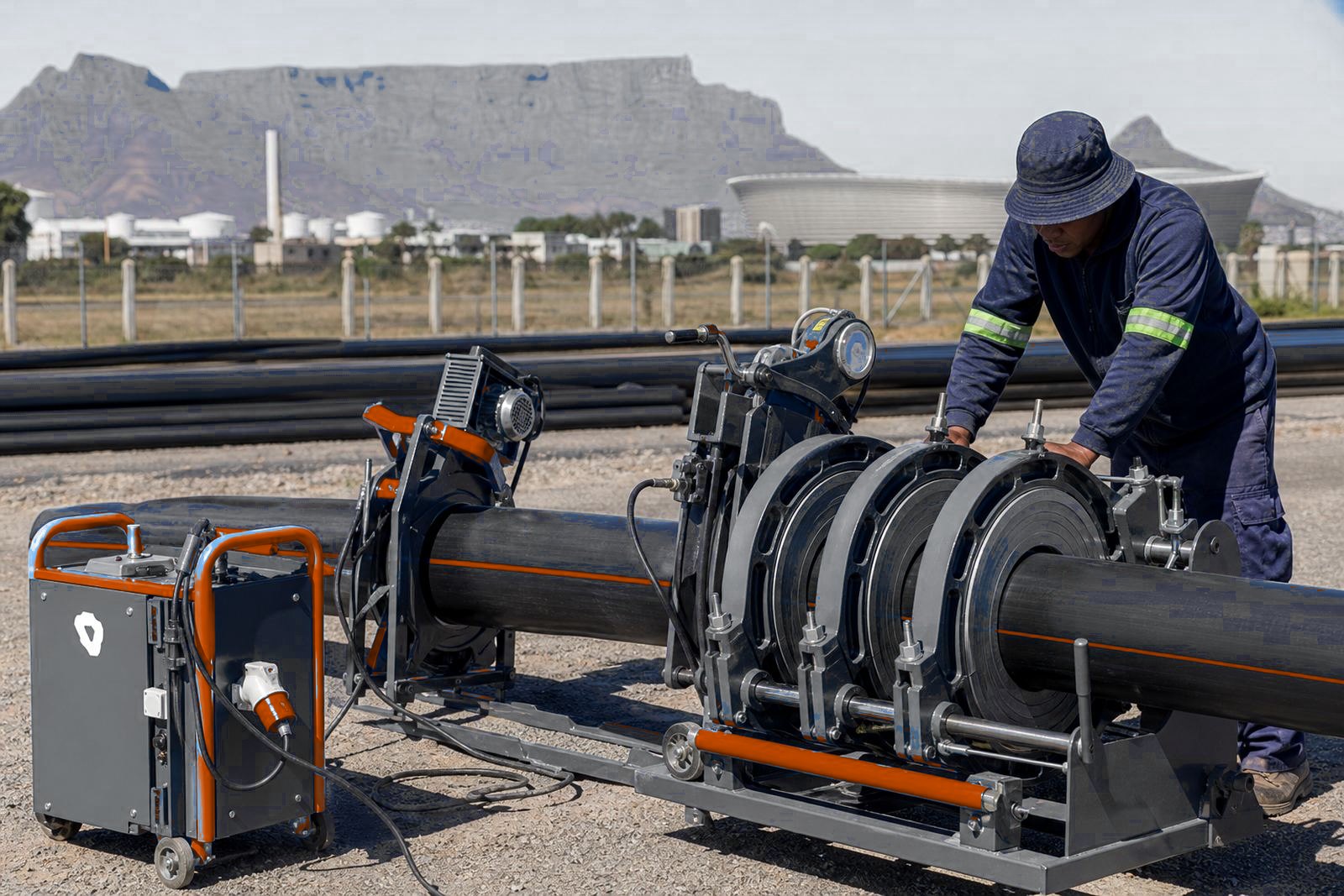
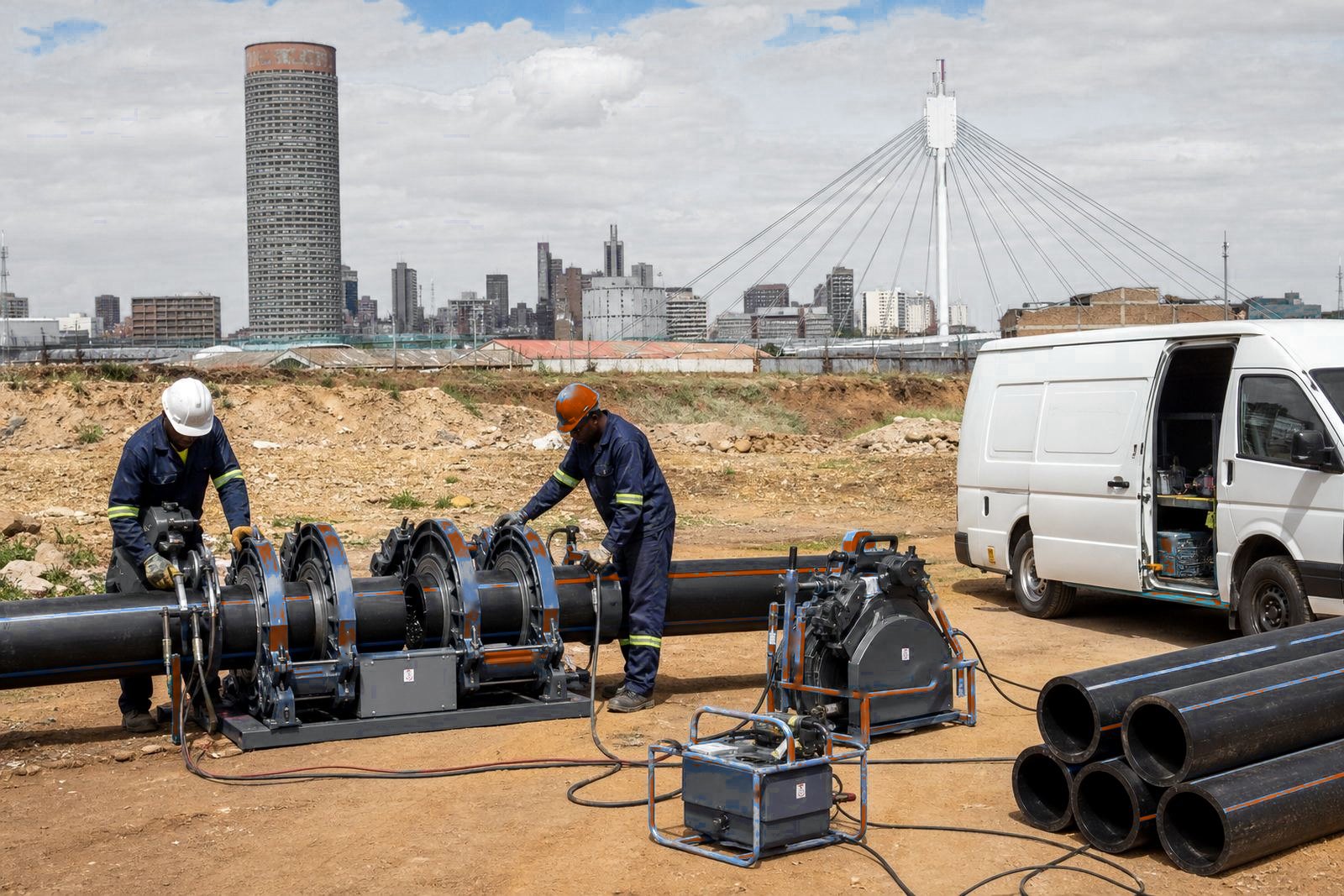
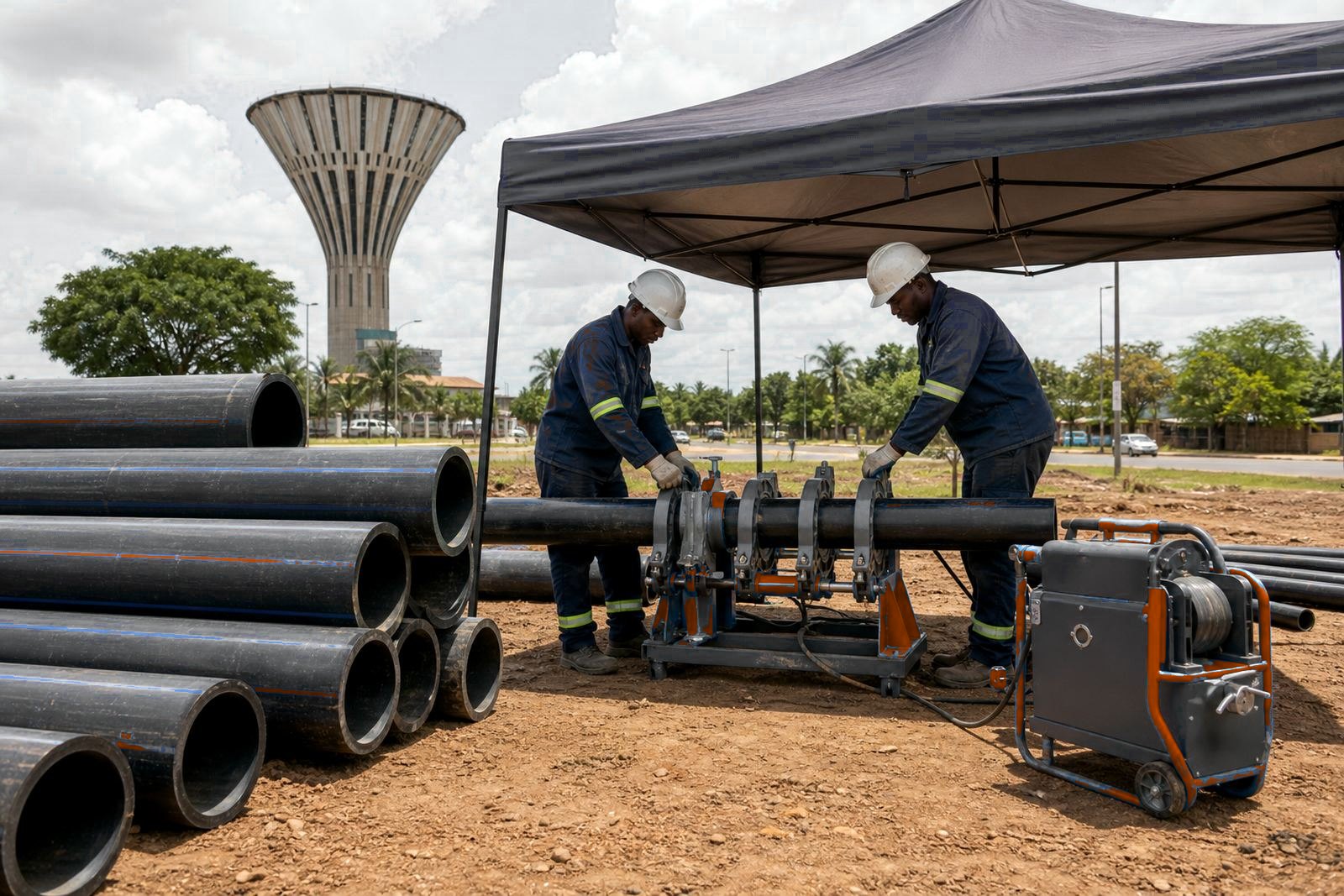
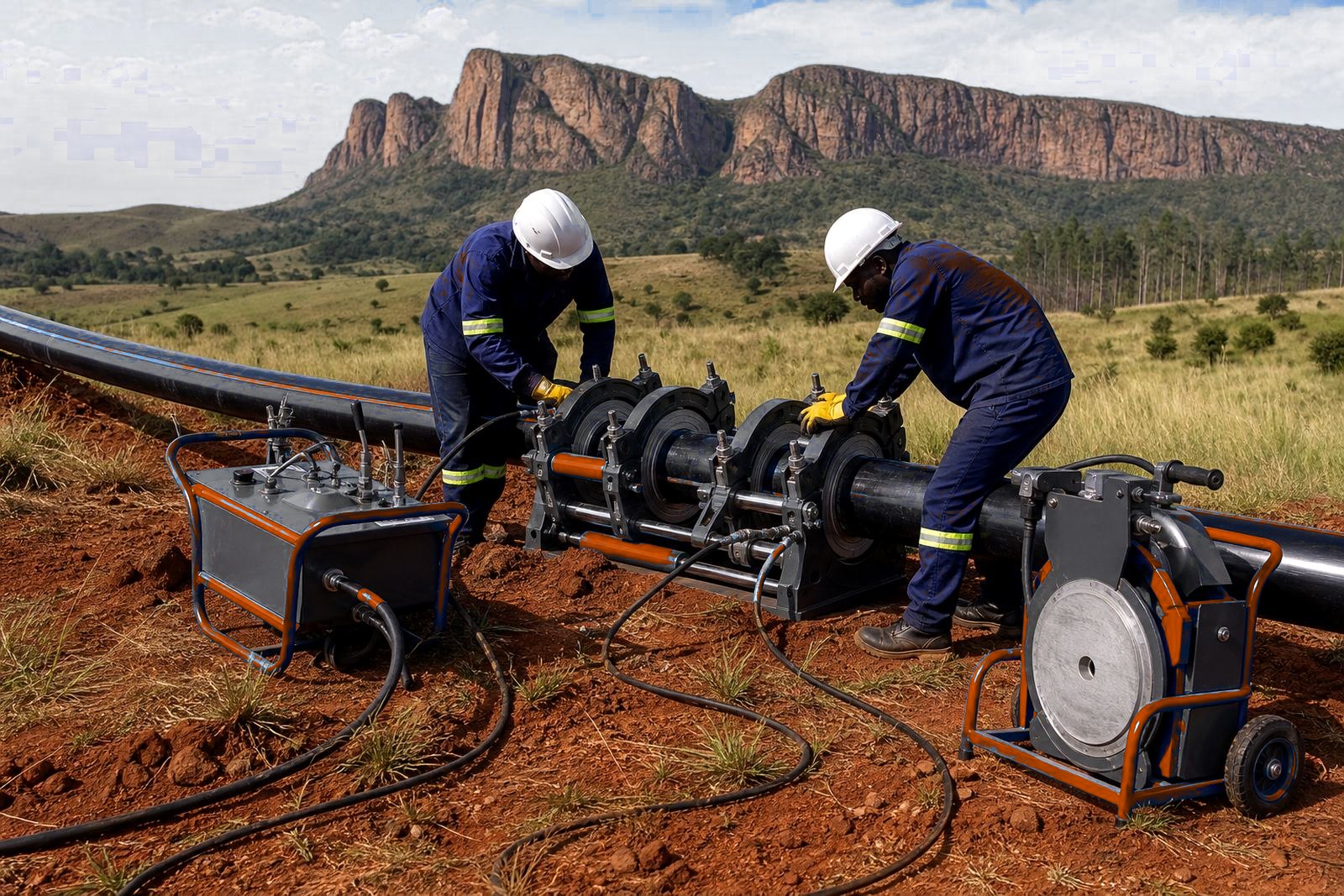
Mpumalanga support covers mine services across towns, shafts and rural sites. The work often involves long pipe runs in 110 mm to 630 mm HDPE, though some crews also handle smaller diameter branches and repair sections where access is tight.
We deal with the practical side of butt-fusion welding, starting with facer setup. A joint has to hold its shape, bead and pressure profile before the line is buried, lifted, or tied into a live system.
- Pipe sizes from smaller service lines through to heavy duty main runs
- SDR matching for wall thickness and pressure rating checks
- Bead inspection after cooling and before movement
- Weld logging support where crews need a clean record of each joint
Travel into the province and the sort of ground we meet there
Jobs in Mpumalanga often mean road time, uneven site access and dust that gets into clamps, guide rails and hydraulic fittings. Vibration, heat and long shifts in the region strain the machine.
We plan field support around those conditions. Mpumalanga site support can mean delivering a serviced machine, checking facer cuts, setting the plate and truing the clamps. Where pipe sits out in sun and wind, shade the joint during cooling and handle it only after the full time.
Typical crews we work with across the region
The region brings together process plant crews and maintenance staff who need pipe joints that are neat and repeatable. Some crews weld on open ground, others work inside plants where access is narrow and every lift has to be controlled. The job can also swing between planned installs and urgent repairs, so the kit has to match both patterns.
We support operators who already know the basics as well as teams that need refresher training before a bigger campaign. Training runs from pipe preparation to the final cool down.
- Water reticulation and pipeline contractors
- Contractors on long pipeline runs between towns
- Joining work from 63mm to 630mm HDPE
What sits in the van or workshop for Mpumalanga callouts
For Mpumalanga work we cover butt-fusion machines, facing tools, heater plates, clamps and the parts that keep those items in service. Mpumalanga units are checked for alignment drift and pressure control before going to the field.
Machines from Mpumalanga sites come back to the workshop for servicing. Where a crew is hiring equipment, we check the frame, jaws, hydraulic action and plate condition before collection. That way the crew gets a unit that is ready for work not a unit that needs sorting on the side of the road.
- Facing tools for pipe end preparation
- Heater plates and clamps for site welding work
- Spares support for worn or damaged parts
Weld records, bead checks and pipe sizes that stay accurate
Weld logging helps the team track each joint by number on larger jobs. A clear handover helps a contractor, and a site supervisor can compare one shift with the next. Patterns can show up in a rushed joint or a plate that cooled too much between cycles.
A joint with even squeeze-out, good alignment and clean pipe ends usually shows that the pressure and timing were controlled well. An uneven bead or out-of-square pipe faces are checked before the line moves forward.
- Weld logging help for site files and handover packs
- Bead inspection after cooling, before handling or burial
- SDR checks so wall thickness matches the job spec
- Pipe size planning for staged work and mixed runs
Getting the right support into Mpumalanga
We work with field crews on Mpumalanga sites. Mandla Maluleke, Riaan Salie, Ayanda Naicker, Leanne Matlala, Thabo Mabena and Alicia Jacobs each handle part of the Mpumalanga machine or hire work.
Hire prep requests are handled around pipe, location and machine condition. The same applies to callouts for heater plate checks.
- Training support for operators and site teams
- Mpumalanga support requests