Johannesburg to the West Rand
Johannesburg Support covers the metro and its industrial belt, with call-outs across the city. Being close to Johannesburg makes it practical to move machines and spares into the field without sending gear across the country first.
A site needs a facer checked, a heater plate tested or a clamp set realigned before the next joint. Johannesburg crews lay HDPE in tight, dusty or uneven areas.
Typical work in Johannesburg that teams ask us to handle
The metro jobs are a mix of new installation and plant shutdown windows, often with a machine hired for a short run. Shutdown work is booked around the plant's own downtime.
How the fusion process is handled on site
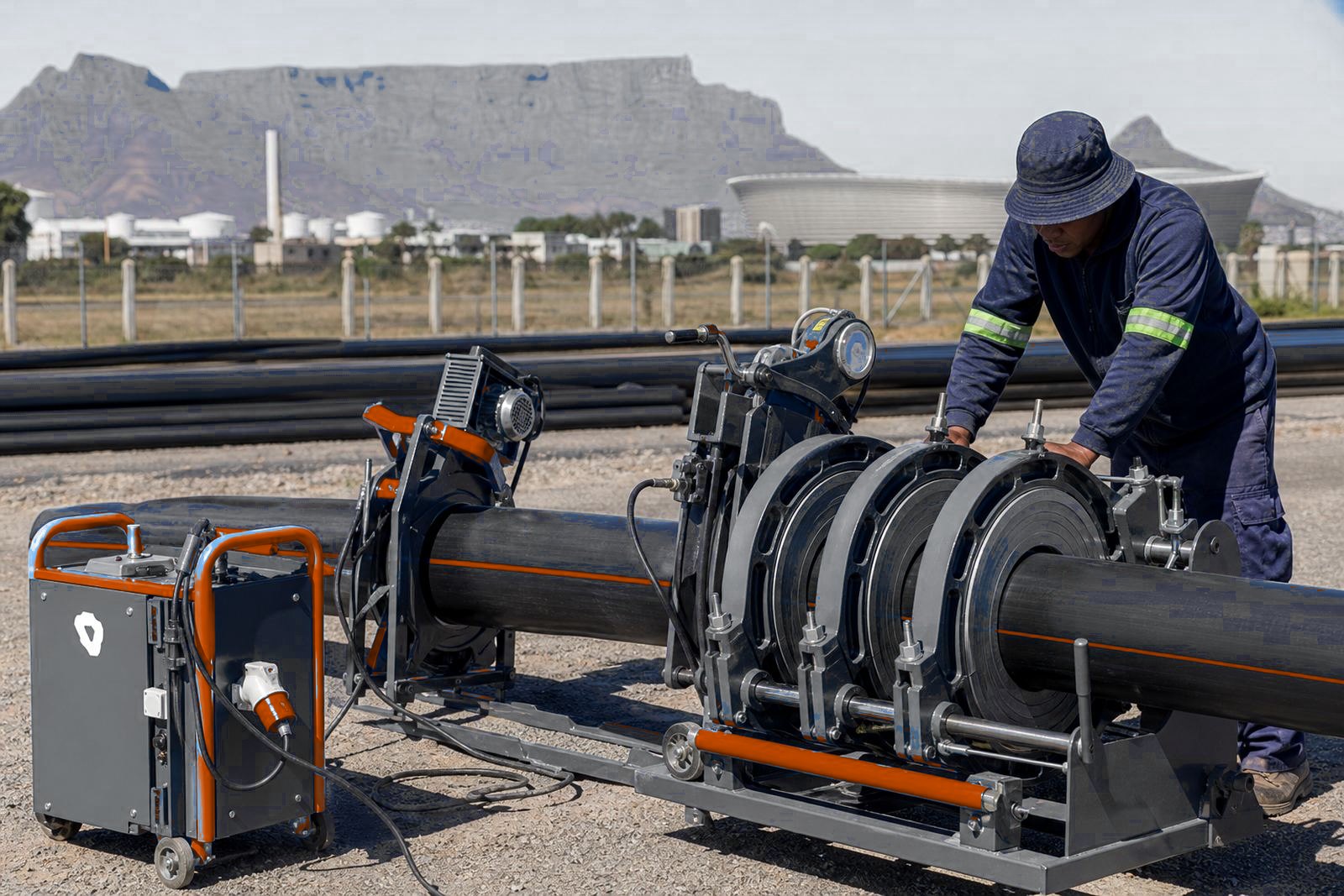
Pipe ends must be cut square, clean and properly clamped. The facer removes any high spots and leaves both ends matching.
We set the weld from the pipe size and SDR in front of us. A small water line and a large diameter industrial run do not behave the same, and the weld schedule must suit the wall thickness, heat soak time and pressure requirement for that pipe. Bead form is checked after clamp release.
For logged jobs, we help the crew keep pressure and timing records in order. Traceability stays clear on repeat work, site handover and the paperwork that gets questioned later if the line ever has to be checked.
Local conditions that change the job on the day
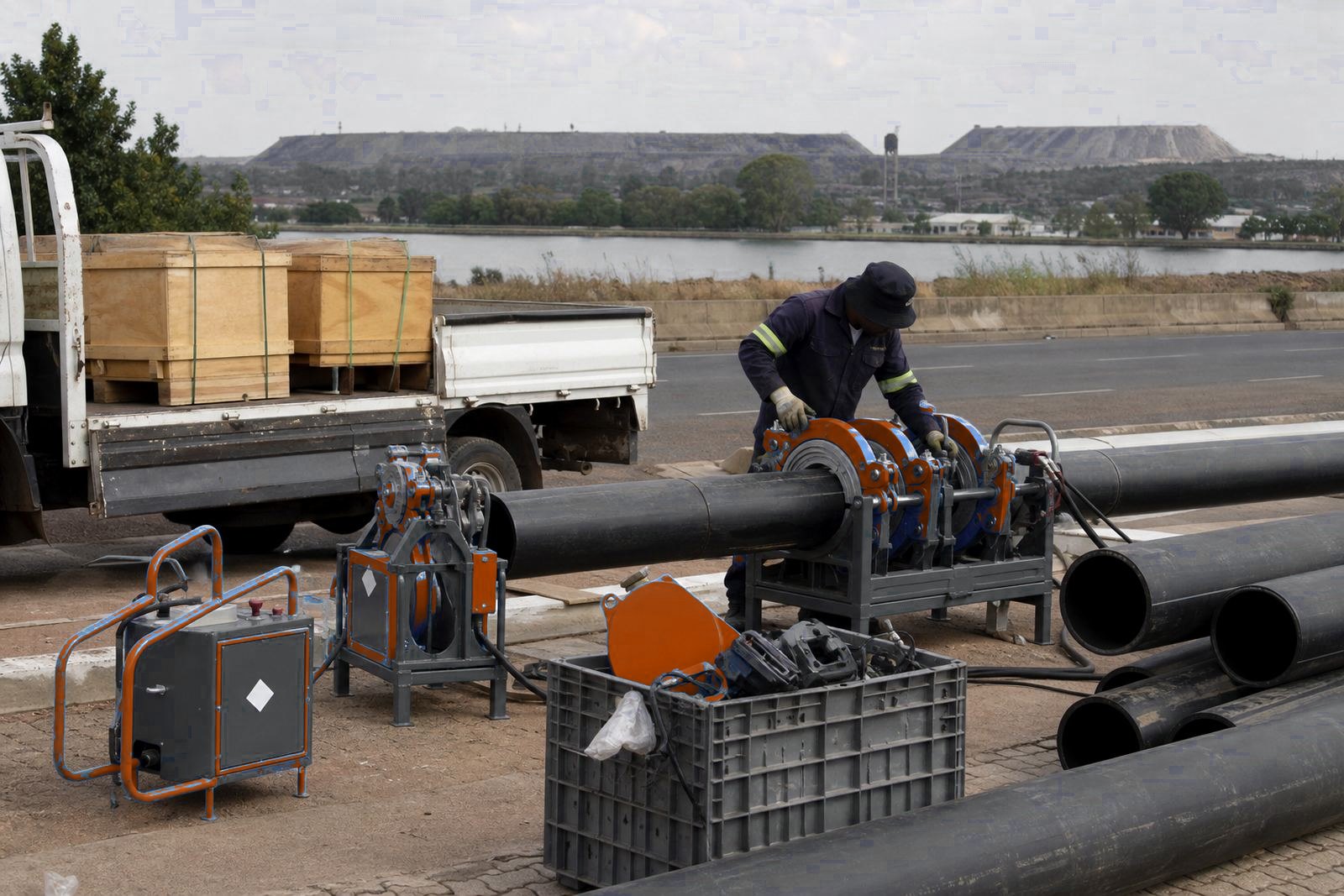
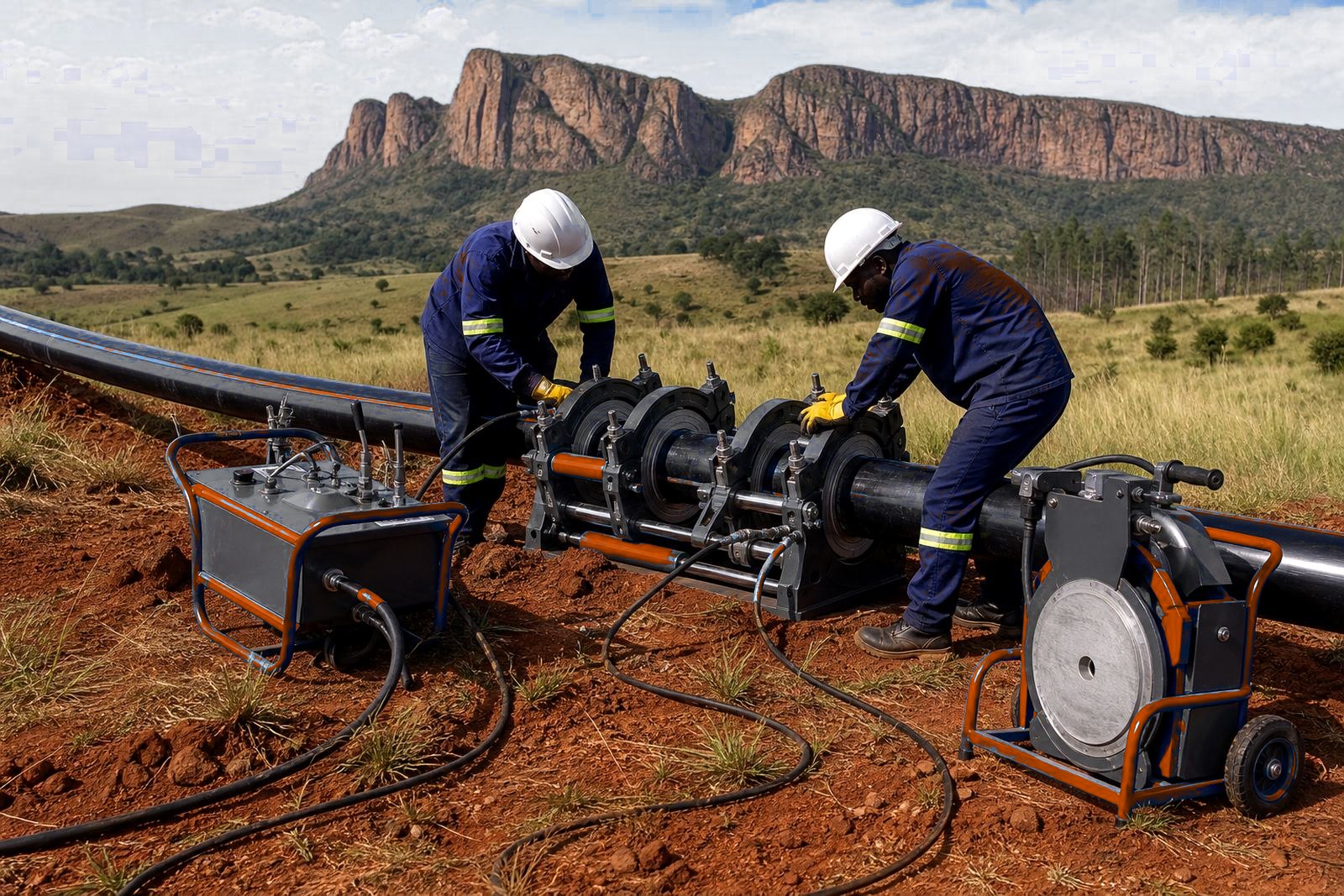
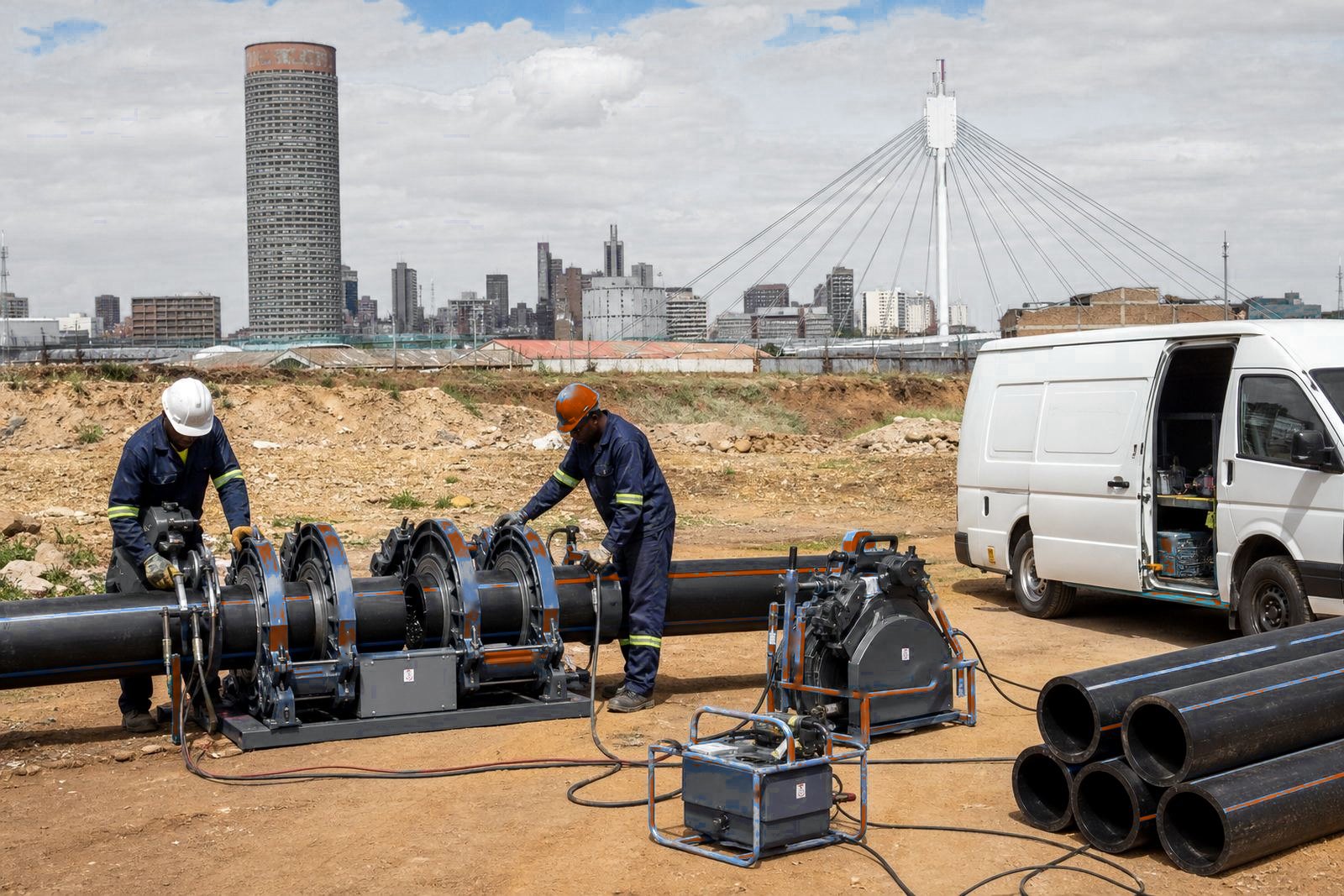
Johannesburg sites can be dusty, windy and cramped, with traffic around the work area and hard standings that are not always level. In older industrial parks, the crew may be working around live services, tight trench access or pipe bundles that need careful handling before any heat is applied.
Summer storms can leave muddy entries and standing water around the line, while winter mornings can be cold enough to slow handling if the pipe has been stored outdoors. Those conditions affect how the team stages the machine, protects the heater plate and keeps the pipe faces clean between facing and fusion.
- Uneven ground that affects clamp alignment
- Dust and grit that must be cleared before heating
- Space limits near substations, pump stations and plant rooms
- Pipe stored outdoors, often with surface contamination to remove
- Lifting gear for larger diameter sections
The hire fleet and the parts we keep moving
Some Johannesburg crews hire for one job and return the machine when the line is done. Others need servicing on a unit they run every week, plus a check on the heater plate, hydraulic system and carriage movement. We keep our hire fleet prepared for field use and inspect each machine when it comes back.
Johannesburg kit often includes the machine, facing tools, plates and clamp sets for the site pipe size. If the welding team has a worn bearing, a damaged cable or pressure inconsistency, our service side finds the fault and sets out the repair path.
Johannesburg crew sessions
Training works best when it is tied to the actual pipe and the real crew on the job. Ayanda Naicker coordinates training for Johannesburg crews. Our sessions cover new operators, mixed-experience teams and supervisors who want tighter control over the weld log and inspection checks.
We focus on practical steps in the trench, starting with machine setup. Clear instructions help crews work with fewer avoidable errors, especially where the line is long and the day is already under pressure.
Johannesburg support requests
Each request lists the project location, pipe size, SDR, machine issue and the service needed. For greater Johannesburg, give the suburb or industrial area in the request.
Leanne Matlala handles hire counter coordination, Thabo Mabena covers field technician work, and Alicia Jacobs helps with hire fleet movement. Contractors across the metro may move a machine between water lines each week.
- Short road trips for Johannesburg area work
- Greater Johannesburg coverage for contractors and site teams
- Johannesburg enquiries by suburb
- Include pipe diameter, SDR and job location where possible