Fire water loop work that had to hold its line
The main concern on the Witbank loop was joining pipe and keeping the line true through offsets, valve stations and a few awkward tie-ins. The contractor needed support with butt-fusion setup, machine handling and weld procedure on the HDPE sections of the loop feeding the fire system.
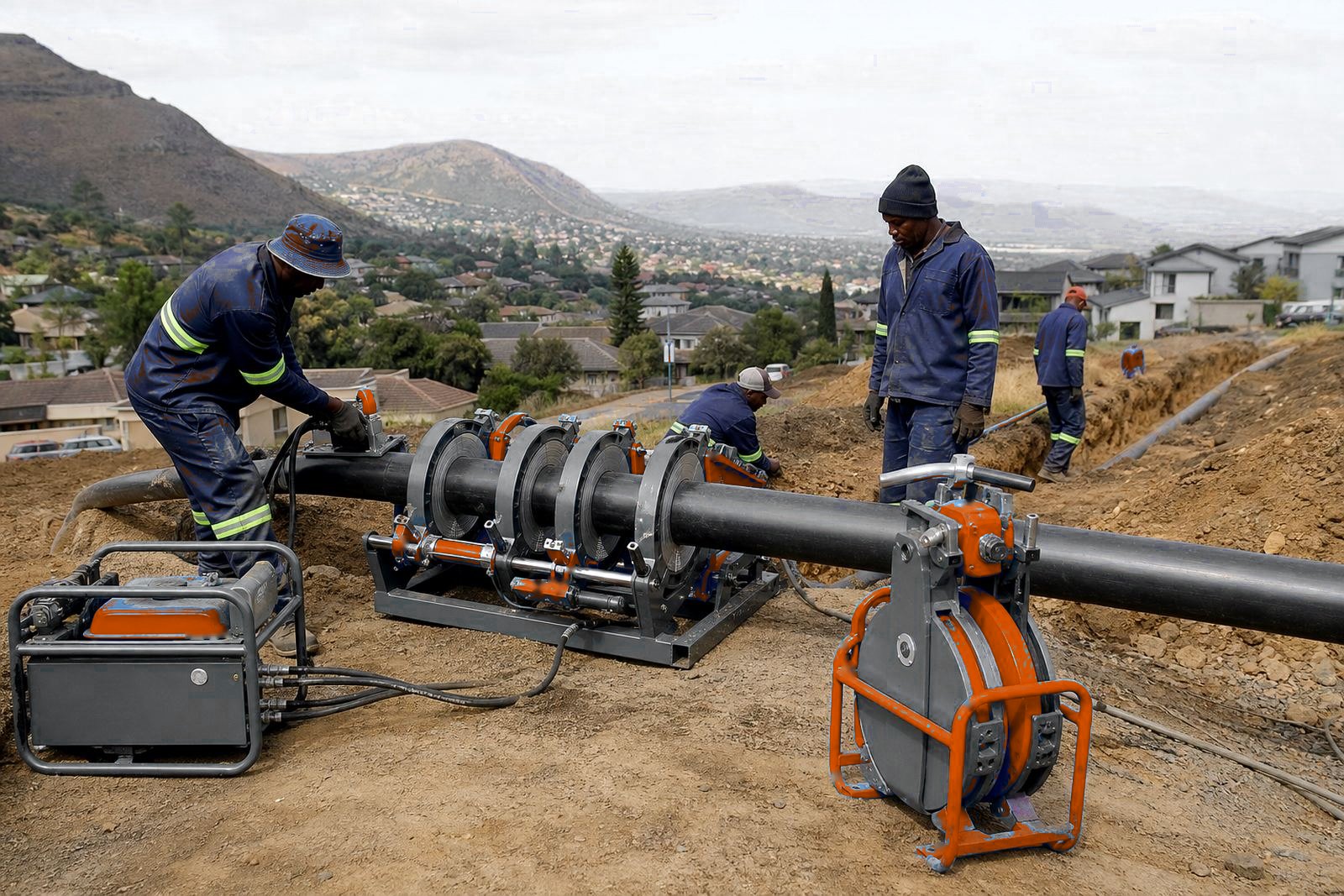
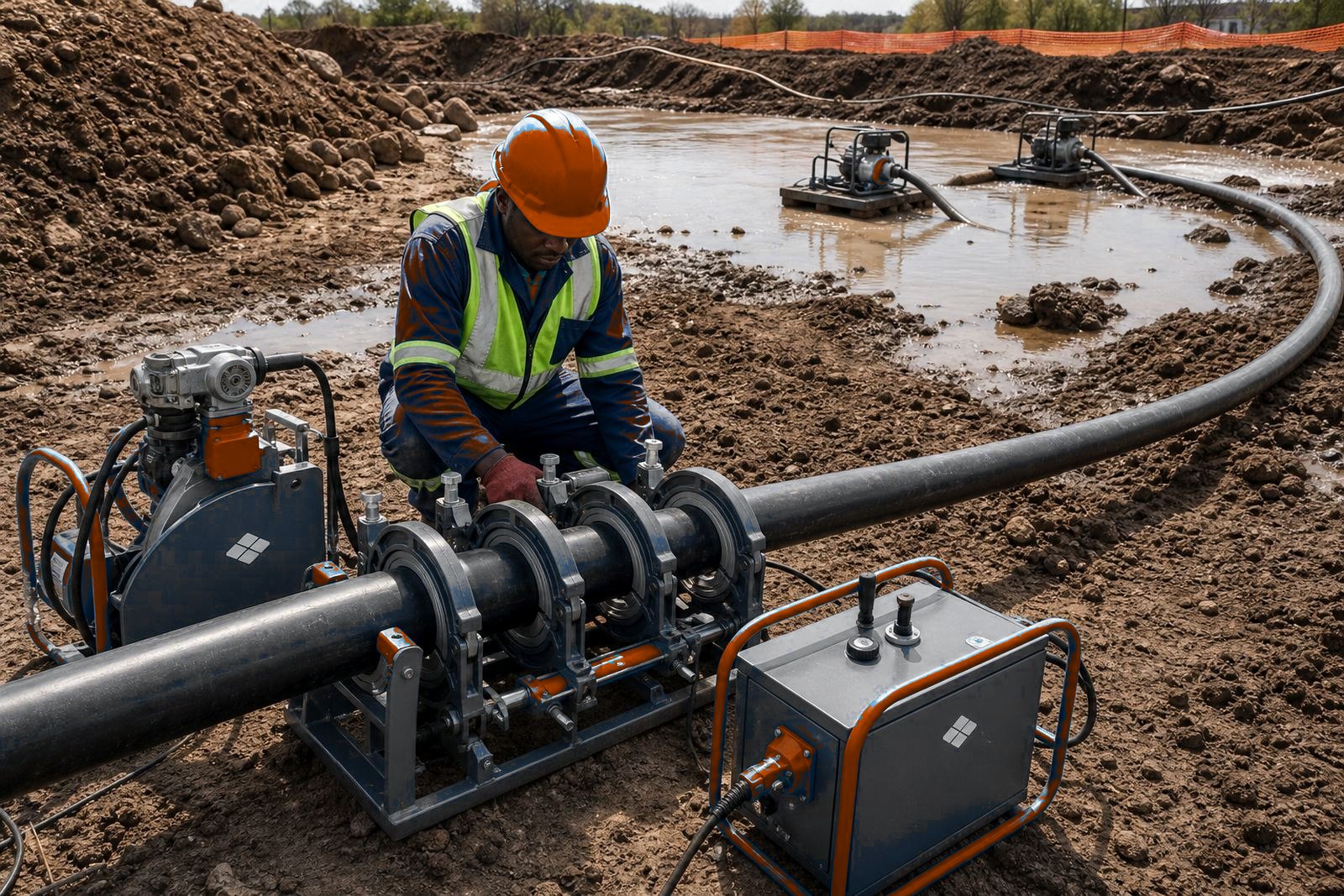
Our role covered the practical side of the weld process. That meant checking pipe ends, setting up the facer, managing heater plate condition, confirming alignment in the clamps and keeping the changeover steady so the molten faces met without dragging. For this kind of run, the bead has to be even and continuous, with no cold joints or squeeze-out faults.
- Town: Witbank
- Scope: fire water loop on HDPE pipe
Pipe sizes, SDR and the welding plan on site
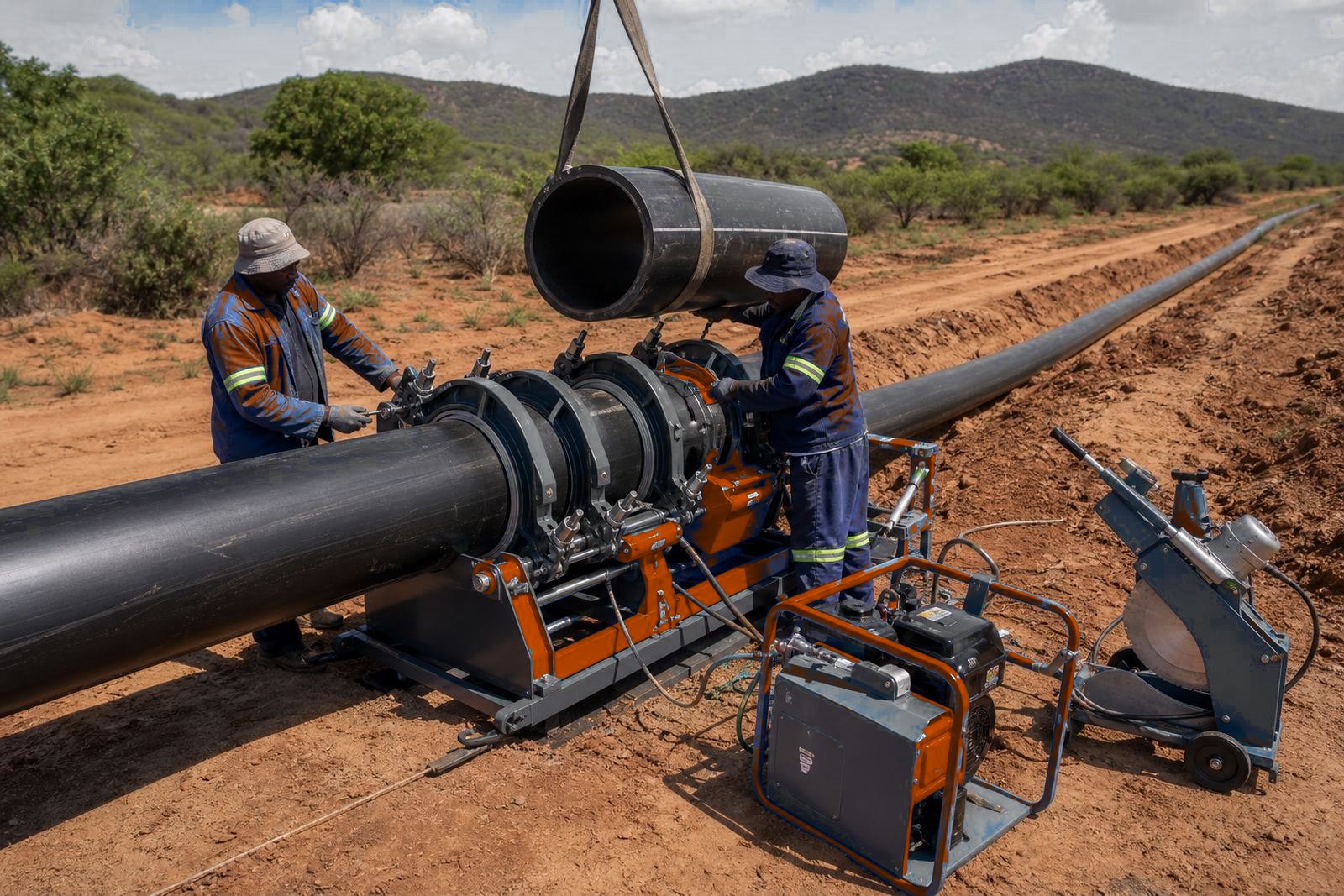
The welding plan was built around the pipe sizes that had to be handled on the ground for the job. The work included smaller branch sections and heavier main runs, so the team needed a machine setup that could handle changing diameters without slowing the flow of work. We also checked SDR, because wall thickness changes the heat soak, the bead profile and the amount of pressure needed during fusion.
We worked with the contractor on the full sequence: facing the ends square, cleaning the surfaces, heating to the correct condition, changing over without delay, then applying the fusion pressure and holding the joint through cooling time. A small slip in timing can leave a joint that looks fine at first glance and fails a closer inspection.
- Pipe work covered mixed diameters across the loop
- SDR differences were checked before each weld run
- Cooling time was allowed before the joint was moved
- Bead inspection was used as a first visual check
What we supplied for the Witbank shift
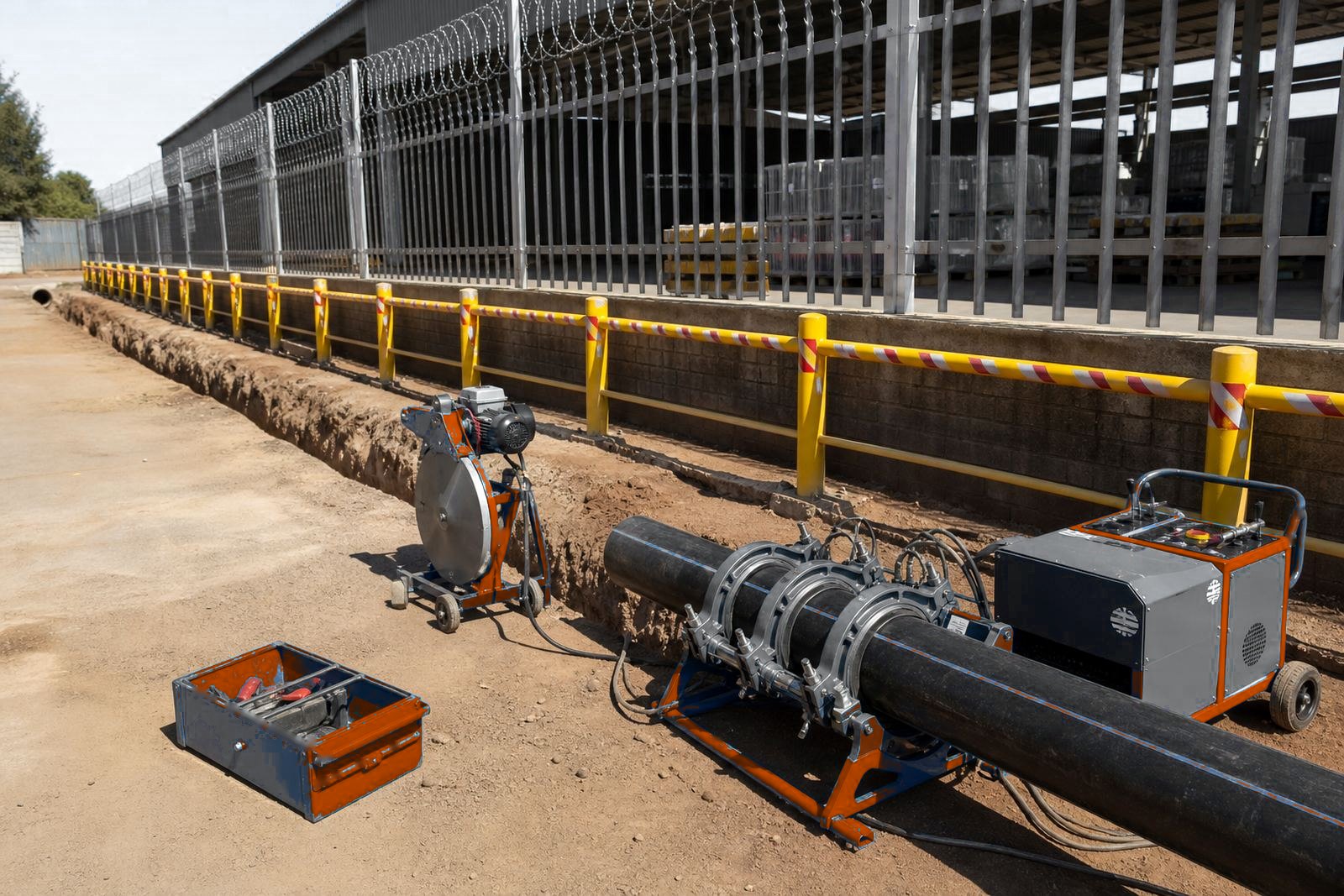
The contractor used our butt-fusion equipment hire together with practical support from our team. Witbank received a machine, facer, plate and clamps with hydraulic pressure control and logging help. The equipment was inspected before collection, so it arrived ready for site use.
The site team asked for setup guidance on clamp alignment and heater plate condition checks. Those details apply where the fire water route may change near foundations or plant items that stay live during the installation. We kept the focus on the weld itself, because each joint has to hold the fire loop's working pressure.
- Butt-fusion machine hire
- Facing tool and heater plate
- Clamp alignment support
Training around the hands that run the weld
The contractor had a mixed team on the job, with experienced pipers and a few operators who needed a firmer grip on the process. We ran operator training and refresher training around surface prep, end squareness, heat soak, changeover timing and the pressure hold used during fusion. That gave the crew a better read on what the machine was doing, and what the pipe face should look like before and after contact with the heater plate.
We also covered simple fault spotting. A bead that leans too far, flattens unevenly or looks dry at the edge often points to a problem earlier in the cycle. The team was shown how to watch for that, and how to pause the work if alignment or pressure did not feel right. In fire water piping, neat work is part of the system’s confidence.
Weeks on the ground and what had to fit around them
The project ran over several weeks, with the fusion work moving in step with civil progress and the mechanical pack-out around the loop. Some sections were welded in open ground, while others needed more care because the route tightened near existing structures. The pace was steady, which suited the material and the type of service line being built.
The machine and heater plate were serviced on a fixed schedule. A plate with dirt, scoring or uneven heat can throw a joint off before the operator realises what is happening. Facer overhaul on return suited kit worked hard in Witbank dust and sun. Witbank dust gets into the facer and hydraulic slides, so the kit was cleaned at the end of each shift.
- Project duration: several weeks
- Work pace matched civil and mechanical handover points
- Equipment checks were built into the run
- Return inspection was done before the kit went back into hire stock
Results on the fire loop
The finished sections gave the contractor a cleaner path through the tie-ins and a better record of each joint laid down on the project. The bead profile was easier to read, the clamp set-up stayed consistent and the weld log gave the site team a clearer paper trail for the loop. A fire water line may sit unused for long periods and must hold full pressure on demand.
For the next fire loop we would again check pipe prep first, keep the heater plate in order, control the changeover and record pressure and cooling. For a repeat Witbank fire loop, we would set the same checks from the first face cut to the final bead inspection.