Temporary dewatering work in Springs needed a mobile weld plan
The job sat with a civil team working on a dewatering run in Springs, where the line had to move through changing ground levels and narrow work areas. The pipework was HDPE, laid in sections that had to be joined on site with enough control over alignment, heat and pressure for a water-moving line that could be shifted as the trench moved.
The brief was practical. Springs needed a portable setup that moved between points and left a clean record for the supervisor. Access was tight in places, so the equipment had to be easy to set, level and clamp without wasting time on each joint. Hands-on guidance covered facing, heating, changeover and the right cooling period before the pipe was moved.
- Temporary dewatering pipe runs for a civil site in Springs
- Portable fusion kit suited to repeated set-down and lift-off
- Weld logging on site
What moved onto site and how the setup was used
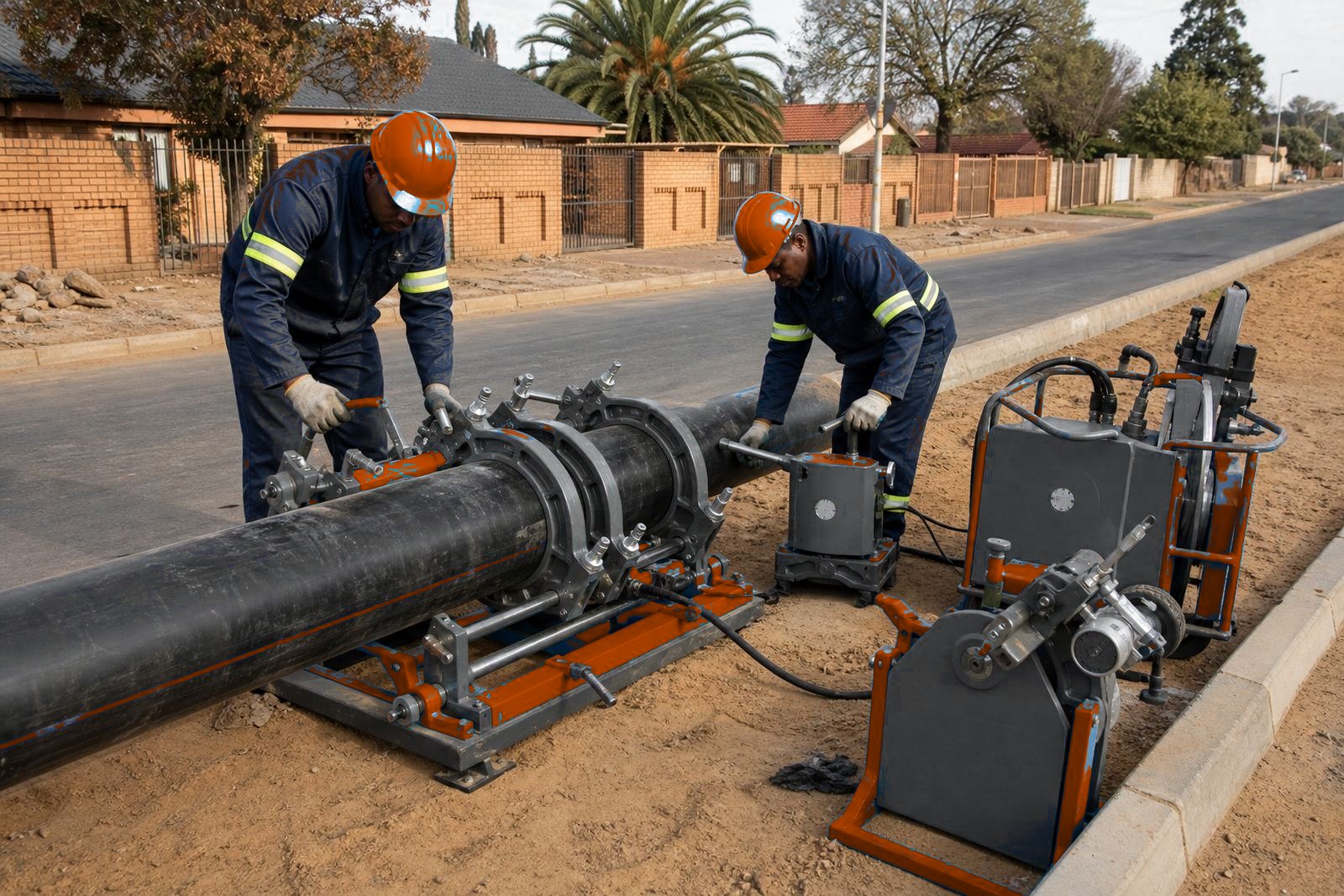
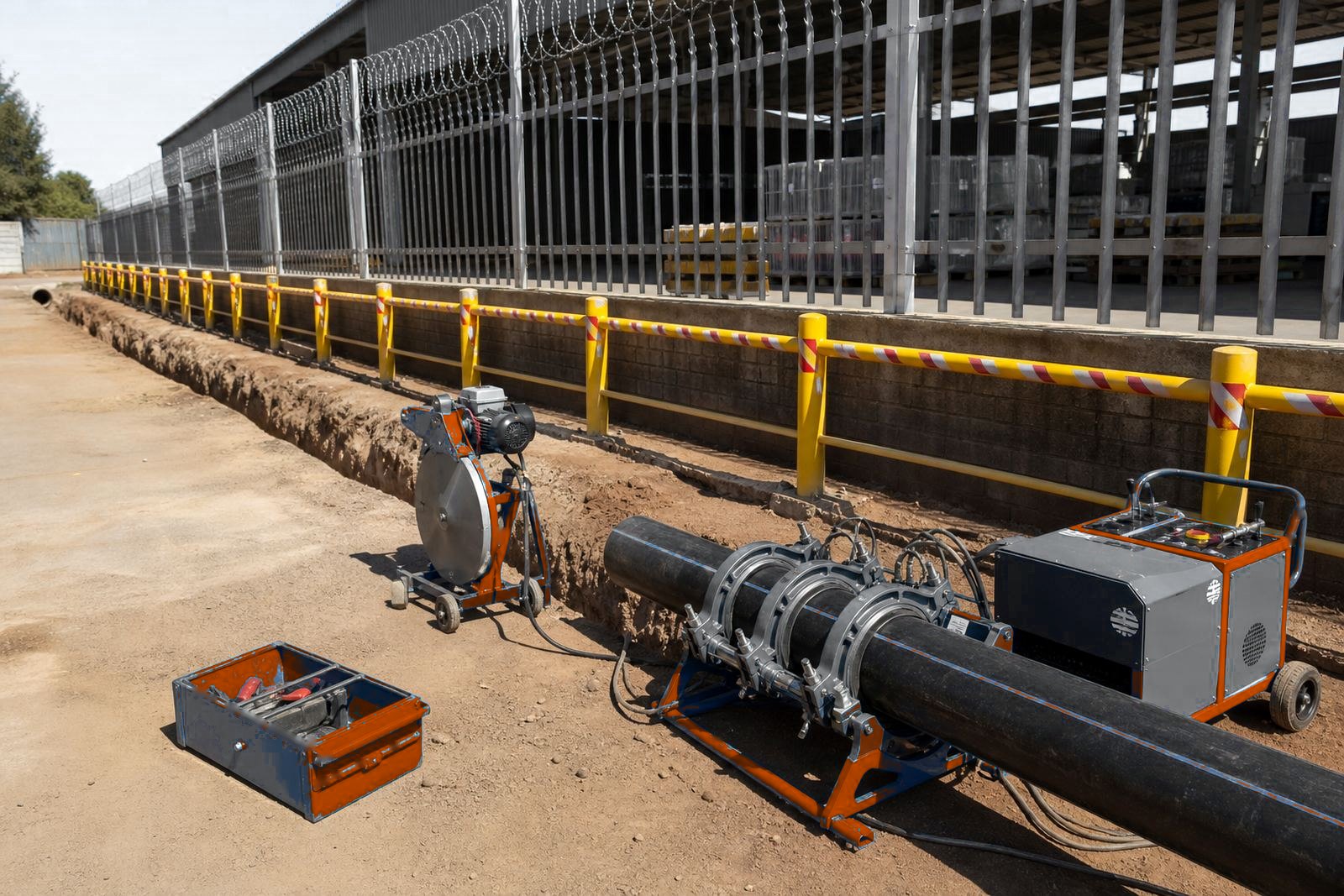
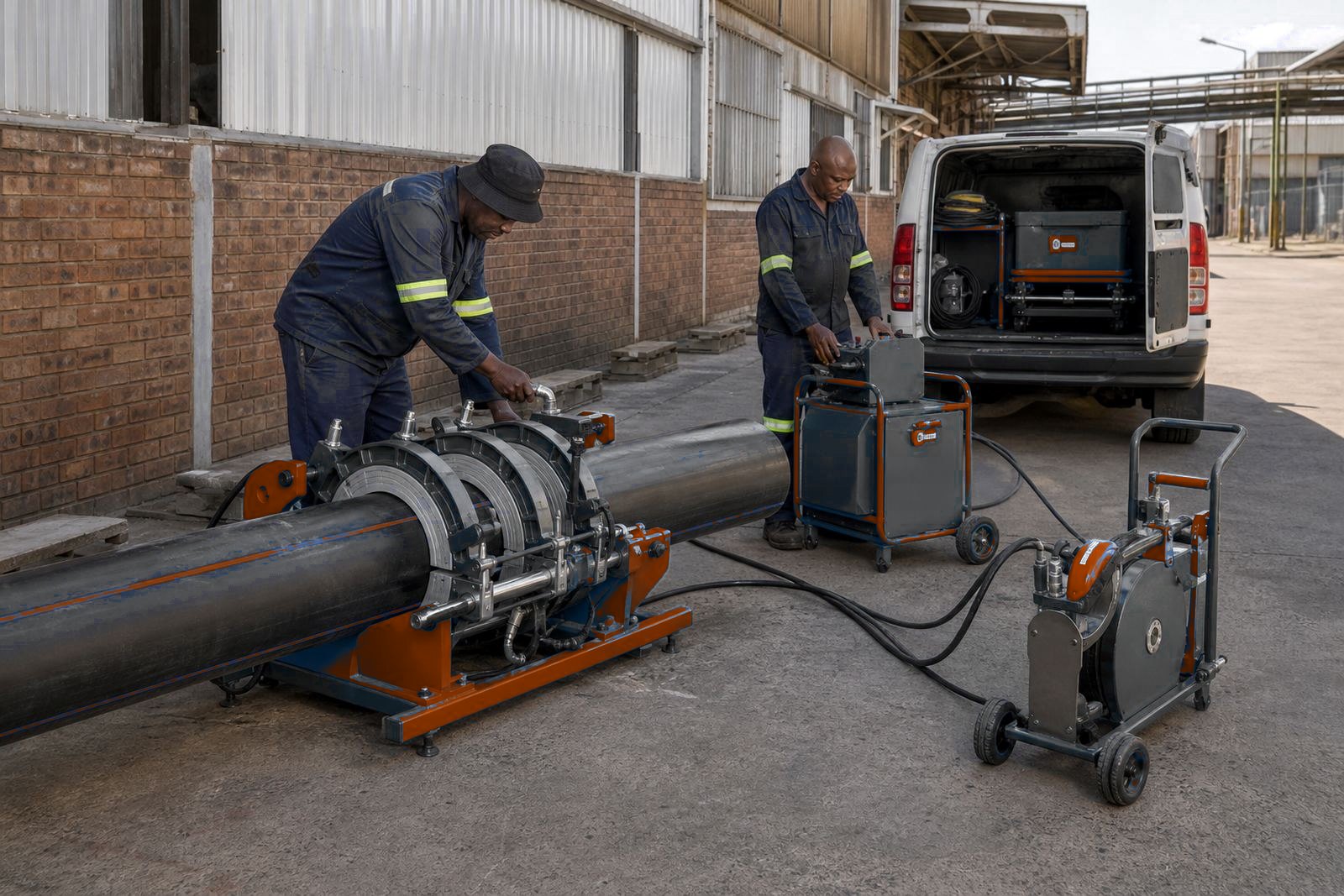
We supplied a butt-fusion machine, a facer, heater plate, clamps and the working accessories needed for a site-based HDPE jointing run. The machine was set up to suit the pipe diameter in use and the SDR range on the job, so the crew could make consistent joints without forcing the ends or overloading the clamp alignment. Where the trench edge was uneven, the setup was adjusted to keep the pipe centreline true before the first facing cut.
After the pipe ends were cleaned and clamped, the facer removed the oxidised skin and left a flat mating surface. Heating followed with the plate at the working temperature, then the pipe ends were brought together after the changeover. Fusion pressure was set from the weld table and held steady. Each joint was left undisturbed for its full cooling time before handling.
- Facing to remove contamination and out-of-square pipe ends
- Controlled heating and a timed changeover
- Fusion pressure held steady through the cooling period
Training on the working trench
The site team already knew the basics of pipe handling, but they needed the weld process tightened up for repeat work on a temporary line. Operator training covered the practical steps around clamping, facing, checking plate condition and reading the bead after each weld. Springs staff learned what to log for each joint, from pipe size to cooling time. Lines built in stages, with crews changing shift or position, rely on a record like this.
Refresher training corrected rushed changeovers and lifting the pipe before the joint had set. The team worked through bead shape, squeeze-out and alignment checks, with attention to the look of the weld after release. Bead shape was checked on each joint for signs of heat or pressure problems.
- Operator Training for the welding sequence and site checks
- Weld logging help for pipe data and joint traceability
Three weeks on the ground from setup to handover
We carried out the job in stages over a three week period. The first week covered equipment selection, transport to site and the initial setup around the dewatering alignment. The second week focused on production welding, with our team assisting on the weld cycle, checking the machine setup and sorting the plate and clamp positions as the line advanced. By the third week, the emphasis moved to servicing checks and making sure the crew could carry on with the remaining joints using the same method.
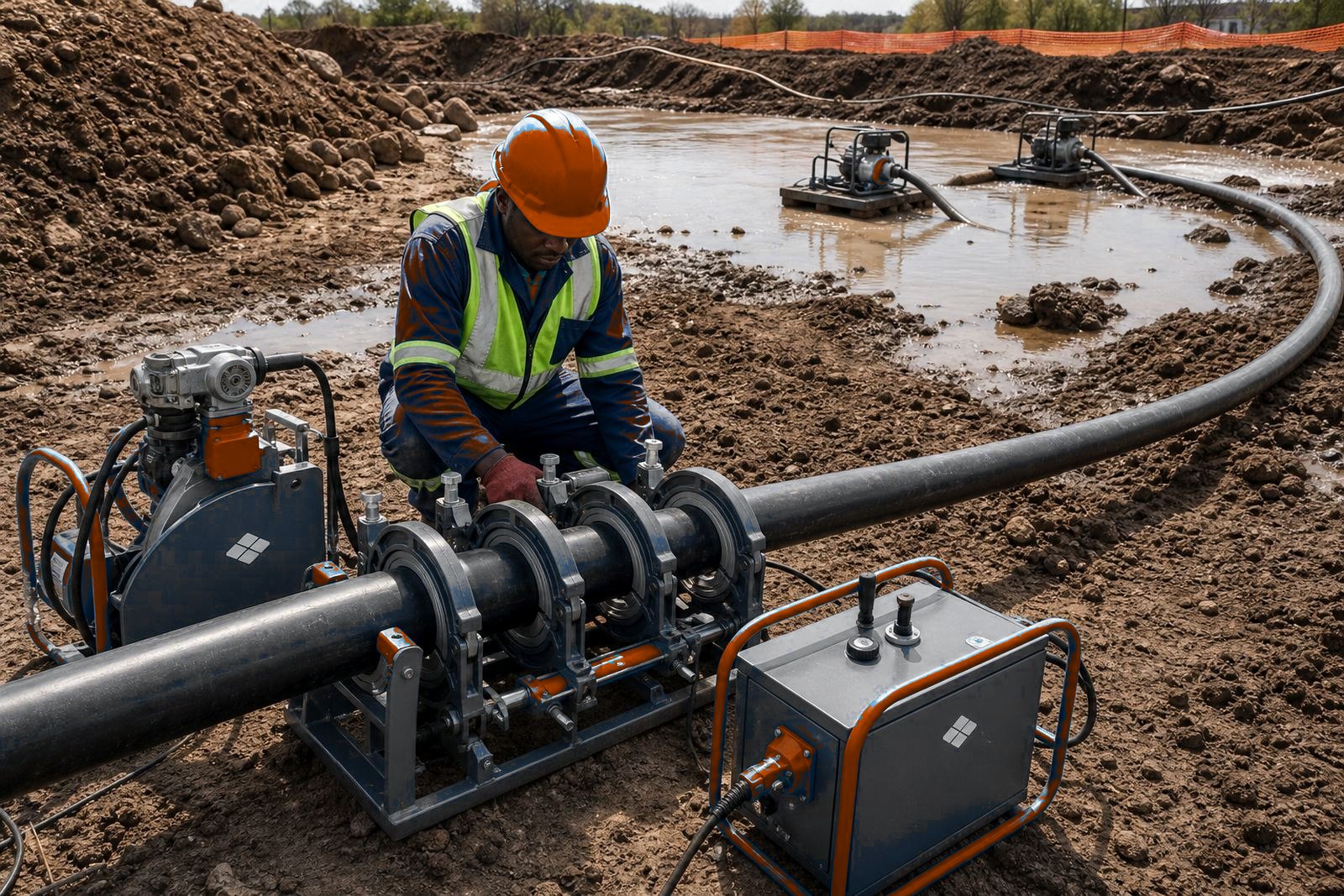
There were a few weather and ground movement interruptions, which is normal on a site like this. Wet edges and uneven bedding can shift pipe ends just enough to affect the facing cut, so the setup had to be reset more than once. That kept the welds cleaner and reduced the need to cut out joints later. The supervisor also wanted the machine kept in good order during the run, so the heater plate, hydraulics and clamps were checked before the next shift started.
- Week 1: delivery, setup and pipe size matching
- Week 2: active welding support and logging
- Week 3: inspection, servicing checks and close-out
The joints that held up the inspection walk
By the end of the job, the dewatering line was joining consistently and the crew had a clearer rhythm for each weld. The bead profile became more even, the pipe ends stayed better aligned and the weld log was easier to complete without missing details. The supervisor could also trace which joints were made under which settings, which helps when the line is extended or a section has to be lifted and altered later.
From an operations point of view, the portable setup suited a site that was never standing still. The machine could be shifted, reset and put back to work on site. On a dewatering job the pipe route can change after excavation, and the welding crew has to keep pace with the trench. The setup kept pace with the trench through the job.
Choices we would carry over to the next dewatering run
The same approach would suit another temporary pipe run in Springs or elsewhere in Gauteng: match the pipe size and SDR first, keep the facing clean, and give the changeover no extra delay. On a similar job, the log sheet would stay beside the pipe stack so details are written down straight after each joint.
For a wet, moving site, plan a small buffer of time for clamp resets and plate checks. The buffer covers rework when the trench edge shifts or the alignment changes by a few millimetres. Give each joint its full facing, heating, changeover and cooling time, even when other trades are waiting.
- Keep the facer and heater plate in steady working order
- Log each joint while the weld details are still at hand
Key facts
| Project | Springs dewatering job |
|---|---|
| Location | Springs, Gauteng |
| Pipe system | HDPE dewatering line |
| Equipment | Butt-fusion machine, facer, heater plate and clamps |
| Pipe range | Site-matched to the line in use, with SDR set for the job |