Cooling line work in a tight industrial yard
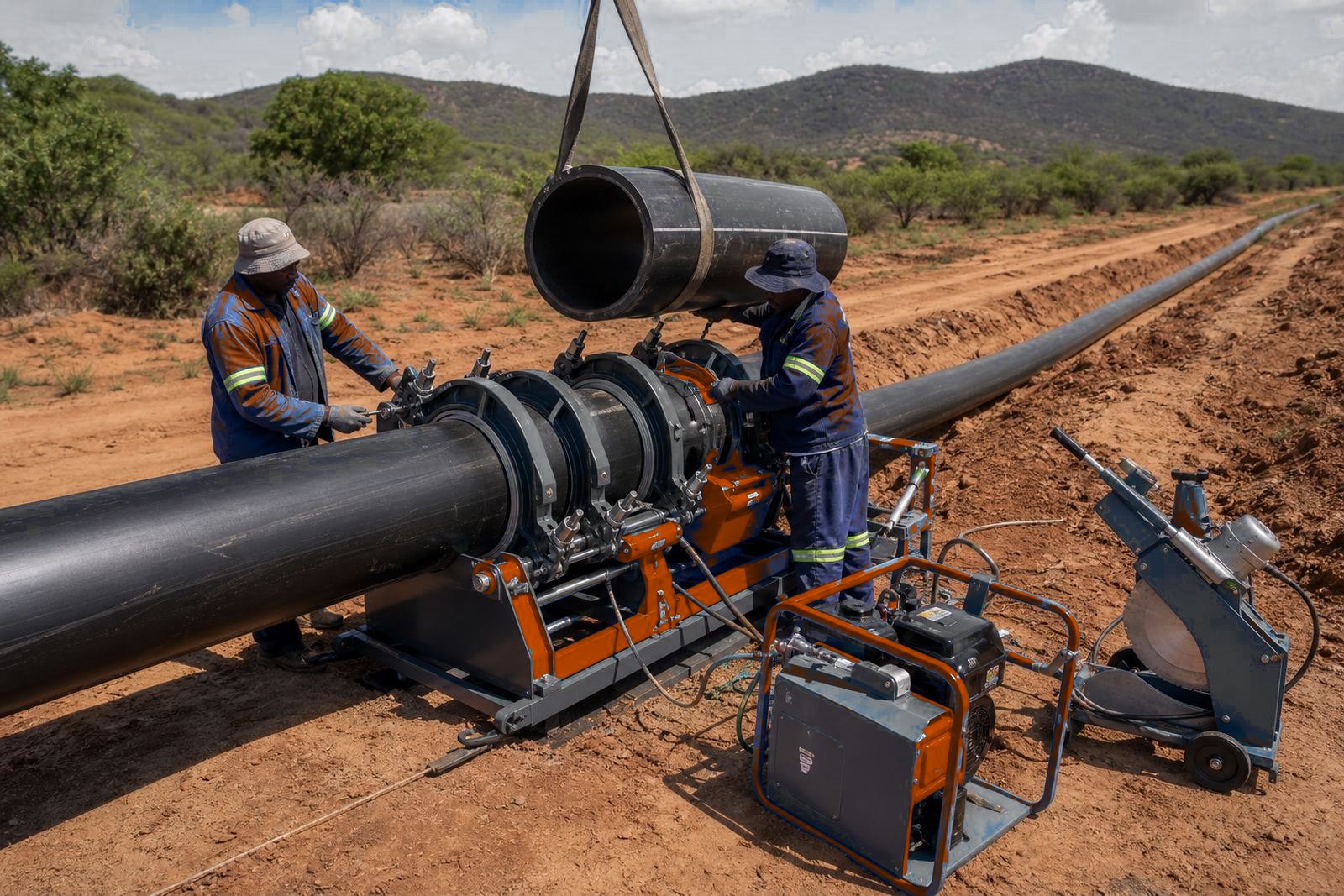
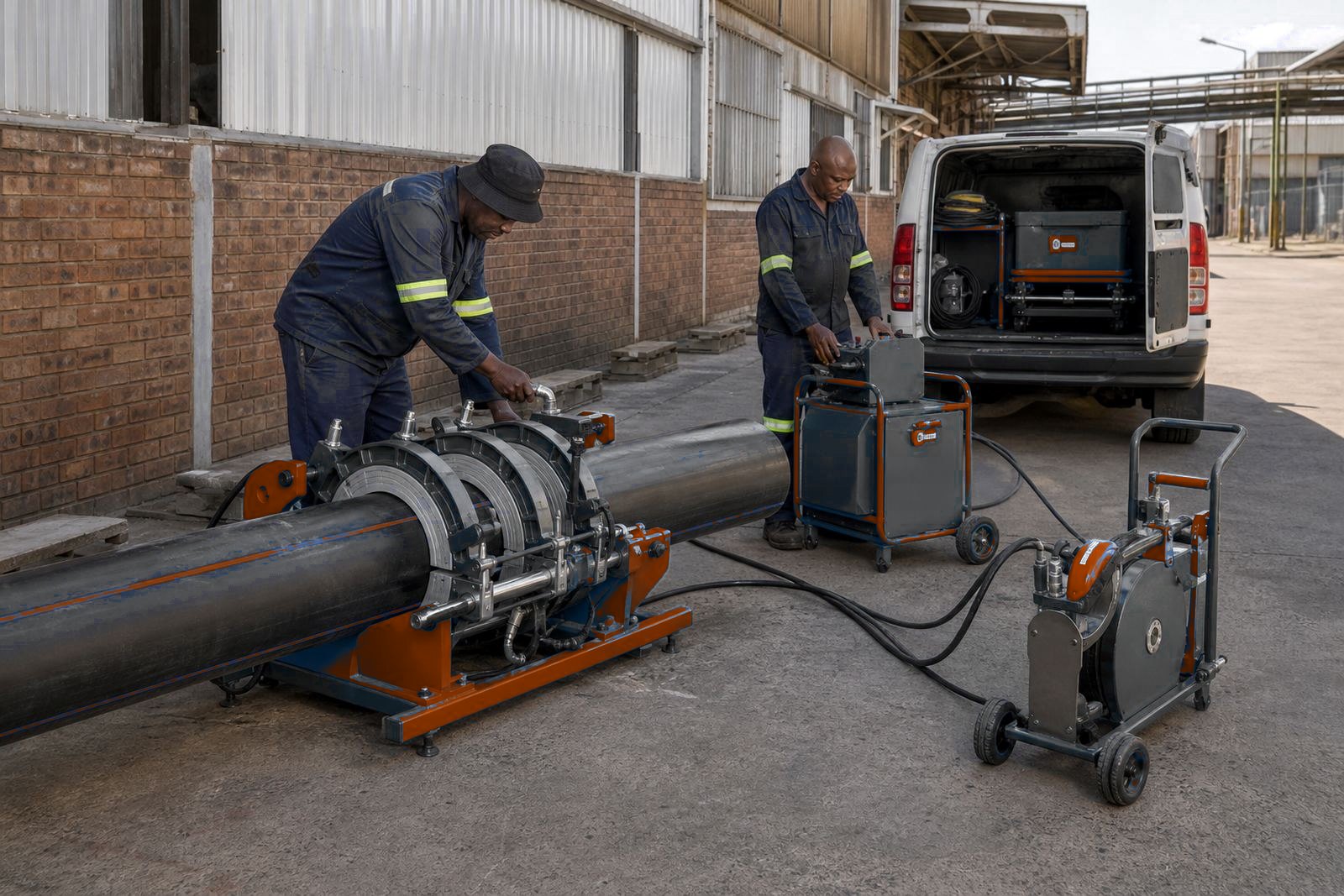
The brief came from a contractor handling cooling water line upgrades at an industrial site in Pinetown. The pipework had to be lifted into position, fused on site and put back into service with neat joints and a clean record of each weld. Access was tight, so the crew needed machines that could be moved between work areas without wasting time on setup.
The line runs were part of a larger water circuit feeding cooling duties, so the team had to control alignment, heating, changeover and pressure with care. The pipe sizes varied across the run and the wall classes had to be matched correctly before any fusion started. In the humid coastal air, pipe ends and heater surfaces were wiped dry before each weld.
- Town: Pinetown, KwaZulu-Natal
- Work: cooling water line upgrade
- Method: butt-fusion joining of HDPE pipe
The welding sequence the crew had to hold
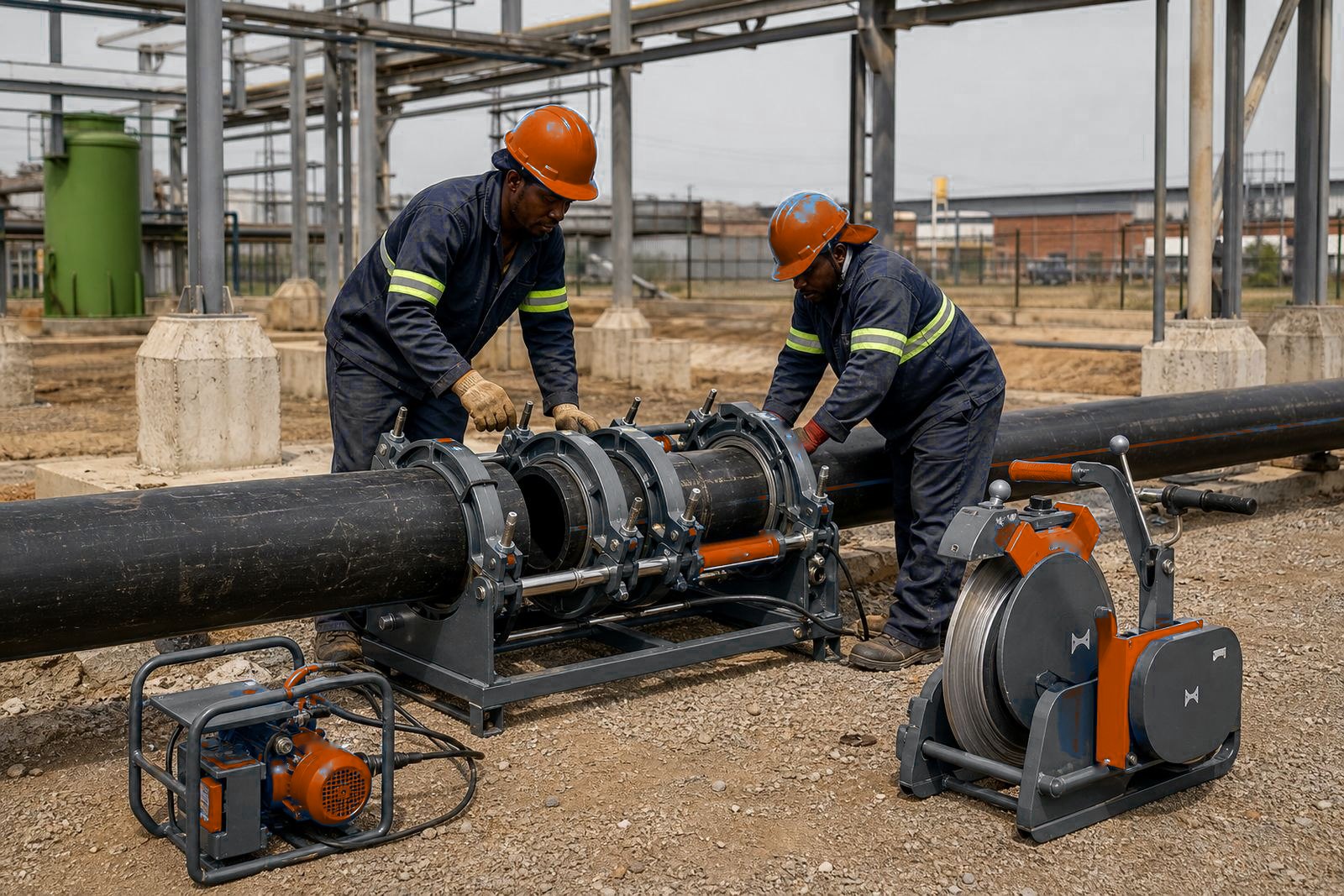
After changeover the ends were brought together under fusion pressure and held still for the cooling time. The operator timed each stage on the clock.
We set out the weld procedure around SDR matching, pipe diameter and wall thickness. Pinetown operators also learned to read bead formation for heat balance and pressure. For this project the crew kept weld logs as they worked, which made it easier to track settings and joint numbers across the line.
- Facing was checked before every heat cycle
- Fusion pressure was held steady through the joint
- Cooling time was kept long enough to protect progress
- Bead inspection formed part of the handover record
What we supplied for the upgrade
A hydraulic pressure test unit was included for weld control checks, and data logging support was used where the contractor wanted a clearer record of the fusion settings. The hire fleet was prepared with the right jaws and inserts so the crew could move from one pipe size to the next without improvised shims.
Operator training was built around the actual job on site. That meant the welders, foreman and plant staff could see the face, heat, changeover and cooling stages on the same equipment they would use on the line. The training also covered joint cleanliness, clamping, machine alignment and the look of a sound bead on a finished weld.
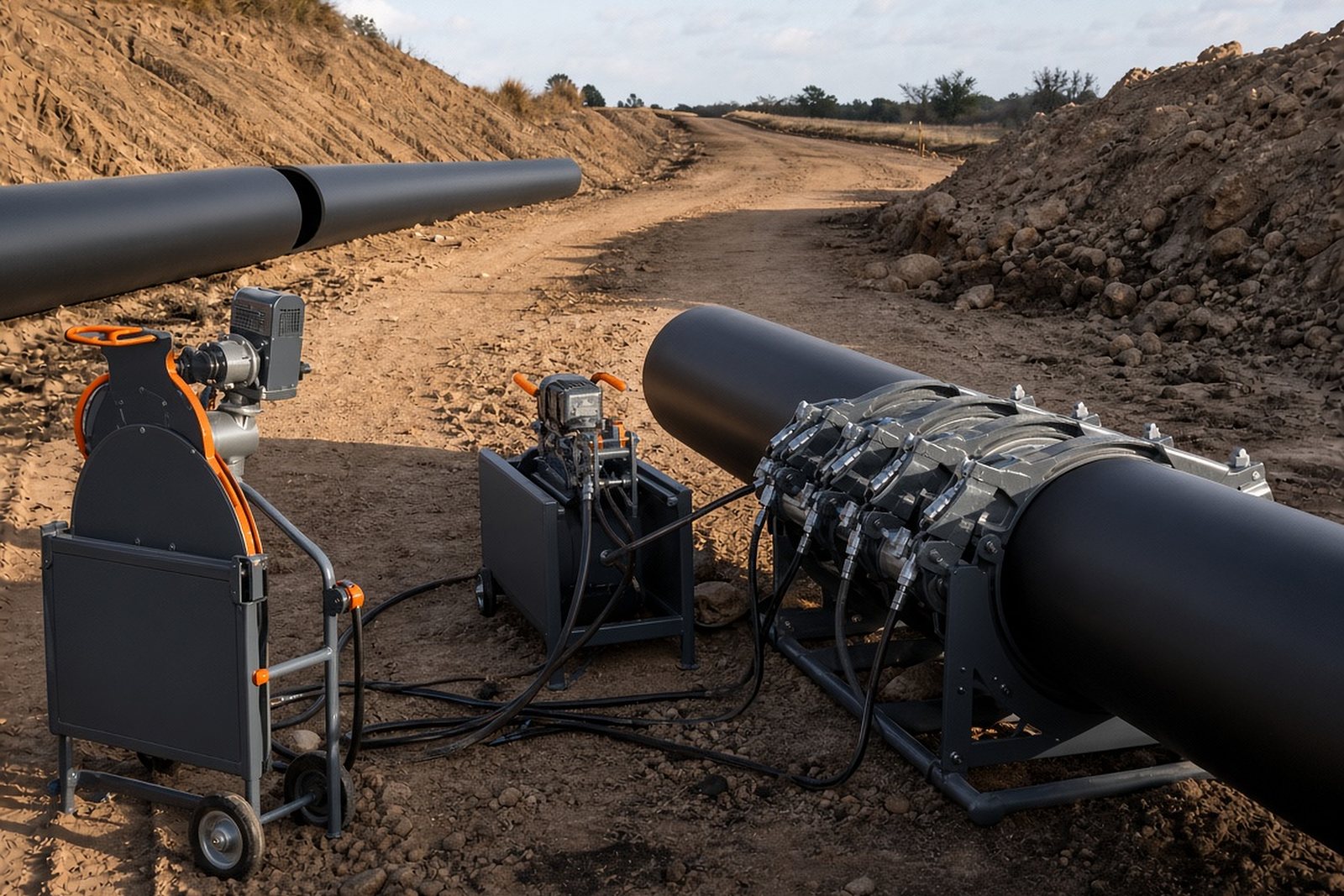
- Butt-fusion machines for HDPE pipe
- Facing tools and heater plates
- Clamp sets for the pipe sizes on site
- Weld logging and pressure test support
Week-by-week shape of the work
The Pinetown upgrade ran over three weeks. Pinetown began with set-up, size matching and operator familiarisation. During that stage we checked clamp alignment and heater condition, then walked through the weld sequence with the crew so each person knew where the hold points sat. Cooling line branches and straight runs took most of the middle Pinetown week.
By the third week the team was on the finishing welds, inspection passes and log checks. A few joints needed extra attention where the line layout forced awkward handling, but that is normal on live industrial sites with limited working space. The fusion process stayed controlled, and the contractor kept the line upgrade on programme.
- Week 1: machine set-up and operator training
- Week 2: primary fusion work on the line
- Week 3: finishing welds, inspection and log review
What the contractor gained from the setup
The main result was a cleaner fusion workflow on the cooling water line. Tools matched to the pipe range cut the stop-start handling that damages faces. Weld logs helped keep track of settings, while bead inspection gave the site team a practical way to check each joint before the line moved on.
Because the equipment was matched to the job, the contractor could work with more confidence on the hardest line sections. The machine setup, pressure control and cooling times all showed in the finished joints. For a cooling system, a line that looks tidy at the joint also has to hold its shape and stay dependable once service starts.
- Better control over joint preparation
- Clearer weld records for site handover
- Less disruption when changing pipe sizes
- Cleaner bead formation across the run
What we'd repeat on a similar line in Pinetown
We would keep the same order of work, starting with pipe matching, clamp setup and a short field run-through before the first production weld. We would also keep the weld log at the machine, so each joint is recorded as it is made.
For a cooling line in Pinetown or any other coastal industrial area, we would also keep a spare heater plate, extra facing blades and a checked set of clamps on hand. Those parts cover changes in pipe size or site layout. The work is better when the gear is ready and the crew knows the fusion sequence well enough to keep the line moving.
- Keep matching and alignment checks at the front of the job
- Use weld logs as part of the live site routine
Key facts
| Project | Pinetown cooling water line upgrade |
|---|---|
| Location | Pinetown, KwaZulu-Natal |
| Equipment supplied | Butt-fusion HDPE pipe welding machines, facing tools, heater plates, clamps |
| Pipe range | Mixed HDPE pipe sizes matched to site sections |
| Process controls | Facing, heating, changeover, fusion pressure, cooling time |
| Duration | 3 weeks |