Mine water work with long pipe runs and tight alignment
A mining team working on water services near Rustenburg brought us in, with work across yards and service routes. The job called for butt-fusion support on HDPE pipe in a mix of diameters, with the crew needing practical help on set-up, joint consistency and the record keeping that sits behind a serious weld sheet.
Mine water systems need square face cuts and a timed changeover. The team asked for help on every step of the weld, from clamping and facing to fusion pressure and cool-down. We also worked around site traffic, dust and weather that changed the pipe surface during the day.
- Area: Rustenburg and surrounding mine service routes
- Client: Rustenburg contractor on long HDPE runs
- Pipe material: HDPE in 250mm to 315mm sizes
The equipment mix and the pipe sizes on site
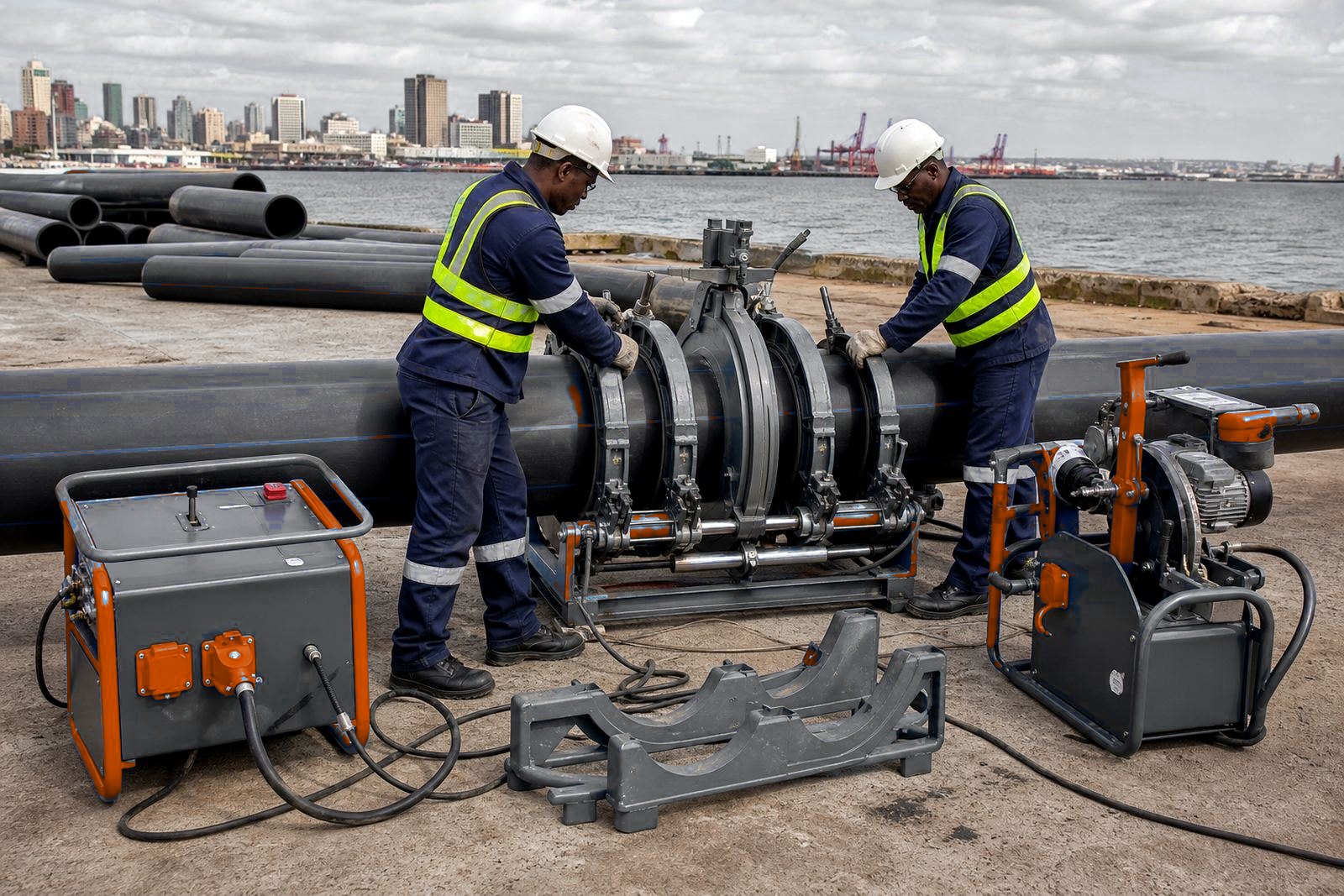
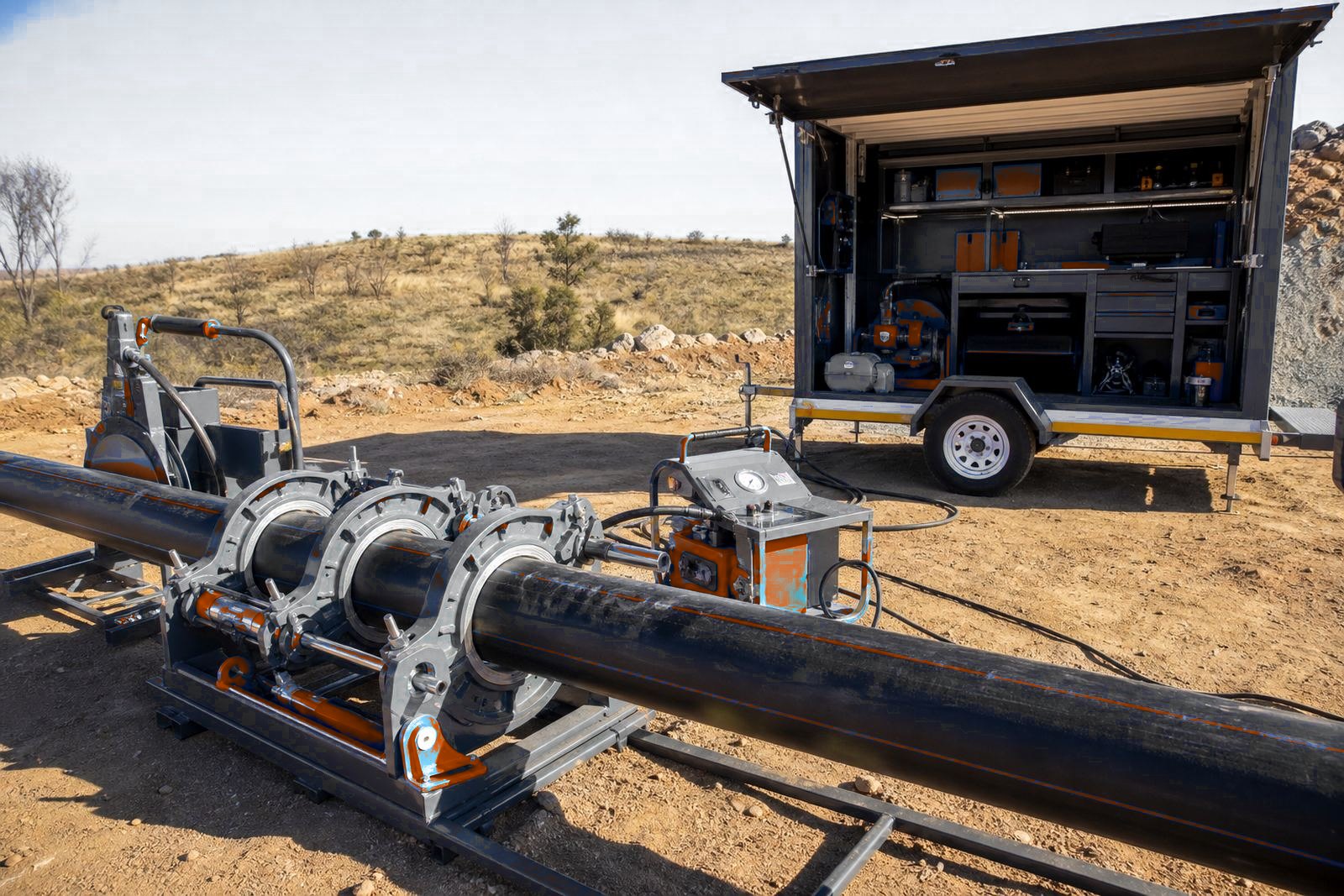
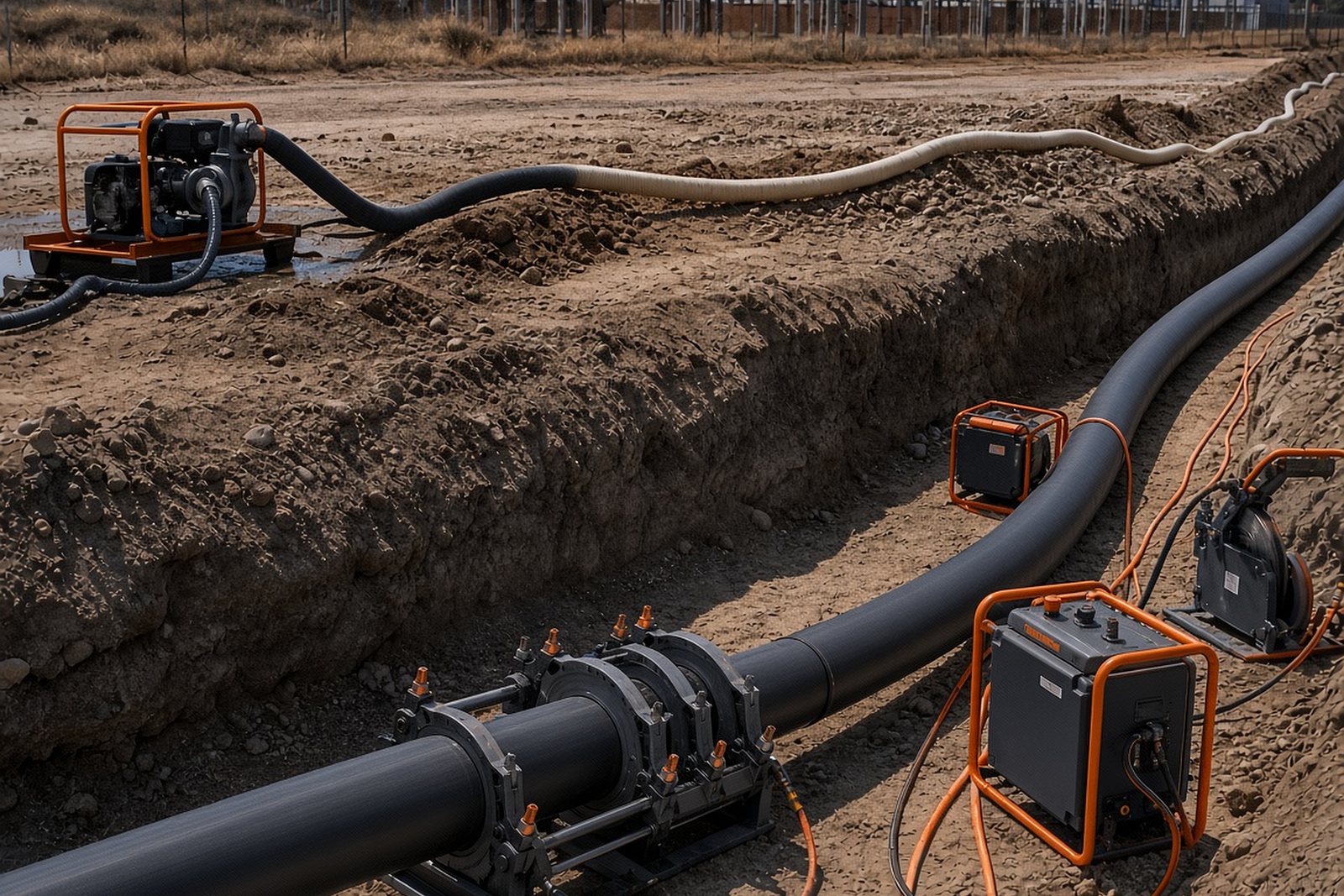
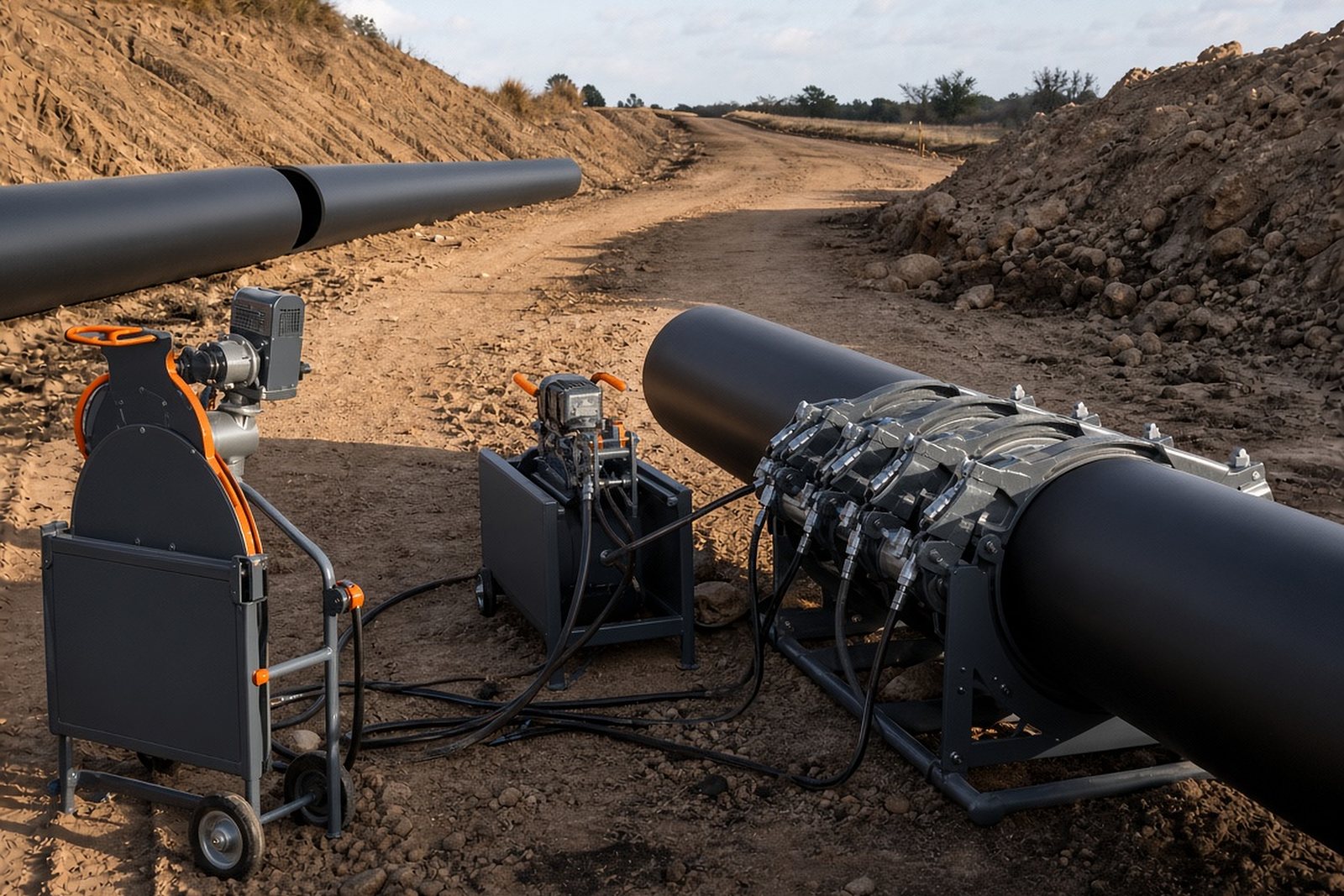
We supplied a hydraulic butt-fusion machine set with facing tool, heater plate and clamp set, chosen for the pipe sizes in use on the job. The work involved standard HDPE welding steps, with the crew needing steady clamp pressure, a clean facing cut and a heater plate that held an even surface temperature across the whole contact area. On a run like this, the machine has to keep the pipe ends square and hold the right heat.
For the line sizes on this project, the crew worked across medium and larger diameters suited to mine water transfer. SDR selection was checked because wall thickness changes the heating period, the force required during fusion and the cooling time before movement can be allowed. Visual bead checks were added to the crew notes.
- Hydraulic fusion machine for HDPE butt-fusion
- Clamp set for alignment and pressure control
How the weld sequence was handled on the ground
We worked through the weld sequence in the same order the line would be used in service. First came inspection of the pipe ends and a check that the clamps held the pipes without twist. Facing followed, until the full face showed a clean, even shave and no low spots were left behind. Timed changeovers kept the molten faces within the open time on the mine lines.
After that, fusion pressure was applied and held under control while the bead formed. Each joint stayed clamped until its chart time had run. If the joint moves too early, the bead shape changes and the line can carry weakness right through the joint. Every Rustenburg weld closed out with a bead check for symmetry, finish and contamination.
- Pipe ends were checked before clamping
- Facing removed surface irregularities and saw marks
- Heater plate contact was kept even across the diameter
- Changeover was done with the joint line protected
Training notes for the operators on the shift
The operator group on site had mixed experience, so training was split into working sections at the pipe. Ayanda covered pipe preparation and the weld sequence, then heater timing, clamp alignment and reading the bead after cool-down. Riaan handled machine set-up and job flow, while Thabo dealt with the field checks that keep a fusion machine ready for the next run.
The team also worked through weld logging help. We recorded pipe size, SDR, heater setting, fusion pressure and cooling time for each joint, so a mine line can be traced later for maintenance or fault finding. A proper log also shows when a joint was made under rain, dust or awkward site conditions, which helps the maintenance crew later on.
- Operator training covered live set-up steps
- Bead inspection was shown on cooled joints
Hire prep and the checks that kept the job moving
The machine was prepared through the hire fleet process, then checked for pressure stability and general working condition before it went out. Leanne handled the hire counter process, while a hydraulic pressure test confirmed the set was tight and predictable. For a mine water job, a loose clamp or uneven facer cut is enough to waste a whole string of pipe sections.
Service work on this project also covered a facer overhaul. Check those items first, because a plate with uneven heat or a cutter that drags throws the weld out of balance. The machine was serviced so it could run every shift.
Two weeks on site and the close-out result
Over two weeks, the first went on set-up, training and initial welds, and the second on support for the run that followed. Time on the machine let the crew correct handling and tighten the sequence on critical joints. The result was a cleaner fusion routine, better logging and less debate at the end of each shift about how a joint was made.
What stood out was the way the crew started to treat each step as part of one controlled process. Pipe faced cleanly, heater time was kept steady, and the bead finish became more uniform. For mine water lines near Rustenburg, that sort of control is what helps a maintenance team trust the joint later when the pipe is buried, buried again or pulled through a tight section.
Key facts
| Project | Rustenburg Mine Services |
|---|---|
| Region | Rustenburg, North West |
| Support type | Hydraulic fusion machine support |
| Pipe material | HDPE |
| Pipe sizes | 160 to 315 mm |
| Work period | 2 weeks |