Process water work outside the plant fence
A contractor on process water lines near Phalaborwa needed pipe runs kept true across uneven ground and dusty laydown areas. The brief was practical: get the butt-fusion kit ready for HDPE pipe work, reduce stoppages around the jointing crew and make sure the equipment matched the pipe sizes and SDRs on the day.
The pipe programme moved through sections that needed careful handling at the joints. On HDPE, the face cut has to be even, the heater plate needs a clean surface and the changeover has to happen without dragging the softened ends. After that, fusion pressure and cooling time are held to the table, because a rushed clamp release can spoil a good joint.
- Client type: process water contractor
- Town: Phalaborwa
- Work type: HDPE butt-fusion support for process water lines
- Core concern: alignment, joint consistency and usable field equipment
What the crew needed on the day
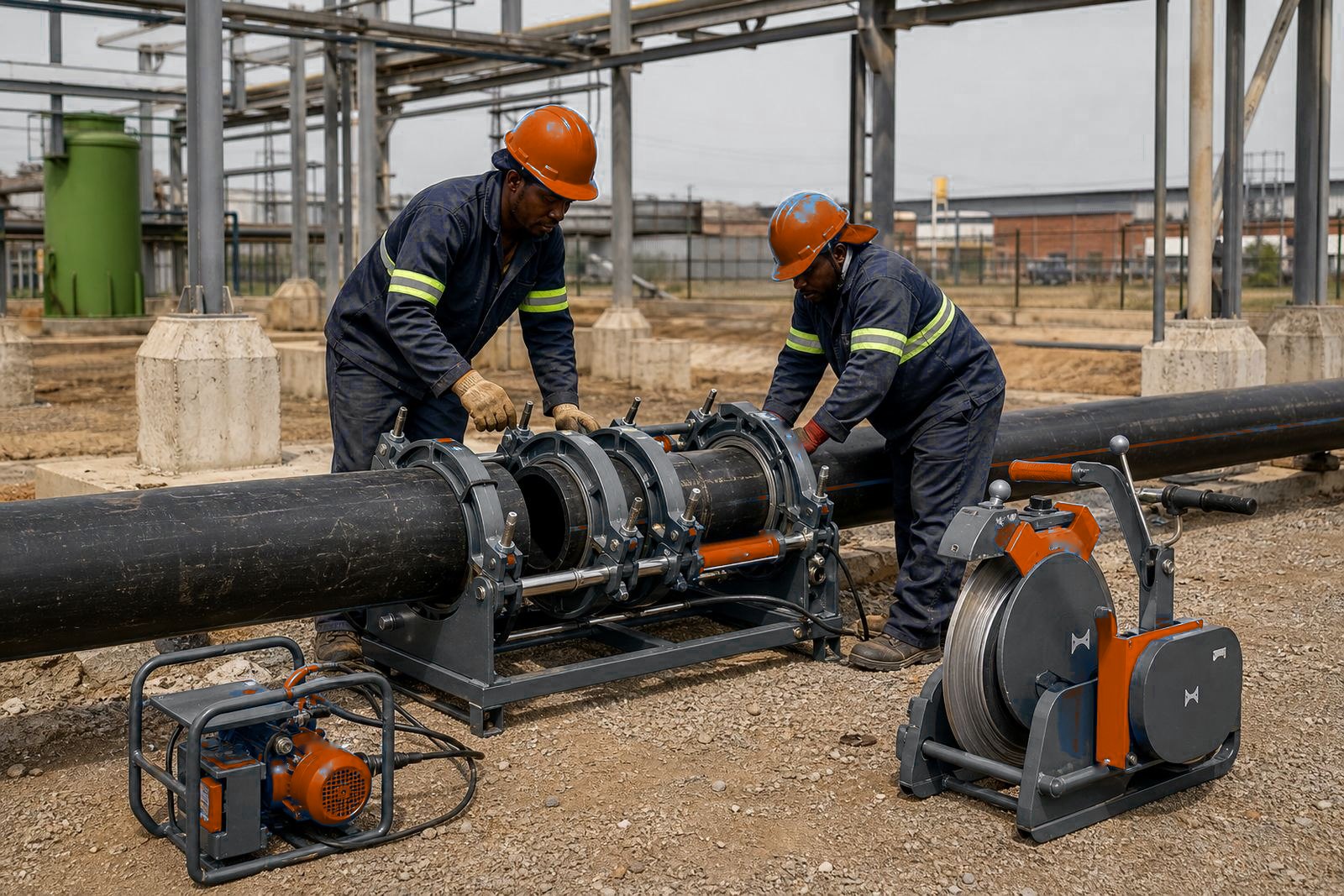
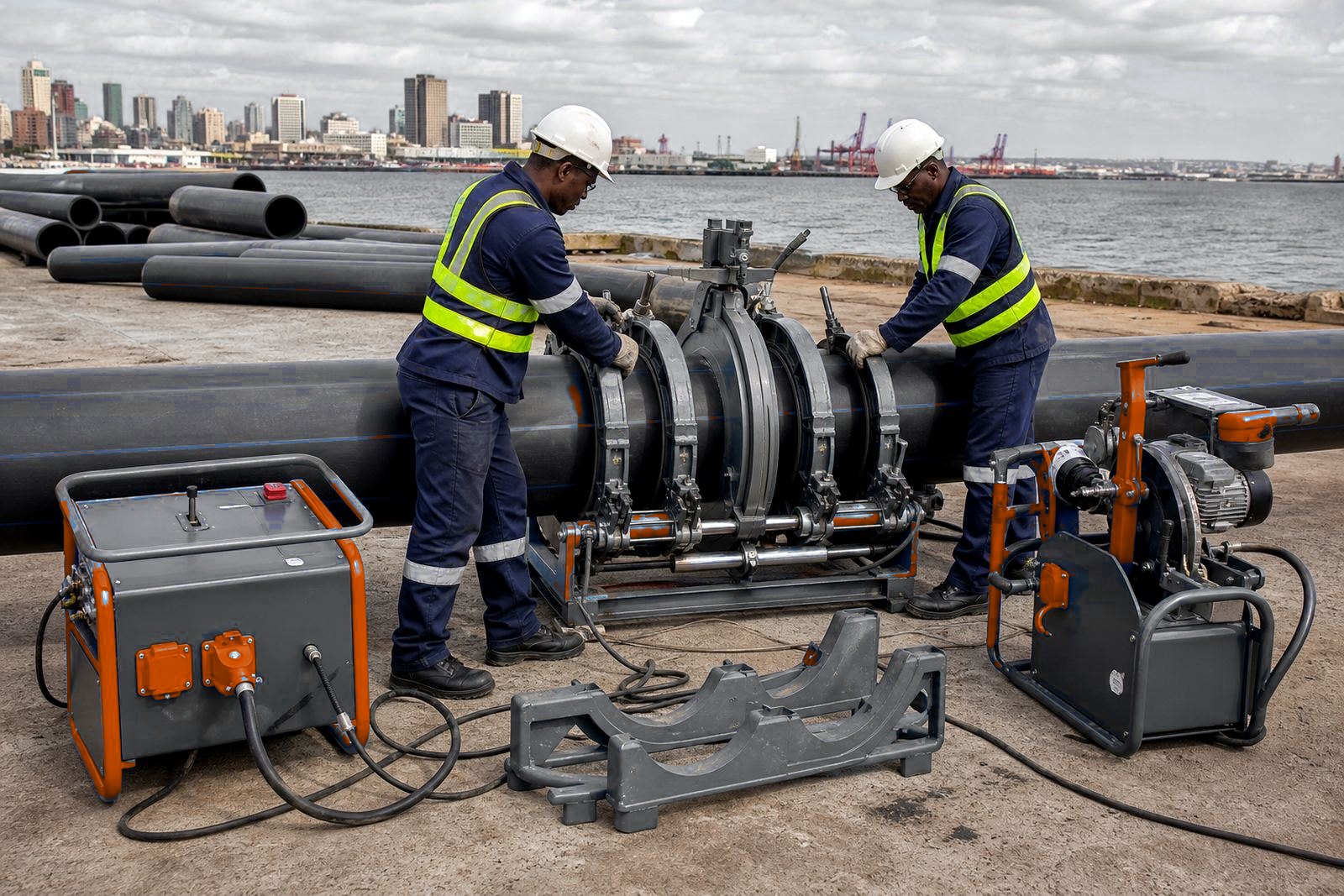
Before the welds started, we carried out servicing on the fusion set and checked the parts that usually cause trouble first. The facer was inspected for cut quality, the heater plate for surface condition and temperature control, and the clamps for wear, parallel hold and grip. Hydraulic readings at Phalaborwa were checked for steadiness under load.
For a project like this, the machine has to switch on and run, hold pipe ends square, produce a flat facing cut and keep the heating cycle repeatable from joint to joint. If one clamp pulls slightly out of line, the bead is uneven and the setup has to be corrected.
Field support through the weld cycle
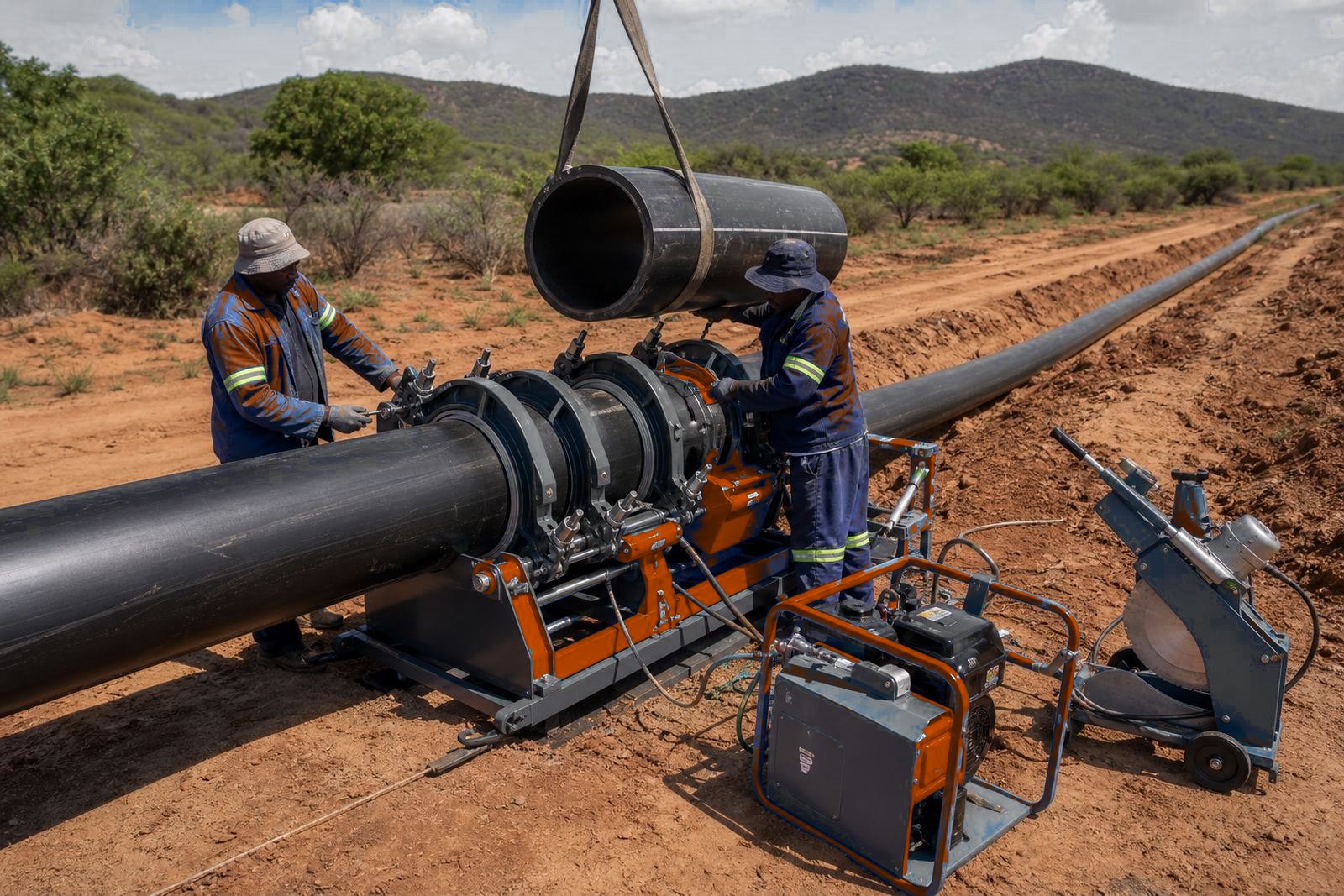
Our support on site focused on the actual weld cycle and the machine in the corner. The team worked through facing, cleaning, heating, changeover and the hold period, then watched the bead formation once pressure was applied and the joint cooled. Check bead appearance on every joint, especially when the pipe is under process water duty and the line will be buried or tied into a longer run.
Field training covered keeping the heater plate free from dirt, protecting pipe ends from grit and checking that the pressure gauge or logging device reflected the real cycle. Each of those checks keeps grit and false pressure readings out of the joint.
- Operator training on site
- Bead inspection after cooling
Three weeks on the ground, with the job moving in stages
The work was handled over three weeks. Machine servicing and equipment preparation came first at Phalaborwa. In the second week, the crew moved into active welding support and records, with our team staying close to the machine setup as the pipe sequence changed. Follow-up checks, clamp review and collection inspection closed the Phalaborwa job.
That kind of schedule suits process water jobs where the pipe run shifts between preparation and jointing. You do not want a machine that only behaves during bench testing. You want one that keeps its line on the pad, under dust, heat and the usual pressure that comes with a live civil site.
- Week 1: machine servicing on site
- Week 2: fusion support on the process line
- Week 3: final joint checks before the machines left site
What held up well after the joints were made
The result was a cleaner welding rhythm and a more consistent set of records for the supervisor. The operator team worked with clearer pressure settings and a steadier changeover sequence, which helped the bead look more even across the line. The equipment was checked before delivery, so the crew could weld without stopping to test the machine.
For process water work, the outcome comes from the first weld, how the machine behaved through the full shift, whether the heater stayed steady and whether the clamps kept alignment when the pipe was loaded. The operators were trained on the same unit before the job.
- Cleaner joint control across the run
- Better record keeping for each weld
- More stable alignment through the cycle
- Less stop-start work around the fusion set
What we’d keep on a similar job
For a comparable job, we would check machine condition and the pipe schedule before any welding. Before production begins, we check the facing cut, confirm the heater plate condition, set the clamps for the pipe size and agree the weld log format.
We keep a close eye on bead inspection and cooling time, especially where the pipe wall changes from one section to the next. Consistent pressure and full cooling let the Phalaborwa line move on without rework.
- Pre-start machine check
- Keep weld logging simple and complete
- Respect cooling time before release
Key facts
| Project | Phalaborwa process water line support |
|---|---|
| Client type | Process water contractor |
| Location | Phalaborwa, Limpopo |
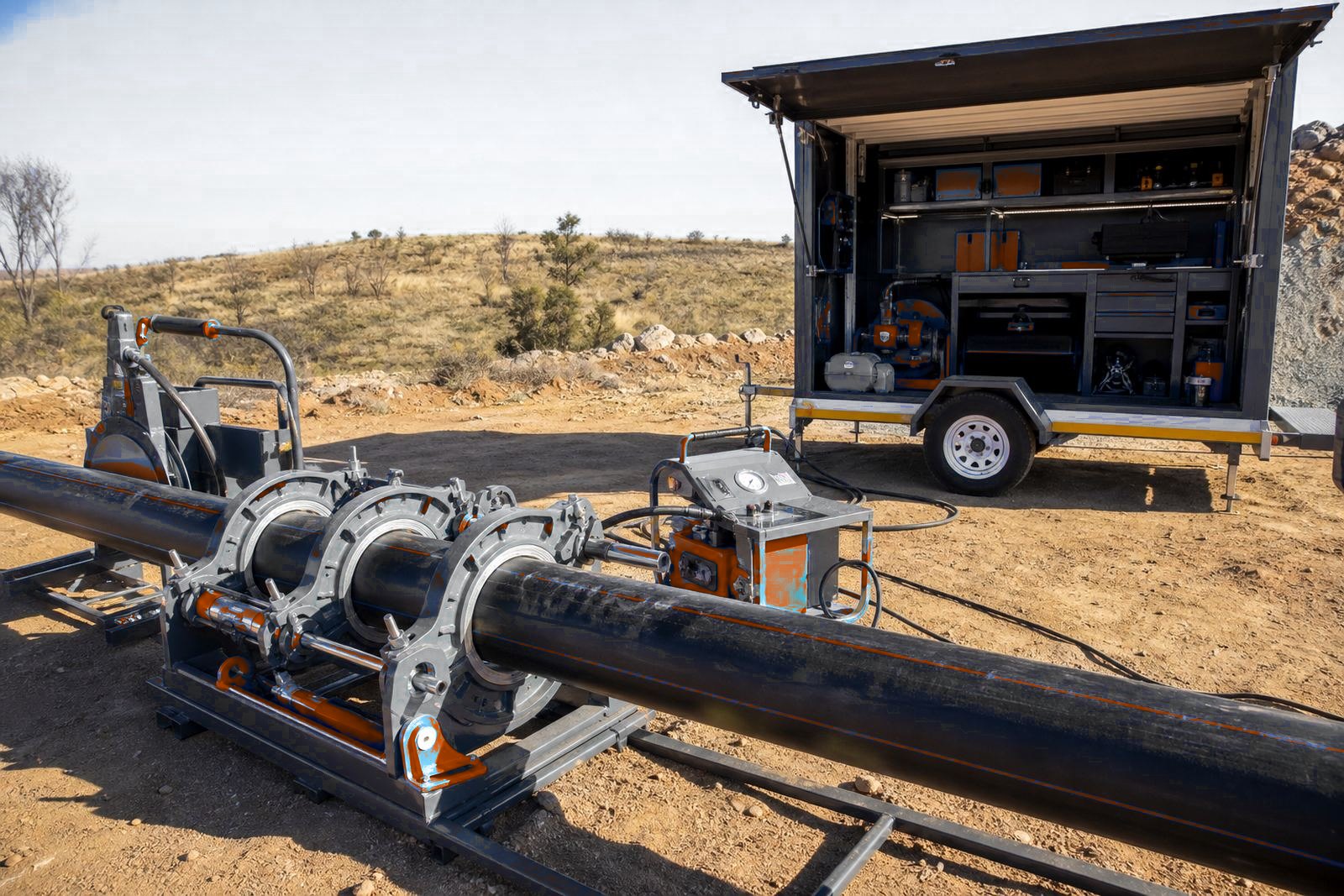
| Equipment | Butt-fusion HDPE pipe welding machine, facer, heater plate, clamps |
| Timeline | 3 weeks on site, from machine servicing to final joint checks |