Port-side drainage work needed steadier weld control
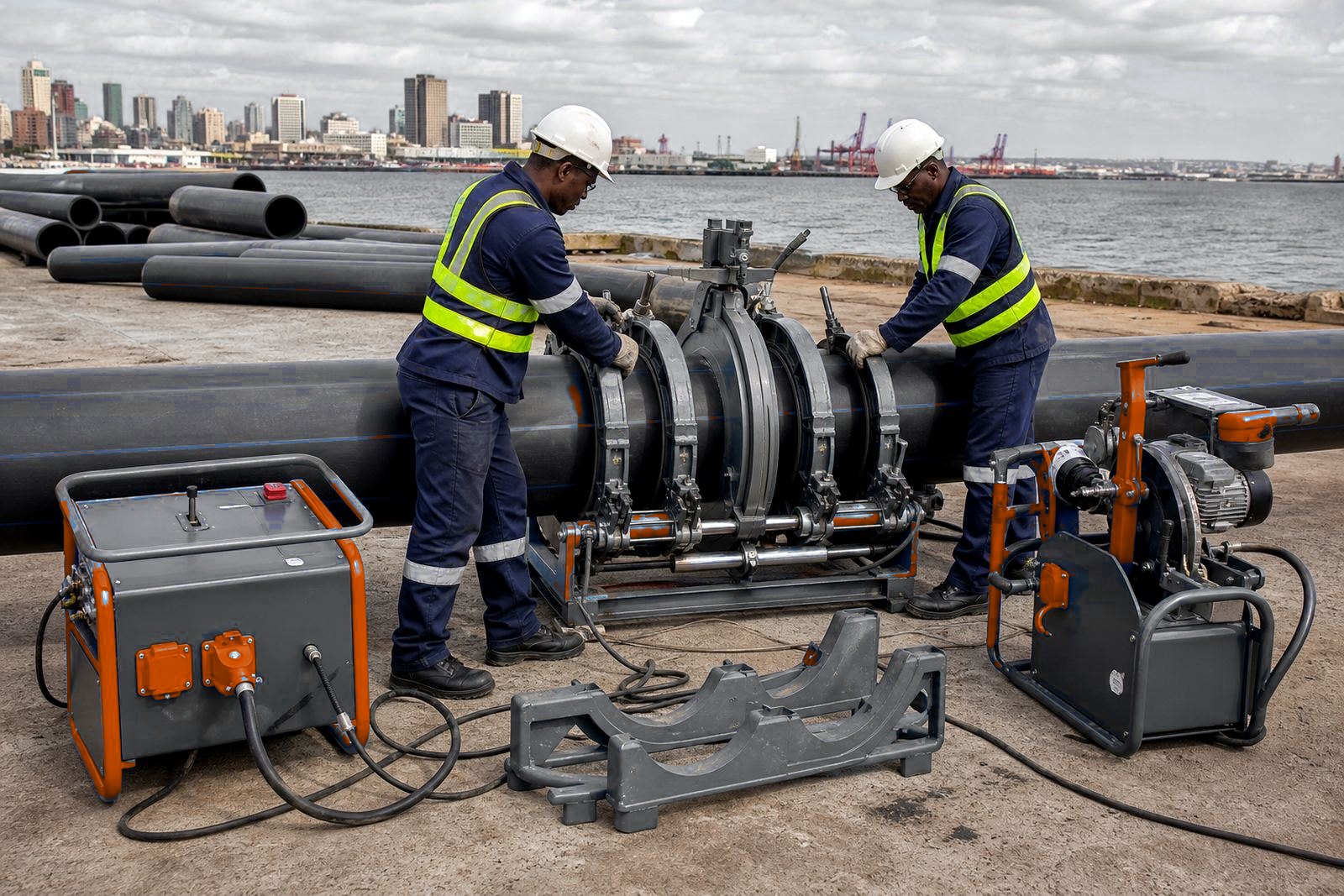
A drainage crew working on HDPE runs at Durban port sent the brief. Their team needed support around welding consistency, machine condition and operator practice, because long pipe runs and repetitive joints leave little room for drift in facing, heating or changeover timing.
Coastal humidity was part of the picture, and the work area also had splashes, fine grit and uneven ground around service trenches. Those conditions can affect clamp grip, heater plate cleanliness and the way a joint cools if the pipe is moved too soon. Durban port drainage needed technical backup to keep the weld process controlled.
- Client type: civil drainage contractor
- Area: Durban port and surrounding works
- Pipe system: HDPE drainage and service lines
- Need: operator training and weld control
What the crew needed from our side
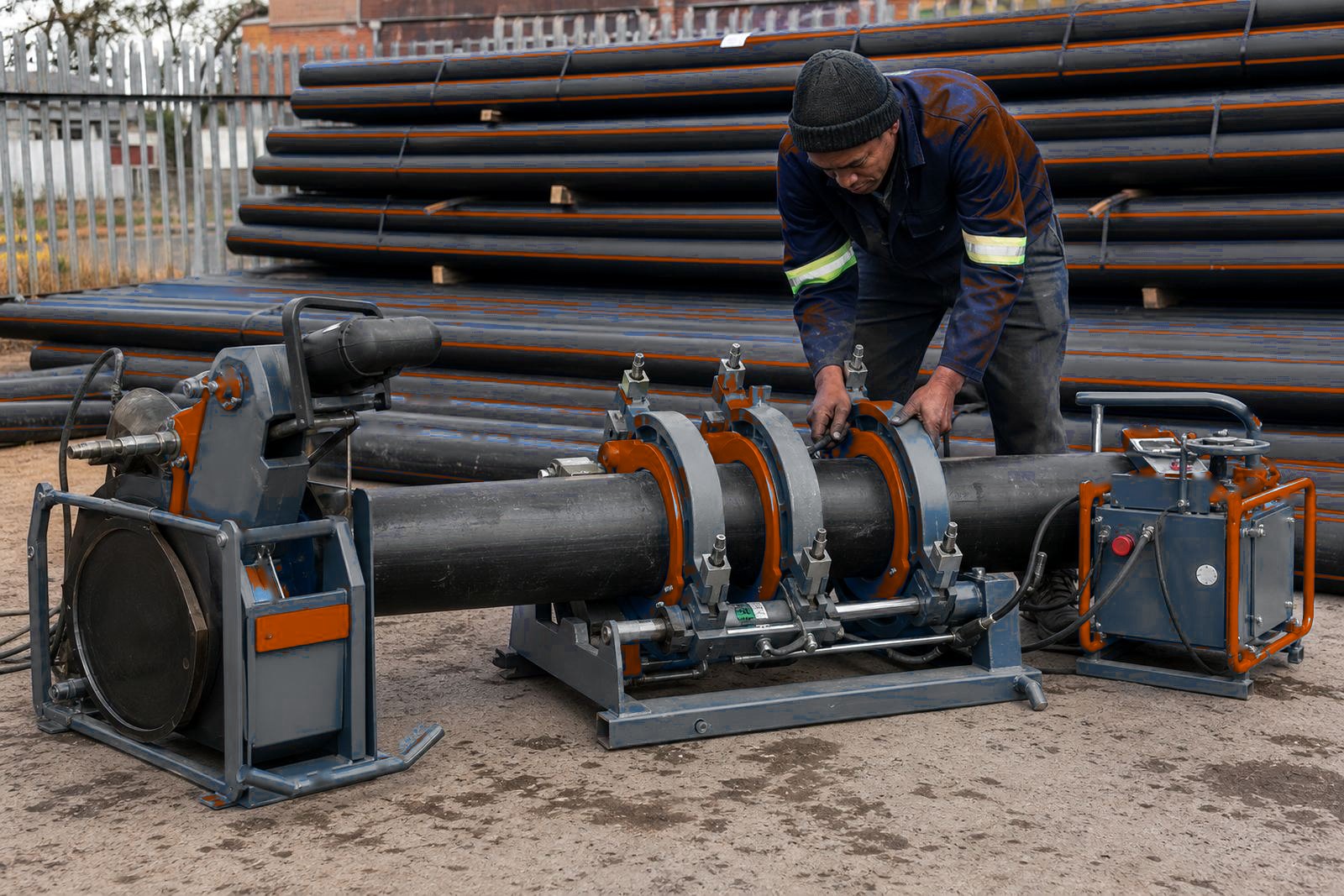
The team was already set up for butt-fusion work, but they needed better control of the full cycle on a mix of pipe sizes and SDR ratings. Machine condition, plate surface, facer alignment and the hydraulic path were checked before welding resumed in Durban.
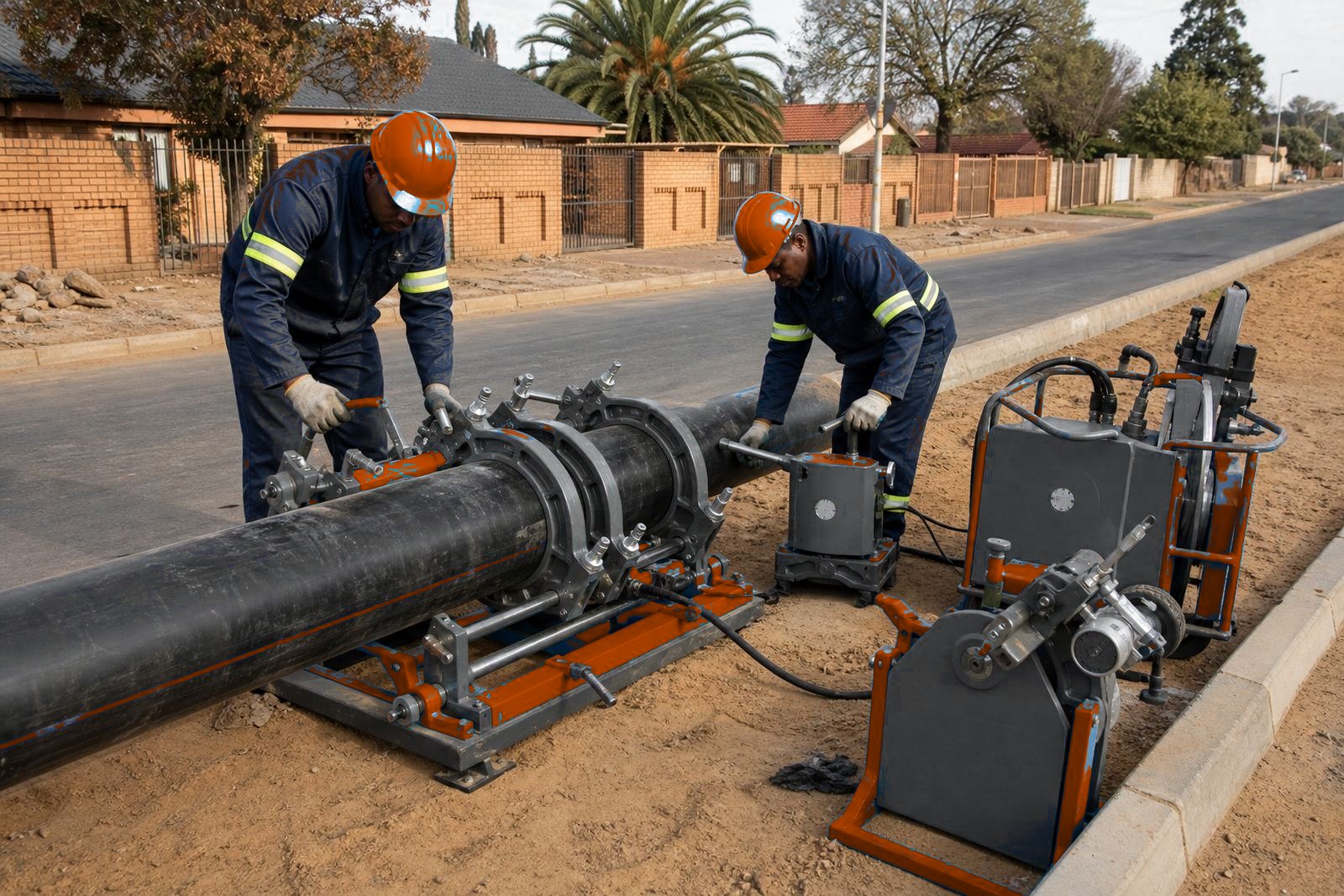
Our technician walked the crew through clean pipe ends after facing, the correct melt bead, changeover without dragging the softened faces, and fusion pressure held steady until the bead formed evenly. For larger diameters, early handling can distort the joint, so the full cooling period was kept.
- Pipe sizes covered: 160 mm to 500 mm
- SDR range handled: SDR 11 to SDR 17
- Controls checked: pressure, clamp alignment and heater condition
- Process points: facing, heating, changeover, fusion and cooling
Servicing the machine before it went back into service
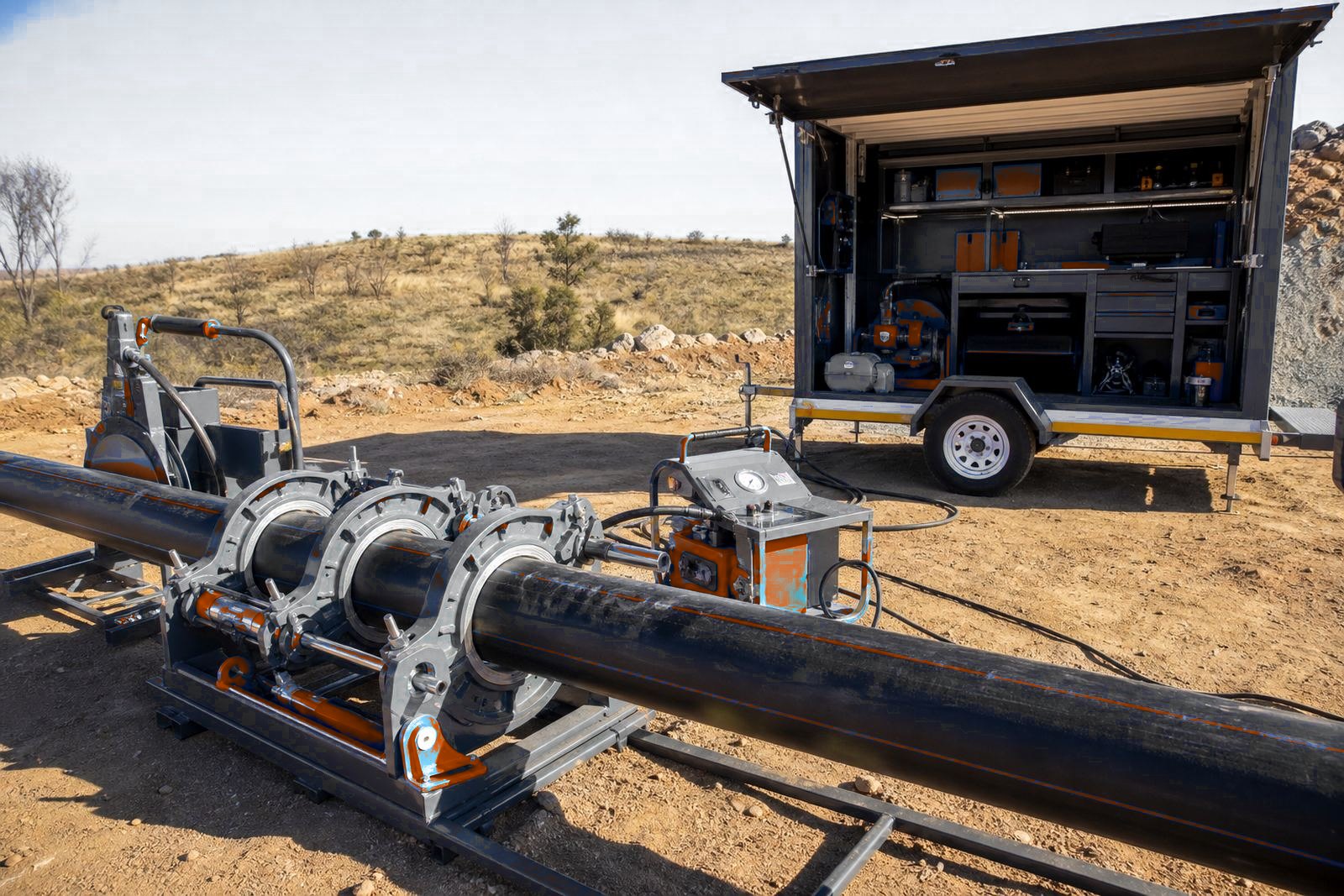
Our workshop team handled the machine servicing and the field checks in stages. The hydraulic system was pressure tested, then the machine was run through a working sequence to see that the movement stayed even under load.
On the logged sections, we helped the crew tidy their weld records so each joint had a clear size, SDR, pressure note and cooling allowance. Port sites involve handover checks, site supervisors and later maintenance teams who need to know how each joint was made.
Training on the sequence behind a sound joint
Operator training on this job focused on the parts that get missed when a crew is working under site pressure. We covered pipe preparation, correct facing depth, heater soak time, clean changeover, fusion pressure control and the cooling period before movement or loading. Training centred on a repeatable method the team could use when conditions changed during the day.
Because the work ran close to the harbour, the crew also needed reminders about keeping joints protected from grit and wet surfaces during set-up. Clean the pipe face and set the clamps before heating, because a drainage line is hard to reach once it is buried.
- Operator training on butt-fusion sequence
- Refresher points on bead inspection
- Guidance on pressure hold during fusion
- Cooling time before pipe handling
Two weeks on site and workshop support
The support ran across two weeks. Machine servicing filled the first five days on site. Final machine adjustments, logging help and second opinions on bead shape took the next Durban week.
By then the Durban team read its machine better. Clamp movement had been tightened up, the heater plate was behaving more evenly and the weld log was easier to follow. On a drainage job that sits near salt air and busy ground conditions, those are practical gains.
- Week 1: machine servicing on site
- Week 2: fine adjustment and weld log help
- Result: steadier joint consistency across pipe sizes
- Result: clearer records for site handover and maintenance
What we would keep for drainage work at a port on the coast
On a similar port drainage project, we would check the machine condition and weld sequence before production. That means checking the heater plate, facer and hydraulic pressure path early, then making sure the crew is comfortable with the pipe size range and SDR changes before the first long run starts.
We would also check that every joint stays clamped for its full cool-down time. A joint disturbed before the fusion has set is weakened. On coastal drainage work, moisture and grit are cleaned off the pipe ends before each weld.
PlasticWelder supported the Durban team with service work matched to the pipe work they were doing on site. The support covered the weld process, the machine condition and the weld records.
Key facts
| Project | Durban Port Drainage |
|---|---|
| Location | Durban, KwaZulu-Natal |
| Pipe material | HDPE drainage pipe |
| Pipe size range | 160 mm to 500 mm |
| SDR range | SDR 11 to SDR 17 |