The yard brief in Germiston
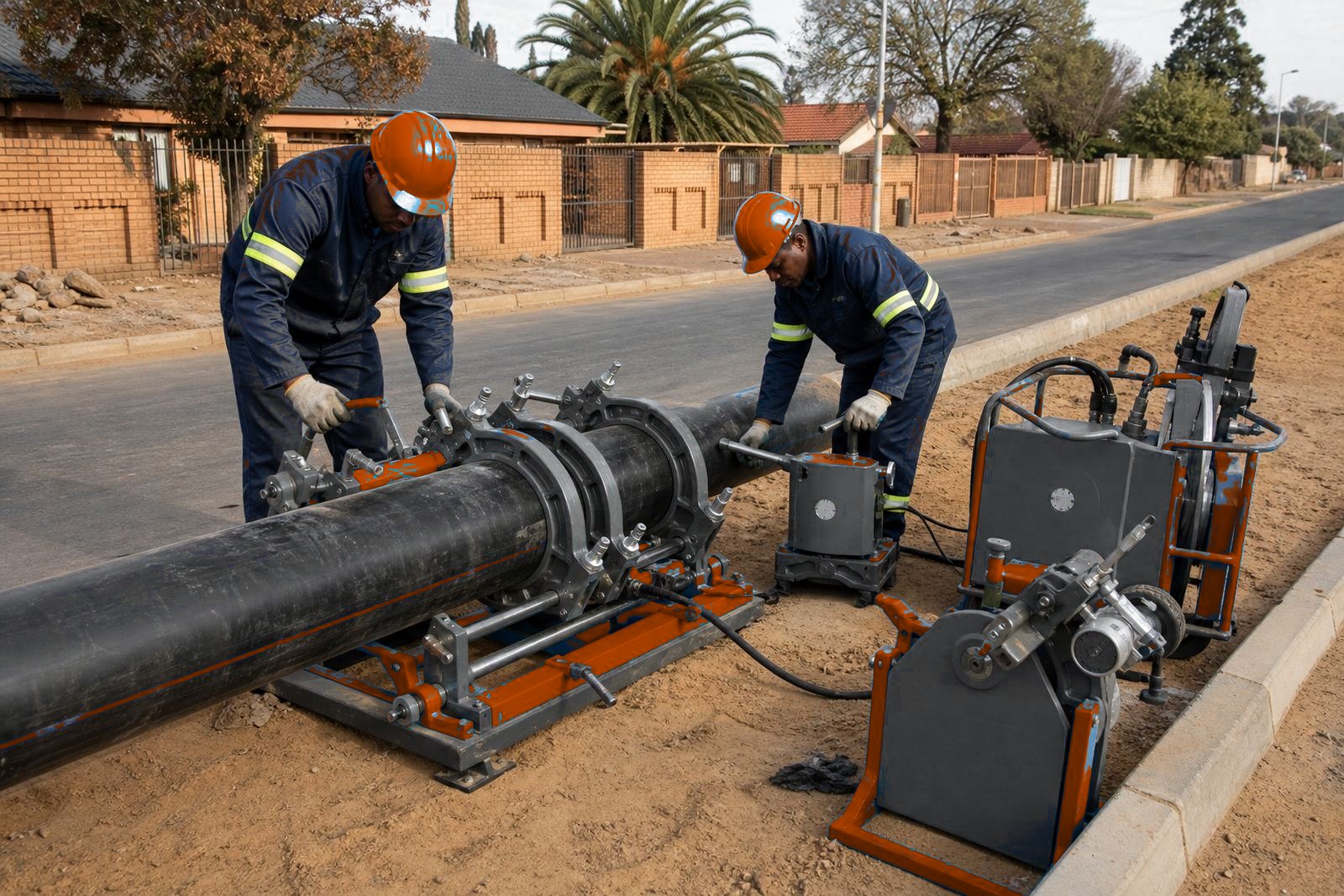
The job was a water line assembly in Germiston, with HDPE sections being prepared for installation and tie-ins. The contractor needed a butt-fusion setup the crew could run from the first morning.
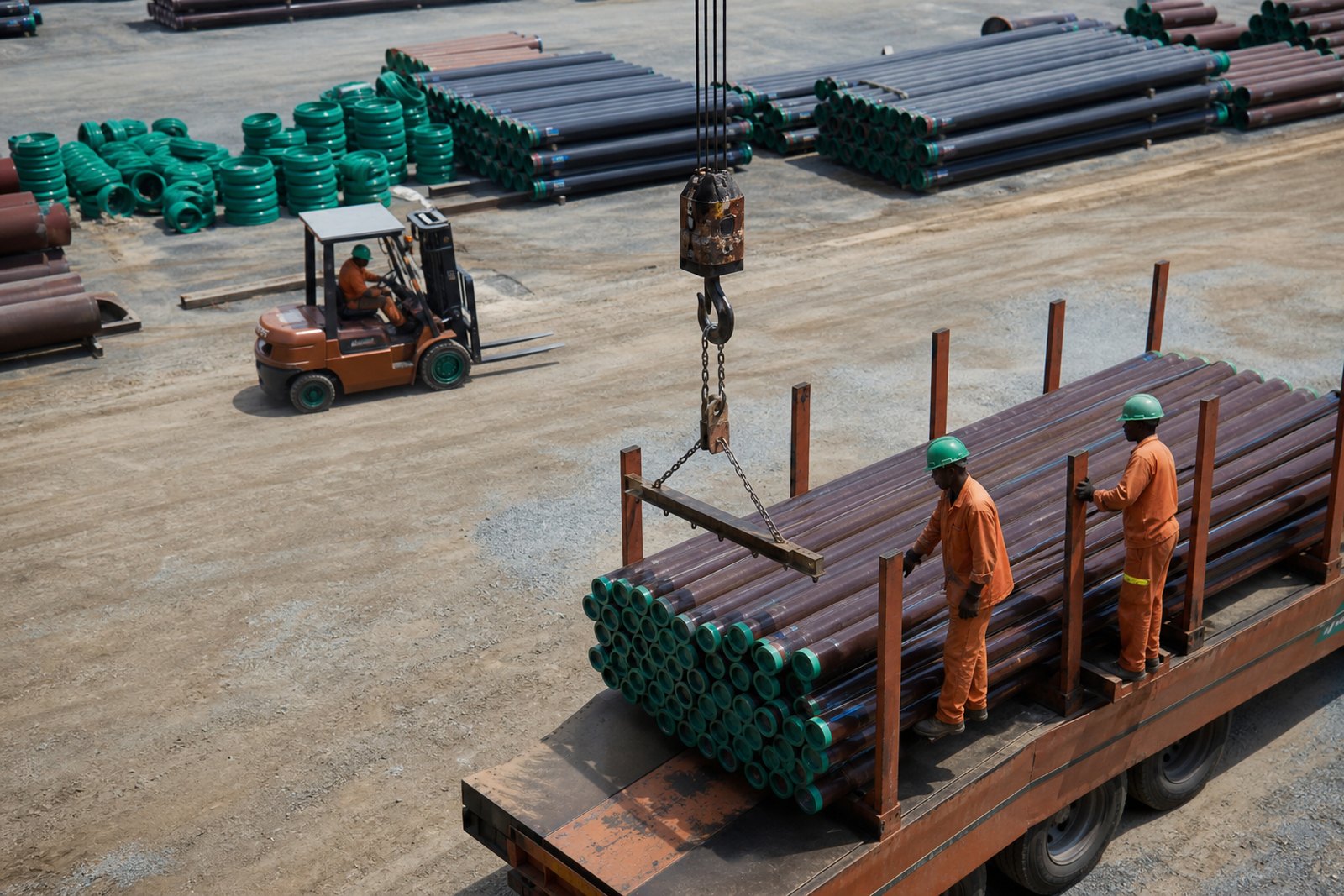
Pipe sizes shifted across the Germiston yard run, with lengths moved, checked and joined in stages. We checked each pipe end for moisture, dust and handling marks before heating.
- Client type: water contractor
- Town: Germiston
- Work type: HDPE line assembly and fusion support
- Method: butt-fusion with controlled heating and pressure
What had to work on the day
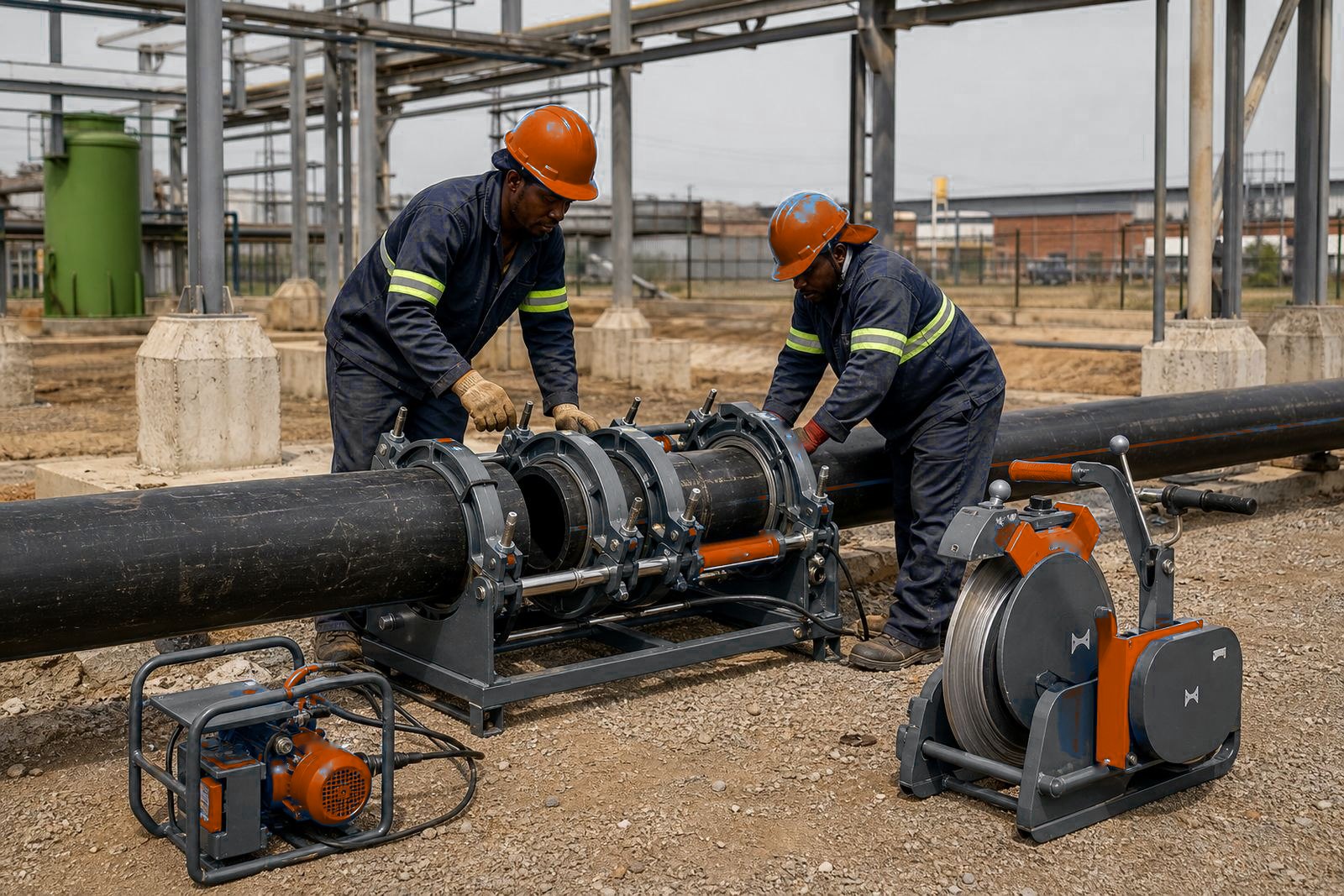
The yard machine set had to cover the site pipe sizes and hold alignment through each joint. The process was kept clear for the team, because butt fusion needs a steady sequence.
The setup had to deal with the usual yard constraints. Pipes were being shifted by hand and with lifting gear, so the clamp line had to stay true. The operator also needed clear control over fusion pressure, heater plate condition and the cooling time after changeover, because those are the details that shape the bead and the joint face.
There was no appetite for a machine that looked good in a store but struggled once the pipe was clamped. We matched the job to the pipe dimensions on hand and checked the hydraulic movement, facer condition and heater plate temperature pattern before work moved ahead.
- Pipe sizes on the job ranged across the working set
- Alignment was checked before each fusion cycle
- Bead appearance was inspected after release
Equipment and support we put in place
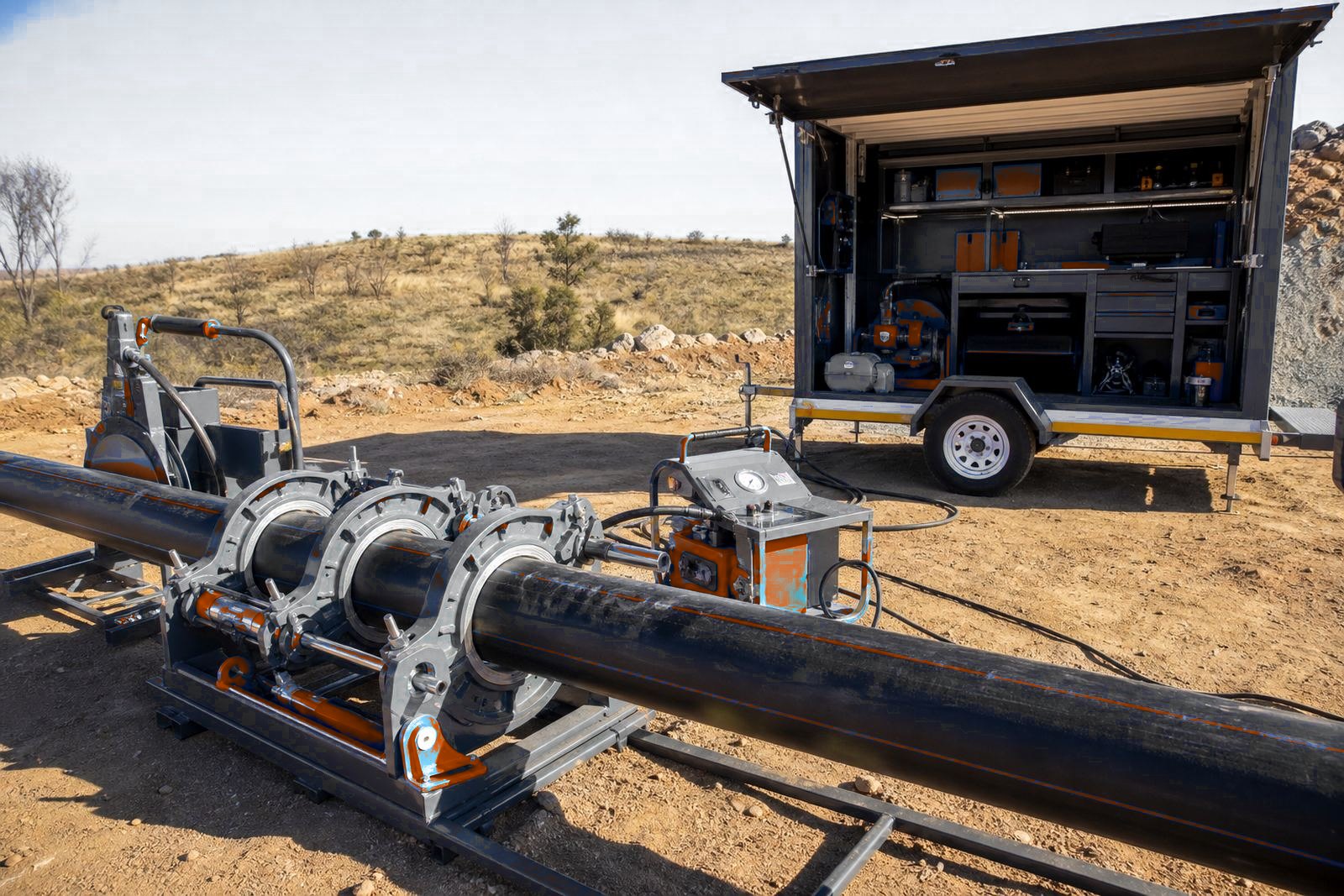
The machine set was prepared for site use, with the hydraulic system checked, clamp faces aligned and the heater plate inspected for even contact across the working surface.
Our team also helped the operator with weld logging so the job record stayed useful for the contractor's own file. When a joint is logged properly, the crew can see where the process held steady and where the setup needs attention.
The machine hire piece was paired with collection inspection, so the gear arrived tested and complete. We also kept spares support on hand for the items that tend to wear first.
How the yard crew learned the setup
The crew needed operator training tied directly to the pipe on the floor and the timing of the weld cycle. We covered the joint sequence from facing through to cooling, with attention on how much material is removed during facing, how the heater plate is handled and why the changeover window must stay controlled.
We also went over bead inspection using sample joints. The external bead should look consistent around the circumference, with no clear sign of displacement or uneven squeeze. A good bead gives the operator a useful first read before the line moves on, and proper records stay in place.
Refresher training took a few hands on the yard who had used fusion gear before through the process again in practical steps. That kept the discussion on welding pressure, timing and pipe preparation, which is where most yard problems begin if the sequence gets rushed.
How the work moved over the weeks
A short planning window led into yard welding in Germiston. First came the check on pipe sizes, SDR range and the machine setup. After that the crew worked through the actual joint routine, with the heater plate, facing cut and clamp pressure kept in order so the weld path stayed predictable.
As the line sections built up, the value of a stable setup became obvious. The operator could keep to the same cycle and the team could move from one joint to the next without stopping to rethink each one from scratch. On water work, multiple lengths are assembled and handled before final placement.
The Germiston crew left with a cleaner process for future sections. The yard team understood what to watch for on the pipe ends, how to read the bead, and where the hydraulic pressure needed to stay steady during fusion and hold.
- Week 1: equipment check, sizing and setup
- Week 2: joint work, logging and inspection
What changed for the Germiston crew
The main result was control. The team had a workable fusion setup that matched the pipe and the pace of the yard, so the operator could work through each joint with less uncertainty. The bead checks were easier to read, and the weld log gave the contractor a cleaner trail for internal records.
We had fewer equipment queries to deal with. With the facer, heater plate and clamps sorted at the start, the crew could focus on each joint. For a water line assembly, that kind of order is worth a lot because every joint sits inside the next stage of the build.
If we were doing a similar Germiston job again, we would keep the same sequence: check the pipe sizes first, set the machine for the actual SDR range, train the operator on the joint timing, and verify the bead before the line moves off the yard.
- Cleaner weld routine for the crew
- Better control over fusion pressure and cooling
- Useful weld logs for the contractor file
- Equipment ready for more line sections
Project facts and support path
The yard job used a hired machine with a freshly checked heater plate.
On the Germiston yard job, a straight setup, clear operator steps and proper inspection kept HDPE fusion work on programme.
- Support: site startup help
- Use case: water line assembly and HDPE butt-fusion
Key facts
| Fusion method | Butt-fusion for HDPE pipe |
|---|---|
| Pipe range | Project matched to the working pipe sizes on site |
| Material focus | HDPE lines for water work |
| Control checks | Facing, heater plate, fusion pressure, cooling time |
| Records | Weld logging support with joint detail and inspection notes |