Rising Main Work Outside Mokopane Needs Clean Joint Control
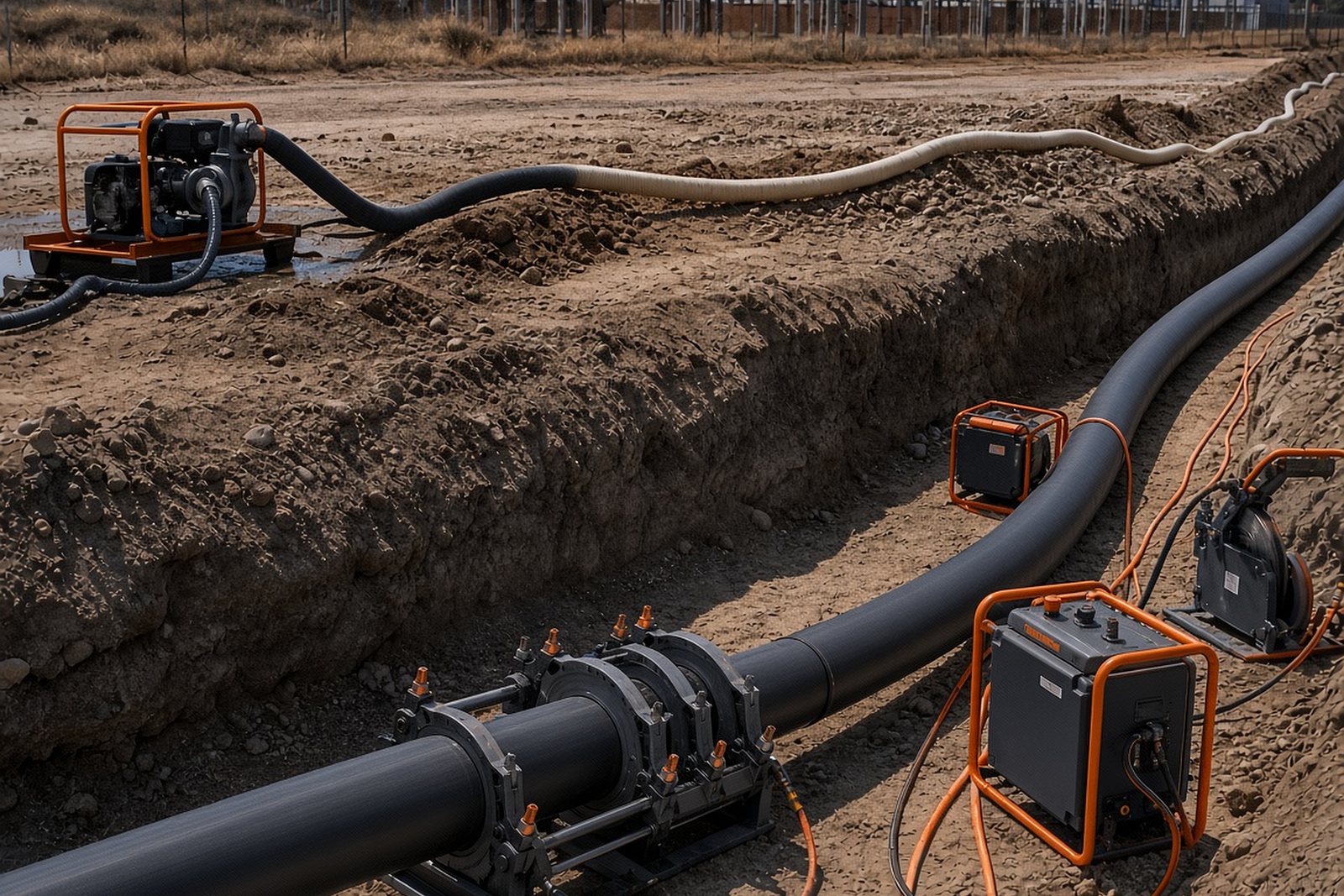
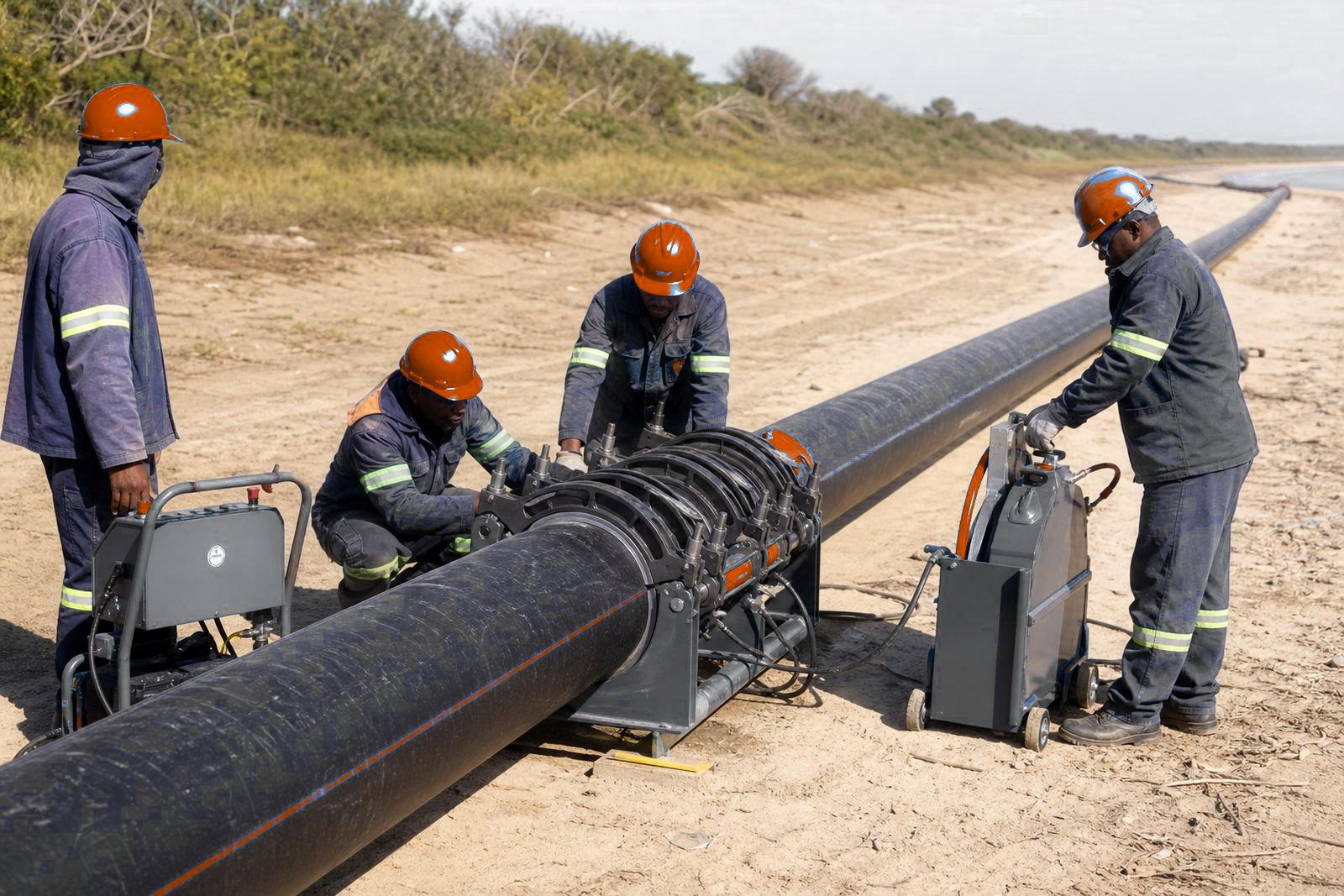
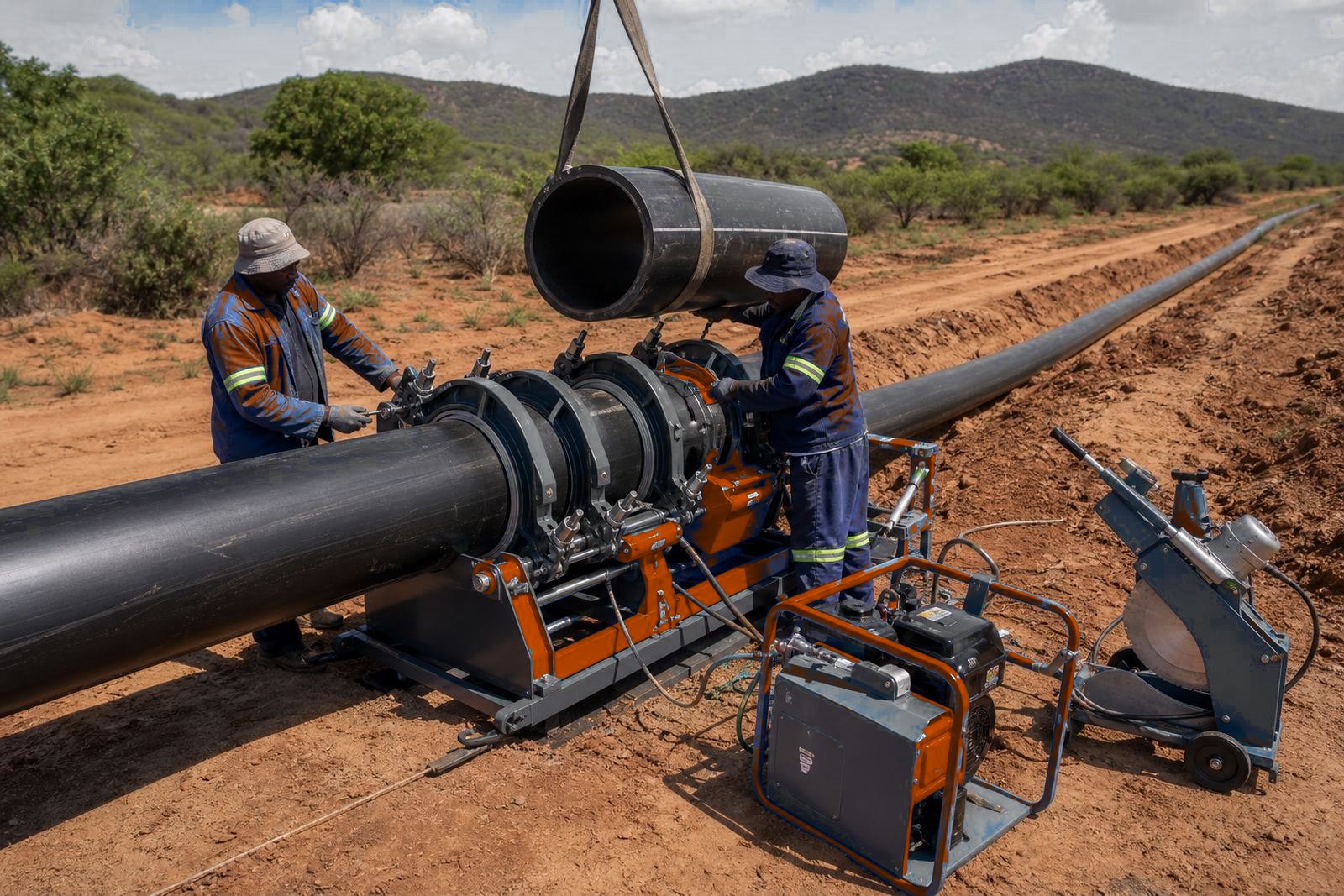
The job sat outside Mokopane on a rising main installation for a civil water line. The crew was joining HDPE pipe in a size range that needed steady alignment, proper facing, and full control of heating, changeover and fusion pressure. The line had to stay true over a long run, so each weld needed the same setting, the same timing and the same bead shape.
Ground conditions were uneven in places and the working area was a live site, so the team needed equipment that could be moved, secured and set up efficiently with minimal repositioning. We handled the hire machine prep, checked clamp alignment, and supported the weld sequence from pipe loading through to cooling. The contractor needed hands on support that would help on the job.
- Pipe handling and alignment on site near Mokopane
- Joint records kept for each weld on the rising main
What The Crew Asked Us To Solve
The brief was straight. Keep the welds controlled, help the operators work to the same routine, and make sure the machine setup matched the pipe size and SDR on site. Pipe length and position changed a few times during the week, so the team timed every stage.
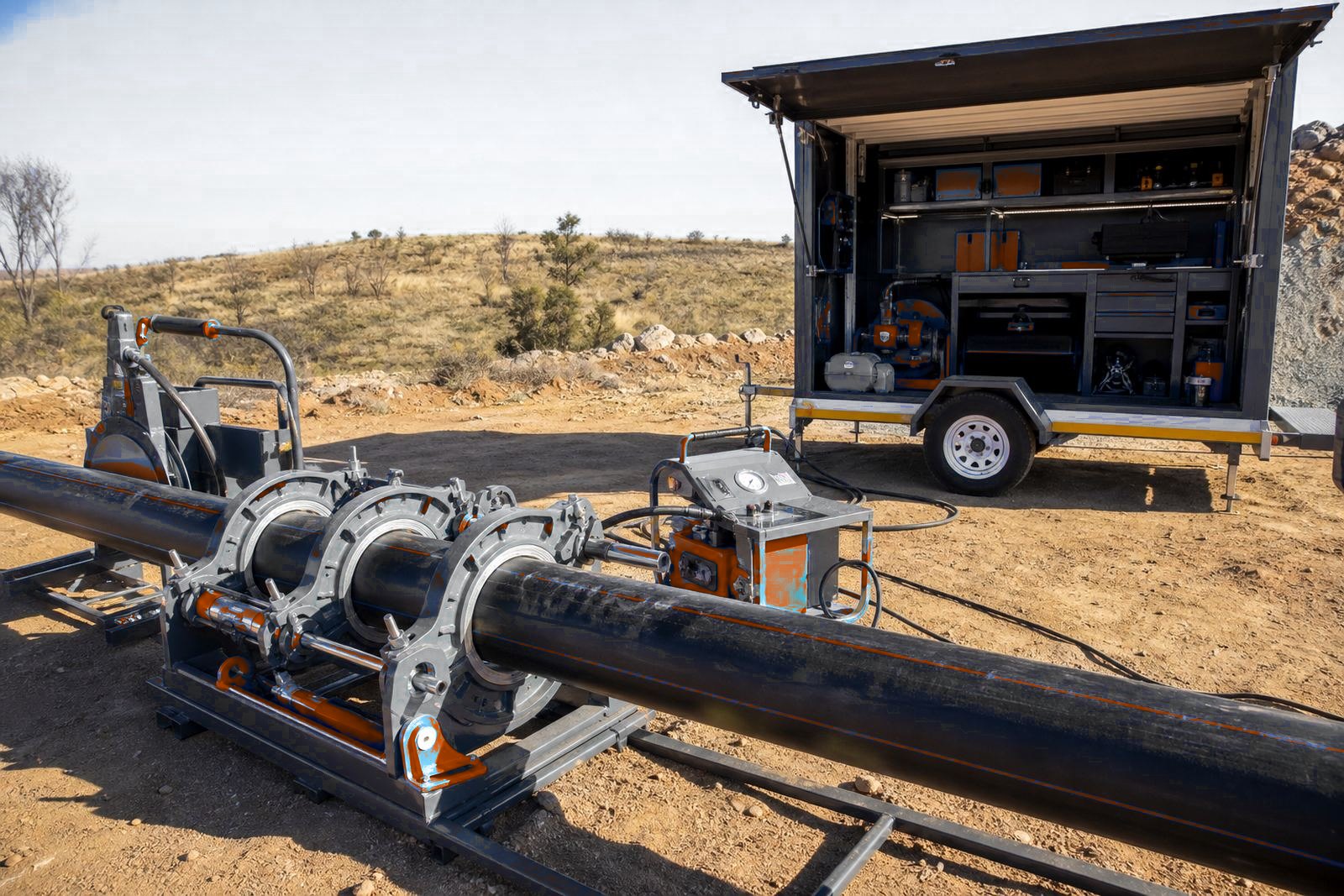
We put in a hire machine, facer, heater plate and clamps suited to the pipe diameter on the project. Before welding started, we walked through the facing cut, check for square pipe ends, bead build during heating, and the changeover step where the pipe ends must move from heat to fusion without dragging or twisting. Weld logging support kept the records in line with the work done in the trench and laydown area.
- Set the machine for the pipe diameter and SDR in use
- Support a repeatable facing and heating sequence
- Keep weld logs neat for the site file
What We Supplied On Site
The Mokopane hire package held a machine, facer, plate, clamps and the small items used in daily welding. Our field technician assisted with the first welds, then stayed close while the operators carried out the same cycle on the remaining joints. We checked pipe ends after facing, timed the heater soak and confirmed the fusion pressure on each joint.
The work also included practical operator training. The team needed to know how to read the machine, when to move from heating to changeover, how long to hold pressure through the fusion stage, and how long to leave the joint before handling it. Bead inspection formed part of that process, because a neat external bead is one of the quickest checks that the joint has closed evenly. A rough or uneven bead can point to bad alignment, dirt on the face, or pressure that moved too early.
- Machine hire with facer, heater plate and clamps
- Facer and clamp setup on the first day
- Weld checks with the site supervisor on day one
The Week-by-Week Flow On The Rising Main
Mokopane started with a week of setup, machine familiarisation and test welds on the rising main pipe. The second stage focused on production welding, where the pace picked up but the control points stayed the same. Mokopane operators learned to read plate temperature, keep ends clean and hold pressure steady through cool down.
When the trench line shifted, we moved the clamps and machine and kept the pipe alignment intact. That is normal on a rising main, especially where the ground falls away or access narrows along a service corridor. We also helped with weld logging so the team had a proper record of the joint number, pipe size, SDR, time settings and visual bead result. Records are important when a line is handed over in sections.
- Week 1: setup, training and trial welds
- Weeks 2 to 3: production welding and log support
What Changed Once The Weld Routine Settled
Once the operators settled into the sequence, the site moved with less pause between joints. The team kept to a steady sequence between facing, heating, fusing and cooling. That showed in the bead consistency and in the time lost to rework, which dropped off once alignment and pressure were being watched properly.
The rising main also benefited from better record keeping. When the weld log is accurate, it is easier to track which joint was done on which day, what size of pipe was used, and whether the machine settings matched the pipe class. For a civil line near Mokopane, that kind of detail is part of getting a clean handover at the end of the run.
- Cleaner bead formation across the run
- Less rework caused by alignment drift
- Better weld trace records for the project file
What We Would Bring To A Similar Pipe Weld
For a comparable rising main, we would use the same sequence Start with machine setup against the actual pipe size and SDR, check the facer before the first cut, and keep the heater plate temperature under watch through the day. We would also keep one person focused on log notes so the welding team can stay on the machine and the trench team can keep moving.
On long civil lines, the crew ran the same short checklist at the start of each shift. Clean pipe ends, steady fusion pressure, a proper cooling period and bead inspection after each joint all help keep the work tidy. If the site is wet, dusty or tight on space, the same checks still apply. The checklist stayed the same on every shift, from the first joint to the last.
- Match machine setup to the pipe on site
- Keep one log format for the full line
- Hold the same weld sequence from first to last joint
Key facts
| Project | Mokopane Rising Main |
|---|---|
| Location | Near Mokopane, Limpopo |
| Work type | HDPE butt-fusion support for a civil rising main |
| Pipe range | Large-diameter HDPE in site-specific SDR classes |
| Equipment | Butt-fusion machine, facer, heater plate, clamps |
| Duration | A few weeks across setup, welding and handover |