The bypass line had to stay moving
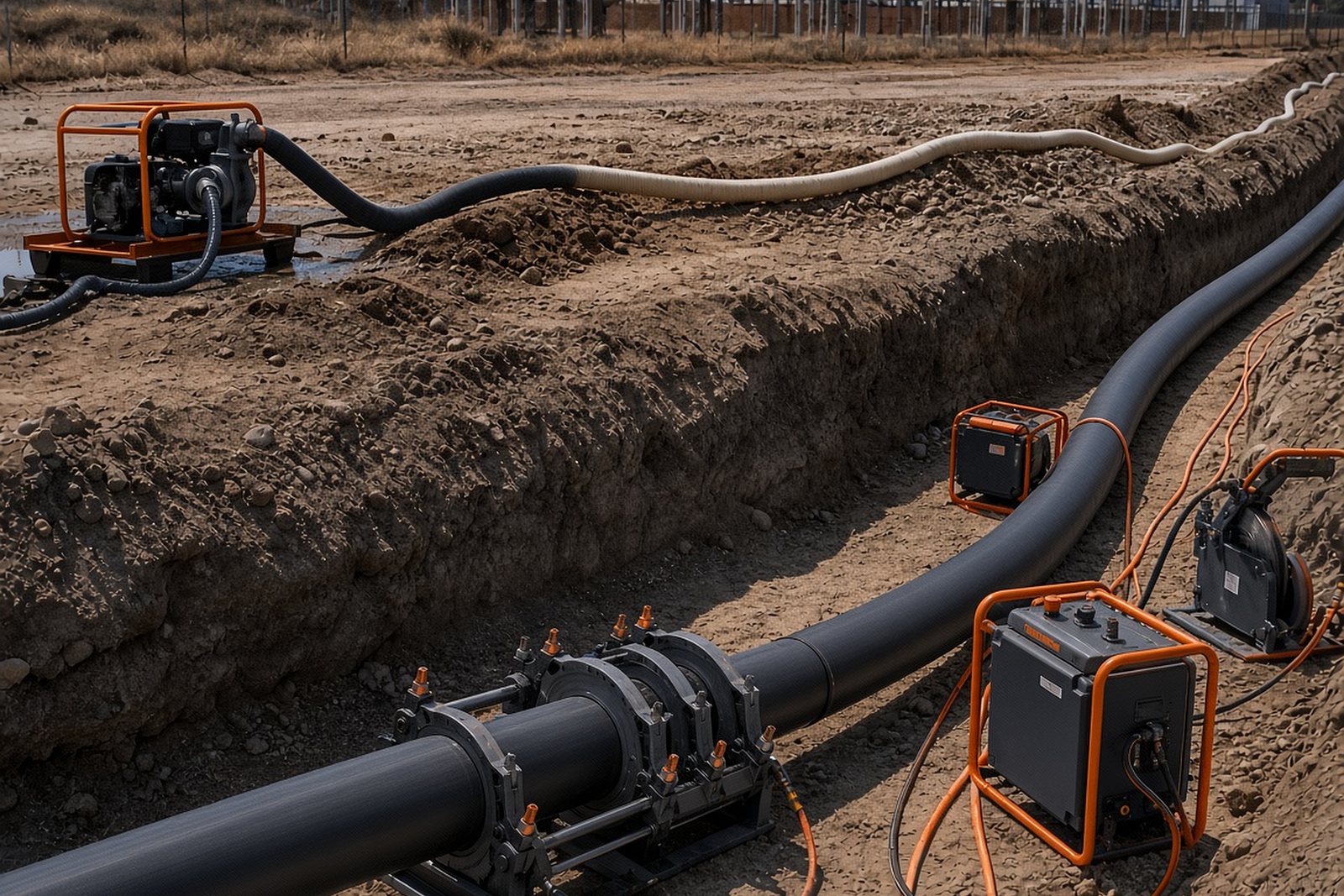
The job came from a water contractor working in Secunda on a temporary bypass line, with the old run isolated while live supply was kept running around it. The pipework was HDPE, the line was built in stages, and the crew needed a fusion setup that could keep joints consistent across changing trench conditions and short work fronts.
The brief was clear enough in the field: keep the welds clean, keep the joint sequence organised, and keep the hire kit ready for repeated starts and stops. Backup was needed on the first shifts because the line had mixed pipe sizes, and the crew had to move between facing, heating, changeover and clamping while keeping control of the bead.
- Temporary HDPE bypass line in Secunda
- Short-term hire equipment for a staged installation
- Operator support during the first weld sequence
- Weld recording help for job records
What the site needed from the equipment
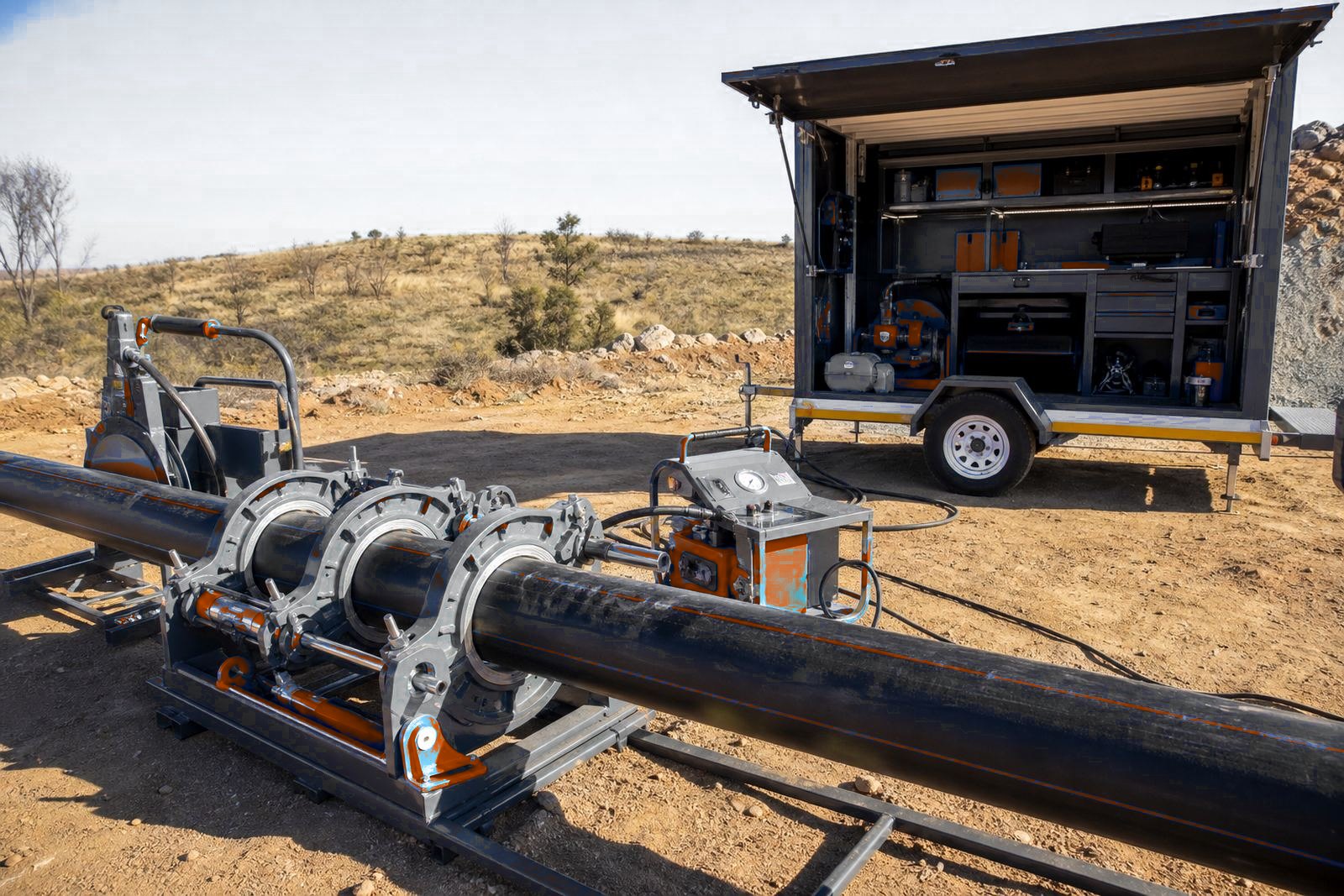
We set the hire package around the pipe range on site and the SDR values the contractor was working to. The bypass machine needed stable pressure and enough rigidity to hold alignment during facing and heating. The clamps, facer and heater plate all had to move together as one system to support the job.
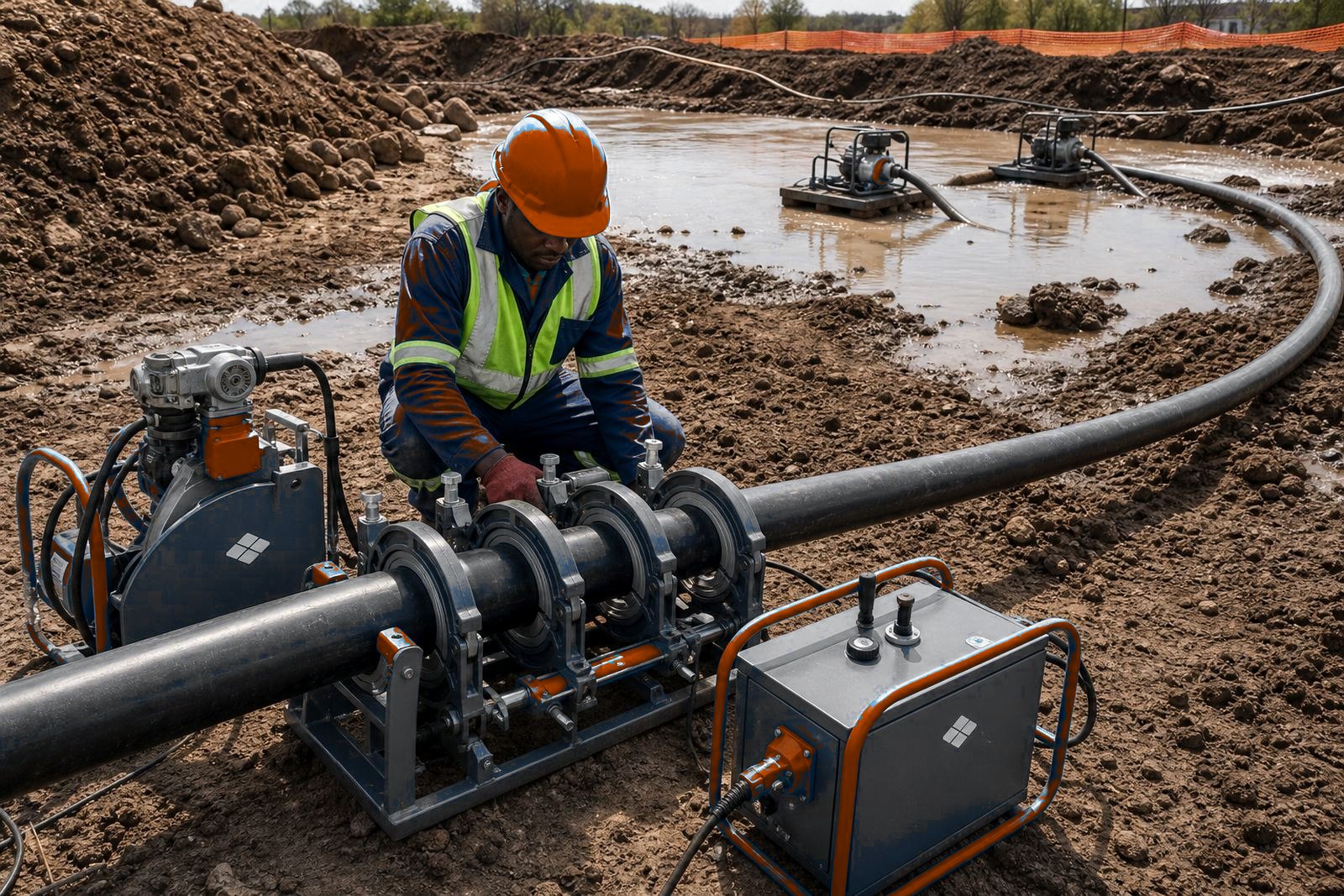
Secunda can be rough on temporary works. Dust gets into the joint area, the ground is seldom perfectly level and the crew is often working around live services or tight access. Clamp alignment was checked before the first Secunda joint and again after the line moved. That cut out the small errors that creep in when a bypass line is welded in sections over several shifts.
- Pipe support and clamps for the Secunda bypass.
- Facing tool for square, clean pipe ends
- Heater plate with even surface temperature control
- Fusion pressure and cooling control for repeat joints
Site setup, training and first welds
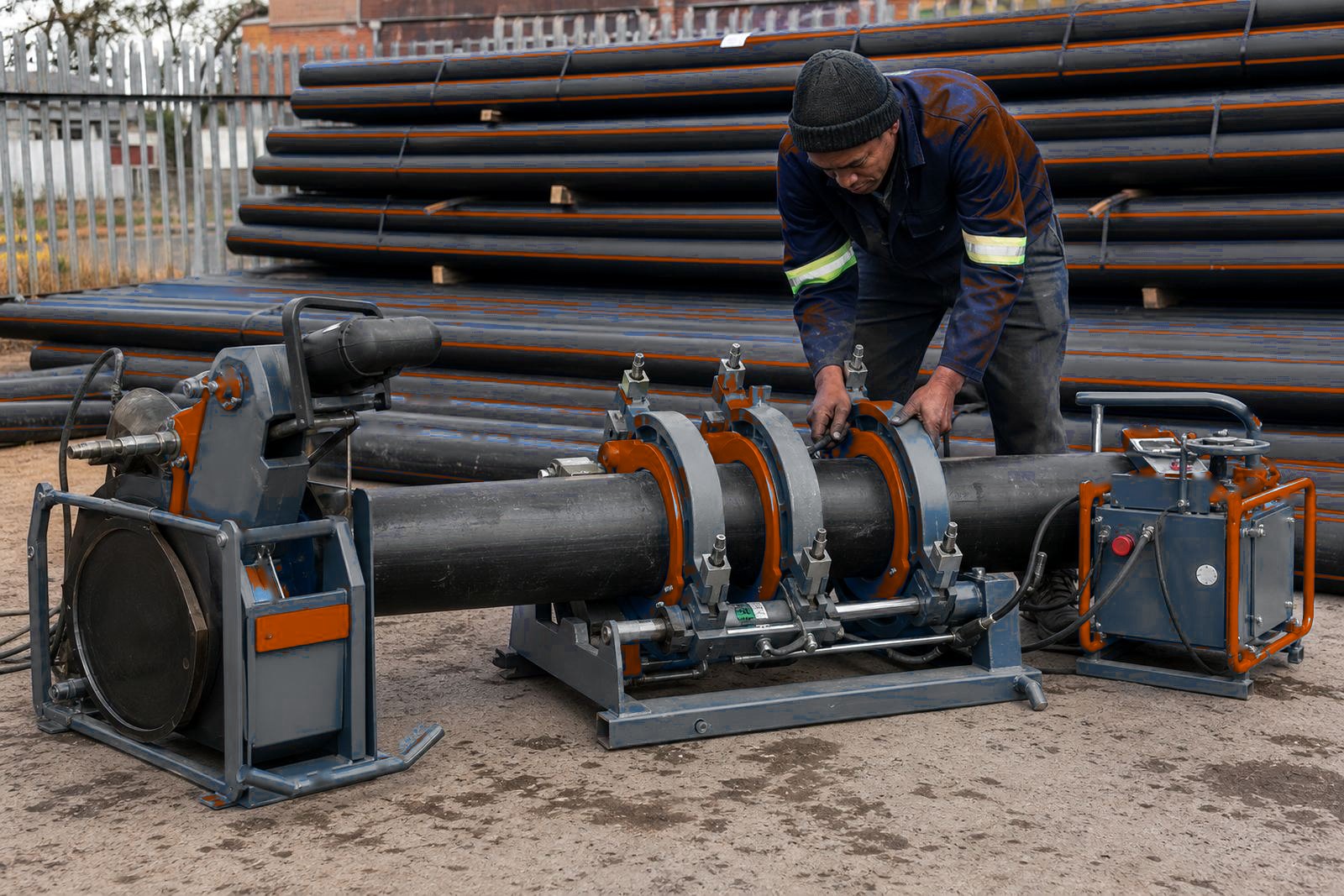
Secunda moved into production once alignment and pressure settings were settled in week one. We ran operator training on the job, showing the team how to face the pipe, inspect the shavings, heat the ends to the right melt pattern, change over without delay and hold the fusion pressure steady through the cooling period. On a bypass line, each of those steps is checked before the next joint.
We also worked through bead inspection with the crew. The external bead is the first visual check, and the operator also watches for uneven squeeze, poor alignment, contamination and overheating. Where the pipe wall and SDR changed, the setup was checked again so timing and pressure matched the joint class.
- Operator training on facing, heating and changeover
- Cooling time allowed before release and move-on
- Bead inspection explained on the live line
Keeping the hire kit useful over a short programme
The contractor had limited time on site, so the hire gear had to stay in working order without tying up the crew. We carried out collection inspection checks, cleaned the clamps, reviewed hydraulic pressure, and verified that the heater plate and facer were still doing a clean job after repeated cycles. That kept the line moving from one weld sequence to the next without unnecessary stoppages.
Short-term hire runs smoothly when one crew keeps the machine for the full job. We checked the key service points on bypass work: clamp alignment, facer condition, plate surface, hose condition and the way the joint sits after release. The Secunda bypass was built in sections over several weeks.
What the job looked like in numbers
The bypass line ran through a practical size band of several pipe diameters, so the setup had to stay flexible. That meant the fusion machine had to work across the joint range, with enough control to suit the pipe class and enough weight in the clamps to hold the pipe faces true during heating and fusion. The job also needed weld logging help, because a temporary line still needs records that make sense when the work is reviewed later.
Across the weeks on site, the team kept the same rhythm for each joint: prepare the pipe, face, check alignment, heat, change over, apply fusion pressure and leave the joint to cool fully before release. On a temporary bypass line, that sequence keeps service running and prevents a hurried joint from becoming a repair call later.
- Pipe sizes: mixed HDPE diameters on one bypass route
- Service window: temporary works over several weeks
- Records: weld logging support for joint traceability
- Method: face, heat, change over, fuse, cool
What we would carry through on a comparable line in Secunda
Once the machine, clamps and heater plate were squared up, the rest of the work settled into a steady pattern. On a similar bypass line, we would set the joint sequence early, keep one person watching alignment and pressure, and keep the welding area free of loose dust and pipe offcuts.
Our training stays tied to the pipe sizes on site, so it remains practical and specific. Operators learn faster when the kit, the SDR range and the line layout are in front of them. For temporary works in Secunda, that practical approach helped the crew keep the weld quality even while the bypass route was being adjusted in stages.
- Keep pressure and cooling under one operator’s control
- Use weld logging from the first joint onward
Key facts
| Project | Secunda Bypass Line |
|---|---|
| Location | Secunda, Mpumalanga |
| Work type | Short-term hire for a temporary HDPE bypass line |
| Equipment | Butt-fusion machine, facer, heater plate, clamps |
| Pipe range | Mixed HDPE sizes and SDR values on site |