Coastal outfall work with long pipe runs and tight access
A civil contractor working on a coastal outfall section near Richards Bay briefed us to assemble the pipework in stages and handle it carefully between lifts. The team needed butt-fusion equipment for large diameter HDPE, plus support that would hold up on a site with wind, moisture and plenty of movement around the laydown area.
Mixed SDR sections and a welding setup suited to common site sizes kept alignment under control, as specified in the pipe schedule. The client also wanted support around facing, heater plate temperature checks, fusion pressure and cooling time, because the welds were being made by more than one crew over the course of the job.
- Large diameter HDPE butt-fusion machines for coastal assembly work
- Facing tools sized for repeat preparation on long pipe strings
- Plates, clamps and hydraulic control gear sized for outfall pipe.
The welding sequence the crew had to hold to
For this kind of jointing, both pipe ends are faced square and clean before heating.
Disturbing an outfall joint early pulls the bead off centre and complicates inspection. Each weld got checks on bead shape, pressure consistency and the log sheet entry, because coastal conditions changed quickly through the day.
- Facing before every weld to keep the ends true
- Changeover managed under controlled pressure
- Cooling held before the joint was moved or loaded
Equipment package supplied for the Richards Bay section
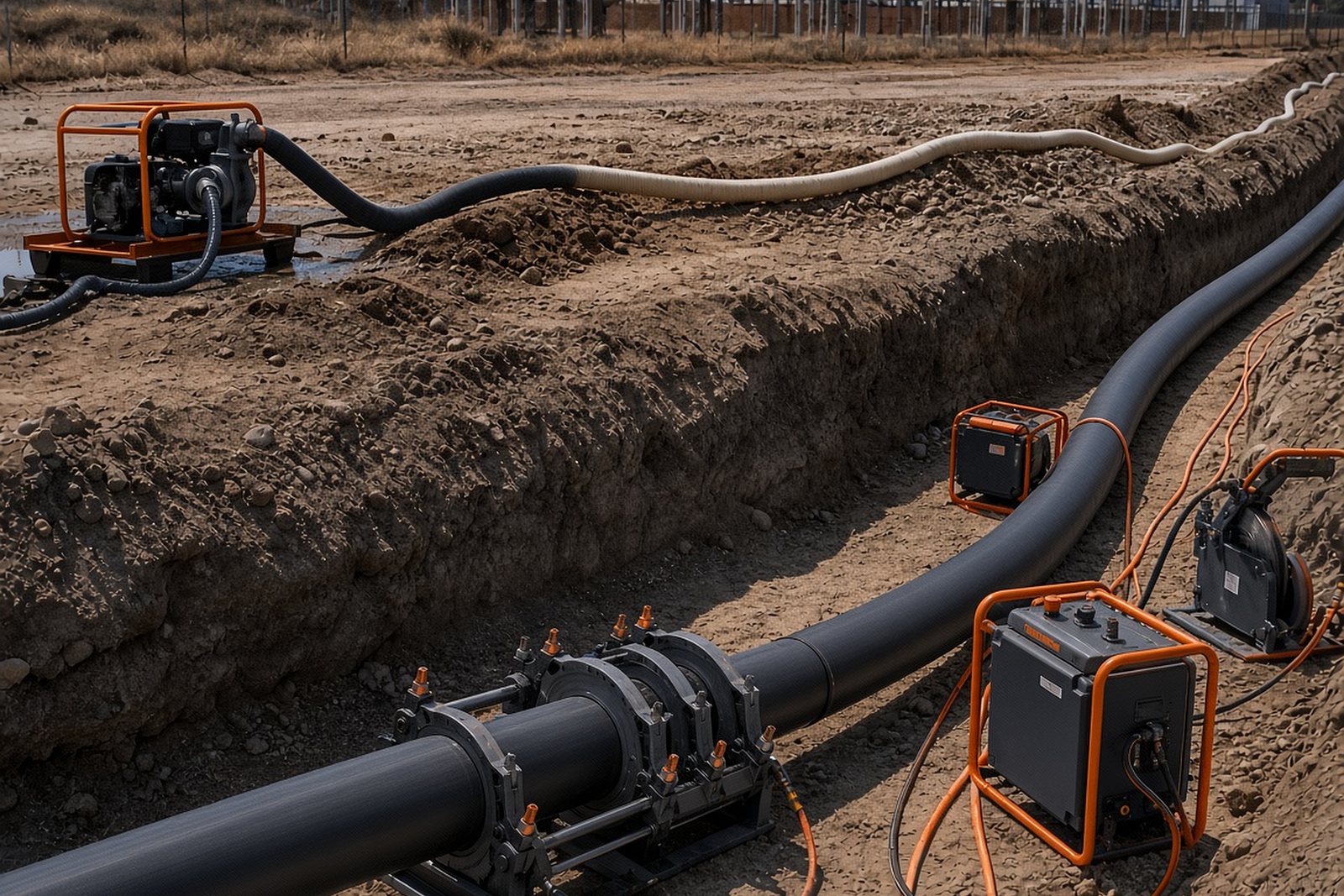
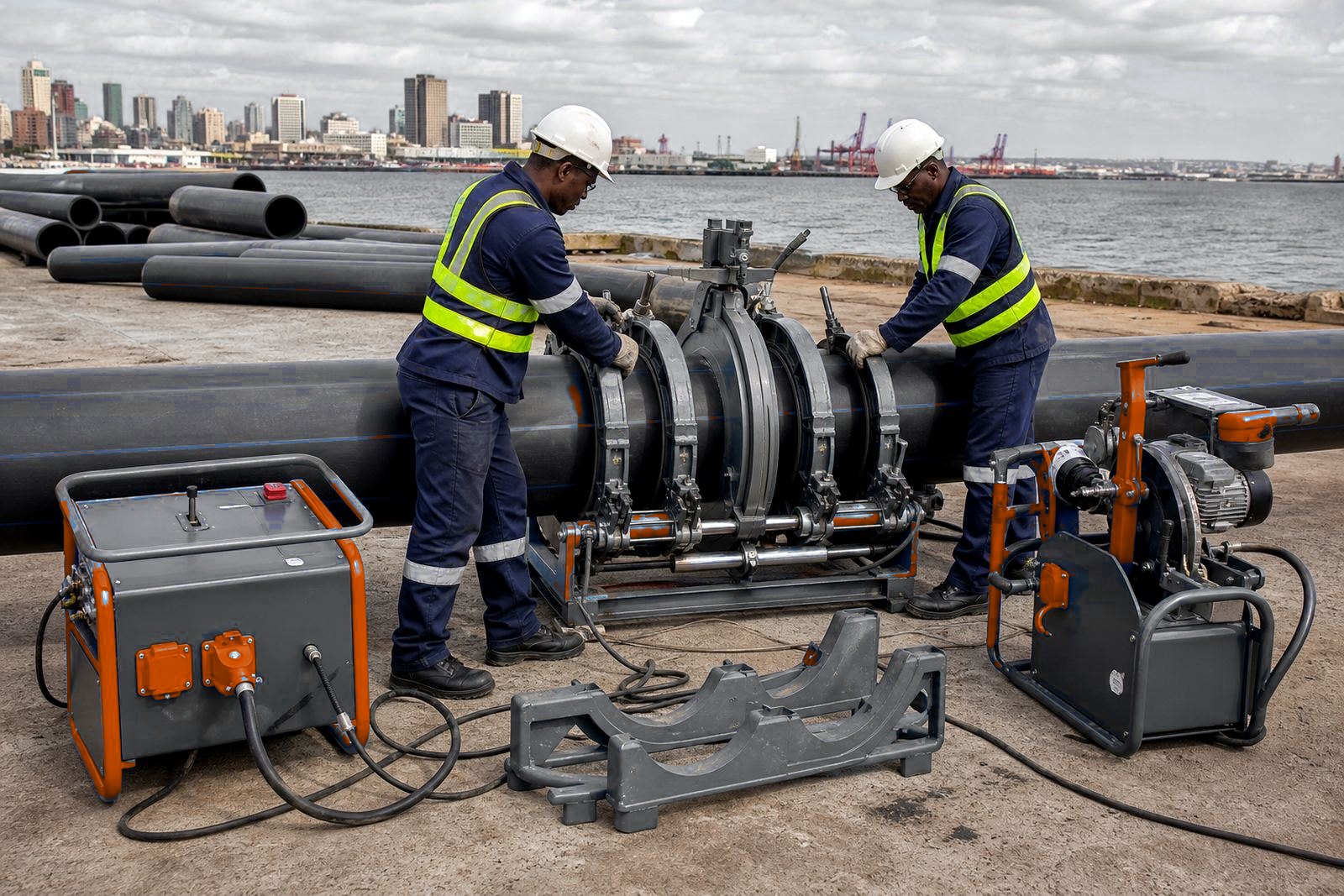
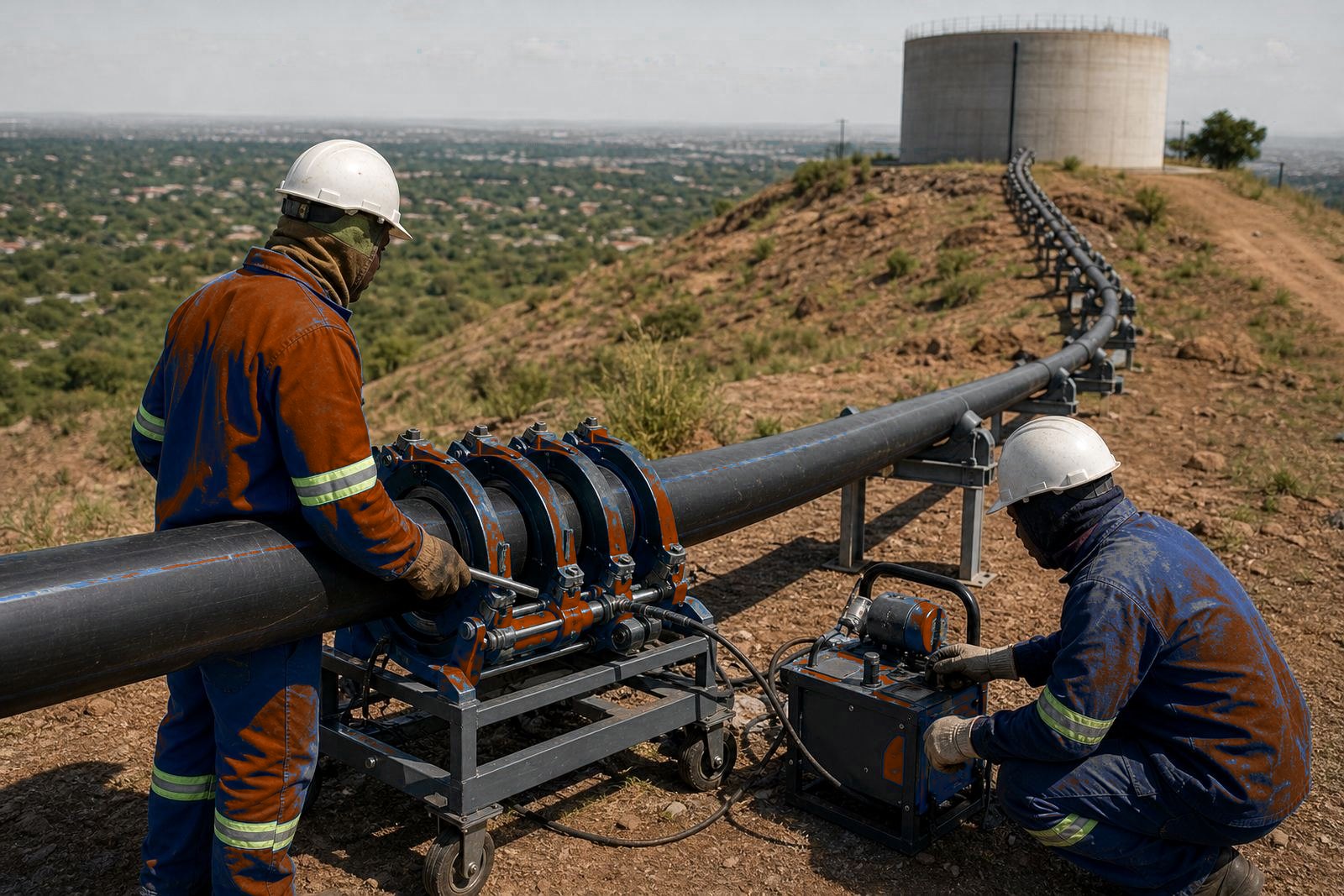
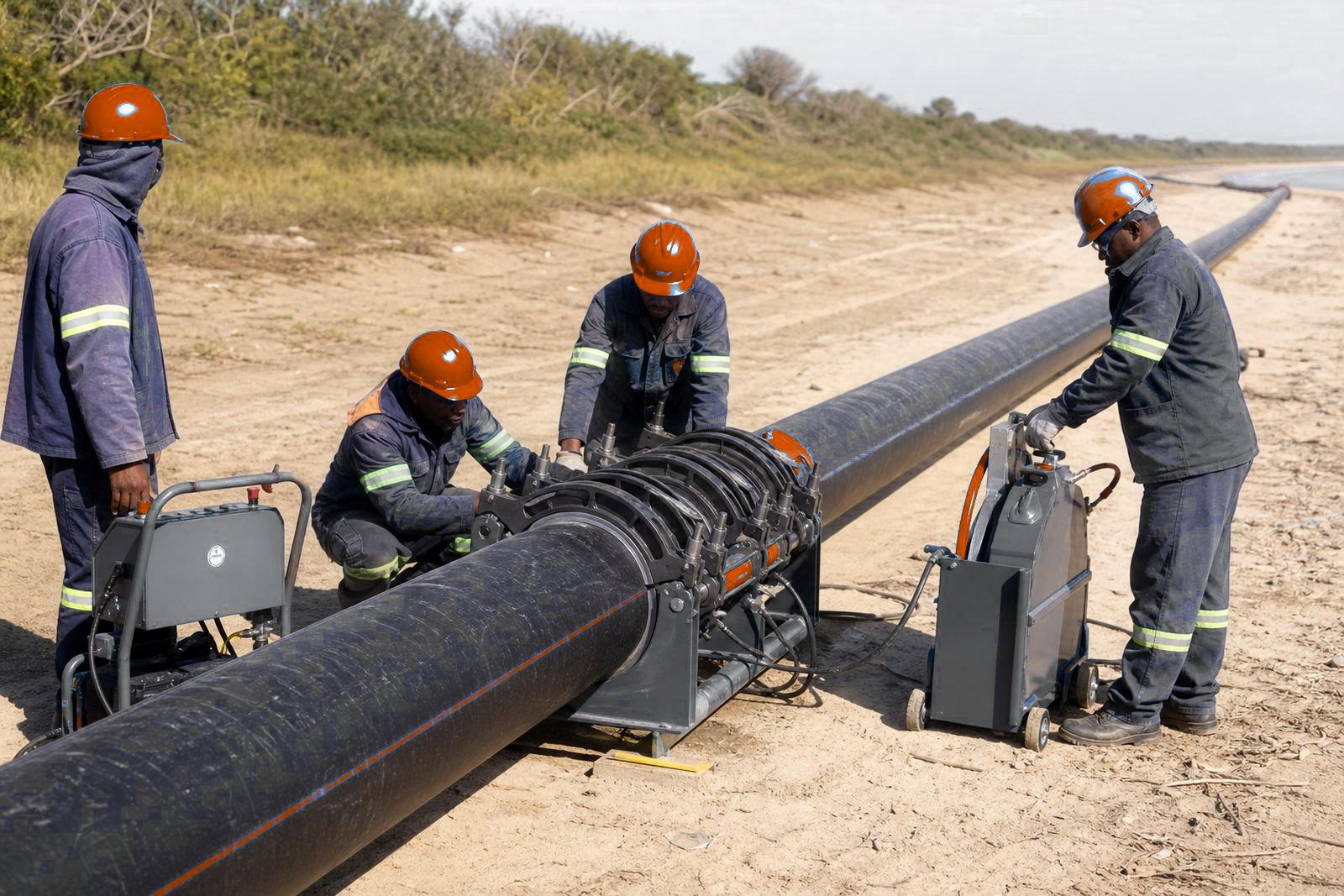
PlasticWelder supplied the butt-fusion welding machine, clamps, facer, heater plate and supporting hydraulic gear as a matched hire package for the section assembly. The setup was chosen so the welders could handle the pipe sizes on site without swapping between different machines or working around mismatched accessories.
We also checked the heater plate and clamp alignment between shifts. Where the crew needed a steadier rhythm on the joint cycle, our team assisted with the sequence and checked that the bead appearance stayed even across the pipe size changes.
A three-week site rhythm from setup to section close-out
Work at Richards Bay ran over three weeks, starting with setup, operator briefing and trial alignment. Once the crew had the sequence settled, the welding moved into the main assembly phase, where the pace depended on pipe handling, fit-up checks and the time needed for each cooling cycle.
By the final stage, attention shifted to inspection and repeat checks on the completed joints. The foreman wanted the records in order, the bead profile readable and the machine kept in steady working condition through the last runs. Service checks were done between welding runs, so worn parts were picked up before the last sections.
- Week 1 for setup, operator familiarisation and alignment checks
- Week 2 for main butt-fusion runs on the outfall section
- Week 3 for inspection support, logging and close-out checks
What the crew gained from the job support
The main result was a cleaner welding rhythm on large diameter HDPE, with better control over facing, fusion pressure and cooling time from one joint to the next. The bead inspection notes stayed consistent, and the team had fewer interruptions caused by adjustment mistakes or uncertainty around the machine settings.
On the coastal outfall the pipework was exposed, access was awkward and handling points shifted through the day. The crew left with a tighter process for future outfall work, plus a better feel for how to manage SDR changes and keep records that match what was actually welded on site.
- More consistent bead shape across repeated joints
- Better control of the weld cycle under site pressure
- Cleaner records for later inspection and handover
Our approach to a similar outfall project in Richards Bay
For a similar project, we would set the machine package around the largest pipe size first, then build the rest of the hire plan around that. The next step would be a short operator run-through on facing, heater plate use, changeover timing and the bead checks that show whether the joint is ready to cool out properly.
We check clamp condition, hydraulic pressure stability and logbook entries, as these slip first when a crew pushes through long lengths of pipe. Settings and the weld record were updated each time the outfall pipe mix changed.
- Match the outfall machine to the largest pipe diameter on site.
- Check clamp alignment before the first weld of the day
Key facts
| Project | Richards Bay Outfall |
|---|---|
| Client type | Civil contractor |
| Work type | Coastal outfall section assembly |
| Pipe material | HDPE |
| Equipment | Butt-fusion welding machine, facer, heater plate, clamps and hydraulic support |
| Duration | 3 weeks |