Reservoir feed line conditions on site
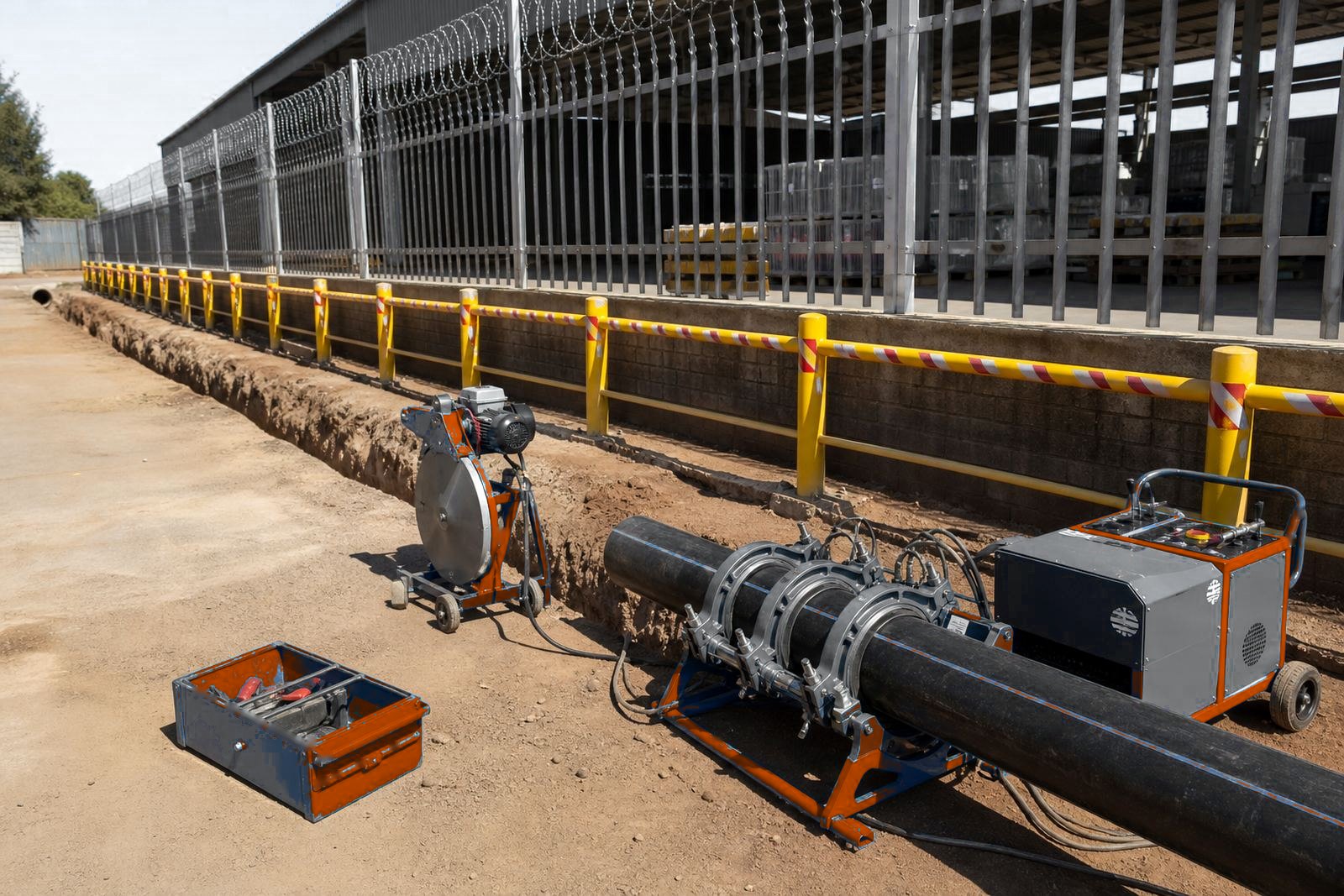
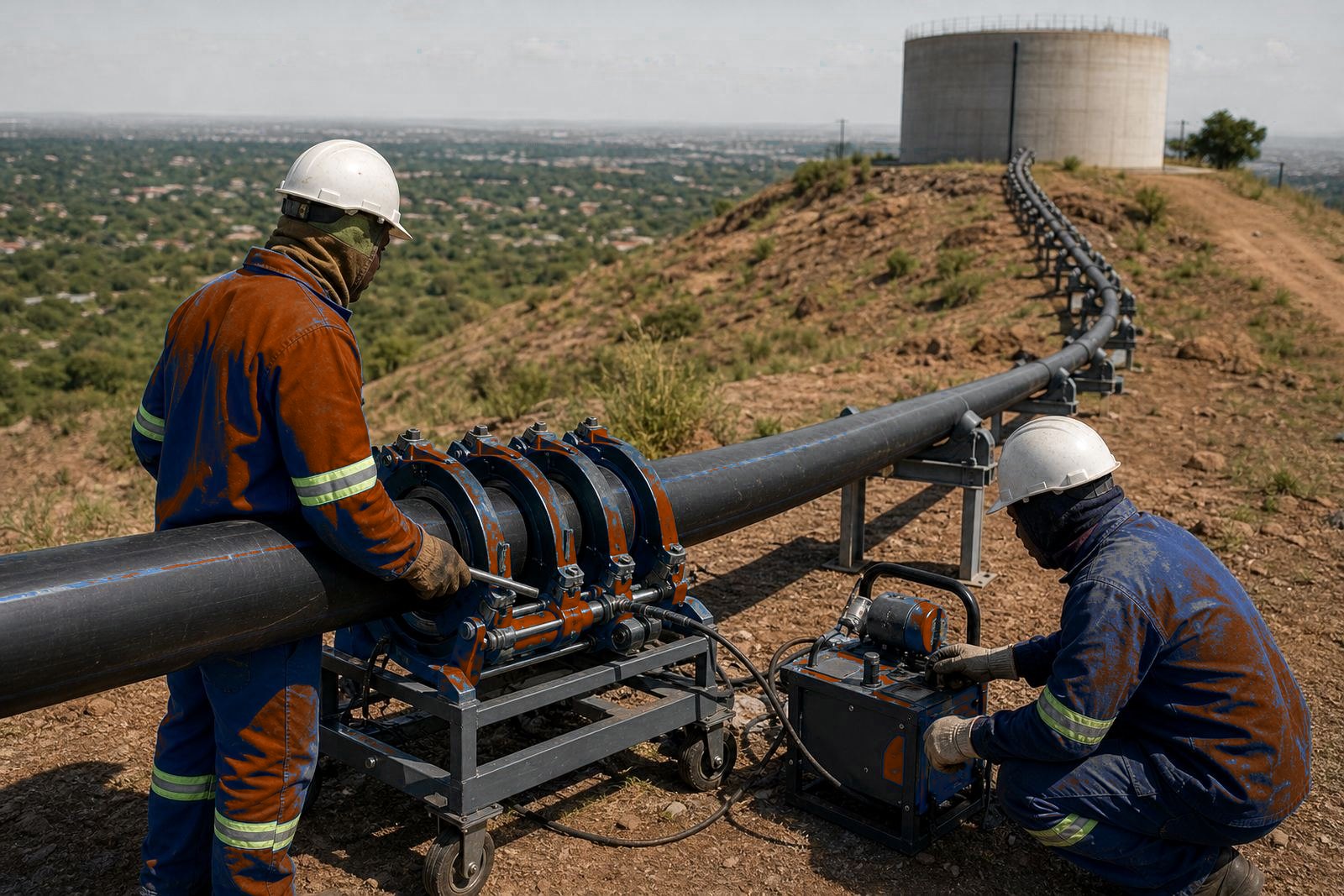
A civil contractor was building a reservoir feed line in Polokwane, with HDPE pipe sections arriving in mixed lengths and the trench line tightening up around bends, valve positions and access points. The pipe run called for careful handling because the welds had to hold shape and alignment through repeated jointing, then sit clean under pressure testing and backfill. So the team needed support with the weld sequence, the set-up of each joint and a practical way to keep records.
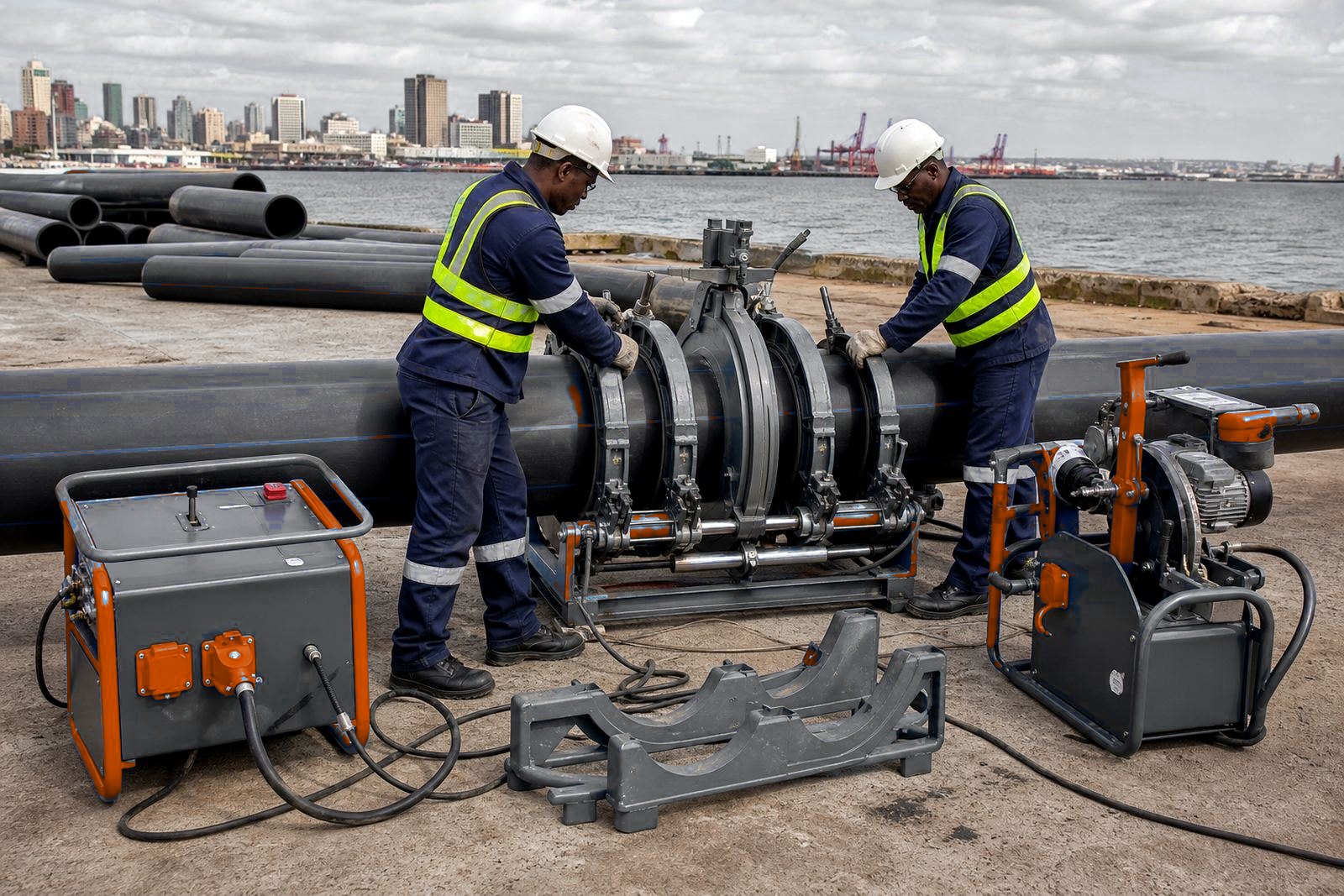
We joined the job as a support package tailored to the site. The contractor used our butt-fusion equipment, clamps, facer and heater plate support, with site startup help and welding guidance from our side. The pipe sizes ranged across the feed line sections, and the work moved through different SDR values on the same project, so the team had to keep settings matched to each pipe schedule and wall thickness for every joint.
- Project type: reservoir feed line support
- Location: Polokwane, Limpopo
- Pipe material: HDPE for water conveyance
- Work method: butt-fusion on straight runs and site joints
What the crew needed from the welding setup
The brief was practical. The contractor wanted a machine that could hold alignment, keep hydraulic pressure steady and make repeatable joints over a line that included long pulls and changes in ground level. Polokwane received a machine with the right clamp set, a facing tool, plate checks and logging help for traceable joints. The contractor asked for refresher training because the job mixed experienced hands with newer operators, which shows in the way a face is cut and how fast the pipe moves from heat to changeover.
The pipe ends need to be squared, facing must leave both ends clean and even, and the heater plate has to bring the surfaces to the right fusion condition before the changeover starts. We kept the focus on those steps, plus bead inspection after each weld. A neat bead shows good alignment, heat and pressure control.
- Clamp alignment checked before each weld
- Facer blade condition checked during the shift
Three weeks on the line, with the sequence kept tight
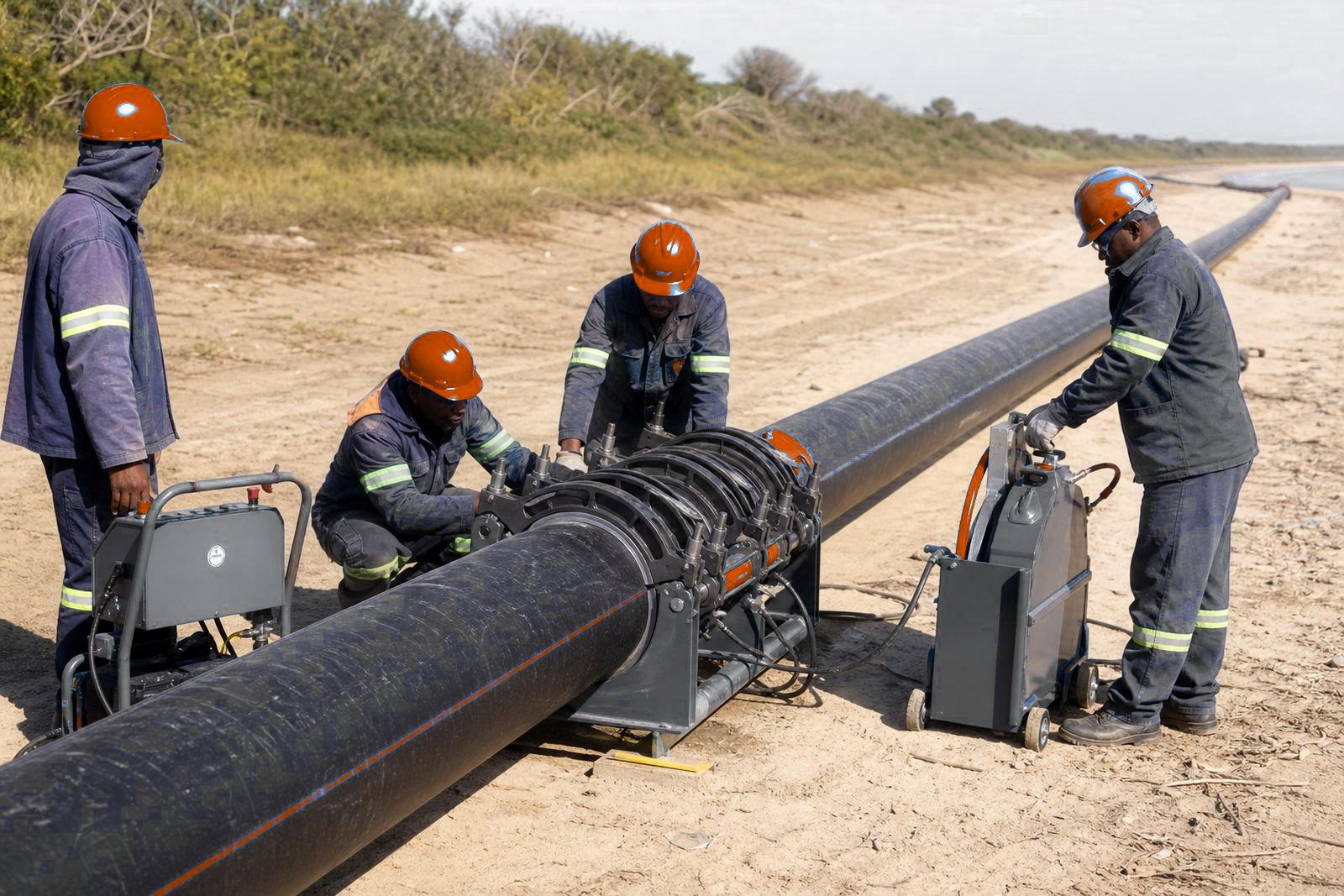
The project ran over three weeks of site support, with the early days spent on machine set-up, operator briefing and the first weld sequence. Once the crew was steady on the process, the work settled into a practical rhythm. The first week covered familiarisation with the machine controls, clamp loading, facer use and the heating window for the pipe wall thickness on site. The second week centred on production welding and the logging of joint details, while the third week dealt with ongoing checks, minor servicing support and help with a few joints in awkward pipe positions.
There was also a sensible constraint around site access. Reservoir feed work rarely gives a wide open working area, so the equipment had to move without wasting time and without putting strain on the pipe ends. We helped the contractor keep the machine area tidy and the joint faces protected from dust and handling marks. In Polokwane, dry conditions can make dust a nuisance on exposed pipe ends, so the crew kept the work area cleaned down before heating and before bead inspection.
- Week 1: machine set-up and first joints
- Week 2: production welding along the reservoir feed
- Week 3: final checks and close-out
The main joint details
Every stage of each weld was completed in sequence. The pipe ends were faced until the cut surfaces met evenly, then the heater plate brought both ends into the correct thermal condition before changeover. That changeover had to be neat and controlled, with the operator moving from heat to fusion without dragging the softened material or losing alignment. After that, the fusion pressure had to stay consistent through the cooling period so the bead could form properly and the joint could set without movement.
Bead shape and consistency were checked on each joint. A balanced bead on both sides of the joint suggests the surfaces were lined up well and the pressure stayed steady. A thin or uneven bead can point to a heater issue, clamp movement or a poor changeover. The team logged each weld number, pipe size and SDR against the joint record, which kept the line traceable for inspection and sign-off.
- Pipe sizes handled within the machine clamp range
- SDR recorded for each weld set
- Fusion pressure matched to pipe wall thickness
- Cooling time respected before handling or moving the line
Hire support during the job
Because the project needed active site support, we kept the machine ready through checks on the hydraulic system, the facing tool and the heater plate condition. On a reservoir feed job, a small stoppage can throw the crew off rhythm and leave the next joint waiting in the trench. Spares came from us too, so the contractor could keep the job moving without piecing together parts from several places. Where the machine needed attention, our team handled the service work and clamp alignment checks before it went back into use.
For a team working across different pipe sections, machine hire can only help if the equipment is ready for the next joint without surprises. This one stayed practical because the operator had clear guidance, the machine was kept in order, and the weld log was kept during the job. That combination suited the pace of reservoir feed work and kept the welding sequence under control from the first joint to the last.
What the line showed at close-out
By the end of the three-week support period, the contractor had a cleaner weld process, better control over the heat cycle and a more confident crew on the fusion machine. The joints were being handled with a steadier rhythm, and the weld records matched the pipe sections more neatly. That helped the line move through final checks with fewer interruptions and gave the team a clearer routine for future reservoir and water reticulation work.
On a similar feed line, we would set the machine from the pipe sizes and SDRs, train the operators on facing and changeover, and log each weld as it is made.
- Better control of facing and heating on each joint
- Cleaner weld records for later inspection
- Steadier operator handling across the full pipe run
Key facts
| Project | Polokwane reservoir feed line support |
|---|---|
| Location | Polokwane, Limpopo |
| Pipe material | HDPE |
| Method | Butt-fusion welding |
| Support period | 3 weeks |