Estate lines, trench rhythm and the pipe sizes on the table
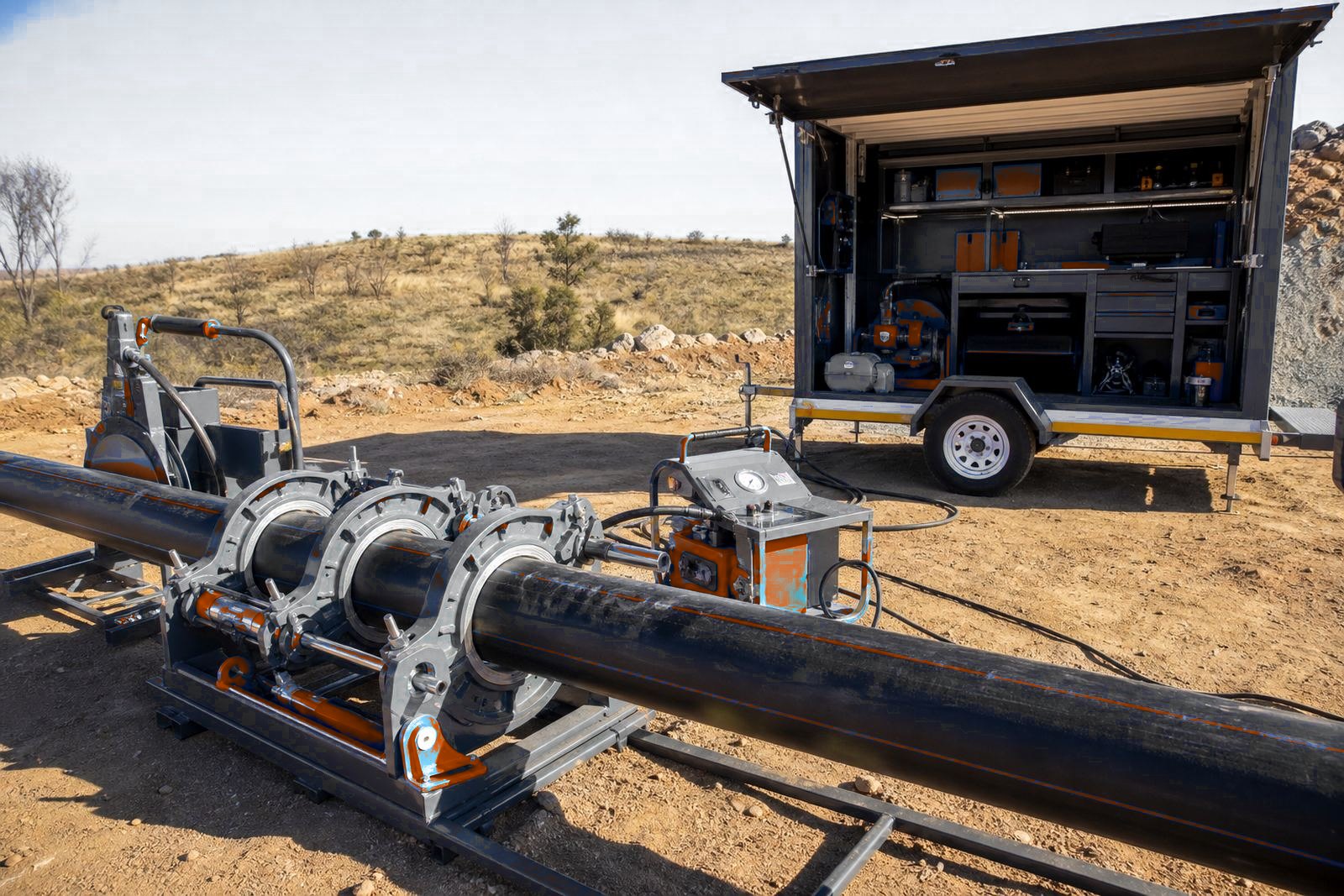
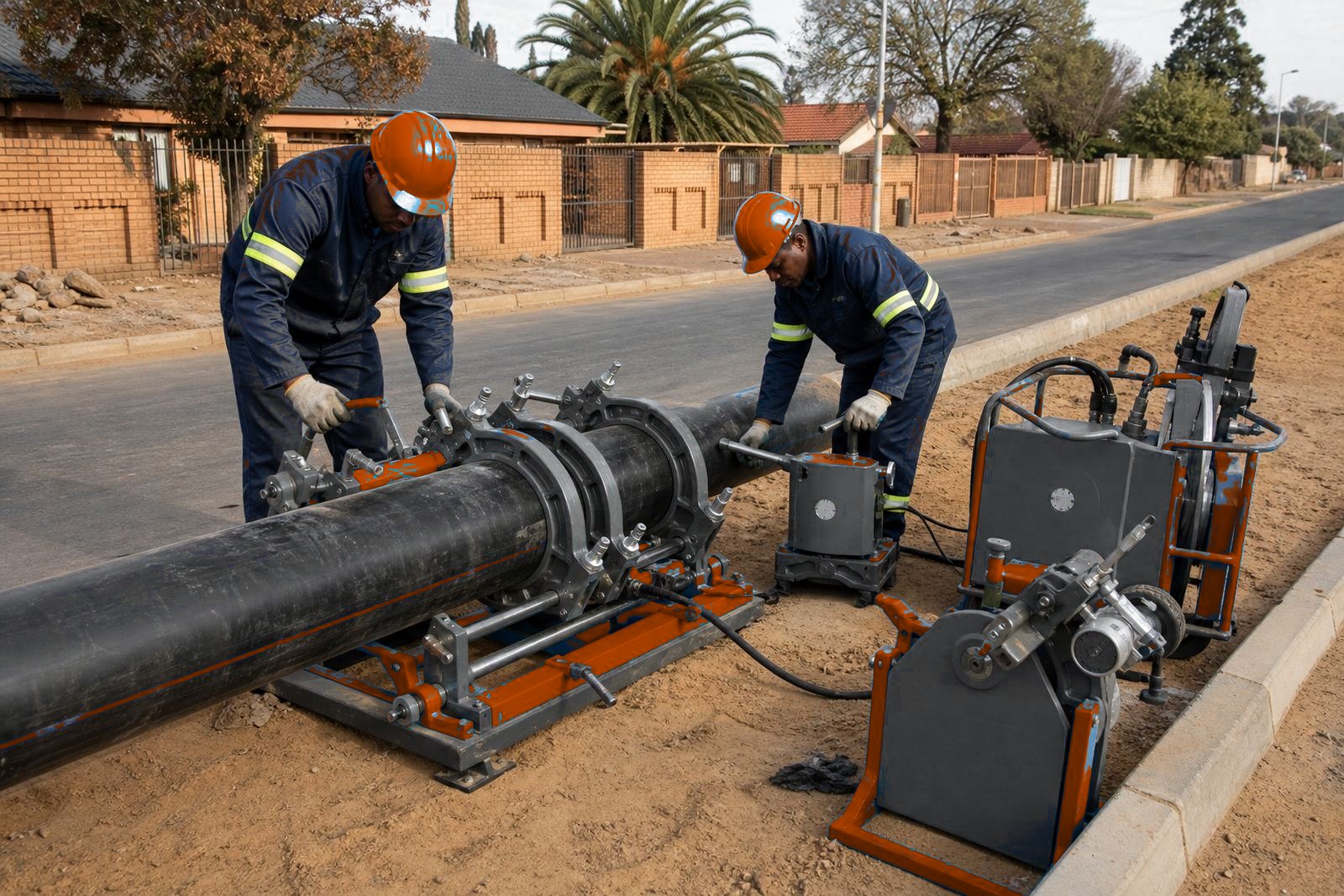
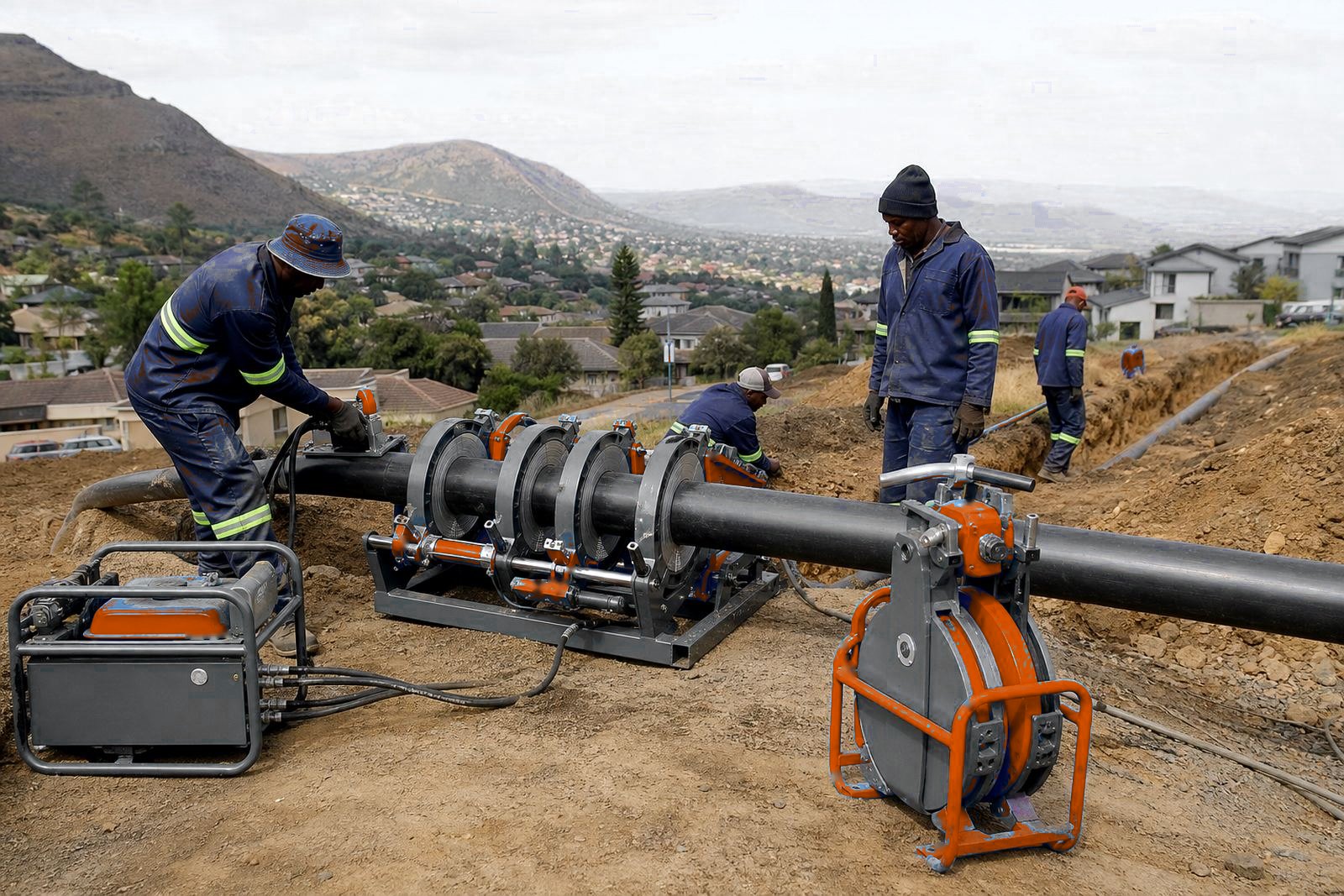
This estate water reticulation programme in George had the crew joining HDPE pipe across internal runs and tie-ins without time for trial runs. The pipe schedule included a mix of sizes and SDR ratings, so the hire had to suit both the line work and the joints that needed a neater finish at the end of each shift.
The brief was practical. The team needed a machine set that could face square, hold alignment, heat evenly and keep the pipe ends stable through changeover. There was also a training angle, because the welders on site wanted a clear method for set-up, bead reading and keeping pressure steady during cooling time.
- HDPE fusion machine hire for estate water reticulation in George.
- Facing tool, heater plate and matching clamps included
- Support for SDR matching, alignment and weld sequence
What the George crew needed from the hire set
Several limits on the site guided our choice of kit. Access around the estate was tight in places, so the machine needed a practical footprint and enough clamping stability for pipe runs that were not always laid on perfect ground. The foreman wanted a set that could log key weld details for handover and future fault tracing.
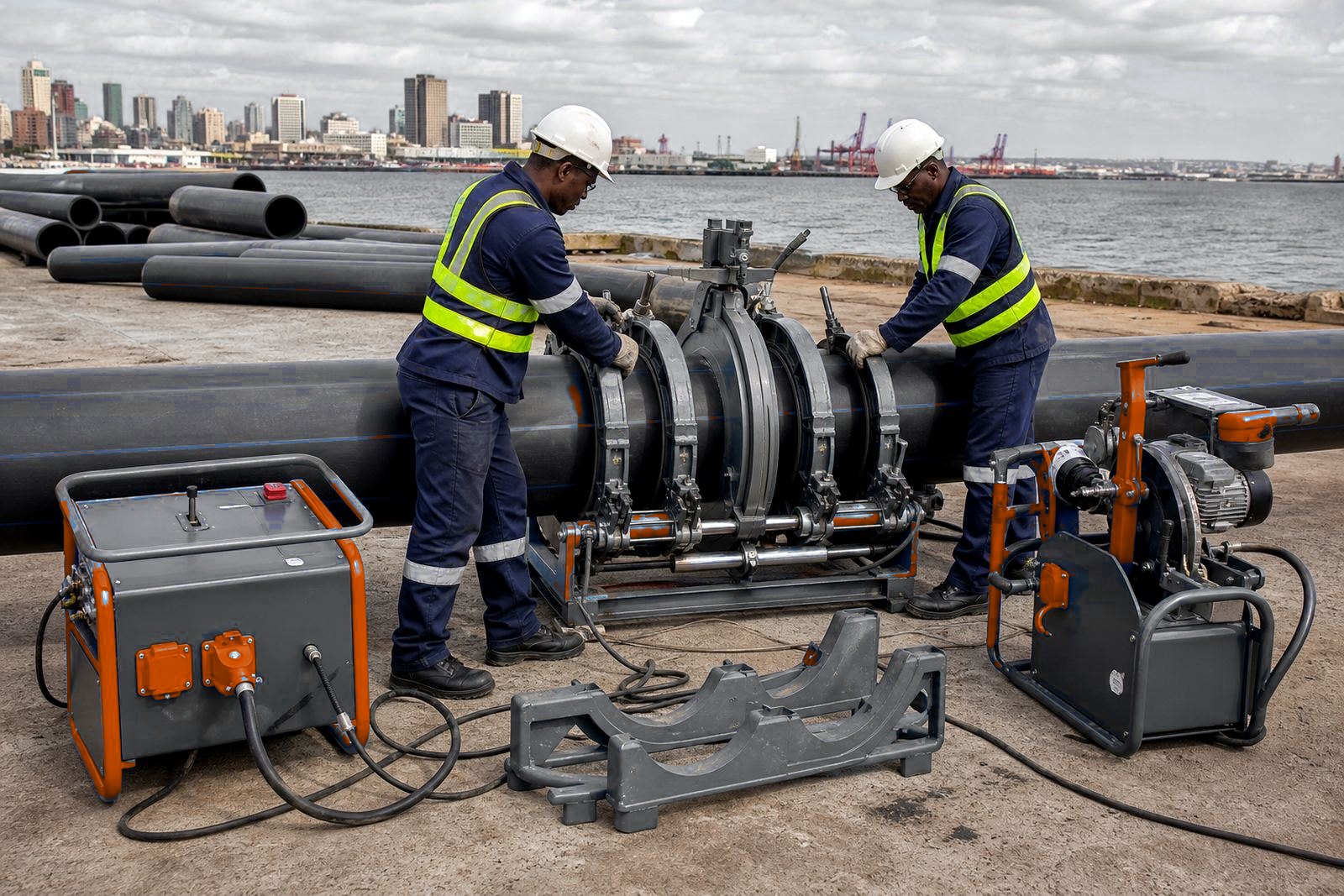
Hire equipment for the George estate was set up around the usual butt-fusion sequence: facing to remove pipe end damage, cleaning the mating faces, heating to the correct melt condition, changeover with minimal delay, then fusion pressure and a proper hold while the joint cooled. Timing between steps was harder to hold when the pipe had sat in the sun.
- Data logging for weld trace notes and job records
- Bead inspection guidance after each completed joint
Training first, welding second
The hire included a machine drop. Ayanda handled the training side with a walk-through of the full butt-fusion cycle, from pipe preparation to final bead inspection. The operators already knew the basics of water reticulation, but they wanted a tighter process for keeping the ends square and avoiding a heavy bead that can point to wrong pressure or poor heat soak.
We covered the working estate routine: how long to face each end, what a consistent melt face should look like, how to work through the changeover without dragging dirt onto the joint, and how to hold pressure through cooling without disturbing the line. Once the clamp setup was kept the same for each joint, the pipe stopped shifting in the clamps.
The training also covered machine care during the hire period. Heater plates need checking for clean contact and even temperature spread, while facer blades and clamp faces need attention if the pipe starts slipping or the cut edge looks rough. The team was shown what to check before the next joint went in.
Three weeks on site, with the work spread across the estate
The George project ran over three weeks. In the first week the crew worked through setup, pipe preparation and the first production joints. Repeated fusion across the George reticulation runs made week two the busiest, with more focus on logging. The final George week finished sections and adjusted the layout around valves and access points.
That pace suited the estate programme because the team could keep the same operators on the same machine set. It meant fewer handovers and less time wasted re-explaining the pressure settings. Our service team also checked the hire kit through the job, and the machine stayed aligned with the kind of work George estates usually throw at a crew: mixed lengths, stop-start progress and a need to keep the trench work moving without shortcuts.
- Week 1: setup, pipe prep and initial welds
- Week 2: production fusion work and weld logging
- Week 3: finishing, inspection and line adjustments
What the welds had to show at the end of the run
For this type of water work, the weld should hold with a regular bead around the pipe, even squeeze-out and no obvious signs of misalignment or overheating. On the George job the crew used the machine records and visual checks together, so they could match each weld to the pipe size and the settings used on that run.
We also covered the handover. The George team kept the joint records after the machines went back. The pipes were joined in a controlled way and the estate crew had a better grip on pressure, temperature and cooling time when the next section was opened up.
If we handled a similar estate water job again in George, we would keep the same structure: proper machine selection, short training before the first weld, and close attention to clamp alignment before production starts. That mix kept the work steady and it kept the operator decisions simple where they needed to be.
Key facts
| Project | George Estate Water |
|---|---|
| Town | George |
| Work type | Estate water reticulation |
| Service | Butt-fusion machine hire |
| Pipe method | HDPE butt-fusion with facing, heating, changeover and cooling |
| Machine set | Facing tool, heater plate, clamps and fusion unit |