Mainline work near Newcastle, with long pulls and rough ground
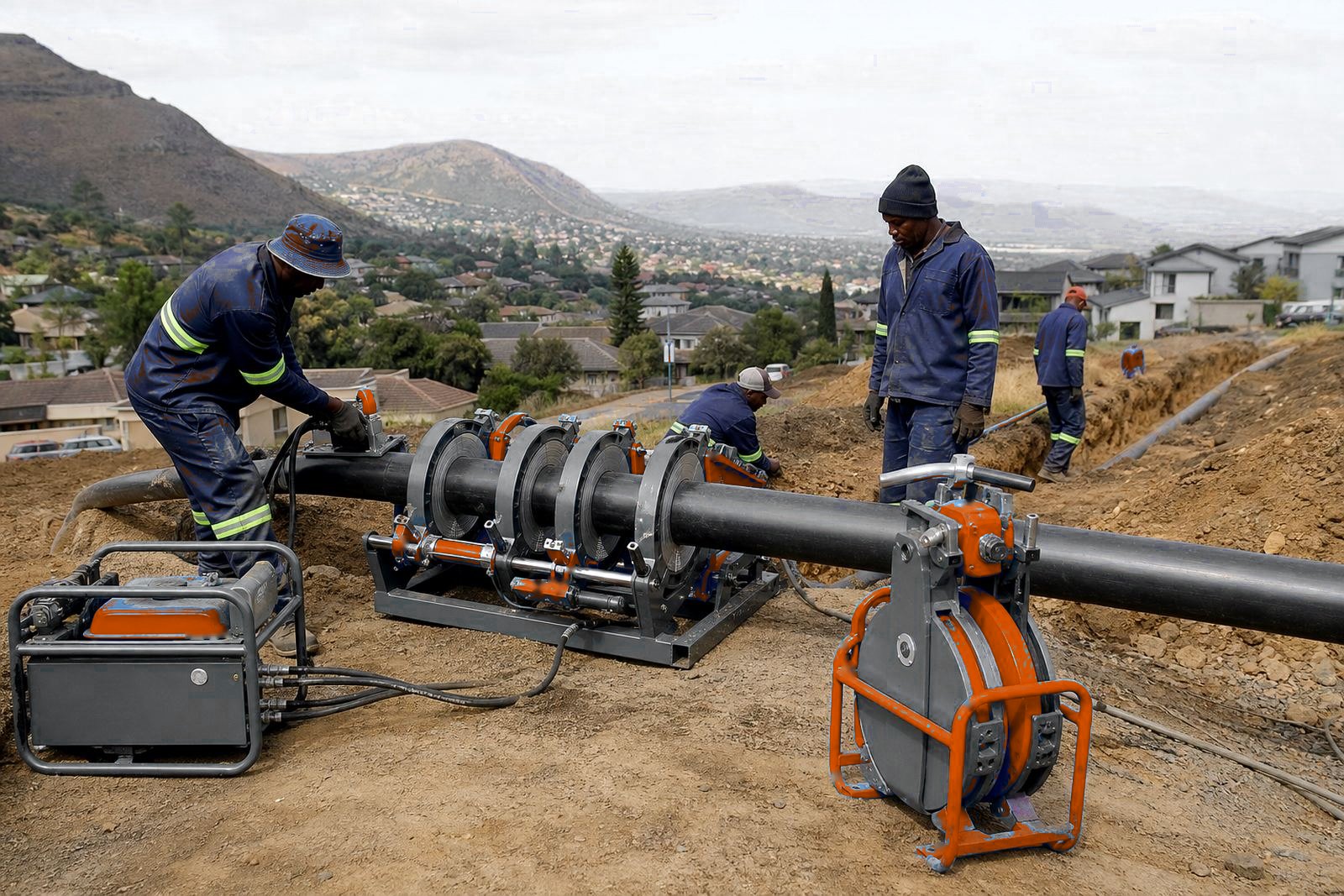
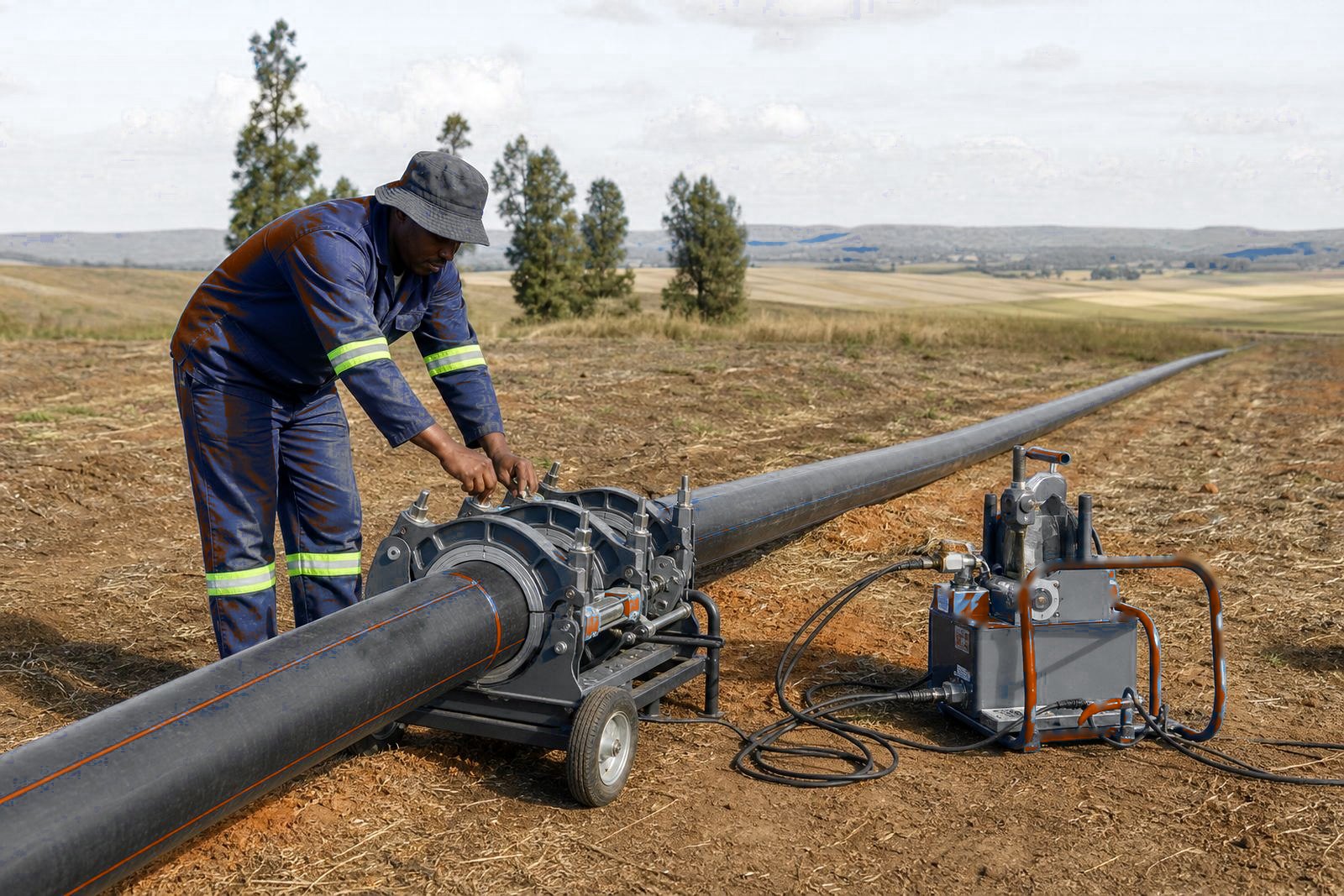
The job sat outside Newcastle on agricultural ground where the mainline had to move across open sections, shallow trenches and a few awkward turns near working roads and service crossings. A setup light enough to move along the trench and handle at the pipe racks was needed.
The brief was to support manual fusion on a water main for irrigation, with enough control for different pipe sizes and SDRs on the same run. The Newcastle team wanted guidance on facing, heating, changeover and pressure, with one bead inspection routine for the day.
- Project type: agricultural HDPE mainline for irrigation
- Area: near Newcastle, KwaZulu-Natal
- Pipe range: mixed diameters used on the same run
- Method: manual butt-fusion with controlled heating and cooling cycles
The fusion sequence the crew needed to hold steady
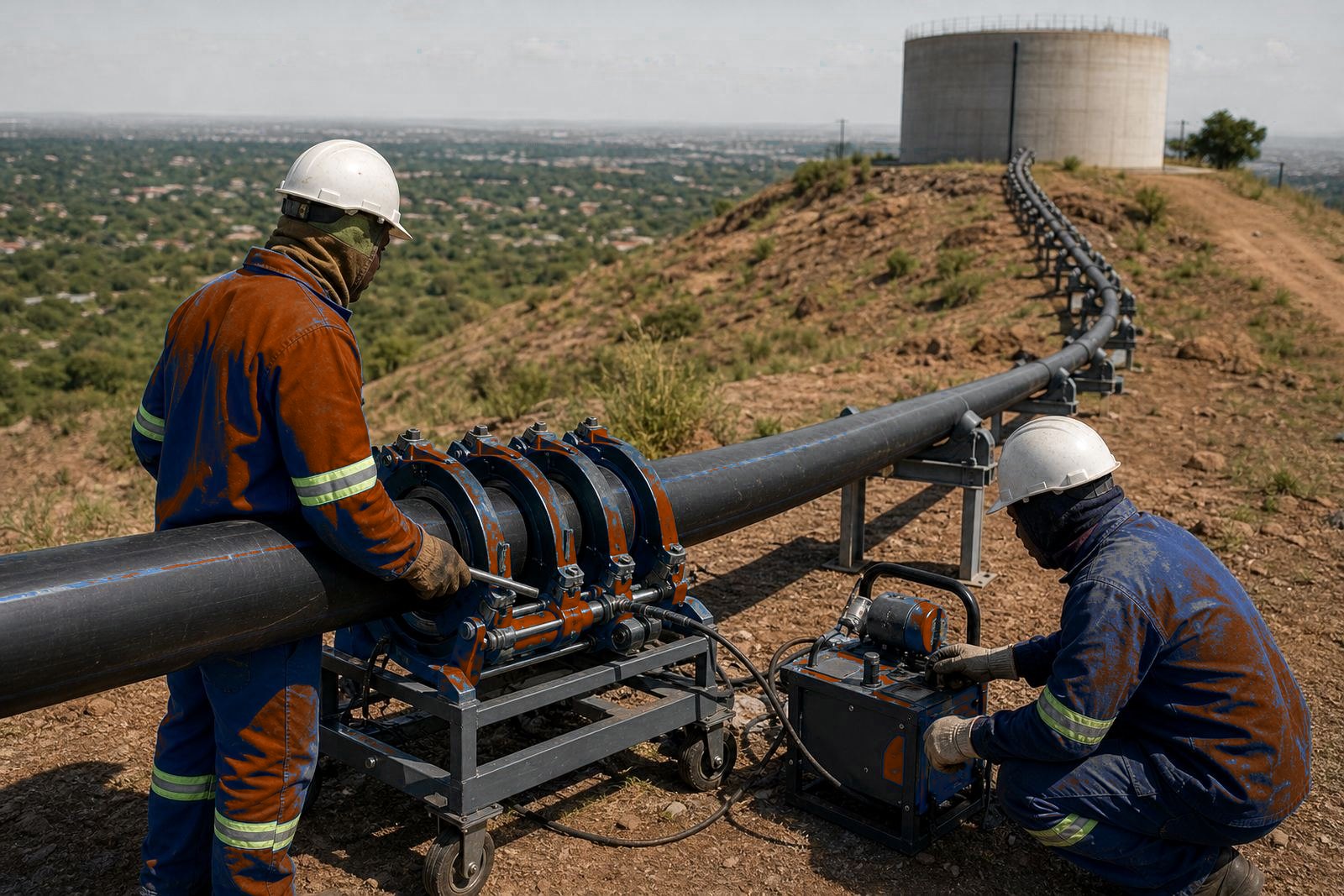
We set the work around the normal butt-fusion sequence. Pipe ends were faced square, cleaned and checked before the heater plate went in. Once both faces were flat and aligned, the joint moved into the heating stage, then changeover was kept tight so the softened ends did not lose temperature or pick up dirt from the trench side.
The crew were shown how to read the joint feel and take the press at its proper pace. Fusion pressure was kept to the correct setting for the pipe wall and SDR, then the joint was held through cooling time without movement. On a few of the larger sizes, the waiting period was the hardest part, because a disturbed joint can look fine at the bead and still fail later.
- Facing tool used to square pipe ends before every weld
- Heater plate checked for clean surface contact and even heat
- Clamp alignment set before heating to avoid oval joints
- Cooling time held before the pipe was released or shifted
Equipment supplied for a mixed-size irrigation run
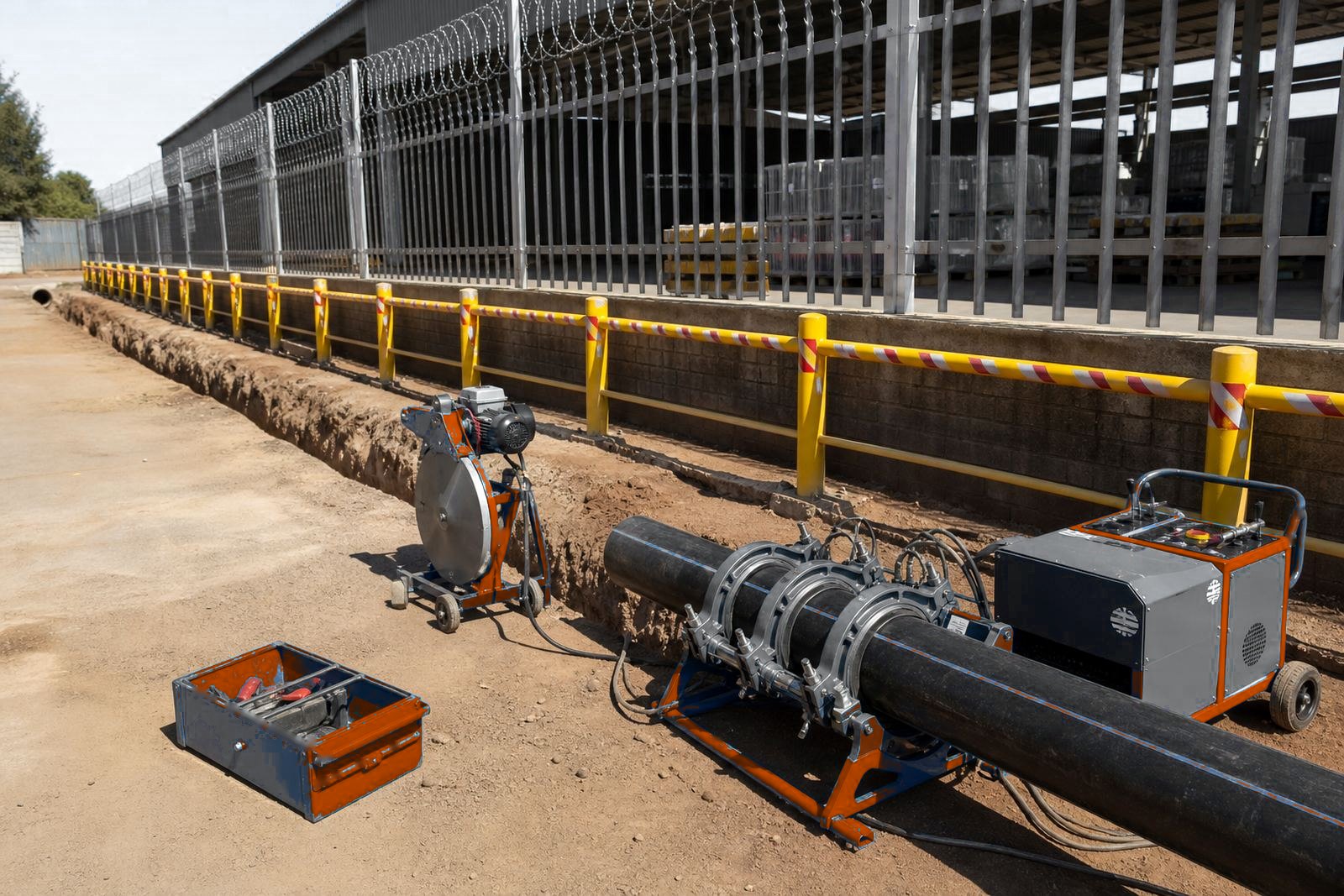
A manual machine sized for the irrigation pipe came with a facer, plate, clamps and field extras. The work was not confined to one straight section, so the kit had to be easy to move between trenches and stable enough for repeat joints through the day.
Weld logging support matched the join records to the pipe and joint sequence. The line crossed more than one working area, and the foreman needed a proper record of what was fused, where it sat in the run and which SDR or diameter was used at each point. We also checked the clamps for grip and alignment before the welding started, which cut out a few avoidable adjustments later.
- Manual butt-fusion machine for field use
- Heater plate for HDPE fusion cycles
- Clamp set for alignment on different diameters
- Weld logging help for site records
Two weeks on site, with the pipe route changing underfoot
The Newcastle work ran over two weeks. In week one, the team set up the fusion station, checked the first pipe sizes and welded a shorter stretch while the crew got used to the cycle. Longer pulls, larger diameters and joints near road crossings came next on the Newcastle main.
There was no spare room for rough handling. Dust from the dry sections, moisture near low spots and the usual farm traffic meant the weld area had to stay organised. Positioning the machine so pipe was not dragged through loose soil improved bead quality on later joints.
- Week 1: setup, checks and trial joints
- Week 2: mainline welding and larger pipe sections
- Site condition: uneven ground with dust and local moisture
- Constraint: limited movement after each fused joint
What changed once the welds settled into a pattern
Once the team got into a steady routine, the joints became more consistent from one size to the next. The bead profile sat more evenly around the pipe, and the foreman had less variation to sort out during inspection. Operators learned to judge when a joint is at the right stage for changeover.
The main result was a cleaner installation path for the irrigation mainline, with fewer interruptions around the fusion station. The pipe could be handed off, aligned and cooled without confusion, and the welding records were easier to match to the physical line. On agricultural work, log each joint against its section before the trench closes.
- More even bead formation across repeated joints
- Better control of heating and changeover timing
- Cleaner weld records for the line sequence
- Less backtracking around the fusion station
What we would retain for a similar irrigation main
On another agricultural mainline, we would check the facer and heater plate and keep the clamp alignment tight before any pipe is heated. The logger stayed on the machine for the Newcastle irrigation main, so each joint record was written as the weld finished.
On work near Newcastle and similar rural routes, keep the fusion station compact and set out in weld order. That approach kept this job orderly from the first joint to the last section handed over.
- Start with square pipe faces and clean surfaces
- Keep fusion pressure matched to pipe size and wall thickness
- Protect the joint through the full cooling period
- Use bead inspection and weld logs together
Key facts
| Project | Newcastle irrigation main |
|---|---|
| Work type | Manual HDPE butt-fusion support |
| Location | Near Newcastle, KwaZulu-Natal |
| Pipe use | Agricultural water mainline |
| Timeline | Two weeks on site |