The pipe and the machine come first
The first training session covers pipe size, wall thickness and SDR. Clamp inserts, facing and pressure readings for 63 mm pipe are different from those for a 315 mm main.
Operators should learn to identify pipe ovality, moisture, dirt and sunlight damage before they ever touch the heater plate. Grime, humidity and storage conditions can change the pipe end before the first cut.
- Check the outside diameter and SDR against the job sheet.
- Inspect pipe ends for chips, ovality and contamination.
- Confirm the clamp set suits the pipe size in use.
- Make sure the machine bed is level and clean.
Facing, heating and changeover without hesitation
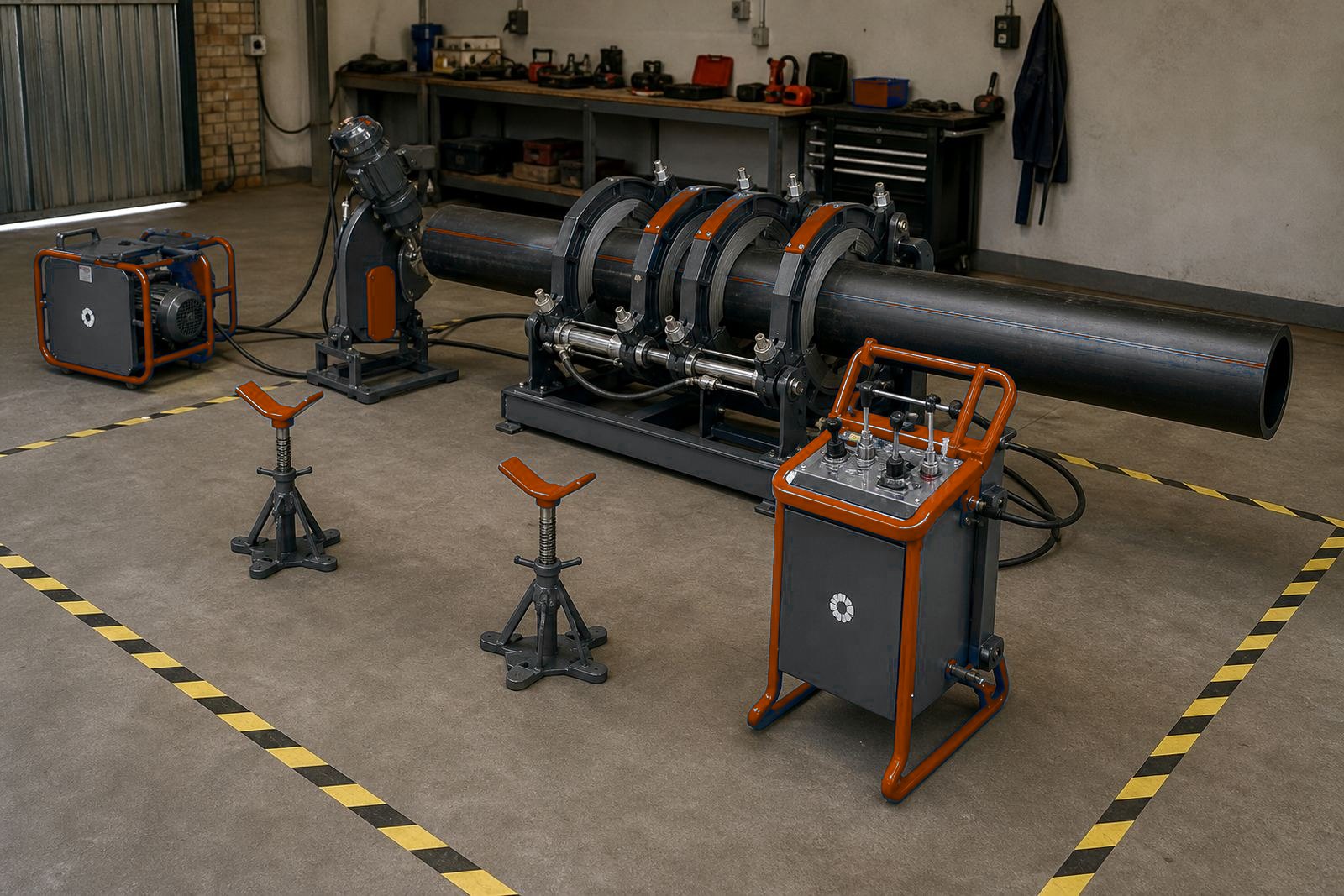
The facer removes the oxidised layer and squares the ends so the heated faces meet evenly. A training session should show how to feed the pipe into the clamps, lock alignment and take a light facing cut until both ends are true and continuous.
Once the heater plate is in place, operators need to recognise the correct melt bead and the temperature reading. Heating time, pressure and changeover time are read from the same weld table. A plate too cold or hot, or a slow changeover, spoils the molten interface.
- Face both ends until a full, even shaving appears.
- Clean the heater plate before each cycle.
- Watch for a uniform melt bead on both sides.
- Move from heating to fusion within the set changeover time.
Fusion pressure and cooling time
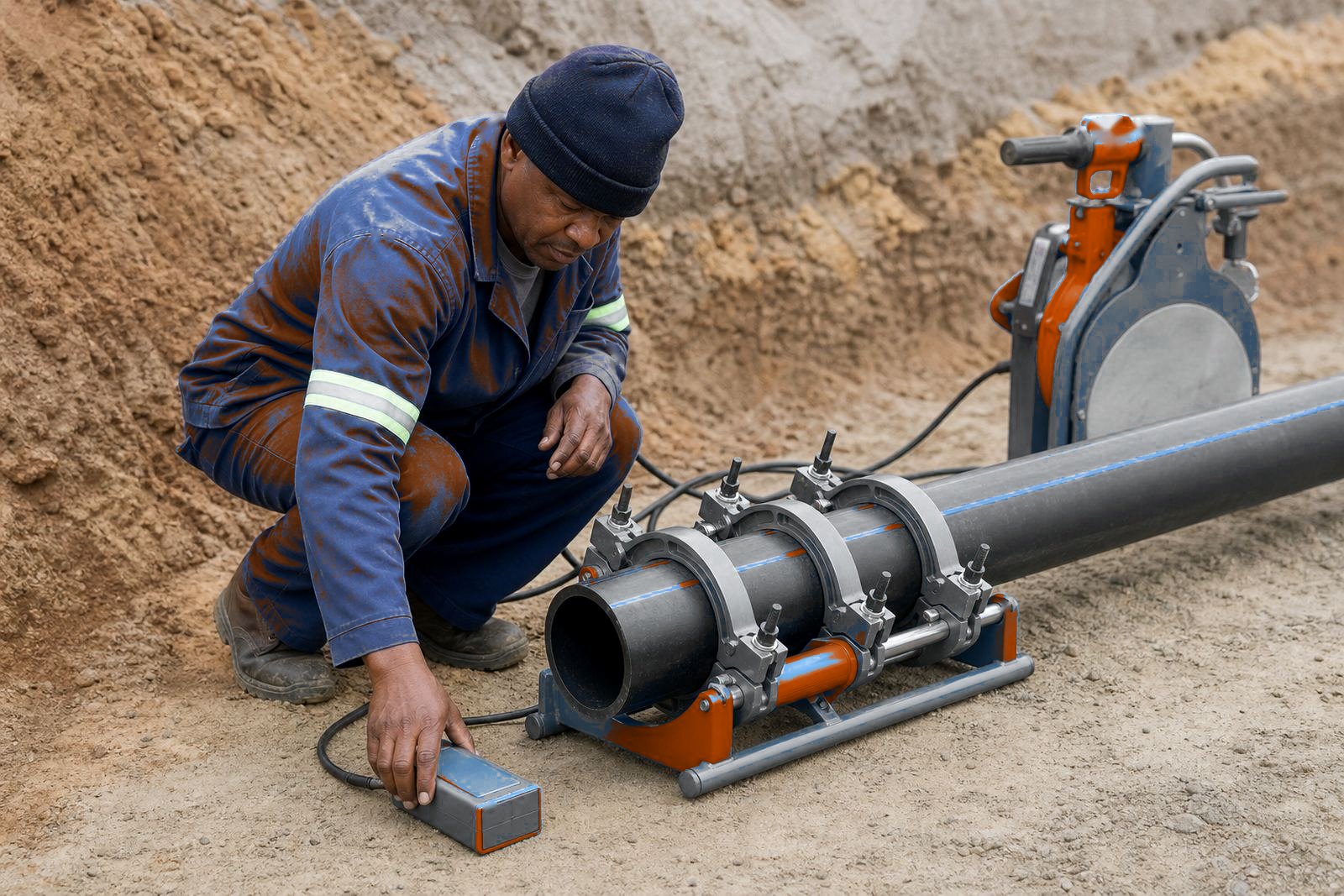
Training before a live job should include pressure control on the actual machine and a classroom talk. The operator must be able to set drag pressure, initial bead-up pressure and the lower pressure held through the fusion stage. That reading is often taken while the line is still in the trench or on a frame beside a civil work area.
The joint may look finished, but if clamps are released too early the pipe can move while the weld is still stabilising. That leads to misalignment, oval joints and stress at the bead. A solid training routine teaches the crew to keep the pipe still for the full cooling period and to leave the joint undisturbed until the material has settled.
- Read the hydraulic gauge before heating starts.
- Hold the joint steady through the full cooling window.
- Do not release clamps until the weld has settled fully.
Bead reading without a supervisor
Training should cover what a healthy bead looks like in a butt-fusion joint, with even squeeze-out around the pipe and no visible gaps, scorched areas or side-to-side drift. Trainees learn when to flag a joint before the line is buried or handed over.
Weld logs help when different shifts, different sites or different pipe sizes are involved. The team should record the pipe size, SDR, heating time, changeover time, fusion pressure and cooling time for each weld. Where a site keeps data logging in the machine, the operator still needs to cross-check the paper or digital record against the actual joint and not leave the detail to memory.
- Look for an even bead all round the joint.
- Check that both ends stayed aligned during fusion.
- Record the cycle details for each weld.
- Store notes for trench work, workshop work and hire fleet use separately.
A first-job checklist before the machine leaves the yard
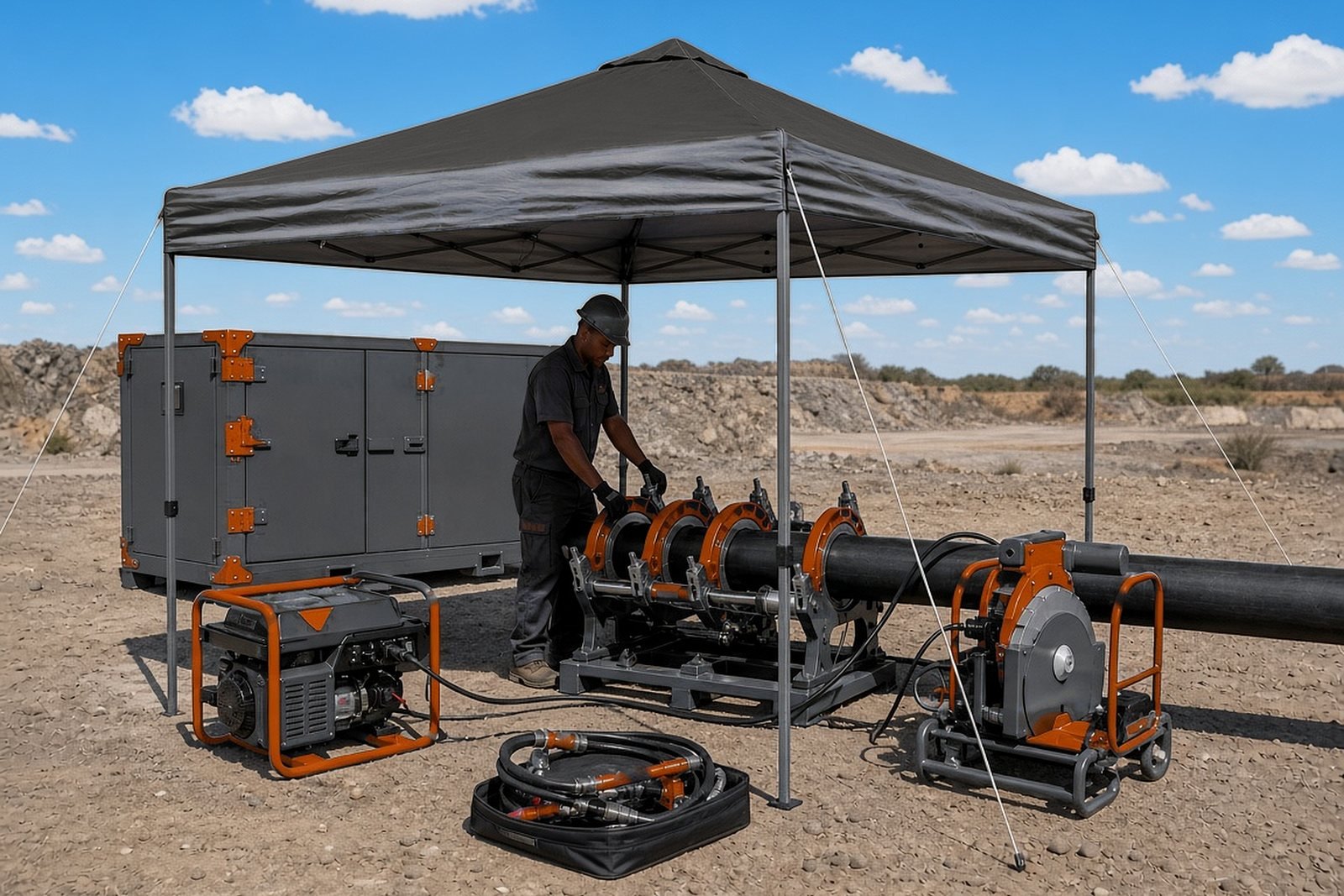
Before the first production weld, the crew should run through a proper start-up drill. Check the machine frame, hydraulic hoses, heater plate condition, facer blades, clamp movement and the pressure gauge. Run the check with the same pipe size and SDR that will be used on site.
Training can be delivered at any of our support regions. A trained operator makes the first joint with less waste.
- Inspect heater plate surface and temperature control.
- Test facer movement and blade condition.
- Check clamp alignment and hydraulic pressure.
- Pack the correct logs, tools and cleaning materials.
Training the weld team
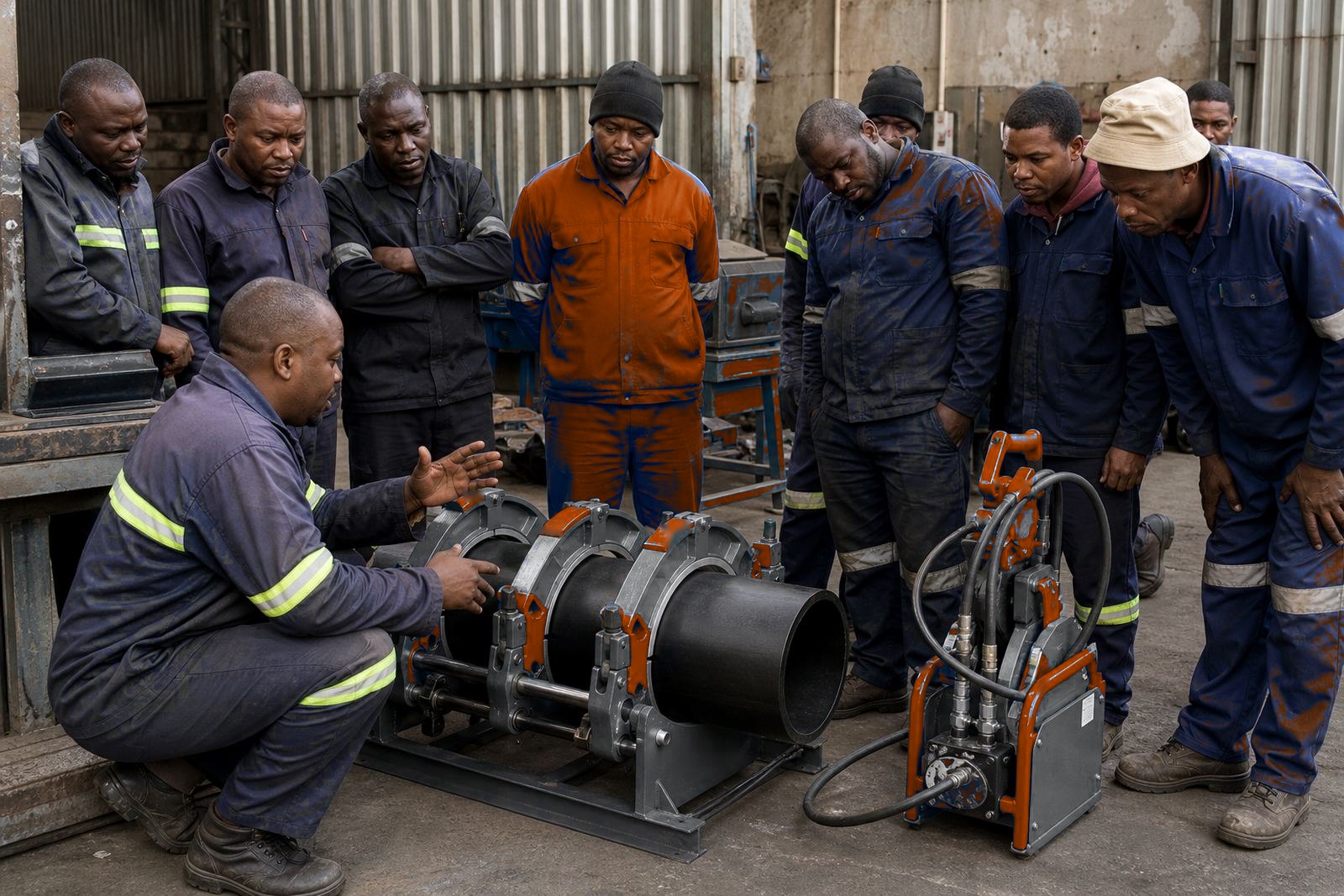
Some crews need only a refresher before a busy contract starts. Others need a fuller session that covers operator technique, site startup help and machine handling for a hire fleet. We can service the machine in the same week as the training, so operator and kit are ready together.
Remote sites or a changed crew need the right mix of people and setup. A machine can be in good order and still be used badly if the operator has not worked through the sequence properly. Training before the first job gives the team a clean routine to follow when the pipe is live and the day's work is already moving.
The team then works from the pipe size, SDR, site conditions and machine setup that the job actually needs.