Check the pipe schedule before loading
Remote work gets easier when the pipe schedule is checked before equipment is loaded. List the diameter range, SDR class and joint count. That tells you what jaw sets, inserts, clamps and heater plate capacity you need for the trip.
Dusty inland or windy sites near Rustenburg or Polokwane need extra cloths, caps and sheeting to keep grit off the ends. Coastal work in Durban or Cape Town needs extra care around moisture and surface contamination.
- Confirm pipe OD, wall thickness and SDR for each section
- List the smallest and largest pipe sizes on the run
- Check whether bends, trenches or benches limit machine access
Build the kit around the welding sequence
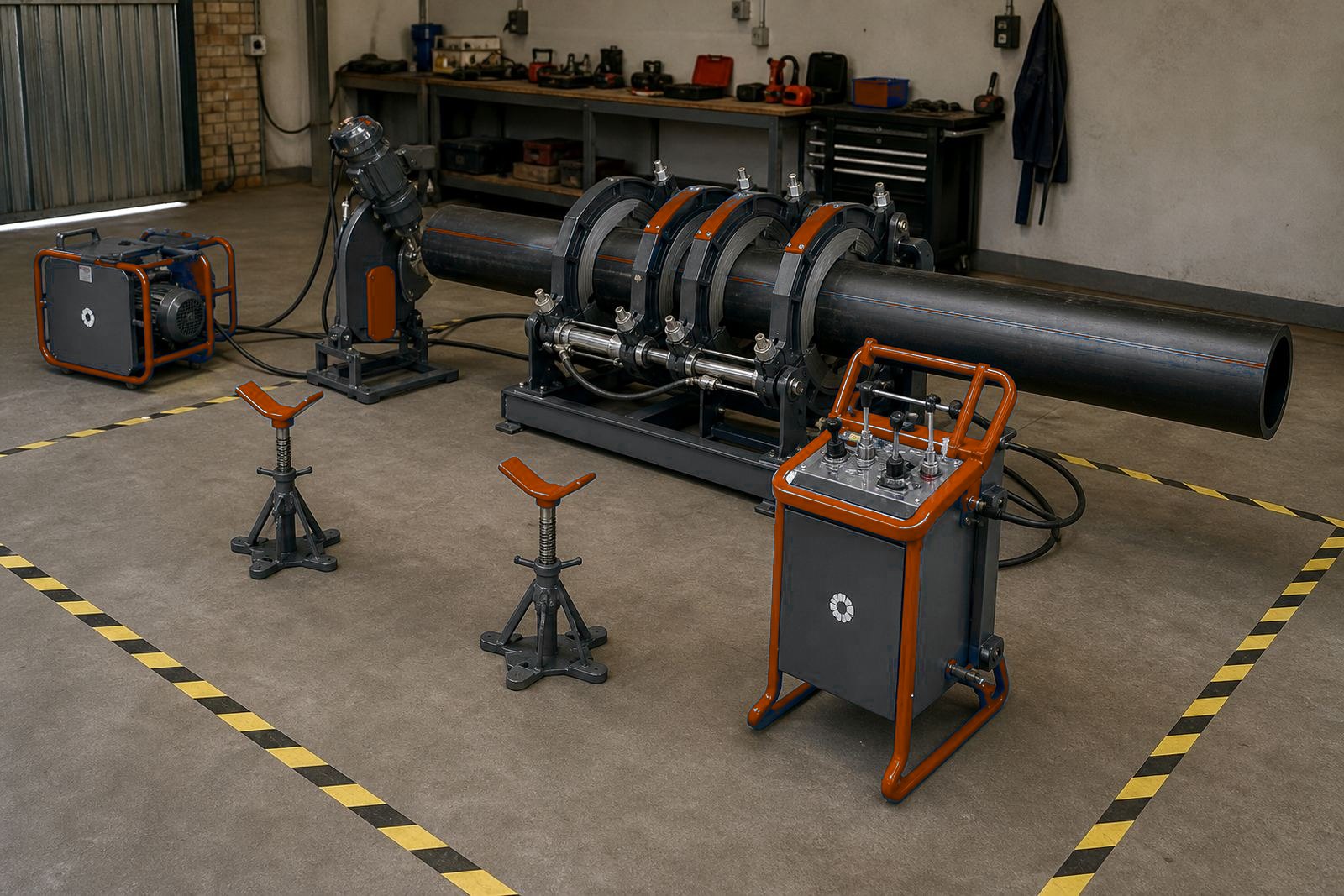
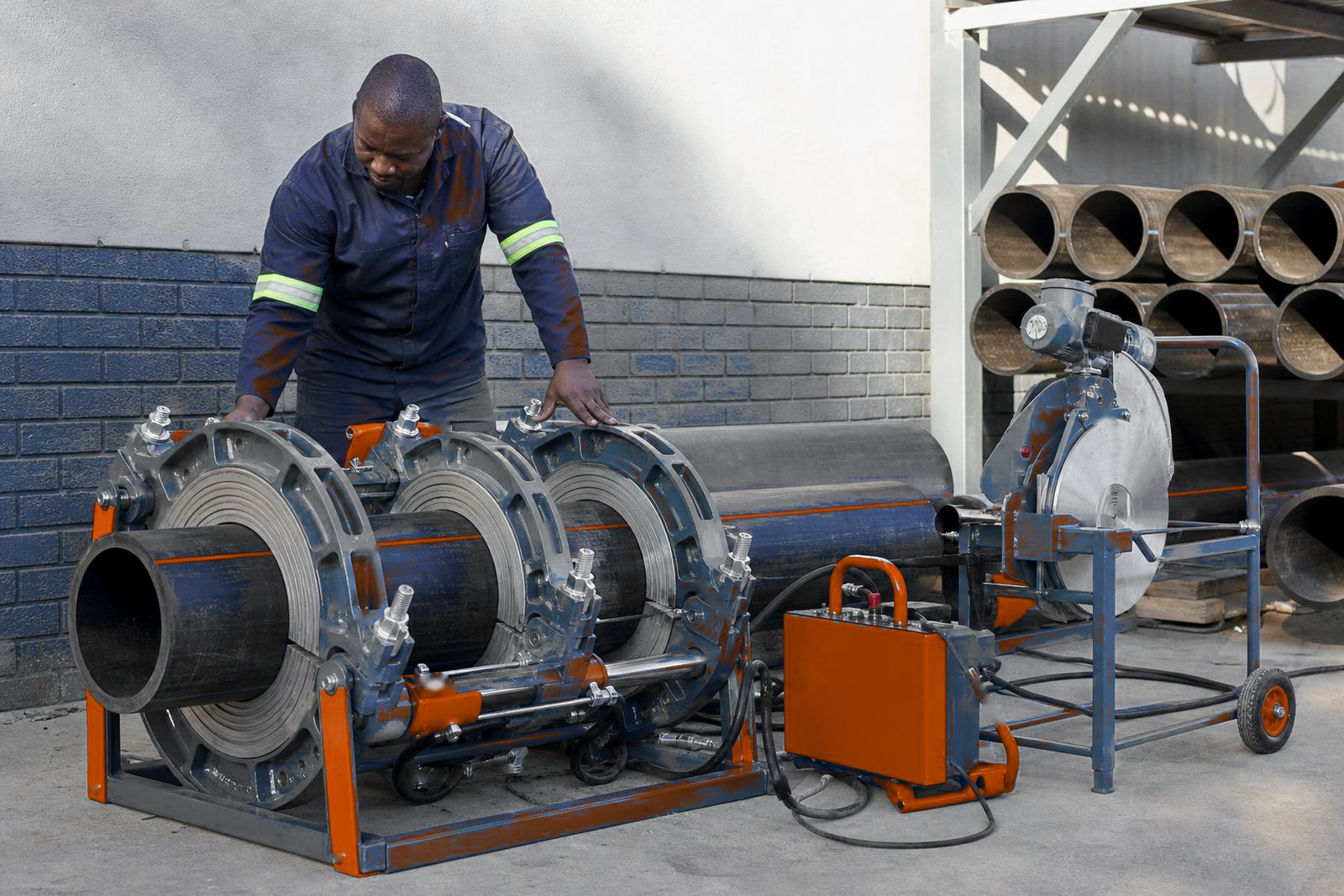
Remote sites add wind, dust and long supply runs to every fusion cycle. Remote crews need a true facer, a stable plate, slip-free clamps and a way to track pressure and cooling. If one of those items is missing, joint quality suffers.
For long shifts, pack the consumables that disappear first: clean lint-free cloths, release-safe wiping material, marker pens, tape, replacement blades, spare pins and seals, and the right lubricant where the clamping system needs it. Carry a spare heater plate cover or approved protective sheet on dusty or wet sites, because a scratched plate leaves the wrong footprint on the pipe face.
- Facing tool with sharp, serviceable cutters
- Clamp set matched to the pipe range
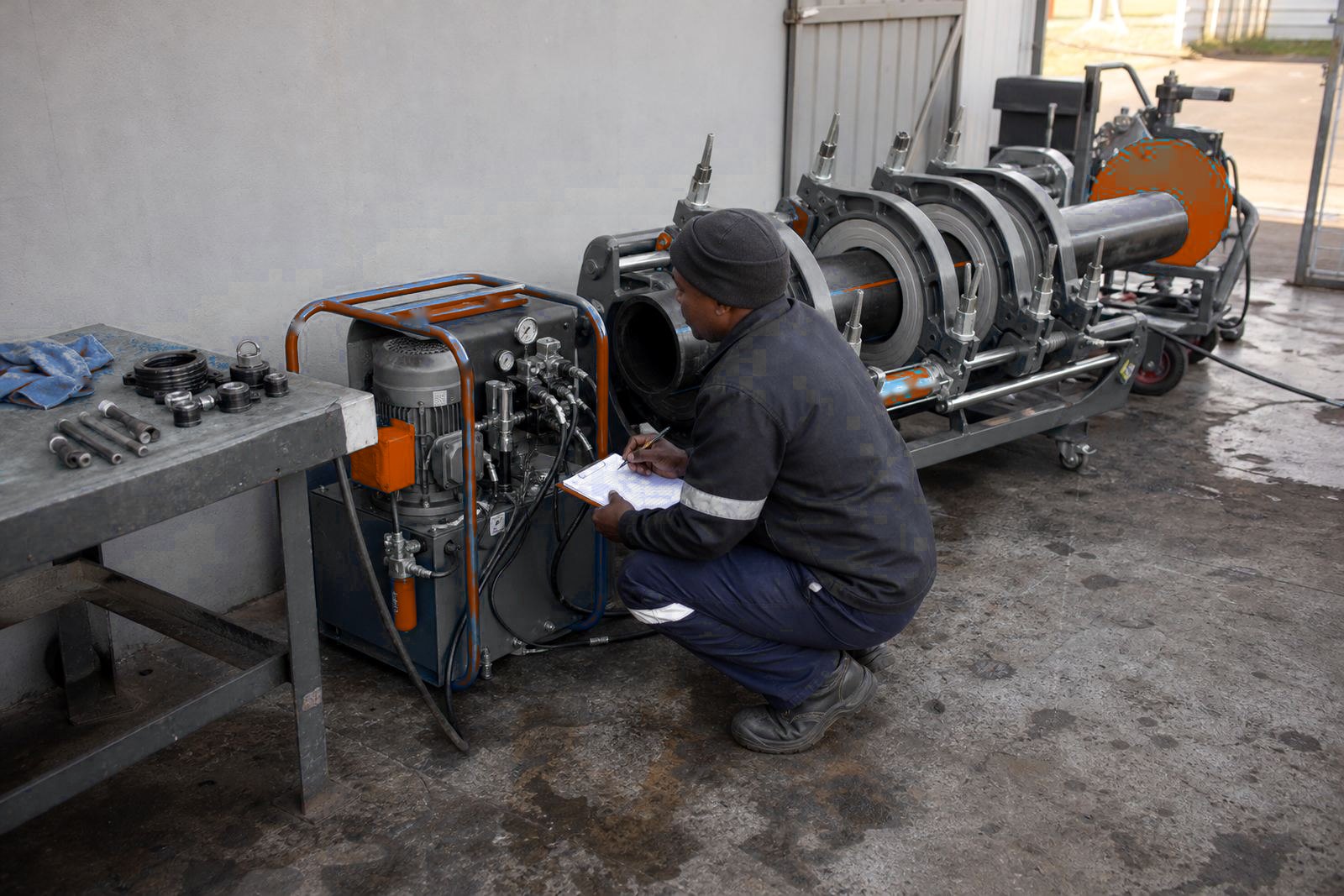
- Pressure source or hydraulic unit in good order
- Logging sheet or digital record setup for weld data
Power, transport and the odd realities of a remote yard
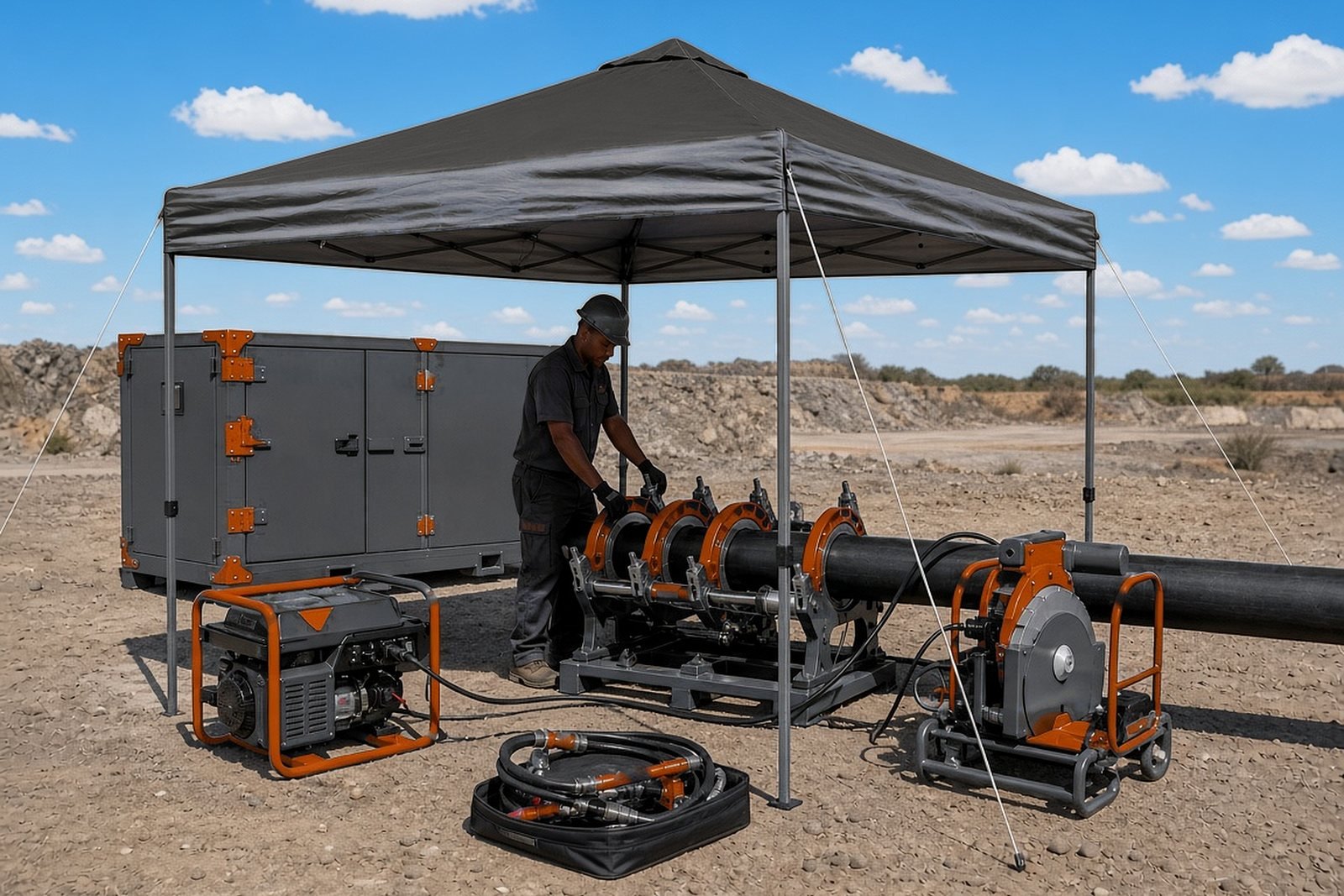
Remote sites often need a power plan that fits the actual yard and the conditions on site. Some equipment runs from mains supply, some from a generator and some from a site workshop feed, which can fluctuate. Even heating, steady pressure and the same cycle through the day are essential when the machine runs all day. If the supply drifts, the plate and pressure readings can drift.
Strap the machine and heater plate down for the drive. A loose plate on the tray gets damaged, and a facer bouncing around with swarf cuts poorly. Heavy items should be tied down, kept dry and kept apart from dirt. In the North West or Northern Cape, dust gets into everything, so covers and sealed boxes keep setup quick.
- Check generator capacity against the full machine load
- Pack extension leads, plugs and site-safe distribution gear
- Use ramps, lifting points or a forklift where the machine is heavy
- Keep plates, hoses and cutters separated from dust and impact
Crew roles that keep the weld line moving
Remote fusion teams work best when every person is responsible for a set task. One person sets the pipe and checks alignment, one runs facing and plate prep, one records the weld details and watches pressure, and one keeps the area clear of grit and traffic. On a small civil site, two people may share all of these checks.
Crews heading to remote sites should complete training first. The crew must recognise a proper bead, a dirty face, a poor heat soak or a changeover that took too long. The weld log should capture pipe size, SDR, heat time, changeover, fusion pressure, cooling time and any note on conditions. That record becomes useful when a line is buried, pressure tested or handed over.
- Assign one person to alignment and pipe handling
- Assign one person to heat, pressure and timing control
- Assign one person to weld logging and joint marking
- Keep a spare person ready for material handling on longer runs
What to carry for the first two days on site
The first two days usually expose the weak point in the plan. A missing insert, a blunt cutter or the wrong seal can stall work while a courier is arranged. For remote work, a practical spares pack keeps the site moving and reduces repeat trips to collect parts.
The pack should cover the parts that wear, flex or get knocked about in transit, including hydraulic hoses, pressure gauges, heater plate covers, clamps and fasteners. Inspect hired machines before loading and again on arrival.
- Cutters, blades and common fasteners
- Seals, hoses and hydraulic connectors
- Clamp inserts for the pipe range on site
- Cleaning cloths, markers and weld log sheets
- Spare plate cover or surface protection
Checks before the first joint is heated
Before the first fusion cycle, the setup should be checked as carefully as the pipe itself. The machine must sit level, the jaws must grip evenly, and the pipe ends must be clean and square. Trench sections must move in and out of the jaws without being forced sideways. A small alignment fault leaves a stressed joint.
Bead inspection happens during the weld as part of the work. Cooling time must be respected before handling, skidding or burying the joint. Remote work gets expensive when a joint is rushed and has to be remade, so the crew should hold every joint for its full cooling period.
Mandla Maluleke and the team plan remote jobs before anything is loaded.