The machine that makes the joint
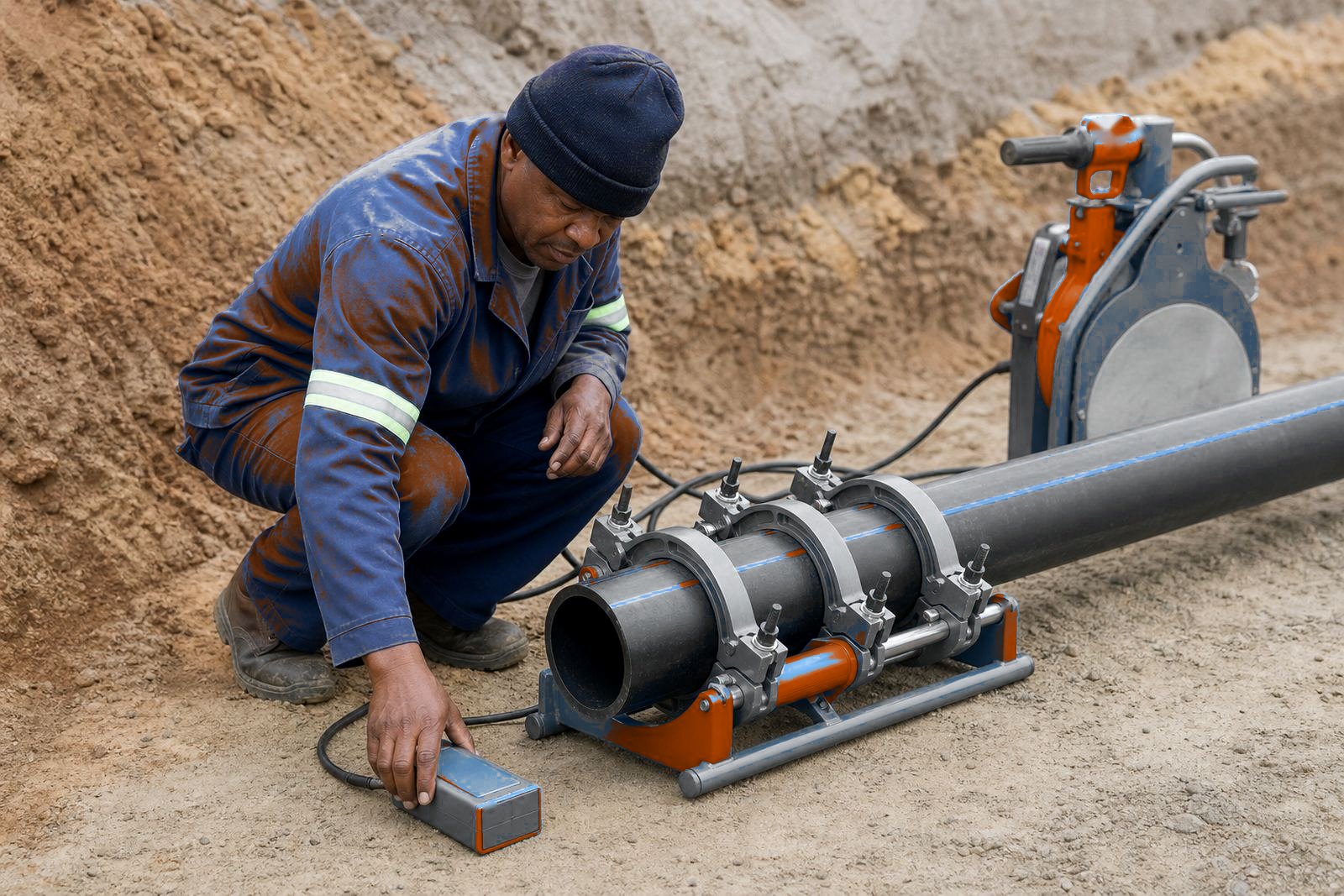
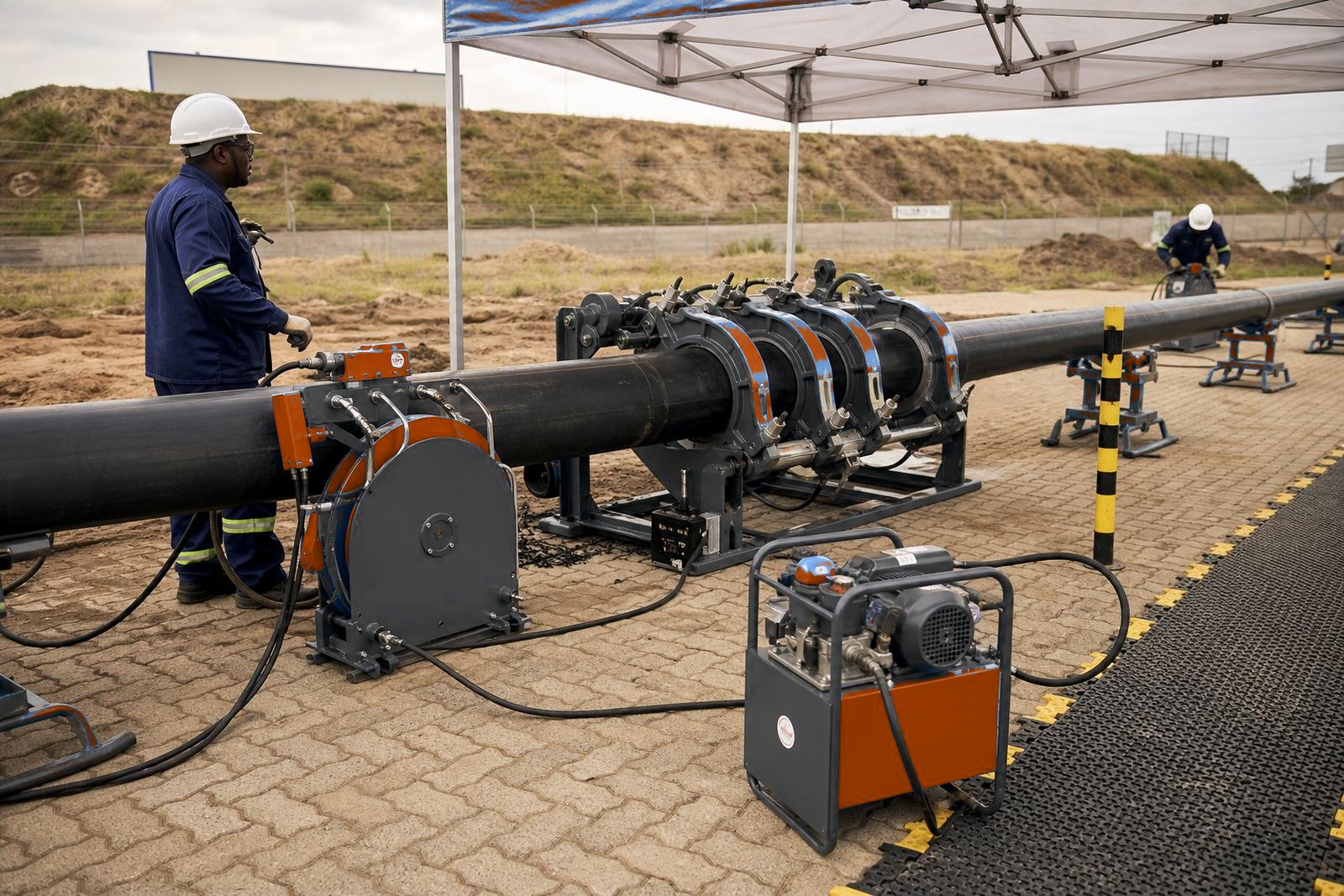
A butt-fusion set works only when the facing tool cuts clean, the heater plate reaches the right surface condition and the clamps hold both pipe ends square. A service plan checks the facer, heater plate and clamps on the same visit.
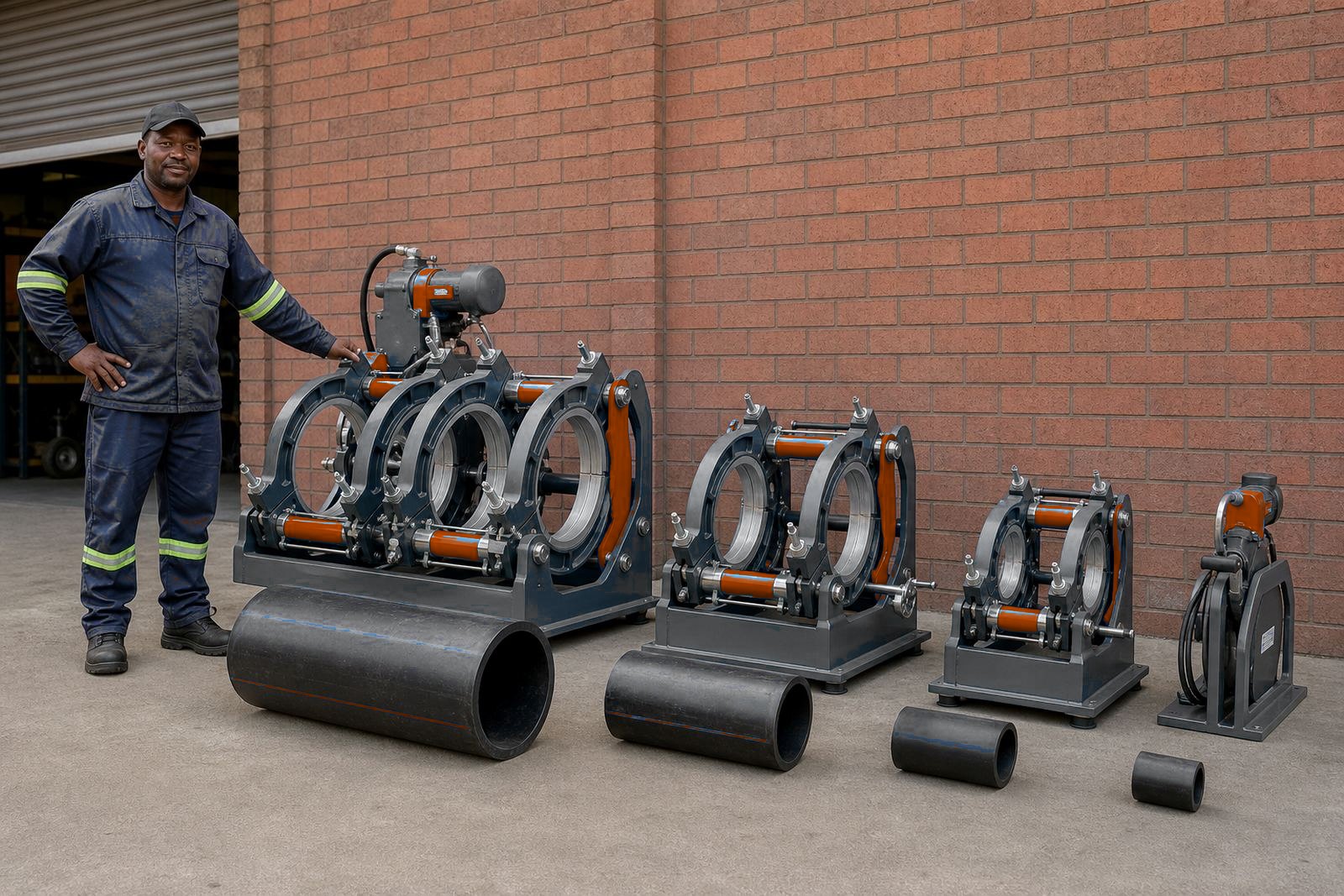
Each machine suits a set range of pipe outside diameters and SDRs. For a 110 mm line, the clamping range and hydraulic feel differ from a larger main, and the service record should show which jaws, inserts and heater settings were used. Keep that note for when the job moves to a new pipe size and the crew needs a familiar set-up.
Service plans cover frame, clamps, facer, plate, hydraulic unit and logger. If one of those parts drifts, the weld cycle starts drifting.
A service plan built around the weld cycle
Butt-fusion is a sequence job. Each stage builds on the one before it, and servicing runs in the same order.
- Check facer blades for wear, chatter marks and uneven cutting.
- Inspect heater plate faces for scratches, build-up and hot spots.
- Confirm clamp alignment so both pipe ends sit on the same centreline.
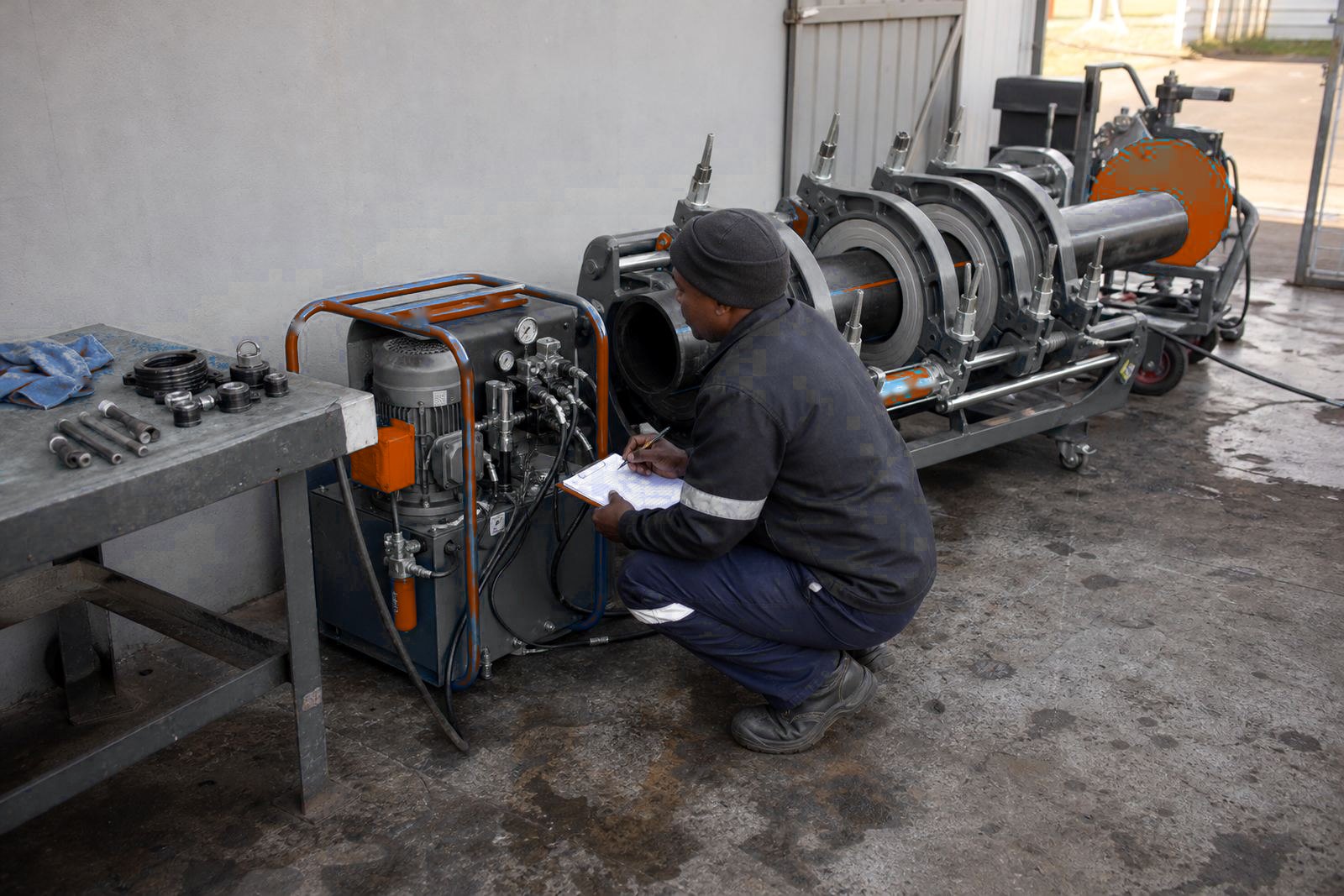
- Check hydraulic pressure while the unit is under working load and again when it is idle.
- Review weld logging settings where the machine records cycle data.
A planned visit keeps the weld sequence repeatable. If the changeover takes too long or the heater plate is not behaving, the joint quality starts sliding before anyone notices a bad bead.
What each service check should record
Keep the checklist plain and specific. It should show what was checked, what was adjusted and what still needs watching on the next job. That makes handover easier when a machine moves between Johannesburg, Rustenburg or a site team travelling into another province.
- Hydraulic hoses, couplings and seals free of leaks or swelling.
- Clamp faces clean, straight and holding pipe without twist.
- Heater plate wiring, temperature control and handle condition.
- Facer carriage travel smooth, with no binding at the end stops.
- Generator or power feed connection sound where the machine relies on mains supply.
- Bead quality from recent welds, including even roll formation on both sides.
In coastal air, especially around Durban or Cape Town, corrosion sets in quickly. Dust on inland mine roads creates its own wear pattern, so the same checklist will not look identical everywhere, and it should not.
Service work in its own plan
Operator training is included in service planning. Crews unsure about heat soak, pressure build-up or cooling time can make weak joints on a sound machine. The service plan should cover both metal condition and operator habits.
Fresh crews usually need help with pipe prep, facing depth, alignment checks and the handover between heating and fusion pressure. Crews changing sites or diameter ranges can book a refresher. Complete weld logs with SDR details and cycle notes make later fault-finding easier.
When the field team sees the same faults repeating, the cause is usually routine and the hardware is fine. Wrong clamp setup, rushed cleaning or poor bead inspection can point to a training gap as well as a machine problem.
Servicing visits should leave evidence behind
Every maintenance visit should leave the machine with a clear record. The record helps when the unit is booked for hire, moved to a new contractor or sent out with spares support for a busy run of trench work. The next technician can avoid repeating the same checks from scratch.
Useful records include pressure test notes and heater plate readings. When a logger is fitted, the service note should say whether it was reading correctly and whether the date, diameter and pressure fields were captured properly. When weld logging is incomplete, the job file loses value very quickly.
Bead inspection continues even when the machine passes its mechanical checks.
Hire fleet prep and workshop storage
A machine leaving the hire fleet needs a full check. The job should include collection inspection, a proper function check and a note on any missing inserts, clamps or adapters. If the next crew is going to load the set into a truck before dawn, the kit needs to be complete and ready.
- Confirm the machine matches the pipe diameter range requested.
- Pack the correct inserts, pressure lines and heater accessories.
- Secure facer, clamps and hydraulic unit for transport.
- Record visible wear on each returned unit before it goes out again.
Pack and check the kit list in the workshop before the machine leaves for site. In the field, one missing part such as a facer blade can stop welding.
A workable servicing rhythm for South African sites
No single timing suits every contractor. Short repairs put different strain on the machine than long pipe strings run in dust and vibration. The service plan should match the way the equipment is used.
A practical rhythm is to schedule pre-job checks, mid-run inspection and a fuller service after heavy use or after moving between sites. Heat, coastal humidity and long shifts change the wear pattern, so the service interval is set per site. That is how planned servicing cuts downtime without pretending every site behaves the same.
Keep the butt-fusion set ready for the next length of pipe by servicing it before a breakdown.