SDR tells you how the wall behaves on the bench
SDR is the outside diameter divided by the wall thickness, so a lower number means a thicker wall and a higher number means a thinner wall. Wall thickness affects how much material must be trimmed, how much heat is needed and how much pressure the joint can take during fusion and cooling on site.
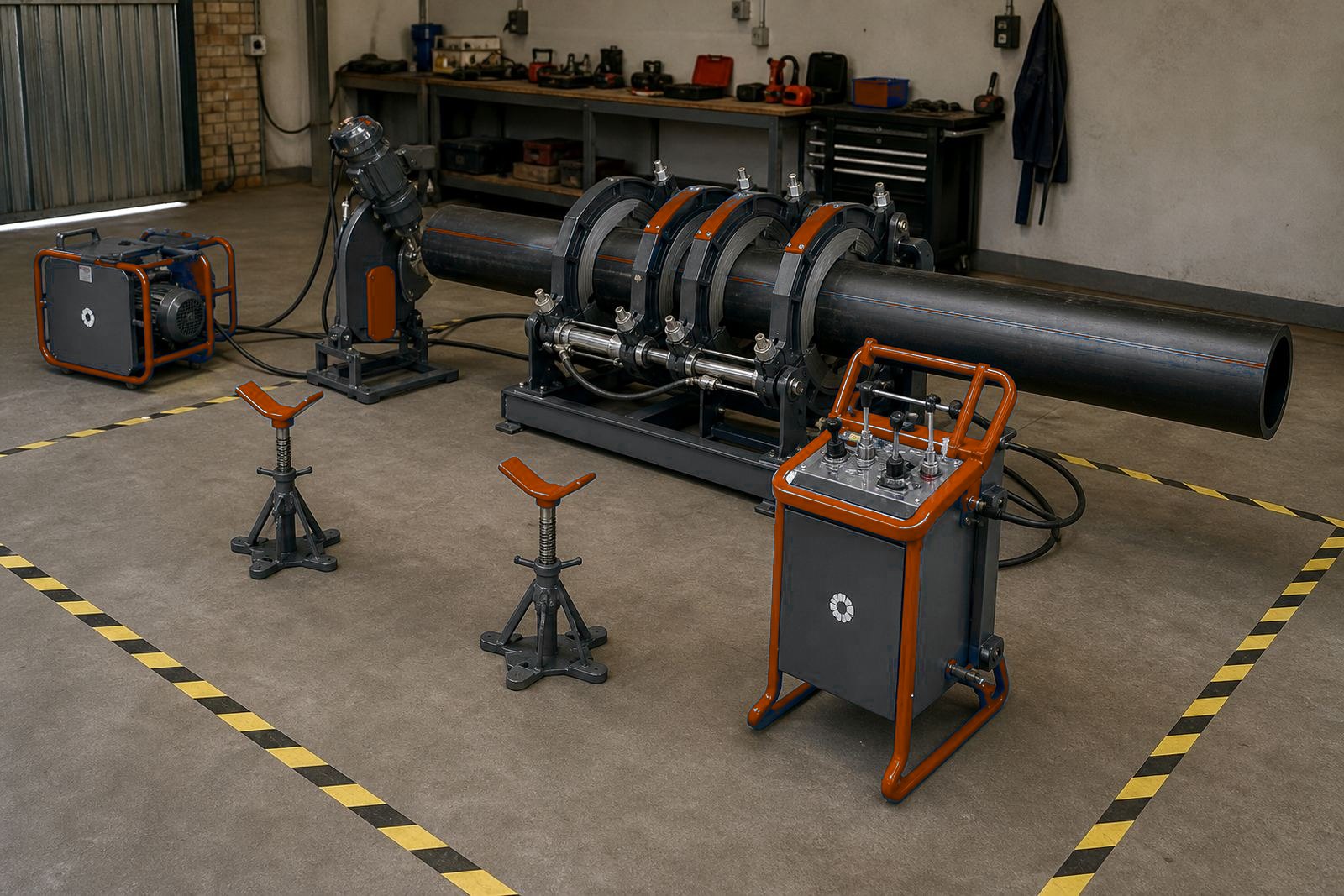
Start with pipe size in millimetres and the expected SDR range for the line. Check that the clamps, facer and plate control suit both the diameter and the wall thickness.
In practical terms, a water reticulation run in 110 mm may behave very differently from a 315 mm mining line even before the heater plate comes into play.
Set-up steps before the first face cut
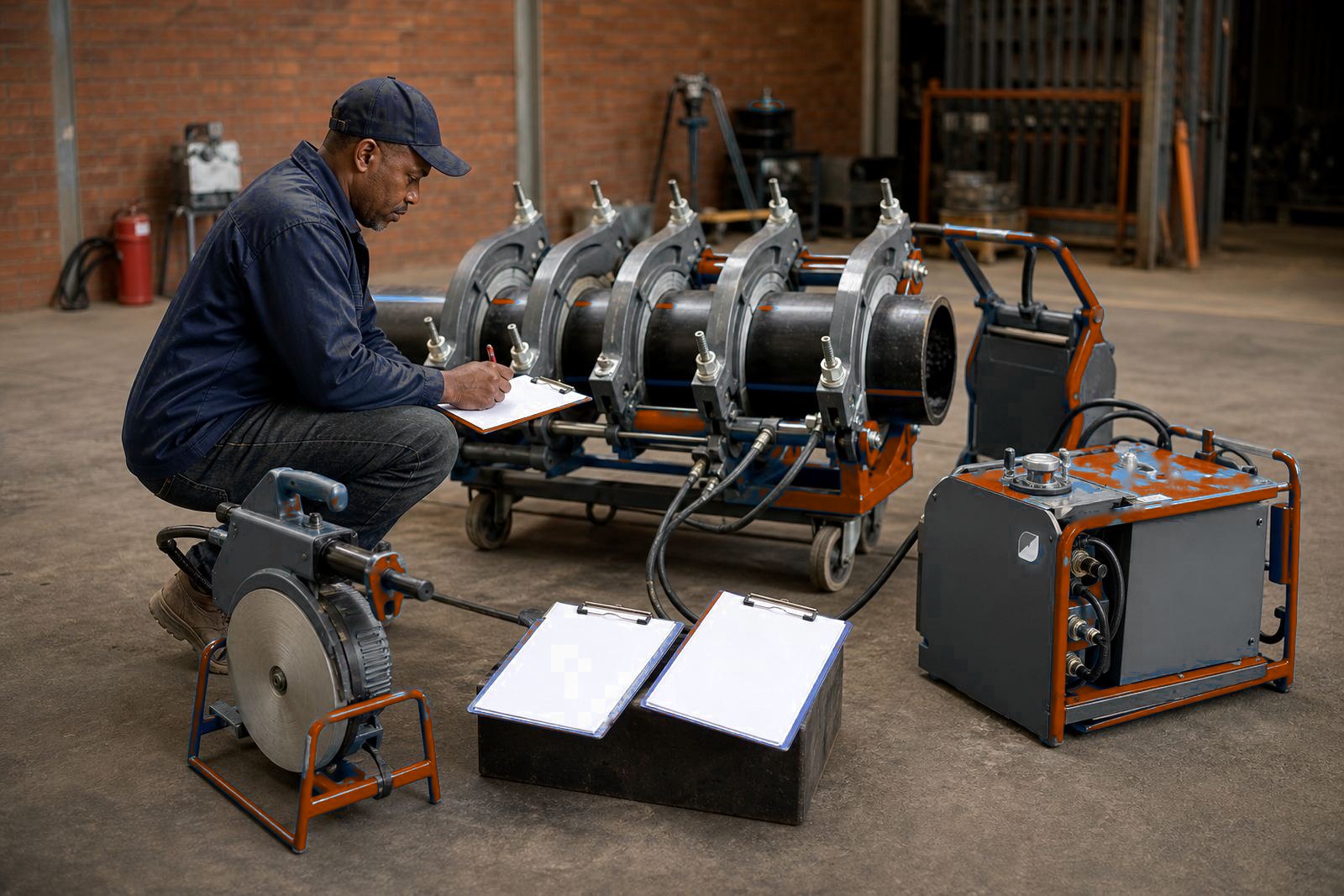
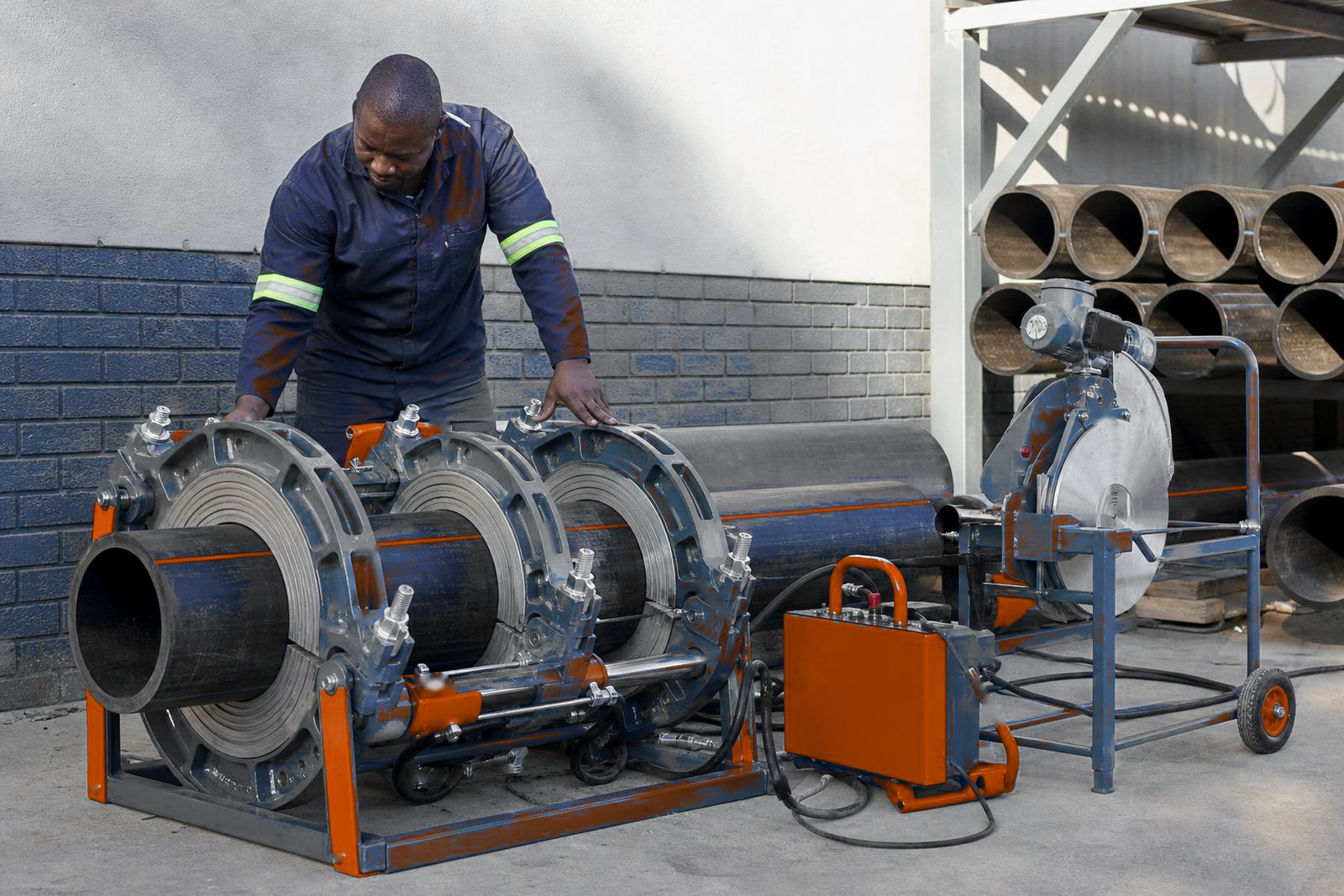
The clamp line should hold the pipe without twist, because poor alignment affects the facer cut and can leave one side with more material than the other.
- Confirm pipe diameter and SDR range against the machine capacity.
- Check clamp inserts, jaw grip and carriage travel.
- Inspect the facer blades for wear and flat cutting.
- Verify heater plate surface condition and temperature control.
- Prepare clean cloths and approved cleaning fluid for the pipe ends.
For larger bore work, the set-up time is often where mistakes show first. Movement during facing or ends out of line give an uneven face and uneven pressure.
How SDR changes heat soak and pressure control
Thicker wall pipe usually needs more careful heat soak control, because the heat must travel deeper before the joint is ready for changeover. Thinner wall pipe can reach the right fusion state faster, but it also gives less room for error if the operator delays between heater removal and pressure build-up.
Match the expected SDR range to the procedure sheet before work starts. The same heater plate temperature may be used across many jobs, yet the actual heating time, changeover speed and fusion pressure must suit the wall thickness and pipe size in front of the team.
Watch for a full, even melt face after facing and heating. If one side shows a narrow melt band and the other side is already soft and drooping, the pressure or heat control is off and the joint should be reset before you continue.
Bead shape, cooling time and what to inspect
The bead is the visible record of the weld, so it should be checked while the joint is still easy to read. A well formed bead is even around the pipe, with no obvious roll-over, gaps or visible contamination trapped in the joint line.
Cooling time needs to suit the wall thickness and the joint size, because movement before full cooling can disturb the fusion interface.
- Check bead symmetry around the full circumference.
- Look for dirt, moisture or grease at the joint edge.
- Record the joint details if weld logging is part of the site pack.
Data logging helps when the job needs a traceable record of pressure, time and joint number. Keep that record wherever pipe sizes change and more than one crew works on the same line.
Picking the right machine range for the pipe series
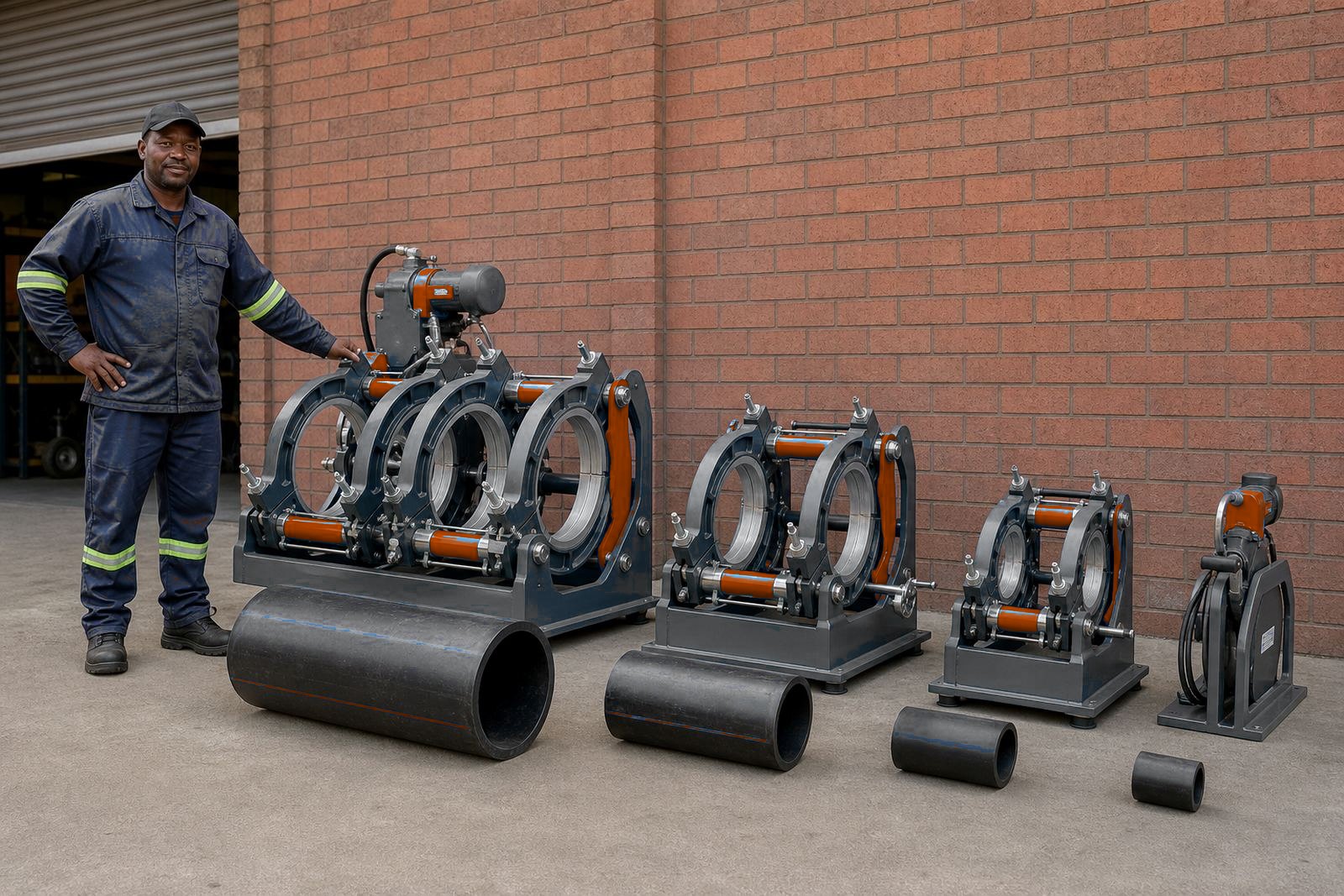
The machine range should match the smallest and largest pipe diameters expected on the job, including the biggest spool the crew hopes to handle. A set of clamps and accessories that suits one SDR band may not suit another if the wall thickness changes enough to alter the grip and the heating demand.
SDR mix shifts between jobs. Before the machine goes out, we check hydraulic pressure and clamp alignment.
- Confirm the available clamp inserts for each pipe size.
- Ask for facer condition, heater plate checks and hydraulic pressure test history.
- Operators are trained for the SDR range on their site.
Compare the wall thickness on site with the SDR band in the machine specification. Usually, this leads to longer set-up, awkward pressure control and less reliable bead formation.
When training should sit before production
Book operator training when the crew moves between pipe series or changes SDR bands. A trained operator knows how to read the pipe mark, set the clamps, handle the facer, manage the changeover and hold the correct fusion pressure without rushing the cooling stage.
A refresher session suits a team that has not run a certain diameter for a while. Watch for poor wiping of the pipe, over heating the face and releasing the clamps too early. Correct these before the line goes live.
Site startup help also shortens setup on jobs with mixed pipe sizes or a tight shutdown window. Check the machine settings against the pipe wall and site conditions on the first joint.
Confirm the plan before welding begins
Know the pipe range, wall thickness and joint sequence before the machine is loaded. Right clamp sets, heater plates and logging methods reach site together, ready to use.
- Pipe diameter list and expected SDR band.
- Number of joints and any change in wall thickness.
- Whether weld logging is needed.
- Plan for hire preparation if the machine is hired.
When the SDR range is known early, the rest of the job is easier to organise. The crew can then focus on clean ends, even heat, correct pressure and a joint that cools without being disturbed.