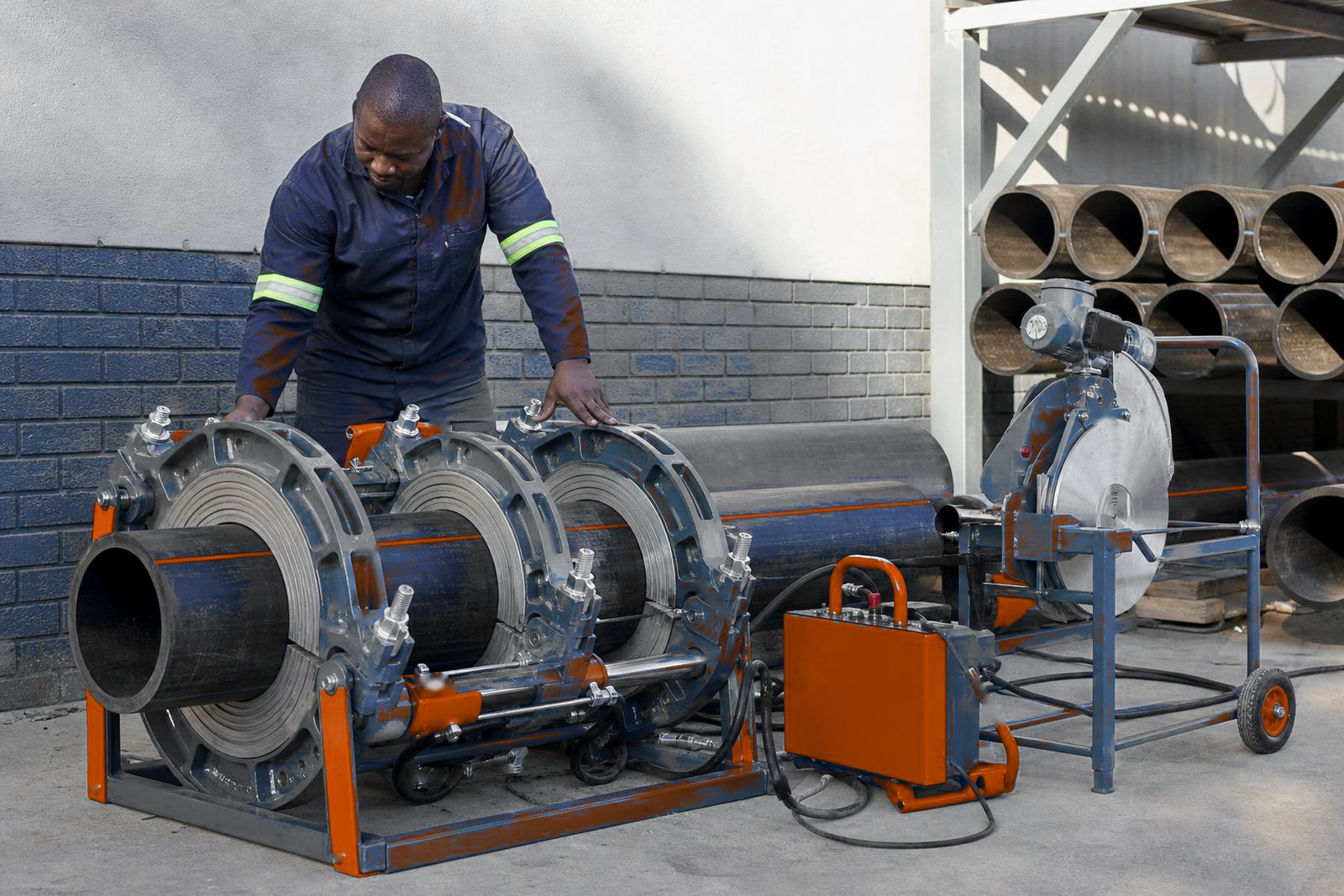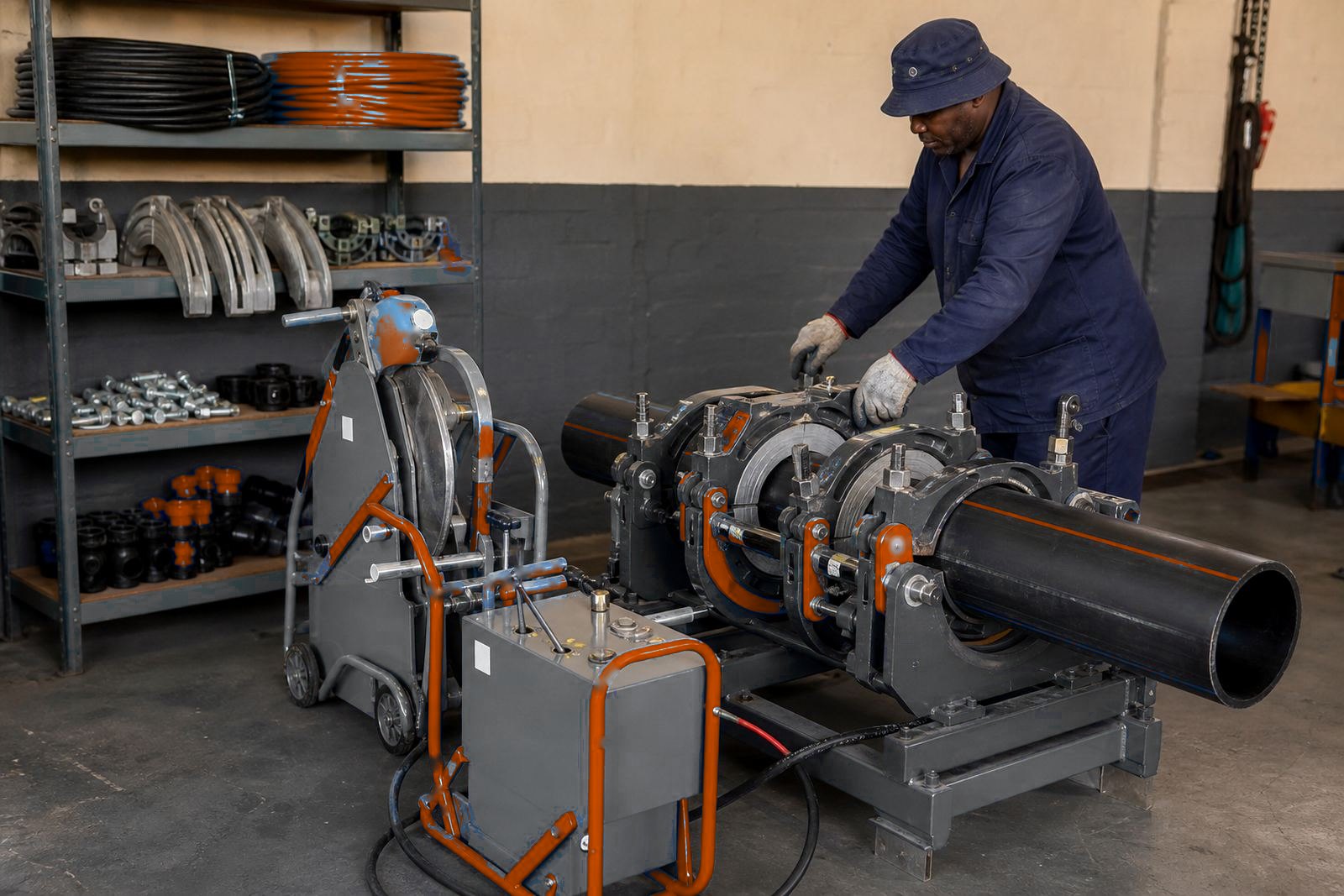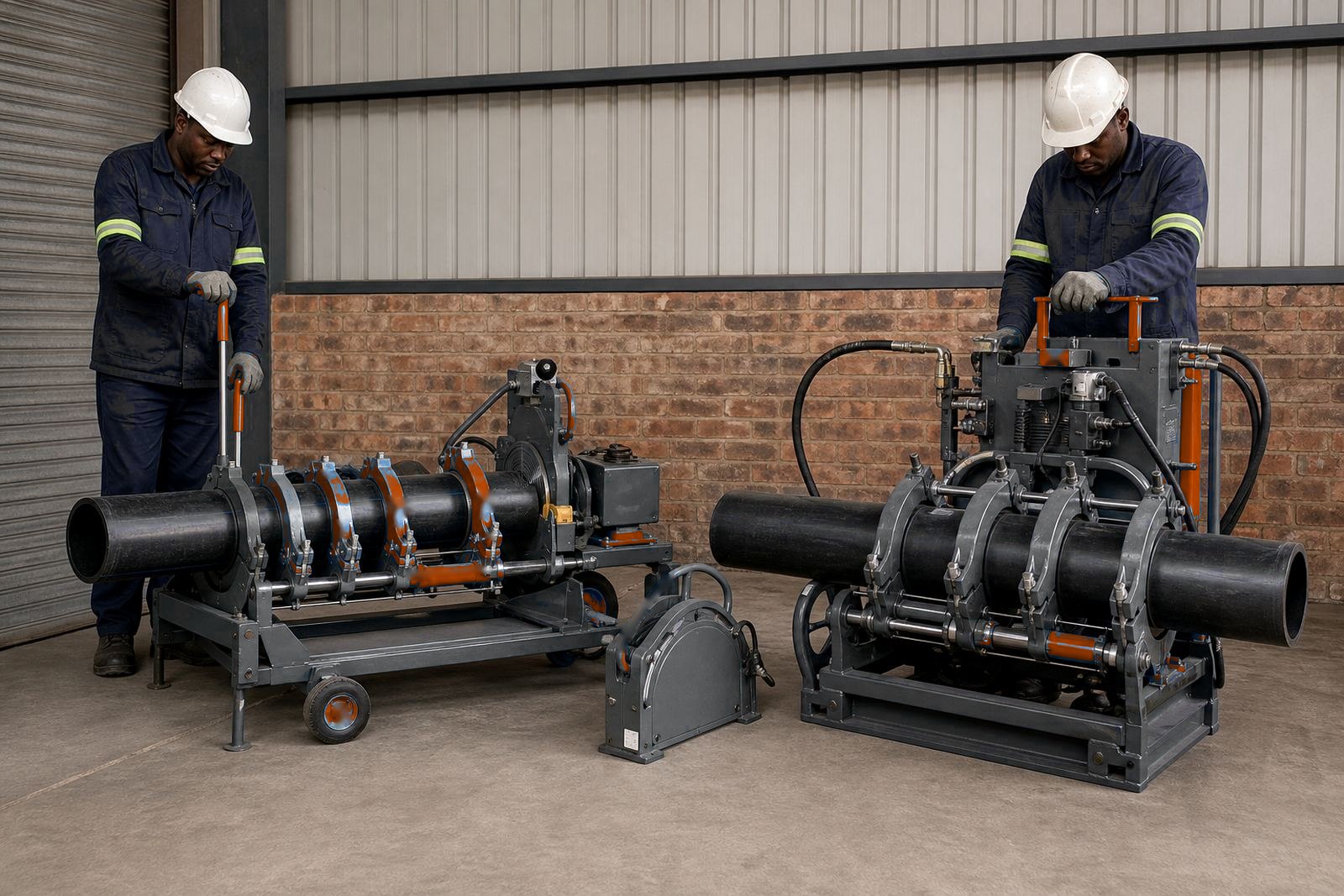
The pipe work you actually weld
The first question is about the pipe. If you are mostly joining smaller HDPE lines for site services, the operating demands look very different from a job that keeps moving through larger diameters and heavier wall sections. Butt-fusion work also changes with SDR, because wall thickness affects heat soak, bead form and the pressure needed during fusion.
Hire suits mixed work where the pipe sizes vary between contracts. Ownership starts to carry more value when the same diameter range keeps appearing, the crew is on site often, and the machine must stay available for early starts, weekend shutdowns or long runs through rural areas.
- Note the SDR range used on each job type
- Check whether you need one machine or a full size range
- Allow for facing, heating, changeover and cooling time on site
When hire suits the work better
Hire suits a short run, a shut-in job or a project with a low weld count. It also keeps cash free for other site costs such as fittings, excavation, transport and labour. Hire can suit a contractor whose unit has to move between regions as the job mix changes.
Servicing is the next item. A hired unit can arrive prepared for the task, with hydraulic pressure checked before collection. Where the weld window is tight, the operator needs to focus on the joint with no machine fault mid-sequence.
- Short-duration projects with clear start and end dates
- Extra machines needed for a peak period
- Jobs that move between sites more than they sit in storage
- Teams that need a ready unit without carrying service stock
When buying starts to make more sense
Buying becomes practical when the machine is used often enough that hire costs keep stacking up over the year. That usually happens on contractors with regular pipeline work, permanent crews or service teams that must respond to maintenance calls without waiting for collection and return. Ownership suits a crew that uses the same kit every week, because familiar controls and repeat settings reduce confusion on site.
Think about the hidden parts of ownership. A machine needs storage, servicing, hydraulic checks, cleaner faces on the facer and heater plates that still hold temperature evenly. If the kit is left in a yard near the coast, humidity and salt air can add wear to electrical and metal parts, so upkeep is not optional. An owned machine needs servicing between jobs so it is ready when the crew needs it.
- Frequent work across the same pipe size range
- Internal crews who need the unit on call
- Long-term use that justifies owning the machine
- Sites where storage and transport are already sorted
What good butt-fusion practice needs from the machine
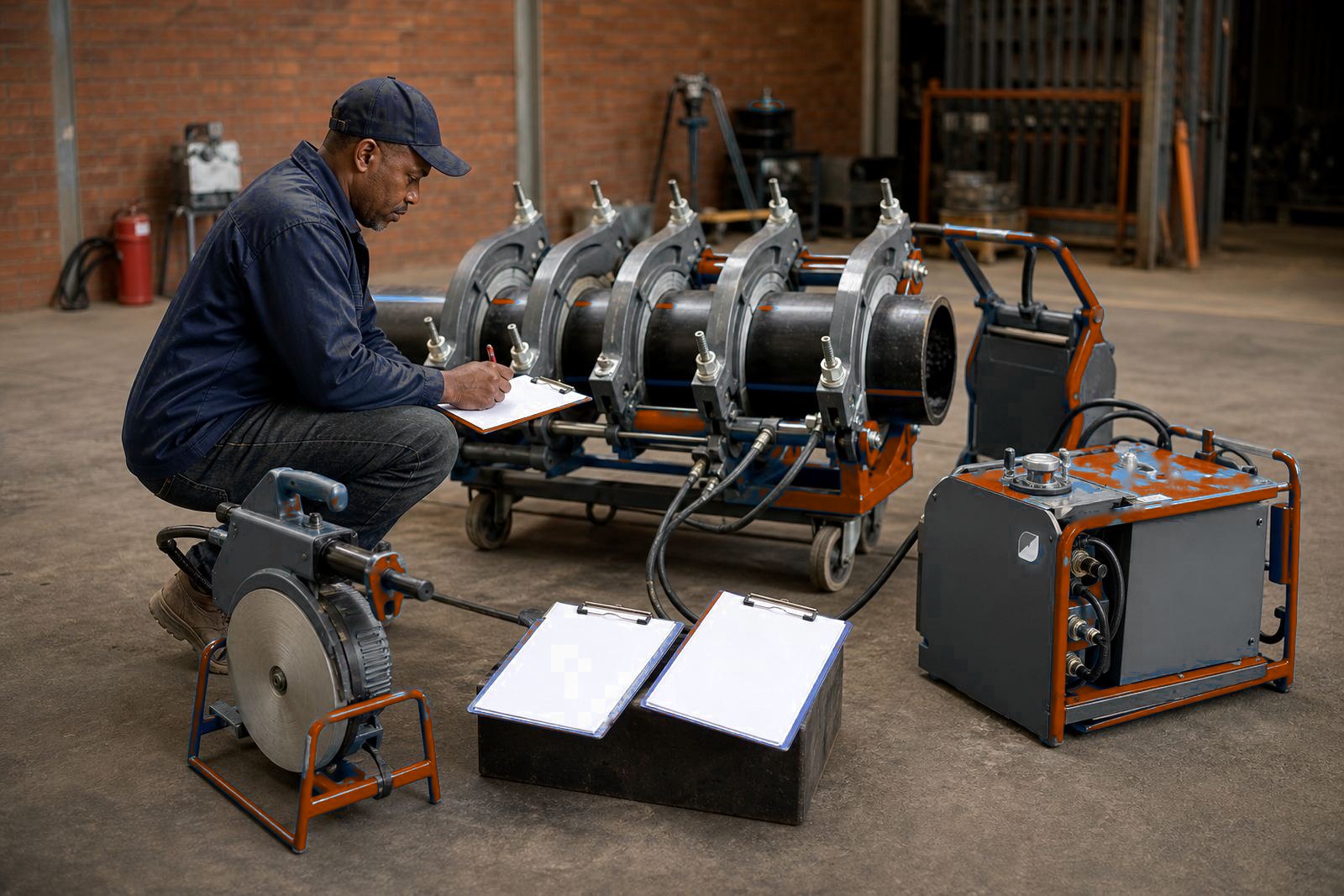
Whether you hire or buy, the machine must support proper butt-fusion steps.
Many sites also ask for data logging, especially where the weld record forms part of the handover pack. Logging makes traceability easier when a job runs through several sections and crews.
Operator training sits in the middle of all this. Good kit still produces poor joints if the operator does not understand heating time, transition timing, pressure control or cooling time. Factor in training for the crew when choosing between hire and purchase.
A practical hire-or-buy check before the order
A proper comparison needs the daily rate or purchase price, the full job pattern, the transport needs and the service load. A machine that sits idle for months is expensive in a different way from one that is always out on site and costing hire fees every week.
Use this check before deciding:
- How often will the machine be used in a month
- What pipe sizes and SDRs are expected
- Will the same crew operate it every time
- Is logging or weld record keeping required
- Do you want to hire or buy
- Will the machine travel between branches or project towns
If your mix of pipe sizes shifts through the year, the answer can change by season. Some firms hire for the first phase of a project, then buy once the pattern settles. Others buy a core unit and hire a second machine when the weld count climbs or the site splits into more than one crew.
Keeping the machine ready after the decision
A machine you own needs regular upkeep between jobs. If the unit is hired, collection inspection protects the next user and keeps the fleet in working order. If it is owned, the same checks keep the machine working and stop small faults growing into missed welds.
The machine, the operator and the pipe all have to line up. When they do, the weld sequence stays controlled and the joint has a proper chance to hold through service.